
What Types of Events Can AI Monitor?
Unexpected events can disrupt operations, create safety risks, and affect compliance long before managers become aware of them. Whether it’s an employee entering a restricted area, a production line stopping unexpectedly, or a loading dock becoming congested, delayed detection often leads to higher operational costs and slower response times.
AI-powered event monitoring helps organizations identify these situations as they happen. By continuously analyzing live video streams and operational data, AI can detect predefined events, unusual patterns, and rule violations in real time. Instead of relying solely on manual observation or reviewing recorded footage after an incident, businesses receive timely insights that support faster decision-making and corrective action.
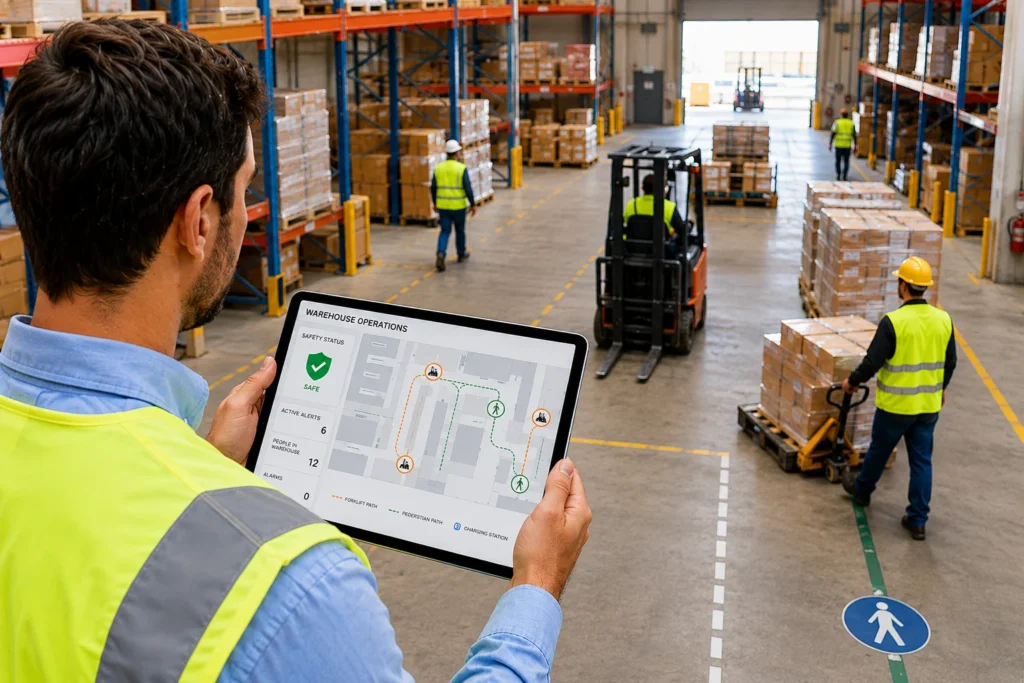
Common Events AI Can Monitor
Different industries prioritize different operational events, but many organizations share similar monitoring requirements.
Event Category | Examples of AI-Monitored Events | Business Value |
Workplace Safety | PPE violations, slips and falls, hazardous zone entry | Safer work environments |
Security | Unauthorized access, loitering, perimeter intrusion | Improved facility protection |
Compliance | SOP deviations, hygiene violations, sanitation checks | Better regulatory compliance |
Manufacturing | Machine downtime, conveyor blockages, product defects | Reduced production disruptions |
Warehousing | Forklift interactions, dock occupancy, pallet movement | Improved logistics efficiency |
Retail | Queue buildup, shelf availability, checkout congestion | Enhanced customer experience |
Facility Operations | Occupancy levels, blocked exits, asset movement | Better operational visibility |
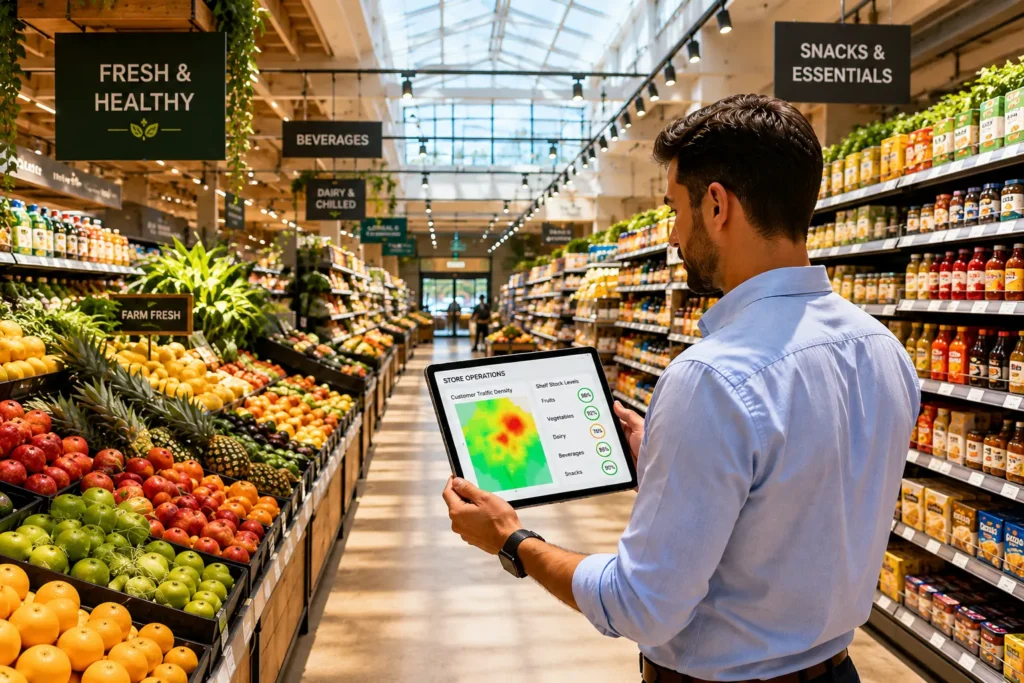
Understanding AI Event Monitoring
An event is any activity, condition, or behavior that matches predefined business rules or requires attention. AI systems use computer vision, machine learning, and rule-based analytics to monitor live environments and determine when an event occurs.
Unlike conventional surveillance systems that simply record video, AI interprets what it sees and classifies activities based on configured operational objectives. The same camera can monitor multiple event types simultaneously, providing continuous visibility across facilities.
Monitoring Events That Matter Most
Organizations typically configure AI to monitor events that directly affect safety, productivity, and compliance.
Safety Events
AI helps identify workplace hazards before they escalate.
Examples include:
- Missing helmets, gloves, masks, or safety vests
- Employees entering restricted areas
- Slip and fall incidents
- Unsafe interactions with machinery
- Smoke or fire detection
- Blocked emergency exits
Continuous monitoring allows supervisors to respond more quickly and reduce workplace risks.
Operational Events
AI provides visibility into everyday operational activities that influence productivity.
These may include:
- Production line stoppages
- Equipment idle time
- Workflow bottlenecks
- Conveyor congestion
- Material movement
- Task completion verification
- Unexpected process interruptions
Early detection minimizes downtime and supports smoother operations.
Compliance Events
Many industries must demonstrate adherence to operational procedures and regulatory requirements.
AI can monitor:
- Standard operating procedure (SOP) compliance
- Cleaning and sanitation activities
- Hand hygiene verification
- Restricted zone access
- Required documentation checkpoints
- Equipment inspection routines
Continuous monitoring creates a more consistent compliance process than periodic manual checks alone.
Industry-Specific Event Monitoring
Although the underlying technology is similar, monitored events vary by operational environment.
Industry | Typical AI-Monitored Events |
Manufacturing | Machine status, product defects, safety compliance |
Food Processing | Hygiene protocols, PPE usage, sanitation verification |
Retail | Customer queues, shelf stock levels, store occupancy |
Warehousing | Loading activities, forklift safety, inventory movement |
Healthcare | Patient falls, restricted access, hand hygiene |
Transportation | Vehicle movement, congestion, loading operations |
Corporate Offices | Visitor access, occupancy, emergency evacuation |
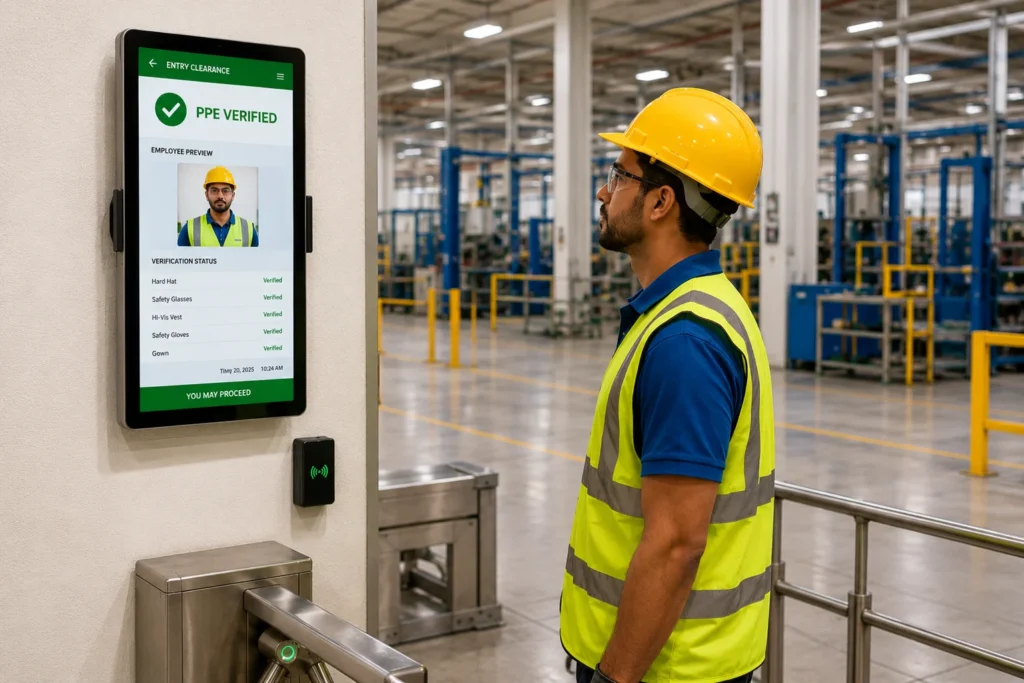
From Detection to Action
The value of AI extends beyond detecting an event. Modern platforms can automatically trigger workflows that help teams respond more efficiently.
When a monitored event occurs, AI can:
- Generate real-time alerts
- Capture images or video evidence
- Notify supervisors or security personnel
- Create corrective and preventive action (CAPA) tasks
- Record event details for audits and investigations
- Display trends through operational dashboards
This reduces the time between event detection and corrective action while improving accountability.
Best Practices for Effective Event Monitoring
Organizations achieve better outcomes when AI monitoring is aligned with operational priorities.
Consider these practices:
- Focus first on high-risk operational events.
- Define clear alert thresholds to reduce unnecessary notifications.
- Review event data regularly to improve monitoring accuracy.
- Integrate AI alerts with existing incident management processes.
- Measure performance using operational and compliance metrics.
- Update monitoring rules as business requirements evolve.
A phased implementation allows organizations to refine event detection while maintaining day-to-day operations.
Turning Events Into Operational Intelligence
Every operational event provides an opportunity to improve safety, efficiency, or compliance. AI transforms isolated incidents into actionable insights by continuously monitoring business activities, detecting potential issues in real time, and supporting faster responses. As organizations expand their operations across multiple sites, AI event monitoring helps create a more consistent, data-driven approach to managing everyday operations while reducing manual oversight.
Frequently Asked Questions
What is an AI-monitored event?
An AI-monitored event is a predefined activity, condition, or behavior that AI automatically detects through video analytics or integrated operational data.
Can AI monitor multiple events at the same time?
Yes. A single AI system can simultaneously monitor safety, security, compliance, and operational events using the same camera infrastructure.
Does AI replace human monitoring?
No. AI assists personnel by continuously identifying important events and presenting them for review, enabling faster and more informed decisions.
Can AI monitoring be customized?
Yes. Organizations can configure monitoring rules based on their operational processes, facility layouts, compliance requirements, and business objectives.
Which industries benefit the most from AI event monitoring?
Manufacturing, food processing, retail, warehousing, healthcare, transportation, construction, corporate facilities, energy, and hospitality all benefit from AI-driven event monitoring.