
SCADA and Edge AI Integration Is Transforming Predictive Operations Across Industries
Control rooms have long relied on SCADA systems to monitor industrial equipment, process variables, and production performance. Operators can view machine status, alarms, and sensor readings from a centralized interface, making SCADA an essential component of industrial automation. However, many operational events still require human interpretation before corrective action can begin.
As industrial environments become more connected, organizations are combining SCADA with Edge AI to create predictive operations. Instead of reacting to alarms alone, businesses can analyze visual activity, equipment behavior, and operational patterns in real time, allowing potential issues to be identified before they develop into production disruptions.
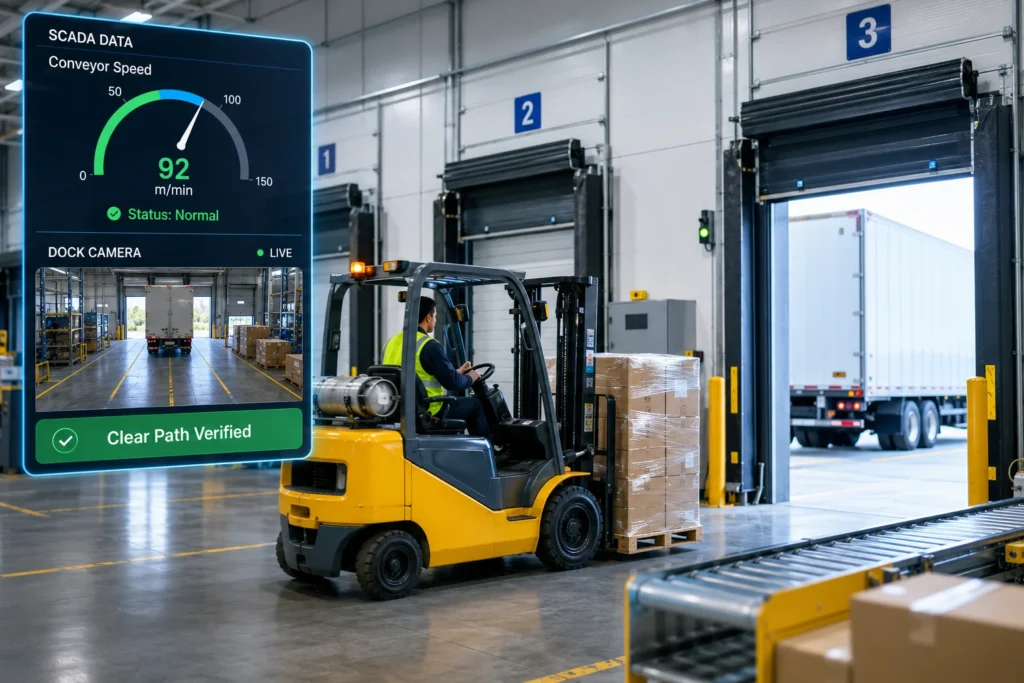
Where SCADA Ends and Edge AI Begins
SCADA excels at collecting structured operational data from machines, sensors, programmable logic controllers (PLCs), and industrial control systems. It continuously reports values such as pressure, temperature, motor status, production counts, and equipment alarms.
Edge AI expands this visibility by interpreting information that traditional sensors cannot measure directly.
For example, AI can recognize blocked conveyor belts, unsafe forklift movement, unauthorized access, product accumulation, equipment abnormalities, or procedural deviations using live video streams. These visual insights complement SCADA data rather than replacing it.
Together, both technologies create a more complete operational picture.
A Connected Flow of Industrial Intelligence
Predictive operations depend on information moving efficiently between operational systems.
The process typically follows this sequence:
- SCADA continuously gathers machine and process data.
- Industrial cameras capture visual activities across the facility.
- Edge AI analyzes live video close to the source, minimizing processing delays.
- AI identifies operational events that may influence production performance.
- Relevant insights are combined with SCADA information.
- Supervisors receive contextual alerts supported by both machine data and visual evidence.
- Operational teams respond before small issues develop into larger production problems.
This integrated workflow supports faster and more informed decision-making.
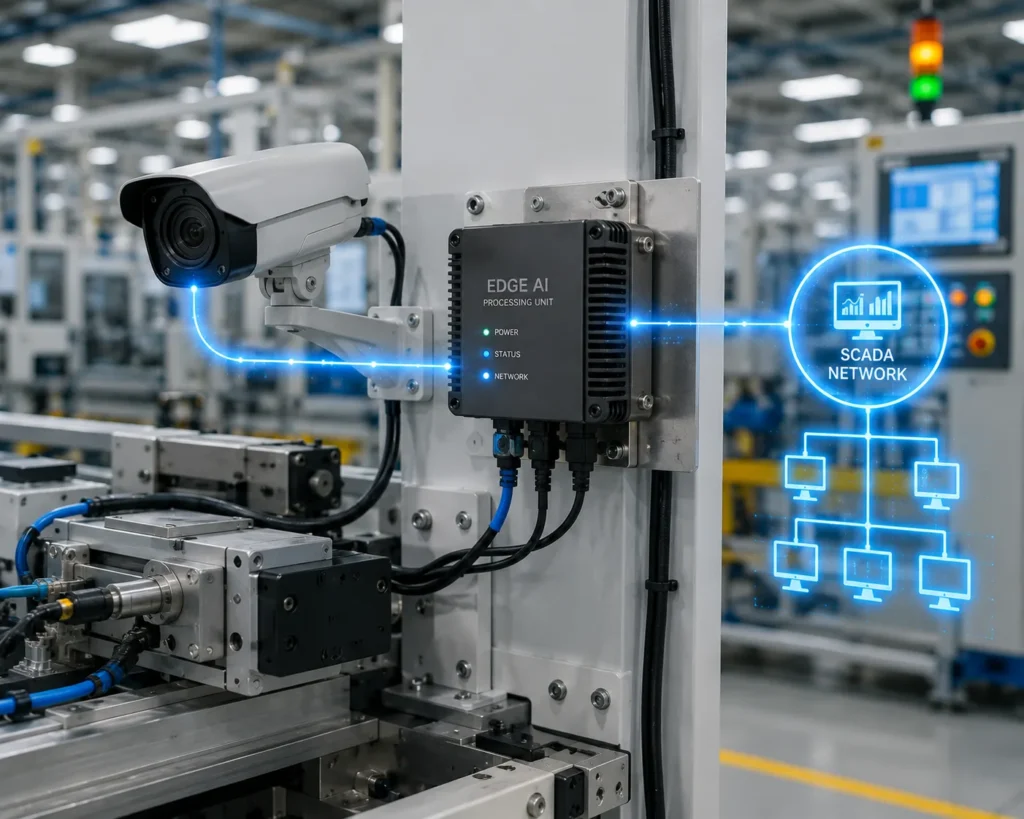
How Integration Improves Daily Operations
When SCADA and Edge AI operate together, organizations gain more than additional data—they gain operational context.
Examples include:
- Confirming whether a machine alarm is associated with material congestion.
- Identifying production slowdowns caused by manual workflow interruptions.
- Detecting abnormal equipment behavior before performance indicators decline.
- Verifying whether loading operations are affecting production schedules.
- Providing visual evidence alongside operational alarms to accelerate investigations.
This combination reduces uncertainty and allows maintenance, production, and operations teams to respond more efficiently.
Industry Applications Driving Adoption
Different industries are adopting SCADA and Edge AI integration based on their operational priorities.
Manufacturing
Production managers combine machine performance data with visual monitoring to improve equipment utilization and identify process bottlenecks.
Energy and Utilities
Operators monitor substations, remote assets, and process equipment by combining sensor information with AI-based visual inspections.
Oil and Gas
Facilities use integrated monitoring to detect abnormal equipment activity, restricted-area access, and process interruptions across large operational sites.
Water and Wastewater
Operational teams improve asset monitoring by combining SCADA process measurements with visual verification of pumps, treatment equipment, and facility operations.
Warehousing and Logistics
Distribution centers correlate equipment status with vehicle movement, dock operations, and material flow to improve scheduling and reduce operational delays.
Preparing for Integration
Organizations achieve better results when integration projects begin with operational objectives instead of technology selection.
Key planning considerations include:
- Identifying operational processes that would benefit from predictive monitoring.
- Evaluating existing SCADA infrastructure and camera coverage.
- Determining where Edge AI processing delivers the greatest value.
- Defining alert priorities based on business impact.
- Integrating operational insights into existing response workflows.
- Establishing cybersecurity and data governance policies for connected environments.
Starting with one production area or facility allows organizations to validate measurable improvements before expanding across the enterprise.
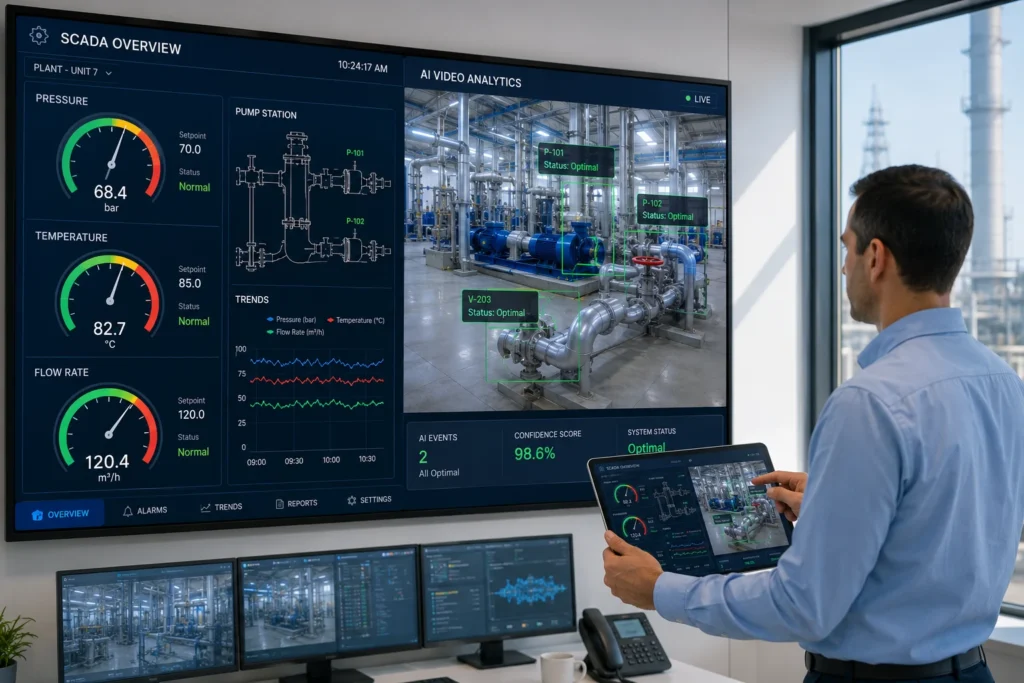
Moving Toward Predictive Industrial Operations
SCADA remains the foundation of industrial monitoring, but today’s operational environments require greater visibility than machine data alone can provide. By integrating SCADA with Edge AI, organizations combine structured process information with real-time visual intelligence, creating a predictive approach to operational management.
As AI Video Analytics, Computer Vision, Edge AI, Operational Intelligence, and AI Automation continue to mature, integrated monitoring will help organizations detect emerging operational issues earlier, improve maintenance planning, reduce production interruptions, and strengthen decision-making across increasingly connected industrial environments.
Frequently Asked Questions
Why is SCADA alone no longer sufficient for predictive operations?
SCADA provides valuable machine and process data, but it cannot interpret visual operational activities such as congestion, equipment handling, or workflow interruptions. Edge AI complements SCADA by analyzing these visual events.
What operational problems can SCADA and Edge AI identify together?
They can help identify equipment abnormalities, material accumulation, production bottlenecks, unauthorized access, inefficient vehicle movement, and workflow disruptions by combining process data with visual analysis.
Do organizations need to replace their existing SCADA systems?
No. Most implementations extend existing SCADA infrastructure by integrating Edge AI and AI Video Analytics, allowing organizations to enhance operational visibility without replacing core control systems.
Which industrial teams benefit most from this integration?
Production, maintenance, operations, engineering, quality, and facility management teams all benefit because they receive richer operational context for faster decision-making.
How does Edge AI improve response times in industrial environments?
Edge AI processes live video locally, enabling rapid identification of operational events and reducing delays associated with sending large amounts of data to centralized systems.
What is a practical first project for organizations adopting SCADA and Edge AI integration?
A good starting point is integrating AI monitoring with one critical production line or process area where operational delays, equipment utilization, or workflow interruptions have a measurable impact on business performance.