
Predictive Maintenance Lifecycle Using AI, IoT, and Machine Learning
An unexpected equipment failure rarely begins with a complete breakdown. Long before production stops, machines often exhibit subtle changes such as increased vibration, fluctuating temperatures, irregular power consumption, or altered operating patterns. These early indicators may go unnoticed during routine inspections, allowing minor issues to develop into costly maintenance events.
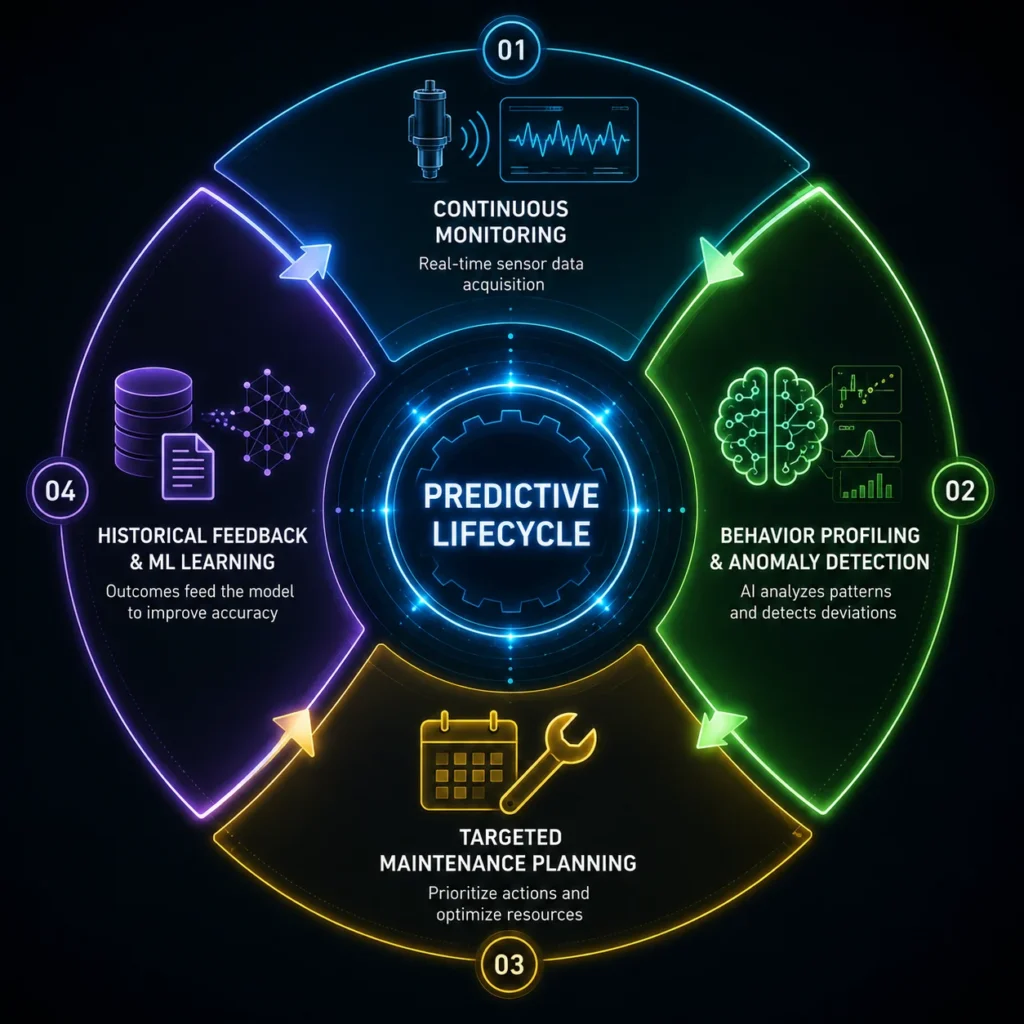
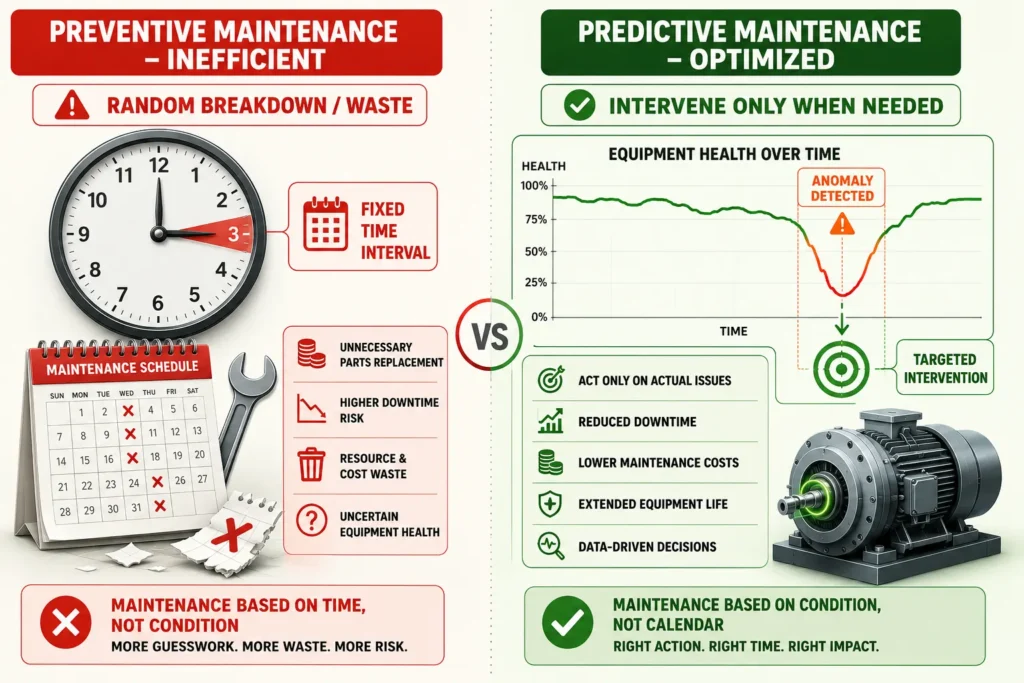
Predictive Maintenance introduces a structured lifecycle that continuously evaluates equipment health using Industrial IoT, AI, and Machine Learning. Rather than relying on fixed maintenance schedules or waiting for failures to occur, organizations monitor operational behaviour, identify changing equipment conditions, and prioritize maintenance activities based on measurable evidence. This approach supports better asset planning while minimizing unnecessary maintenance interventions.
Capturing Equipment Health
The lifecycle begins with continuous observation of equipment through multiple monitoring sources. Every operating asset generates information that reflects its mechanical and operational condition.
Common monitoring inputs include:
- Vibration sensors
- Temperature sensors
- Pressure sensors
- Current and voltage meters
- Oil condition sensors
- Acoustic monitoring devices
- Production equipment status
- Computer Vision observations
Collecting information from different sources provides a broader understanding of equipment behaviour than relying on a single measurement.
Building Equipment Behaviour Profiles
Individual sensor readings provide limited insight when viewed independently. Machine Learning establishes a behavioural profile by analysing equipment performance over extended operating periods.
The profile may include:
- Normal operating temperatures
- Typical vibration ranges
- Expected energy consumption
- Standard operating cycles
- Load characteristics
- Production throughput
- Operating duration
- Historical maintenance records
This baseline allows future equipment behaviour to be evaluated against established operating patterns.
Recognizing Changes Before Failures Occur
Equipment rarely shifts from healthy operation to complete failure without warning. AI continuously compares current operating conditions with historical behaviour to identify meaningful deviations.
Examples include:
- Increasing vibration trends
- Gradual temperature rise
- Extended machine cycle times
- Irregular motor current
- Abnormal noise patterns
- Reduced production consistency
These observations help maintenance teams investigate potential issues before operational disruption becomes significant.
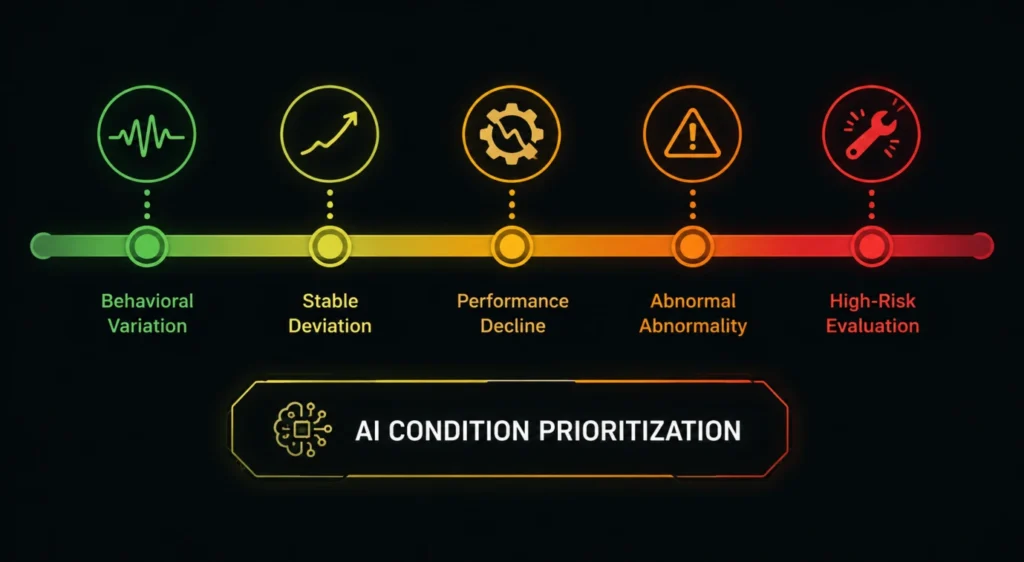
Assessing Maintenance Priority
Not every equipment anomaly requires immediate intervention. AI evaluates multiple operational factors before determining maintenance urgency.
Equipment Condition | Maintenance Assessment |
Minor behavioural variation | Continue observation |
Stable deviation | Schedule routine inspection |
Progressive performance decline | Plan maintenance activity |
Significant operating abnormality | Prioritize technical review |
Multiple abnormal indicators | Escalate maintenance response |
High-risk equipment condition | Immediate evaluation recommended |
Prioritizing maintenance activities helps organizations allocate technical resources more effectively.
Supporting Maintenance Planning
Once equipment conditions have been evaluated, maintenance teams can organize work according to operational priorities rather than responding only after failures occur.
Planning activities may include:
- Scheduling inspections
- Ordering replacement parts
- Coordinating maintenance personnel
- Preparing shutdown windows
- Assigning specialist technicians
- Reviewing maintenance documentation
This structured planning reduces unnecessary production interruptions while improving maintenance coordination.
Learning From Every Maintenance Activity
Each completed maintenance task contributes additional information that improves future equipment assessments.
Historical records commonly include:
- Equipment condition before maintenance
- Inspection findings
- Components replaced
- Maintenance duration
- Failure causes
- Operational impact
- Return-to-service performance
- Maintenance costs
As this information grows, Machine Learning models gain a more comprehensive understanding of equipment behaviour throughout its operating life.
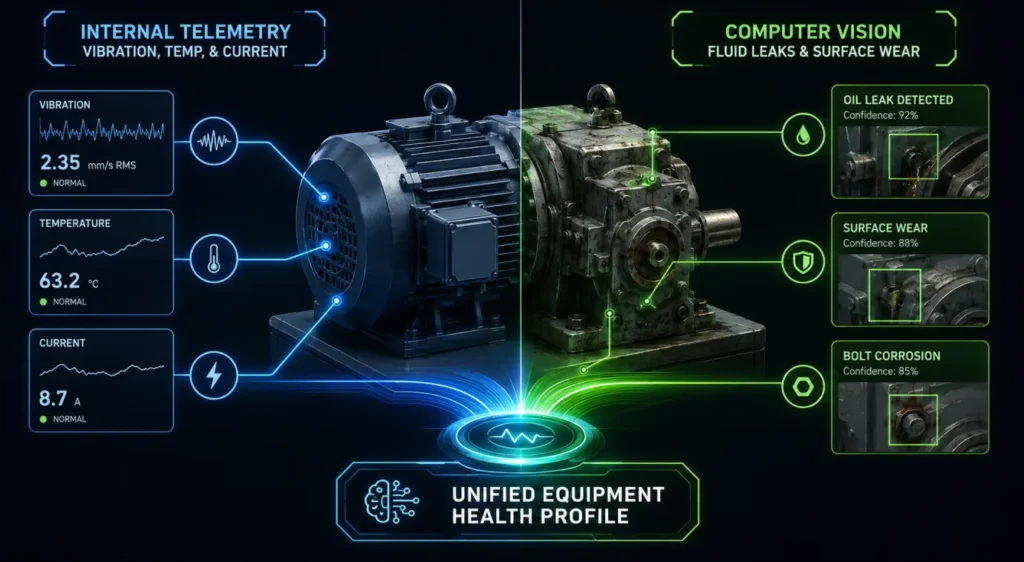
Expanding Visibility with Computer Vision
Many maintenance-related observations involve visible conditions that conventional sensors cannot measure. Computer Vision complements Industrial IoT by providing additional operational context.
Examples include:
- Fluid leakage detection
- Smoke observation
- Belt alignment verification
- Surface wear identification
- Loose component detection
- Equipment obstruction monitoring
- Maintenance activity verification
- Workspace condition assessment
Visual observations strengthen equipment evaluations by combining physical measurements with workplace evidence.
Maintenance Perspective
Maintenance Objective | Operational Contribution |
Asset health monitoring | Tracks equipment behaviour throughout operation |
Maintenance scheduling | Supports planning based on equipment condition |
Resource utilization | Prioritizes maintenance activities according to operational need |
Equipment reliability | Identifies developing issues before major failures |
Maintenance documentation | Builds historical equipment knowledge |
Performance evaluation | Reviews maintenance outcomes over time |
Developing Knowledge Across the Asset Lifecycle
Every maintenance decision becomes more effective when it is supported by operational history instead of isolated equipment readings. A structured predictive maintenance lifecycle allows maintenance teams to understand how assets behave, how equipment conditions evolve, and where technical attention delivers the greatest value. By combining Industrial AI, Industrial IoT, Machine Learning, Computer Vision, Edge AI, AI Video Analytics, Smart Manufacturing, and AI Dashboards, organizations establish a maintenance strategy that is guided by evidence, operational experience, and continuous learning rather than fixed maintenance intervals.
FAQ
How is predictive maintenance different from preventive maintenance?
Preventive maintenance follows predetermined schedules, while predictive maintenance evaluates actual equipment condition to determine when maintenance should be performed.
Can predictive maintenance be applied to older industrial equipment?
Yes. Existing equipment can often be monitored by installing IoT sensors or integrating available operational data with AI analysis.
Why are historical maintenance records important for Machine Learning?
Historical records help Machine Learning recognize recurring equipment patterns and improve future maintenance assessments
Does Computer Vision replace condition-monitoring sensors?
No. Computer Vision complements sensors by observing visible equipment conditions that cannot be measured through physical sensors alone.