
AI-Based PPE Detection and Workplace Safety Monitoring Reduce Operational Risks Across Industrial Sites
1. Customer Profile
Industry: Multi-Site Industrial Manufacturing
Customer: Industrial Manufacturing Group (Anonymous)
The customer operates multiple manufacturing plants, warehouses, utility facilities, and engineering workshops employing a large workforce across different industrial locations. While comprehensive safety policies, periodic audits, and workforce training programmes were already established, management recognised that workplace safety depended on daily operational behaviour rather than scheduled inspections alone.
The organisation wanted to create a safety environment where risks could be identified continuously instead of only during audits or after incidents.
2. Operational Environment
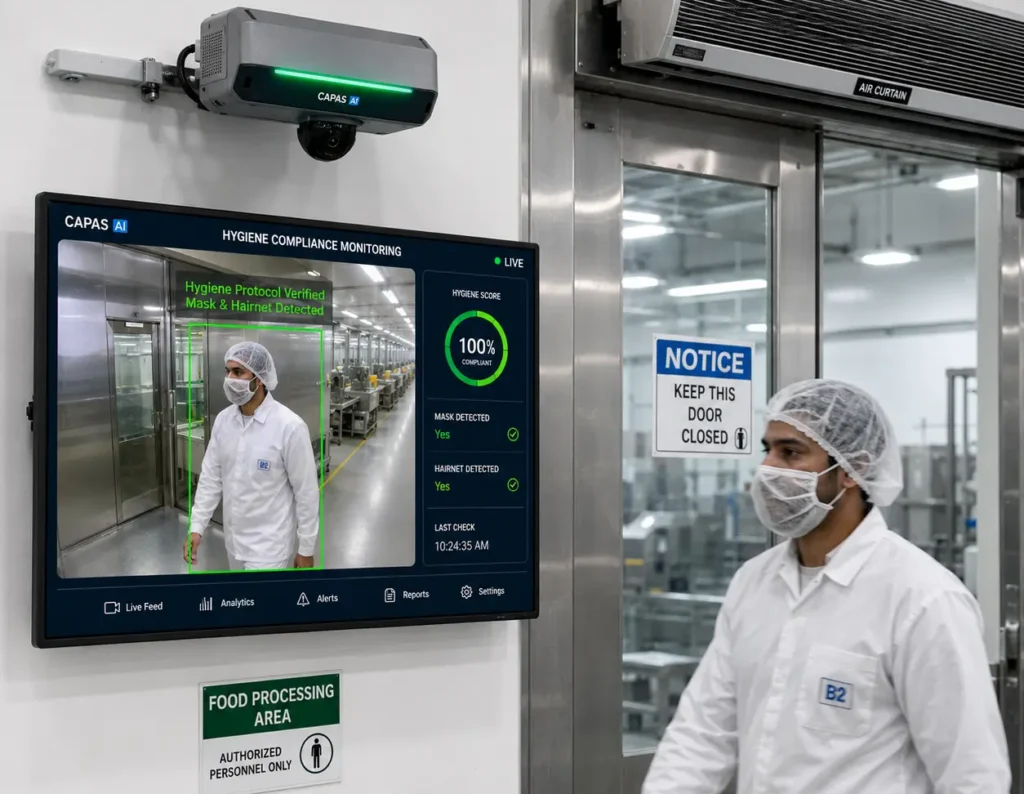
Industrial facilities are constantly changing environments. Employees move between production areas, contractors perform maintenance, forklifts transport materials, machinery operates continuously, and multiple activities occur simultaneously throughout every shift.
The organisation aimed to establish Continuous Safety Intelligence, allowing workplace behaviour to be monitored consistently across every industrial site while supporting existing safety management programmes.
3. Business Challenges
Despite maintaining a strong safety culture, several operational challenges remained:
- Safety observations depended heavily on manual inspections.
- PPE compliance varied across departments and contractor teams.
- Unsafe behaviours were identified only after supervisor intervention.
- Safety audits provided periodic snapshots rather than continuous visibility.
- Near-miss events were inconsistently documented.
- Behavioural trends across multiple sites were difficult to compare.
- Safety reporting relied on manual evidence collection.
- Corporate safety teams lacked enterprise-wide operational visibility.
4. SPGS Solution
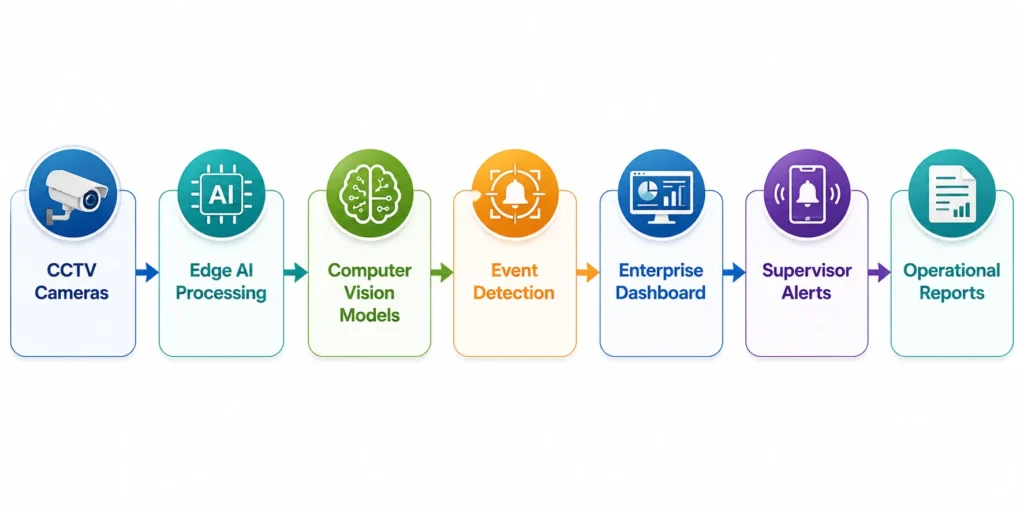
SPGS implemented a Continuous Safety Intelligence Platform powered by AI-Based PPE Detection, Computer Vision, Smart CCTV, Edge AI, and Intelligent Video Analytics.
Rather than using cameras solely for surveillance, the platform continuously analysed workplace activities to identify operational safety events. AI models verified PPE compliance, monitored restricted-area access, detected unsafe interactions between personnel and machinery, observed housekeeping conditions, and identified behaviours that could increase operational risk.
5. Technology Stack
Technology | Operational Responsibility |
Smart CCTV | Workplace activity observation |
Computer Vision | Safety behaviour recognition |
Edge AI | Real-time local analysis |
AI Video Analytics | Continuous event detection |
Industrial IoT | Environmental monitoring |
SCADA | Production process context |
MQTT | Operational event communication |
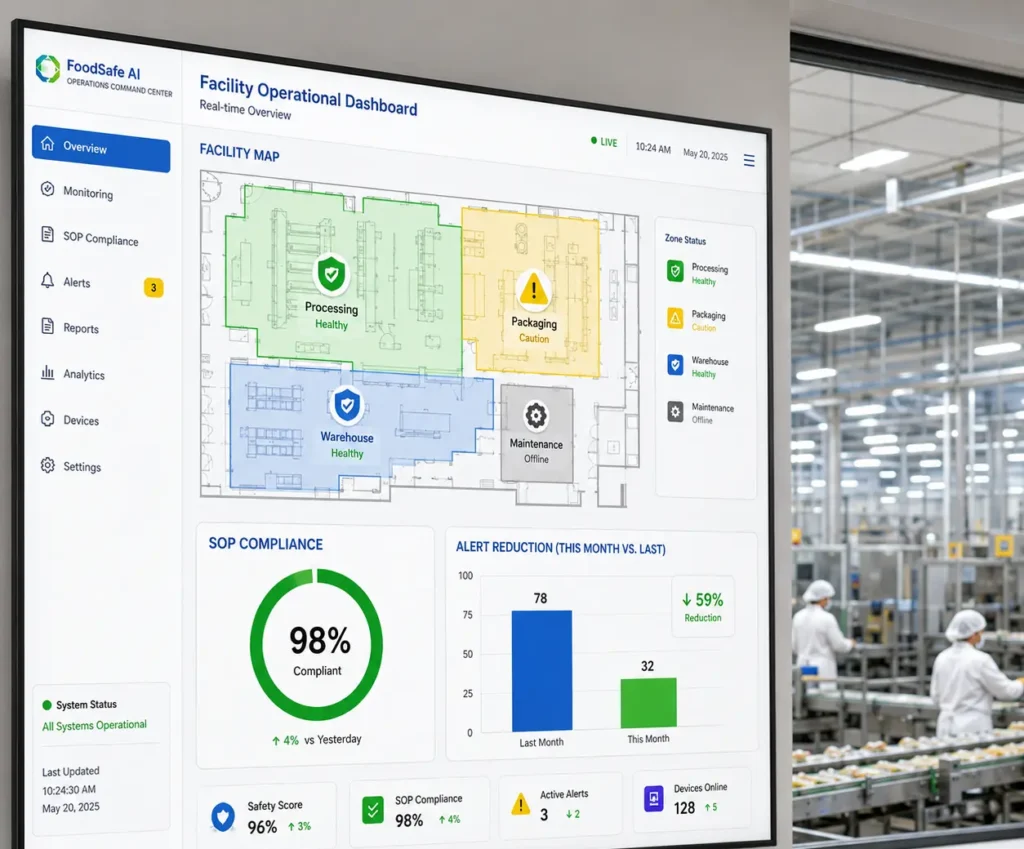
Enterprise AI Dashboard | Safety performance visibility |
Cloud AI | Enterprise-wide trend analysis |
Mobile Alerts | Immediate safety notifications |
6. Solution Architecture Diagram
7. Implementation Methodology
Deployment began by identifying high-risk operational areas including production lines, maintenance workshops, loading docks, warehouse zones, chemical handling areas, utility plants, and restricted access locations.
AI models were configured to recognise safety behaviours specific to each operational environment. Existing CCTV infrastructure was integrated with Edge AI devices to enable real-time event analysis while enterprise-wide safety definitions ensured consistent interpretation across all facilities.
8. AI Models & Video Analytics Features
AI capabilities were organised around workplace safety responsibilities.
Safety Function | AI Monitoring Capability |
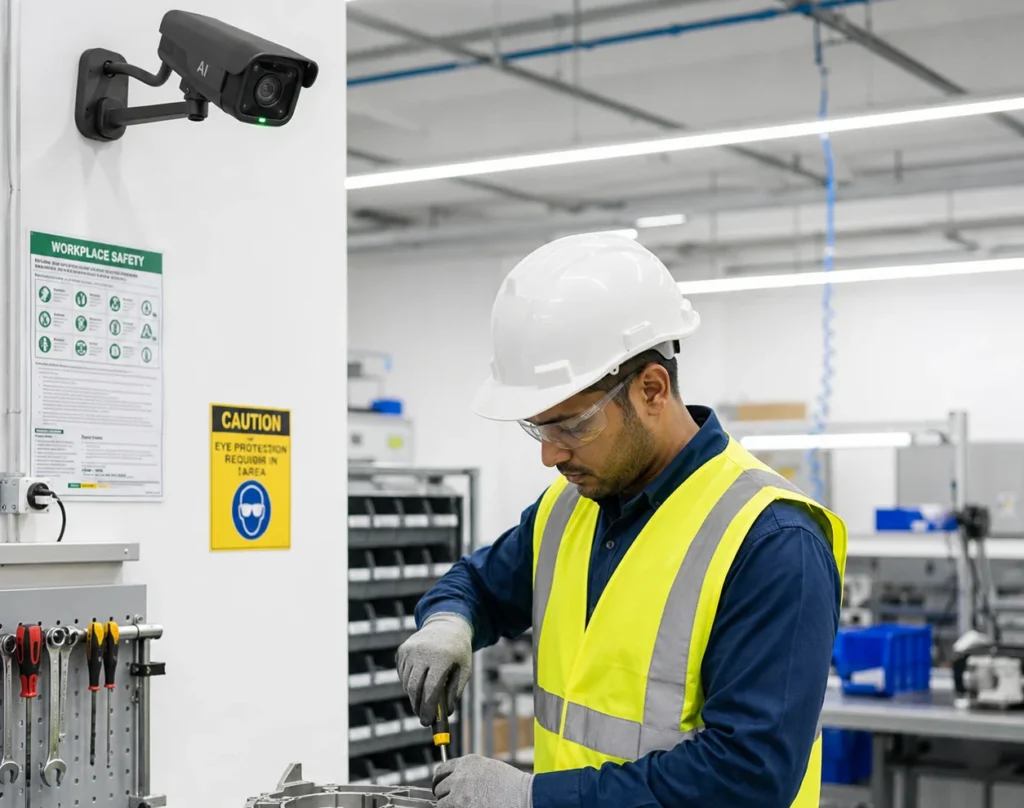
PPE Compliance | Helmet, safety vest, gloves, goggles and footwear detection |
Access Control | Restricted area monitoring |
Human–Machine Safety | Personnel proximity to operating equipment |
Vehicle Safety | Forklift and pedestrian interaction monitoring |
Working at Height | Safety harness verification |
Emergency Preparedness | Exit obstruction and evacuation route monitoring |
Housekeeping | Spill, obstacle and clutter detection |
SOP Compliance | Operational procedure verification |
9. System Integrations
The platform integrated with existing industrial safety and operational systems.
Integrated technologies included:
- Smart CCTV
- Video Management System (VMS)
- SCADA
- Industrial IoT Platforms
- Access Control Systems
- Incident Management Software
- ERP
- MQTT Brokers
- REST APIs
- Enterprise AI Dashboards
The solution strengthened existing safety processes without replacing established operational procedures.
10. Business Outcomes & KPIs
The greatest improvement was not simply detecting missing PPE—it was creating continuous visibility into workplace safety behaviour.
Business outcomes included:
- Enterprise-wide safety intelligence across all facilities.
- Consistent PPE compliance monitoring.
- Earlier identification of unsafe operational behaviours.
- Improved contractor and visitor safety oversight.
- Better coordination between safety, operations, maintenance, and security teams.
- Standardised safety reporting across multiple industrial sites.
- Enhanced audit readiness and regulatory compliance.
- Stronger safety culture supported by measurable operational evidence.
The organisation could understand how workplace safety evolved throughout daily operations rather than relying solely on scheduled inspections.
11. ROI & Cost Savings
Business value was achieved by improving risk awareness instead of increasing manual supervision.
The organisation reduced the effort required for routine safety inspections, improved utilisation of existing CCTV infrastructure, and strengthened compliance through continuous operational observation. Earlier identification of unsafe behaviours helped minimise operational disruptions, supported workforce training initiatives, and improved the effectiveness of safety management programmes across multiple facilities.
12. Lessons Learned
The project demonstrated that workplace safety is shaped by thousands of routine operational decisions made every day.
Periodic inspections remain important, but continuous observation provides a more complete understanding of how safety behaviours develop across an organisation. Measuring operational behaviour consistently enabled proactive coaching, stronger governance, and more informed safety decision-making.
13. Future Enhancements
The customer plans to enhance the platform with predictive safety risk scoring, Vision-Language Models (VLMs) for incident investigations, AI-powered safety copilots, Digital Twin integration for safety simulations, cross-site behavioural benchmarking, autonomous hazard prediction, workforce behavioural analytics, and enterprise safety maturity scorecards.
14. Related Industry Pages
- Smart Manufacturing
- Heavy Engineering
- Oil & Gas Facilities
- Chemical Processing Plants
- Warehousing & Logistics
- Mining Operations
- Construction & Infrastructure
15. Related Technology Pages
- AI-Based PPE Detection
- AI Video Analytics
- Computer Vision
- Smart CCTV
- Edge AI
- Workplace Safety Monitoring
- Intelligent Event Detection
- Operational Intelligence
- Industrial IoT
- Enterprise AI
16. Contact SPGS
SPGS helps industrial organisations transform conventional safety monitoring into Continuous Safety Intelligence using AI-Based PPE Detection, Computer Vision, Smart CCTV, Edge AI, and Intelligent Video Analytics. By continuously observing workplace behaviour across multiple facilities, organisations gain actionable operational insights that strengthen compliance, reduce risk, improve workforce awareness, and support safer, more resilient industrial operations without disrupting existing safety management processes.