
Operational Visibility Is the New Competitive Advantage
Business leaders no longer struggle with a lack of data they struggle with a lack of visibility. Production systems, warehouses, retail stores, and corporate facilities continuously generate operational information, yet critical decisions are often made using delayed reports or fragmented updates. By the time a problem reaches management, valuable time has already been lost.
Operational visibility addresses this challenge by providing a continuous view of what is happening across the enterprise. Instead of relying on isolated reports, organizations gain immediate awareness of activities, process deviations, and emerging risks, enabling faster and more informed decisions.
Why Visibility Is More Important Than Data Volume
Most enterprises already collect enormous amounts of operational data through cameras, sensors, enterprise applications, and production systems. The real challenge is connecting this information into a meaningful operational picture.
Without visibility, organizations frequently encounter:
- Delayed responses to operational issues
- Limited oversight across multiple facilities
- Manual investigations that consume valuable time
- Inconsistent compliance monitoring
- Difficulty identifying process inefficiencies
- Reduced confidence in operational decisions
Visibility transforms raw information into actionable intelligence that supports daily business operations.
Creating a Real-Time View of Enterprise Operations
Modern AI-powered monitoring platforms continuously analyze operational activities instead of simply storing information for later review. Through computer vision and real-time analytics, organizations receive immediate insights into workplace activities, equipment usage, workflow performance, and compliance status.
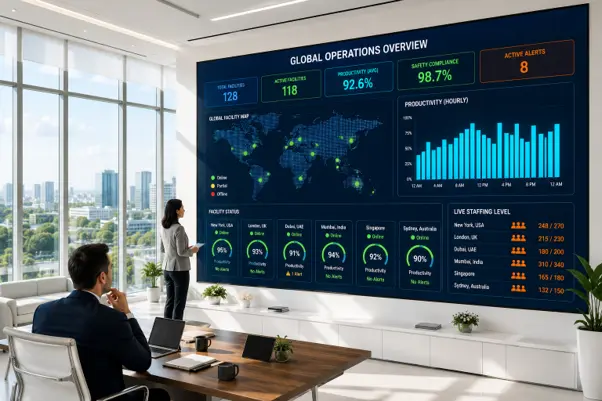
A centralized operational dashboard allows decision-makers to monitor multiple facilities simultaneously, making it easier to identify exceptions before they affect productivity.
Examples of operational visibility include:
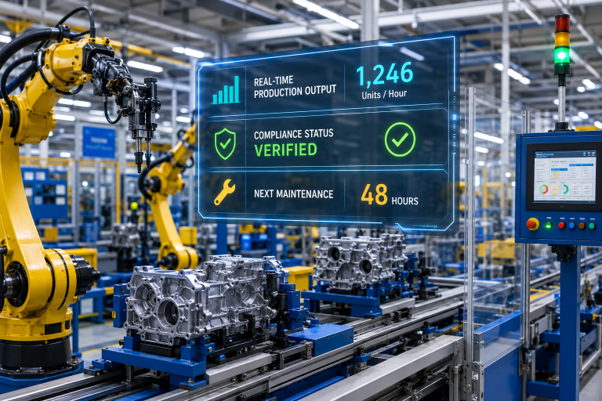
- Monitoring production flow
- Observing loading dock activity
- Tracking occupancy levels
- Detecting workflow bottlenecks
- Identifying safety deviations
- Measuring equipment utilization
- Supervising restricted area access
- Monitoring service queues
Rather than waiting for periodic reports, managers receive continuous operational awareness.
Comparing Traditional Oversight With Operational Visibility
Traditional Operational Oversight | Operational Visibility |
Periodic reports | Continuous operational insights |
Manual supervision | AI-assisted monitoring |
Reactive investigations | Immediate operational awareness |
Separate reporting systems | Unified enterprise dashboards |
Delayed management decisions | Faster data-driven decisions |
This transition enables organizations to spend less time gathering information and more time improving operations.
How Visibility Supports Better Business Decisions
Operational visibility improves decision-making because it provides current information instead of historical summaries.
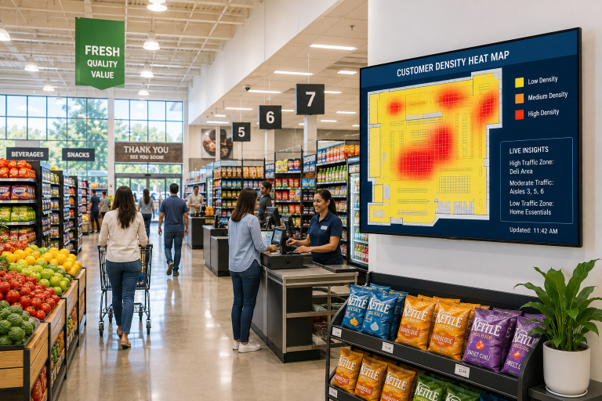
For example, supervisors can immediately recognize production delays before schedules are affected. Warehouse managers can identify congestion around loading areas before deliveries fall behind. Retail managers can monitor customer flow and staffing requirements throughout the day instead of reacting after service levels decline.
These insights help organizations:
- Improve operational efficiency
- Strengthen workplace safety
- Enhance compliance monitoring
- Optimize workforce allocation
- Reduce manual monitoring
- Improve customer service
- Increase resource utilization
- Support continuous operational improvement
Instead of making assumptions, leaders base decisions on live operational intelligence.
Visibility Across Multiple Business Locations
As organizations expand, maintaining consistent operational oversight becomes increasingly difficult.
Centralized visibility enables management teams to monitor facilities from a single platform while maintaining standardized operational practices across locations.
Enterprise-wide visibility supports:
- Multi-site performance monitoring
- Consistent compliance verification
- Unified operational reporting
- Faster incident response
- Better collaboration between locations
- Improved executive decision-making
This level of oversight becomes particularly valuable for organizations managing geographically distributed operations.
Business Outcomes That Strengthen Competitive Performance
Organizations investing in operational visibility often experience improvements that extend beyond security and monitoring.
Common business outcomes include:
- Faster operational response times
- Reduced downtime
- Better compliance performance
- Improved workplace safety
- Greater process consistency
- Increased operational transparency
- More efficient resource planning
- Higher productivity across facilities
- Stronger support for digital transformation
- Better strategic planning through operational intelligence
These improvements help businesses respond more effectively to changing operational conditions while maintaining consistent performance.
Transforming Visibility Into Business Performance
Competitive advantage increasingly depends on how quickly organizations understand and respond to operational conditions. Operational visibility provides that advantage by converting continuous business activities into meaningful insights that support faster decisions, stronger compliance, and improved operational efficiency. As enterprises continue to automate processes and expand across multiple locations, visibility will become an essential capability for achieving sustainable business performance and long-term operational excellence.
FAQ
What is operational visibility?
Operational visibility is the ability to continuously monitor business activities, workflows, and operational performance using real-time information from multiple systems.
How does operational visibility improve decision-making
It gives managers instant access to the state of operations, enabling them to see problems early and take action before they have an impact on company performance.
Which technologies support operational visibility?
AI video analytics, computer vision, edge AI, operational dashboards, event monitoring, and real-time analytics work together to deliver enterprise-wide visibility.
Can operational visibility support multiple facilities?
Yes. Centralized dashboards allow organizations to monitor performance, compliance, safety, and operational activities across multiple locations from a single interface.
Why is operational visibility becoming a competitive advantage?
Organizations that identify operational changes quickly can respond faster, optimize resources more effectively, reduce disruptions, and make better business decisions than competitors relying on delayed information.