
Modern Manufacturing Requires AI-Driven Exception Management Instead of Reactive Monitoring
A production manager begins the morning by opening five different dashboards. One displays machine availability, another shows production output, a third tracks maintenance alerts, while separate systems monitor cameras and quality inspections. Hundreds of notifications appear, yet only one of them will actually interrupt production during the shift. Finding the events that require quick attention is the problem, not a lack of data.
Manufacturers are now moving beyond traditional monitoring toward AI-driven exception management, where artificial intelligence filters routine operational activity, highlights only abnormal conditions, and helps teams respond before disruptions spread across the factory.
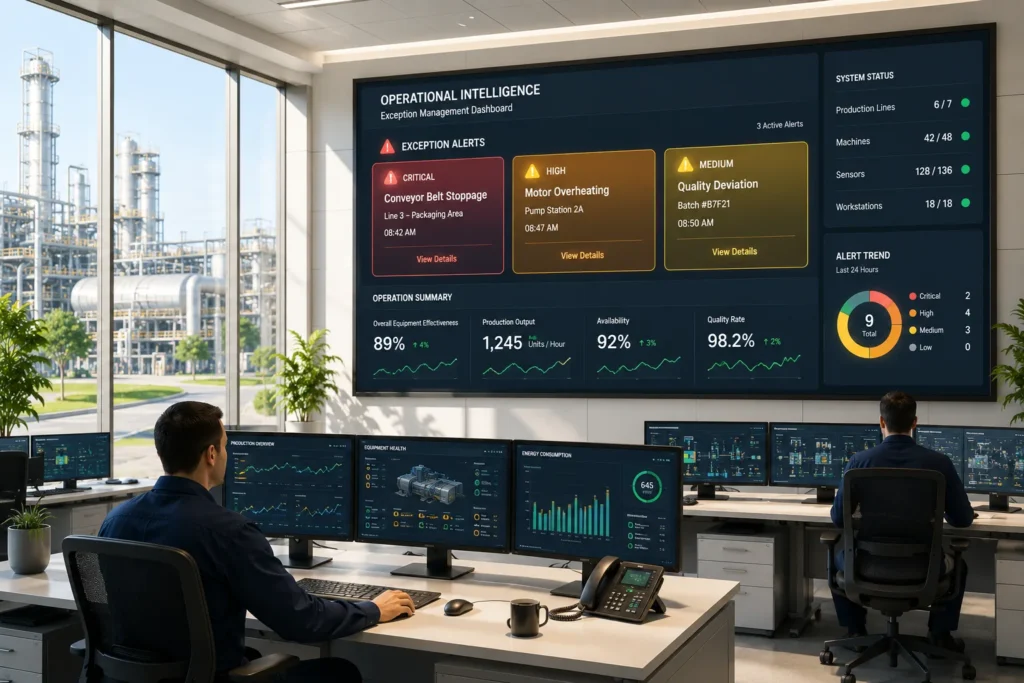
The Real Cost of Treating Every Alert the Same
Factories produce thousands of operational events every hour.
Most represent expected activity:
- Machines completing normal production cycles.
- Employees following standard operating procedures.
- Materials moving between workstations.
- Equipment operating within acceptable limits.
- Environmental conditions remaining stable.
When every event receives the same level of attention, operators eventually experience alert fatigue. Important issues become harder to identify because they are buried among routine notifications.
The objective is no longer to monitor everything, it is to identify what deserves immediate action.
Imagine a Typical Production Shift
Consider two different factories operating under similar conditions. In the first case, the production dashboard shows normal indicators even when a packaging machine starts to slow down a little. As time passes, operators eventually notice cartons accumulating downstream, and maintenance is only called after production output has already declined. This delay forces adjustments in inventory schedules and leads to potential shipment delays. In contrast, in a factory using AI-driven exception management, the same slowdown is detected immediately through Real-Time Analytics. Computer Vision identifies early signs of product accumulation, and historical machine data highlights patterns associated with previous mechanical issues. Instead of multiple alerts, operations receives a single, prioritized notification explaining both the issue and its potential impact. Maintenance teams intervene promptly, preventing disruption to production targets. The key difference lies not in faster monitoring, but in the ability to understand and act on operational changes at the right time.
Exceptions That Matter Most
Every factory has different priorities, but AI commonly identifies exceptions such as:
Operational Area | Example Exception |
Production | Unexpected reduction in throughput |
Equipment | Increasing vibration or overheating |
Quality | Repeated product rejection patterns |
Material Flow | Unexpected accumulation of finished goods |
Workplace Safety | Unsafe equipment interaction detected |
SOP Monitoring | Required production steps skipped |
These events receive attention because they influence operational performance rather than simply recording activity.
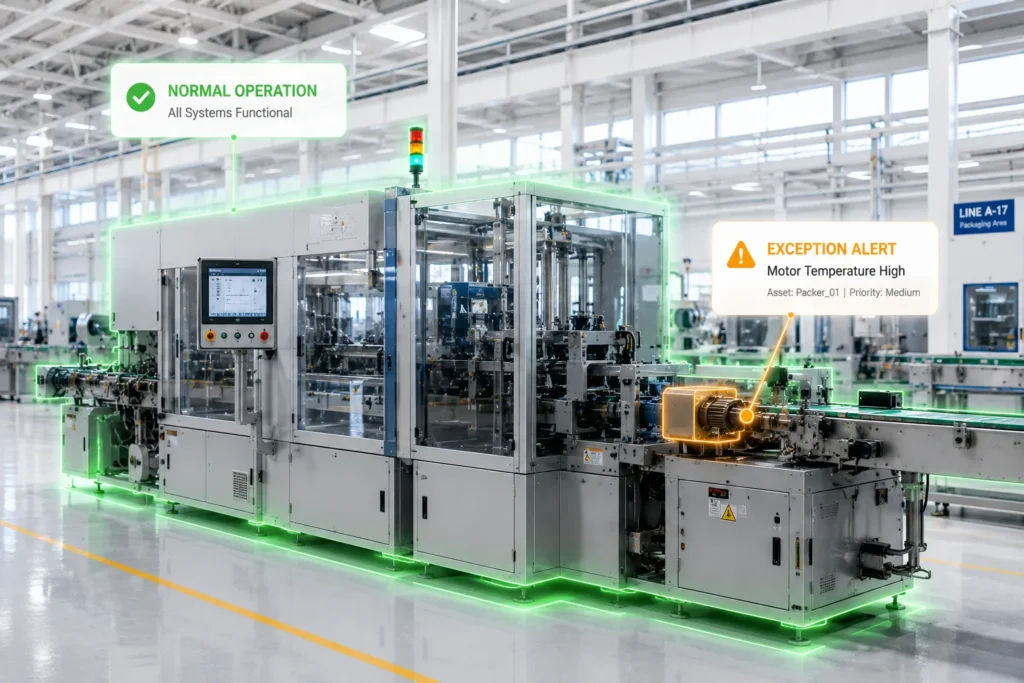
Shifting From Detection to Operational Prioritization
Traditional monitoring answers one question:
“Did something happen?”
AI-driven exception management answers additional questions that are far more valuable.
- Does this event require intervention?
- Could it interrupt downstream operations?
- Has this pattern appeared before?
- Which department should respond first?
- What evidence supports the alert?
By adding operational context, AI Automation transforms isolated events into actionable business decisions.
Where AI Creates the Greatest Manufacturing Value
Instead of replacing operators, AI helps each team focus on its own responsibilities.
Production supervisors concentrate on maintaining throughput.
Maintenance engineers receive equipment-related anomalies before failures occur.
Quality teams investigate only recurring inspection issues.
Plant managers monitor Operational Intelligence across multiple production lines without reviewing every operational event.
Executives gain AI Dashboards summarizing manufacturing performance rather than hundreds of machine notifications.
Each department gets data specific to its choices.
Making Existing Systems Work Together
Most manufacturers already operate multiple digital systems.
Rather than replacing them, AI combines information from:
- AI Video Analytics
- Industrial AI platforms
- PLC and SCADA systems
- IoT devices
- Compliance Monitoring applications
- Enterprise AI reporting platforms
Connecting these systems allows AI to evaluate operational events as complete business processes instead of isolated technical alerts.
Questions Every Manufacturer Should Ask Before Implementing AI
Before investing in an exception management platform, organizations should evaluate their operational maturity.
Questions worth considering include:
- Which production interruptions occur most frequently?
- Which alerts rarely require action?
- Where do operators spend the most investigation time?
- Which production assets create the greatest financial impact when unavailable?
- How quickly can teams currently identify the root cause of operational issues?
The answers help determine where AI will deliver measurable operational improvements first.
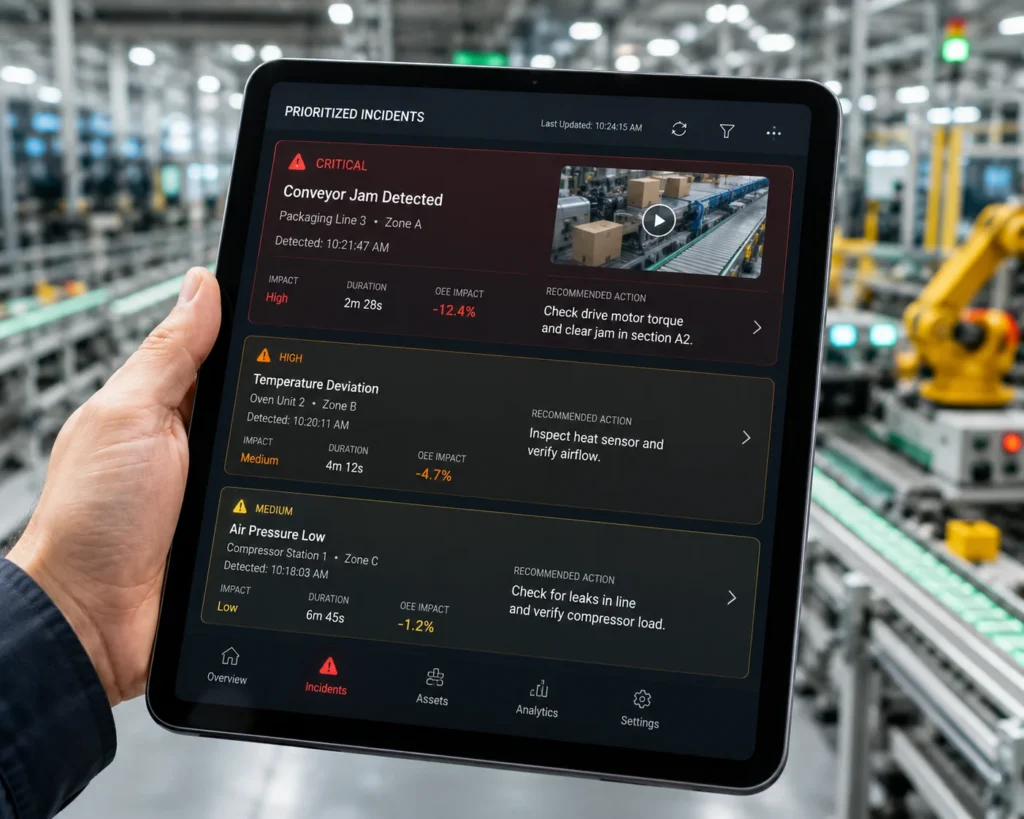
From Monitoring Machines to Managing Manufacturing Performance
Manufacturing success increasingly depends on how quickly organizations recognize meaningful operational changes rather than how many dashboards they monitor. AI-driven exception management enables Smart Manufacturing by filtering routine activity, connecting operational events, and directing attention to issues that influence production, quality, and reliability. As Digital Transformation continues across industrial facilities, manufacturers that prioritize exceptions instead of continuously watching every process will create faster, more focused, and more resilient operations.
FAQs
What is exception management in manufacturing?
Exception management is an operational approach where AI identifies abnormal events that require action while filtering routine production activities.
Why is reactive monitoring becoming less effective?
Modern factories generate large volumes of operational data, making it difficult for teams to identify genuinely important events using traditional monitoring alone.
How does AI determine an operational exception?
AI evaluates production patterns, equipment behavior, Computer Vision insights, and historical operating data to identify deviations from normal conditions.
Can exception management improve maintenance planning?
Yes. By identifying abnormal equipment behavior early, maintenance teams can address issues before they lead to unplanned downtime.
Does exception management require replacing existing factory systems?
No. Most solutions integrate with existing production equipment, sensors, cameras, and operational software to enhance decision-making rather than replace current infrastructure.