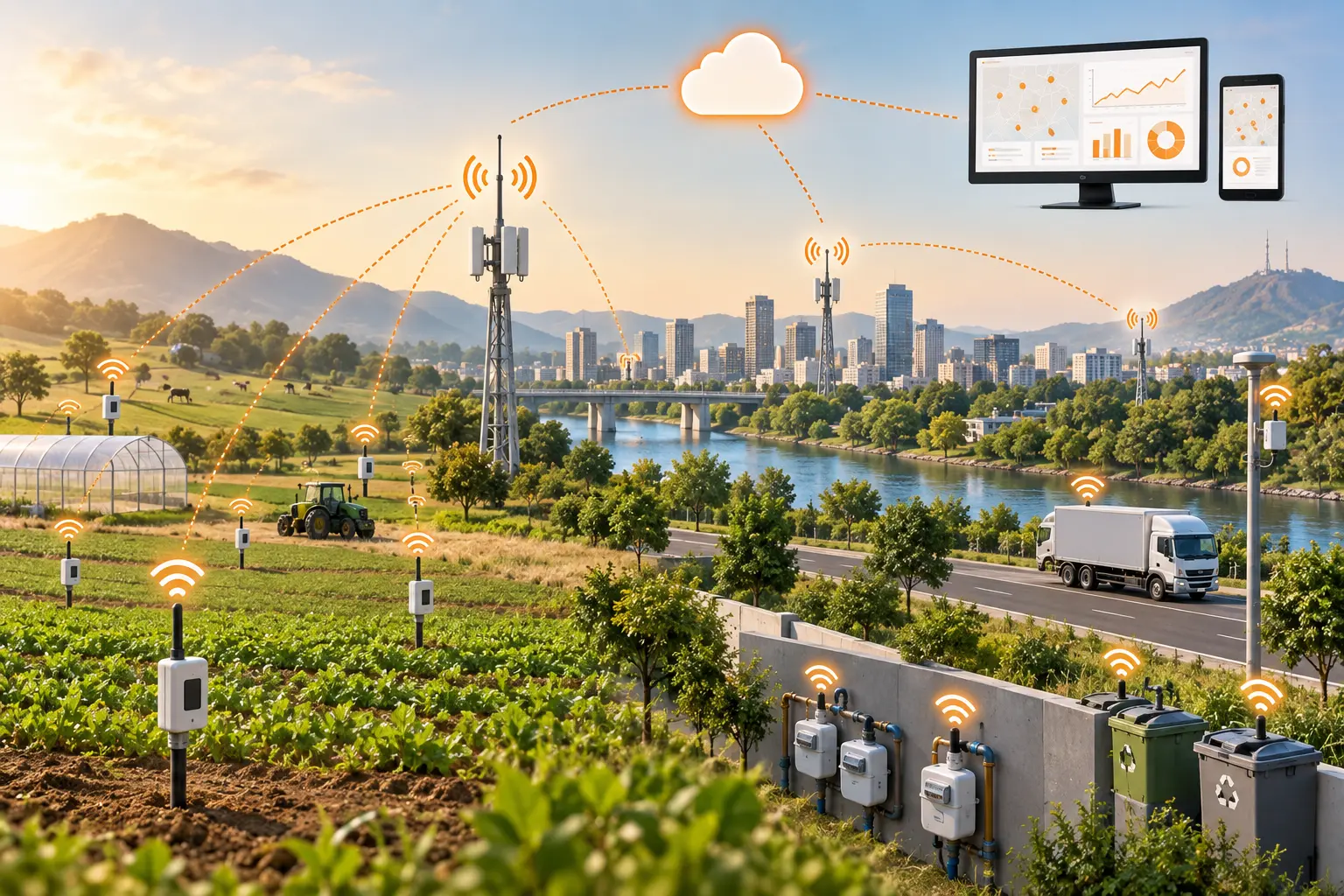
LoRaWAN, short for Long Range Wide Area Network, is a wireless communication protocol designed to connect battery-powered devices over long distances while using very little energy. It is built for applications that send small amounts of data at intervals rather than requiring continuous high-speed communication. Devices communicate with gateways, which forward their data to a central network server for processing and management.
For example, a smart agriculture system can use LoRaWAN sensors to measure soil moisture across a large field and periodically transmit readings to a central application. Because the sensors consume little power, they can operate for long periods on batteries. LoRaWAN is commonly used for environmental monitoring, smart cities, agriculture, utility metering, asset tracking, and industrial sensing.