
Intelligent Business Monitoring Using Edge Computing
A distribution center receives thousands of operational events every hour. Forklifts move inventory between storage locations, loading docks process outbound shipments, production lines maintain strict schedules, and employees work across multiple operational zones. Waiting for this information to travel to a centralized cloud before making decisions can introduce delays that affect productivity, safety, and service quality.
For this reason, a lot of businesses are implementing edge computing. By processing data closer to where it is generated, organizations can monitor operations in real time, respond faster to changing conditions, and reduce dependence on centralized infrastructure.
A Smarter Monitoring Workflow
Edge Computing creates a streamlined decision process that minimizes delays.
Operational Stage | Edge Computing Function |
Capture | Cameras continuously observe business operations |
Analyze | Edge AI processes video locally |
Detect | Computer Vision identifies operational events |
Respond | Real-time alerts are generated instantly |
Report | AI Dashboards receive summarized operational data |
This distributed approach enables faster decisions while reducing unnecessary data transfers.
Business Monitoring Without Constant Cloud Dependence
Edge-based monitoring supports continuous operational visibility across multiple environments.
Manufacturing Facilities
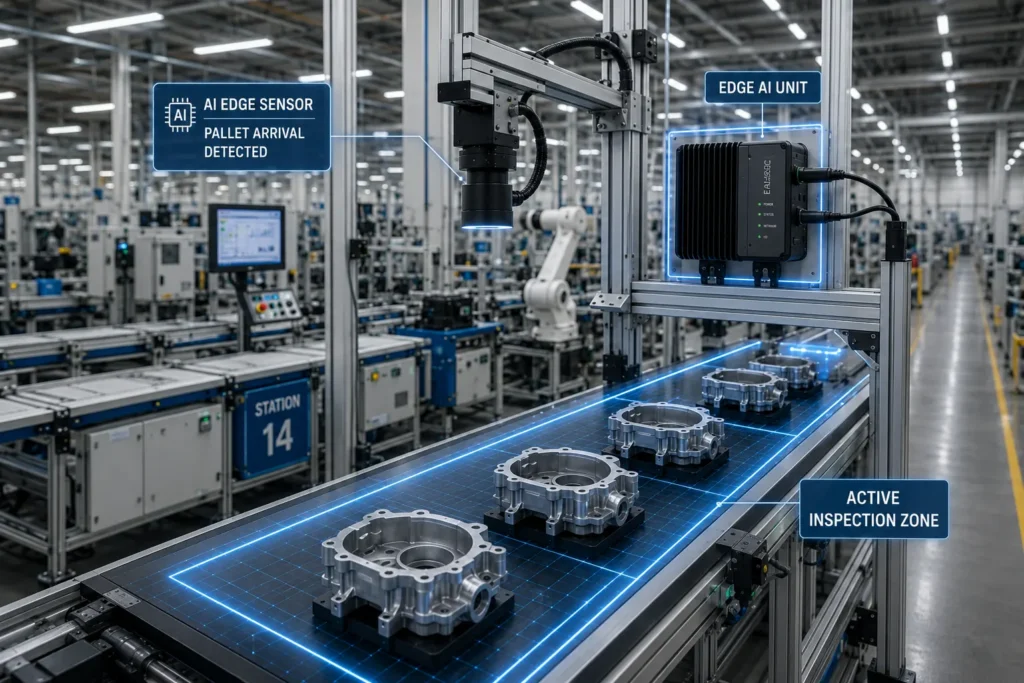
Monitor production flow, machine interaction, equipment utilization, and Workplace Safety with low-latency processing.
Warehousing and Logistics
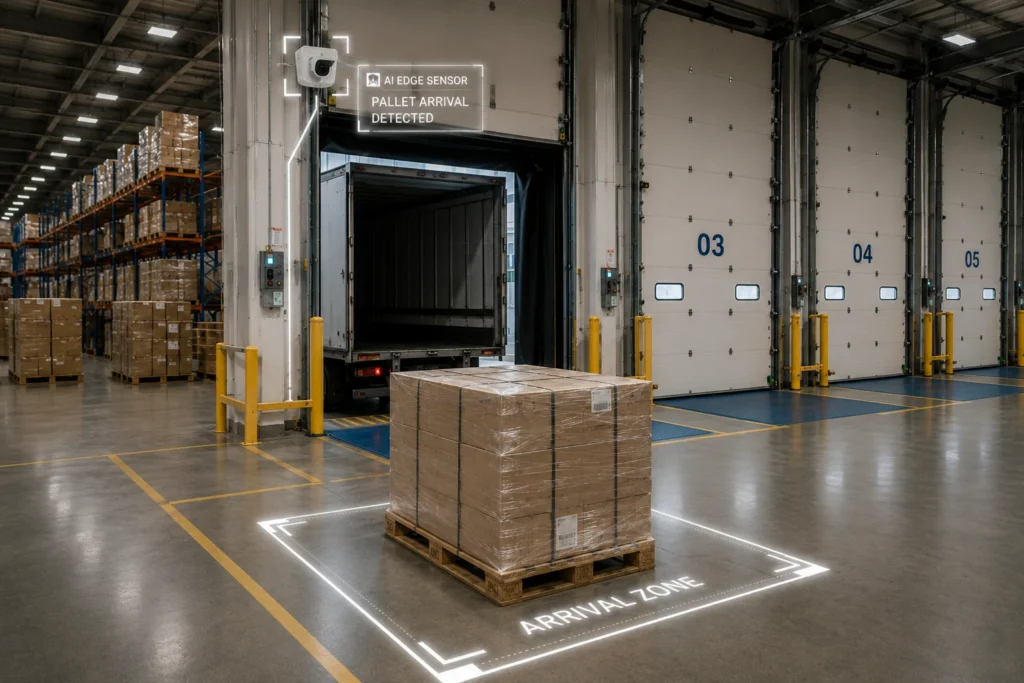
Track inventory movement, forklift routes, loading operations, and dock activities through Real-Time Analytics.
Retail Stores
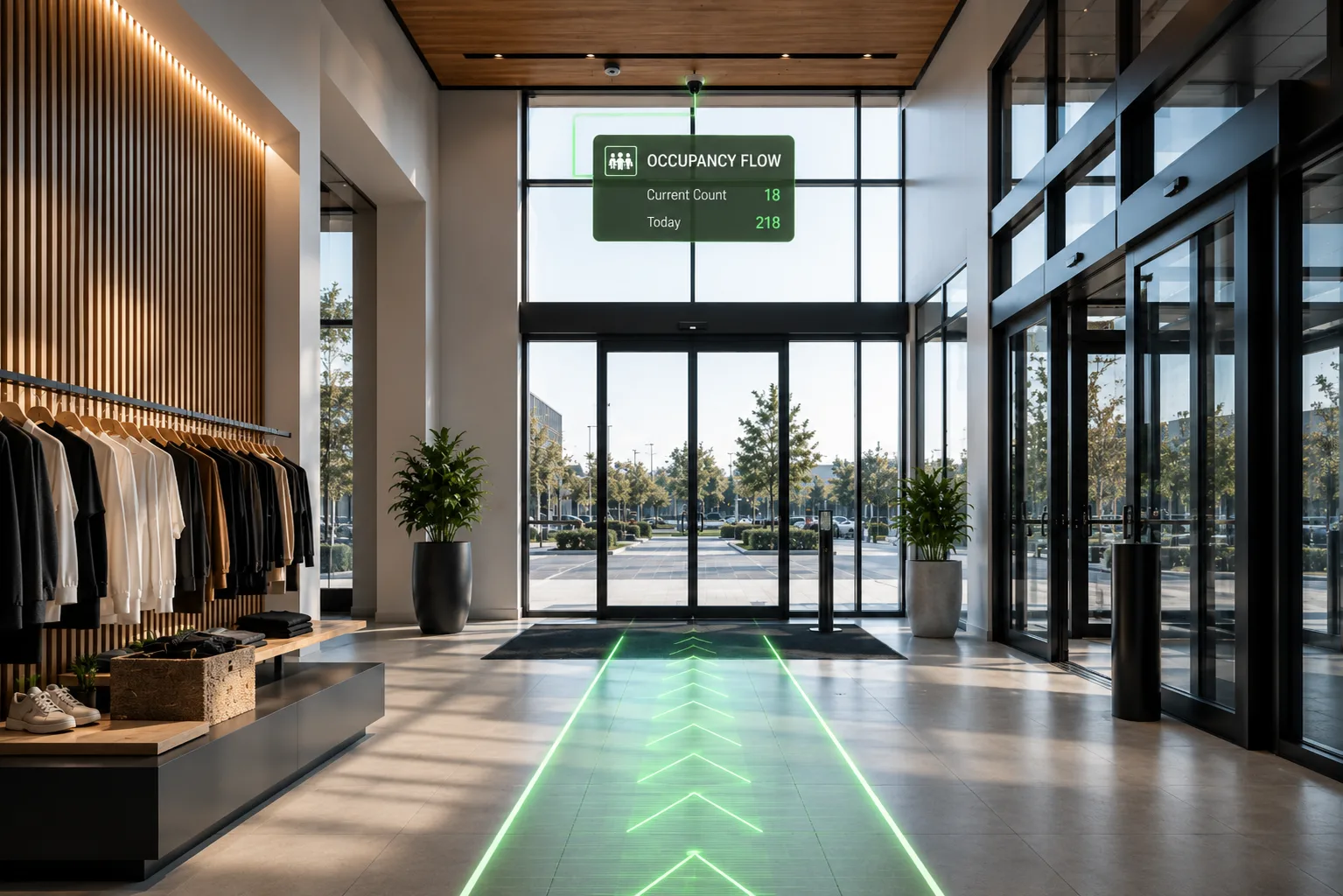
Analyze customer movement, queue performance, occupancy levels, and service efficiency locally without transmitting every video stream.
Corporate Campuses
Monitor visitor movement, building occupancy, restricted areas, and facility operations while improving operational responsiveness.
Transportation and Infrastructure
Support vehicle monitoring, platform activity, and operational safety in locations where reliable connectivity may vary.
Why Local Intelligence Matters
Conventional monitoring systems frequently transmit sensor and video data to distant computers for analysis. While effective for historical reporting, this approach may not always meet the demands of environments where decisions must be made within seconds.
Edge Computing changes this model by performing AI analysis directly at the facility or near the connected devices.
This enables businesses to:
- Detect operational events immediately.
- Reduce network bandwidth usage.
- Improve system responsiveness.
- Continue monitoring during network interruptions.
- Support time-sensitive business operations.
Instead of moving every piece of data across the network, only meaningful operational insights are transmitted.
Edge Computing vs Centralized Processing
Edge Computing | Centralized Processing |
Local data processing | Remote cloud processing |
Faster operational response | Higher communication latency |
Reduced bandwidth consumption | Continuous high-volume data transfer |
Supports intermittent connectivity | Requires stable network availability |
Immediate event detection | Delayed operational insights |
Better scalability across facilities | Greater dependence on centralized resources |
Many organizations combine both approaches to balance real-time monitoring with enterprise-wide reporting.
Making Every Camera More Intelligent
With edge computing, cameras become sophisticated operational sensors rather than passive recording equipment.
Instead of simply storing video, Edge AI can:
- Detect safety violations.
- Monitor operational workflows.
- Recognize equipment anomalies.
- Identify unauthorized access.
- Track inventory movement.
- Support Compliance Monitoring.
- Generate operational alerts.
This allows organizations to focus attention on important events instead of reviewing hours of recorded footage.
Implementing Edge-Based Business Monitoring
Organizations achieve the best outcomes by deploying Edge Computing strategically.
Recommended implementation steps include:
- Identify operational areas requiring immediate response.
- Connect existing IP cameras with Edge AI devices.
- Define monitoring rules for critical business processes.
- Integrate alerts with operational workflows.
- Centralize dashboards for enterprise-wide visibility.
- Expand deployment gradually across facilities.
A phased rollout reduces complexity while demonstrating measurable business value.
Enabling Faster Decisions Across the Enterprise
Business performance increasingly depends on how quickly organizations recognize and respond to operational changes. Intelligent monitoring powered by Edge Computing enables enterprises to analyze events where they occur, deliver immediate operational insights, and improve decision-making without overwhelming network infrastructure. By combining Edge AI, Computer Vision, AI Video Analytics, Operational Intelligence, and Real-Time Analytics, organizations can strengthen compliance, improve workplace safety, optimize operations, and accelerate their digital transformation journey.
Frequently Asked Questions
What is Edge Computing in business monitoring?
Edge Computing processes operational data close to where it is generated, enabling faster analysis and quicker responses than relying solely on centralized cloud systems.
Why is Edge Computing important for AI Video Analytics?
It reduces latency by analyzing video locally, allowing organizations to detect events and generate alerts almost instantly.
Can Edge Computing work with existing cameras?
Yes. Many Edge AI solutions integrate with existing IP camera infrastructure, allowing businesses to enhance monitoring without replacing all cameras.
Which industries benefit most from Edge-based monitoring?
Manufacturing, warehousing, retail, transportation, healthcare, energy, construction, education, hospitality, and corporate facilities all benefit from local AI processing.
Does Edge Computing replace cloud platforms?
No. Most organizations use a hybrid architecture where Edge Computing handles real-time processing while centralized platforms manage reporting, analytics, long-term storage, and enterprise-wide insights.