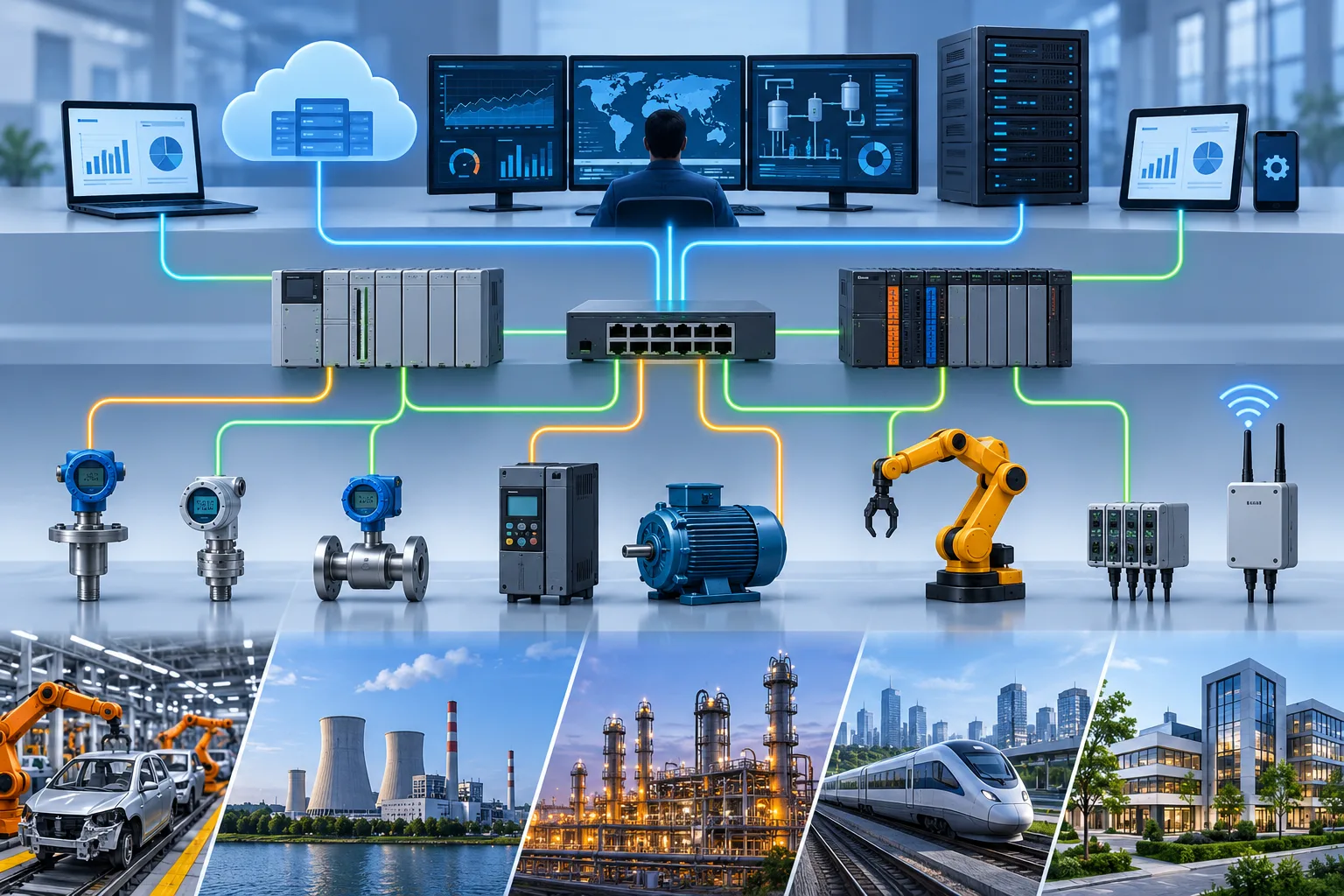
An Industrial Protocol is a standardized set of communication rules that allows machines, controllers, sensors, instruments, and software systems to exchange data within an industrial environment. It defines how information is formatted, transmitted, addressed, and interpreted so that equipment from different manufacturers can communicate reliably. Industrial protocols may support functions such as real-time control, device monitoring, diagnostics, synchronization, and data exchange across automation networks.
Industrial Protocols are widely used in manufacturing, energy, utilities, transportation, building automation, and process industries. Common examples include Modbus, PROFINET, EtherNet/IP, OPC UA, CAN, and HART. They enable communication between programmable logic controllers, remote terminals, sensors, drives, robots, and supervisory systems. By providing standardized communication, industrial protocols improve interoperability, simplify system integration, support automation, and allow operational data to move efficiently between field devices and higher-level control or analytics platforms.