
Industrial AI Platforms Must Combine Video Analytics, Sensor Intelligence, and Process Automation
Selecting an Industrial AI platform has become more complex than choosing software that can detect defects or monitor production lines. Manufacturing leaders are now asking a different question: Can one platform connect operational events, equipment intelligence, and business workflows into a single decision-making system?
Many factories already use cameras, machine sensors, programmable controllers, and production management software. The problem is that these technologies frequently function on their own. Operators switch between applications, maintenance teams work from separate alerts, and managers rely on reports generated long after production has finished.
The next generation of Industrial AI platforms is moving beyond isolated monitoring by bringing together visual intelligence, sensor data, and automated business processes into one operational ecosystem.
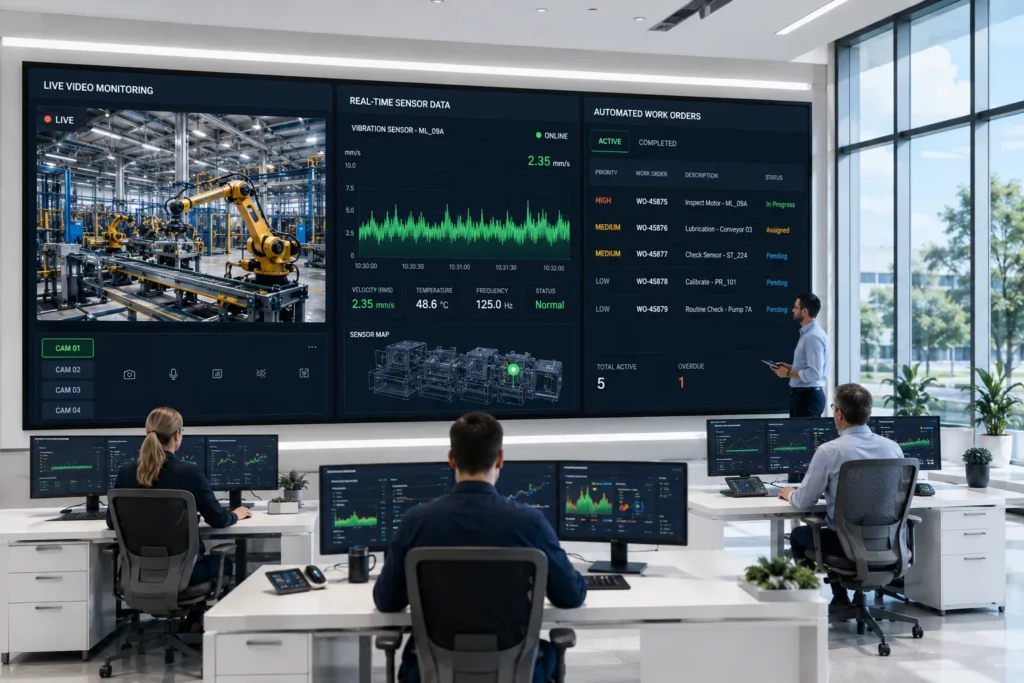
The Three Pillars of a Unified Industrial AI Platform
Successful Industrial AI platforms are typically built around three complementary capabilities.
Visual Intelligence
AI Video Analytics and Computer Vision observe production environments continuously.
Typical applications include:
- Production line monitoring
- Product counting
- Workplace Safety observation
- SOP Monitoring
- Material movement verification
- Restricted-area detection
Video provides context that traditional machine data cannot capture.
Sensor Intelligence
Industrial sensors measure operational conditions that are invisible to cameras.
Examples include:
- Temperature fluctuations
- Machine vibration
- Power consumption
- Environmental conditions
- Equipment operating status
- Process variables from SCADA systems
Sensor intelligence helps identify performance changes before they affect production.
Process Automation
Only when information results in action does it become valuable.
AI Automation enables platforms to:
- Assign incidents automatically.
- Generate maintenance requests.
- Escalate unresolved events.
- Notify responsible departments.
- Record operational evidence.
- Support Compliance Monitoring workflows.
This transforms monitoring into continuous operational execution.
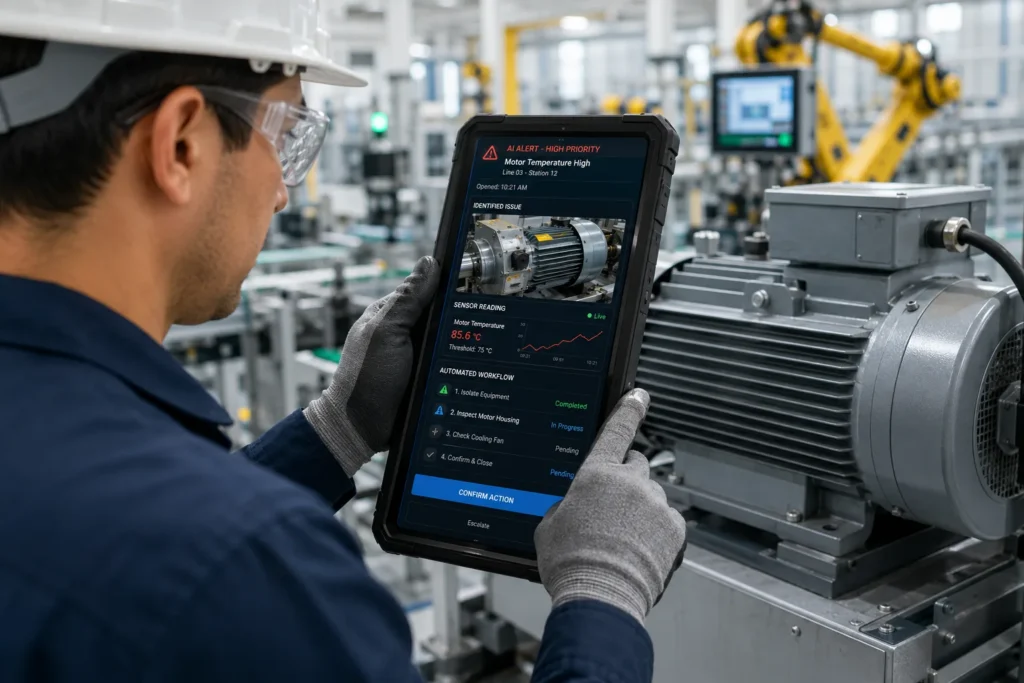
What Should an Industrial AI Platform Actually Deliver?
A good platform should be able to do more than just gather data. It need to assist operations teams in comprehending, setting priorities, and responding to manufacturing events.
When evaluating a solution, manufacturers should look for capabilities that answer questions such as:
- Can production issues be detected automatically?
- Does the platform correlate events from multiple systems?
- Can workflows be triggered without manual intervention?
- Will operations teams receive only meaningful alerts?
- Can decisions be standardized across multiple facilities?
These capabilities determine whether AI becomes a reporting tool or an operational management platform.
Why Integration Matters More Than Individual Features
Adding more AI features does not automatically improve factory performance.
A platform becomes valuable when every operational event contributes to a connected workflow.
Platform Capability | Business Contribution |
Video Analytics | Visual operational awareness |
Sensor Intelligence | Equipment and environmental visibility |
Process Automation | Faster operational response |
AI Dashboards | Centralized decision support |
Operational Intelligence | Unified enterprise visibility |
The objective is to reduce operational complexity rather than increase it.
Questions to Ask Before Investing
Rather than comparing software feature lists, decision-makers should evaluate how well a platform supports long-term operational goals.
Important questions include:
- Will the platform integrate with existing manufacturing systems?
- Can it scale across multiple plants?
- Does it support Edge Analytics for local decision-making?
- How are incidents prioritized?
- Can different departments use the same operational data?
- Does it reduce manual investigations?
- How easily can workflows be customized?
The answers often have a greater impact than individual AI models or hardware specifications.
Where Manufacturers See the Fastest Returns
Organizations typically realize measurable value when connected intelligence replaces isolated monitoring.
Common operational improvements include:
- Faster response to production interruptions
- Better equipment utilization
- Reduced manual inspection effort
- Improved maintenance coordination
- More consistent production processes
- Shorter incident investigation times
- Improved cross-functional collaboration
These outcomes are achieved because every department works from the same operational information.
Preparing for the Next Stage of Smart Manufacturing
As factories become more connected, Industrial AI platforms will increasingly function as operational coordination systems rather than monitoring applications. Enterprise AI will continuously combine Computer Vision, Industrial AI, Real-Time Analytics, AI Dashboards, and Intelligent Operations to support faster decisions while reducing operational complexity. Instead of adding another dashboard, manufacturers will invest in platforms that connect people, equipment, and business processes into a single operational framework.
Developing an AI System to Support the Whole Factory
Manufacturing competitiveness increasingly depends on how effectively organizations connect operational information across the factory. A platform that combines AI Video Analytics, sensor intelligence, and process automation enables businesses to move beyond isolated alerts and create coordinated, data-driven operations. As Digital Transformation accelerates, manufacturers that prioritize integration over standalone tools will be better positioned to improve productivity, strengthen operational resilience, and support continuous process improvement.
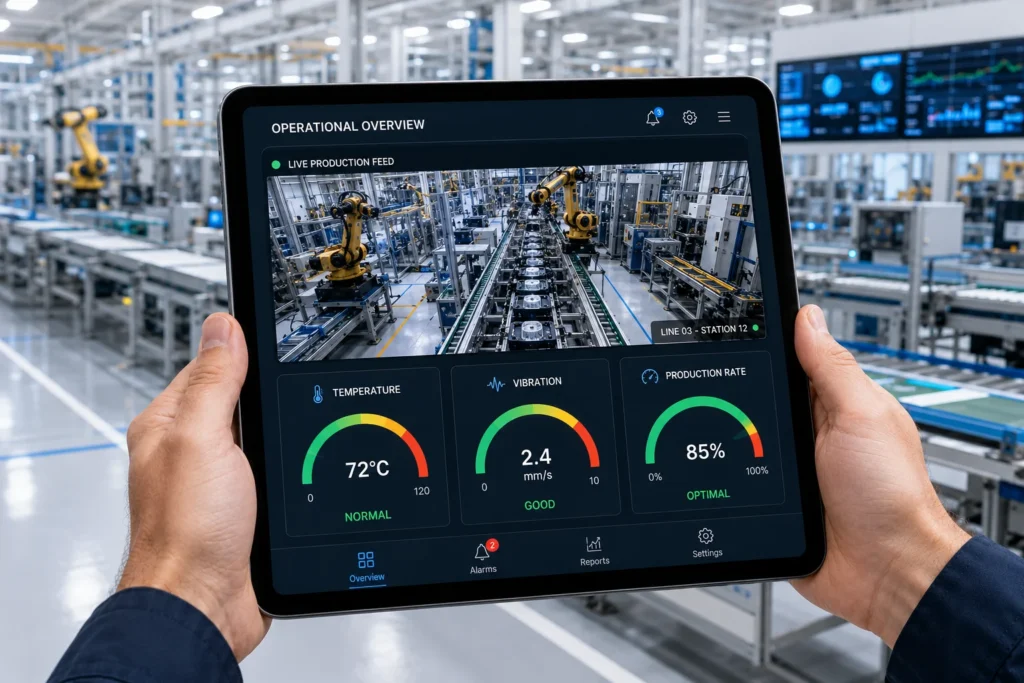
FAQs
What is an Industrial AI platform?
An Industrial AI platform integrates operational technologies such as cameras, sensors, automation systems, and business applications to provide centralized monitoring, analysis, and workflow automation.
Why should sensor intelligence and video analytics collaborate?
Video provides visual context, while sensors measure machine and environmental conditions. Combining both improves operational understanding and decision-making.
What role does process automation play in Industrial AI?
Process automation converts AI-generated insights into actions such as maintenance requests, alerts, approvals, and compliance workflows without requiring manual intervention.
Can Industrial AI platforms integrate with existing factory systems?
Yes. Most enterprise platforms are designed to integrate with cameras, SCADA systems, IoT devices, ERP software, and other operational technologies.
What is the biggest advantage of a unified Industrial AI platform?
A unified platform reduces operational silos by bringing video analytics, sensor data, and automated workflows together, enabling faster and more informed operational decisions.