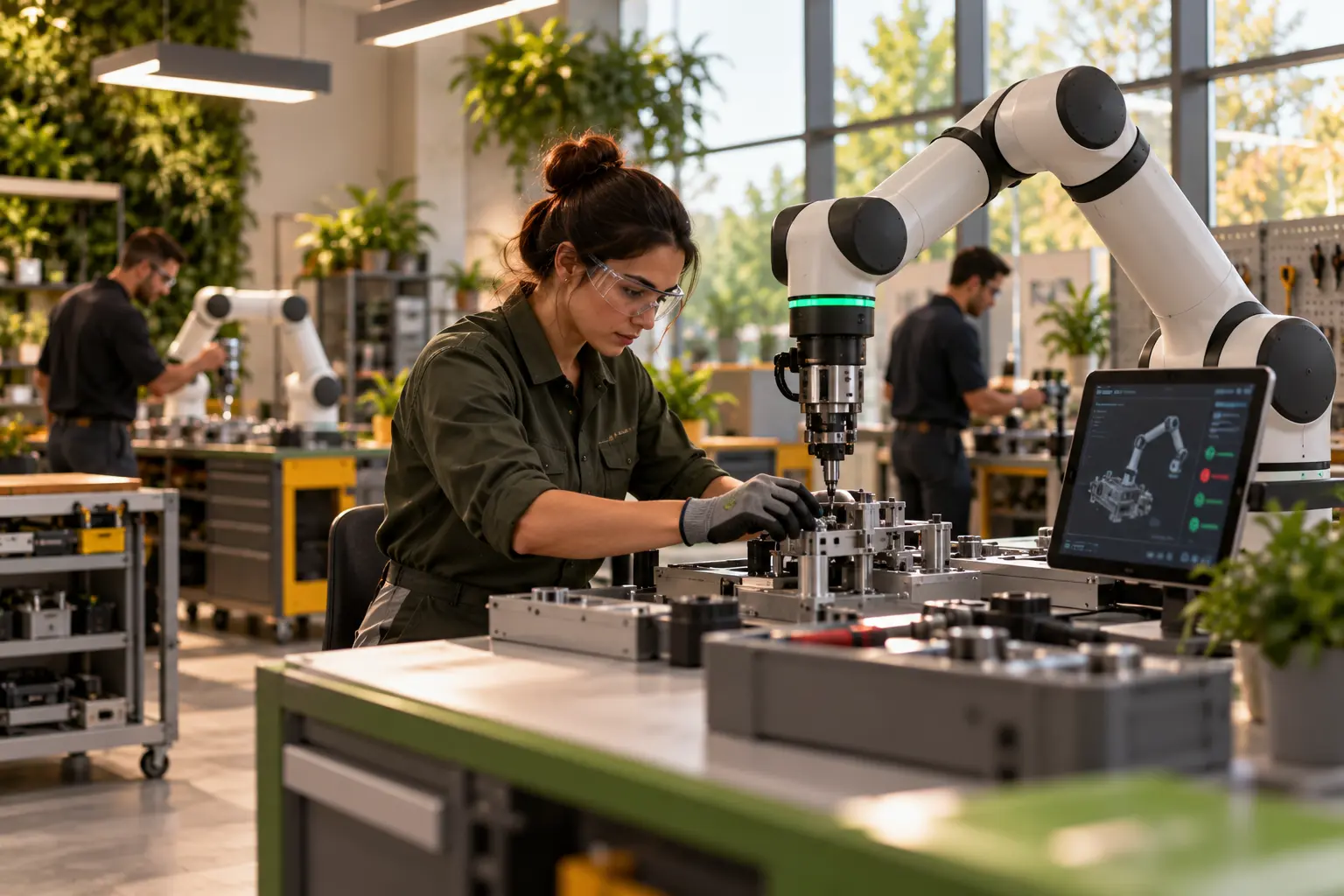
Human Machine Collaboration is an approach in which people and machines work together to complete tasks by combining human skills with automated capabilities. Machines may perform repetitive, precise, or data-intensive operations, while people provide judgment, creativity, problem-solving, and decision-making. Communication between humans and machines can occur through touchscreens, sensors, voice commands, robots, or intelligent software systems.
Human Machine Collaboration is commonly used in manufacturing, healthcare, logistics, construction, research, and service industries. Its purpose is to improve productivity, accuracy, safety, and efficiency while allowing people to focus on tasks that require human expertise. Collaborative robots, for example, can assist workers with lifting, assembly, or inspection without completely replacing human involvement. By combining machine speed and consistency with human flexibility and reasoning, collaborative systems can support more effective and adaptable workflows.