
How Secure Is Edge AI Processing?
Every second, organizations generate massive amounts of operational data through cameras, sensors, and connected devices. In industries where sensitive information is involved, sending all this data to remote cloud servers can introduce concerns about privacy, cybersecurity, latency, and regulatory compliance. As a result, many enterprises are adopting Edge AI to process data closer to where it is generated.
Edge AI improves security by performing AI inference directly on local devices such as industrial gateways, smart cameras, or on-premises servers. Instead of continuously transmitting raw video or operational data across networks, only relevant events, alerts, or analytics need to be shared. This approach reduces the exposure of sensitive information while supporting faster and more resilient operations.
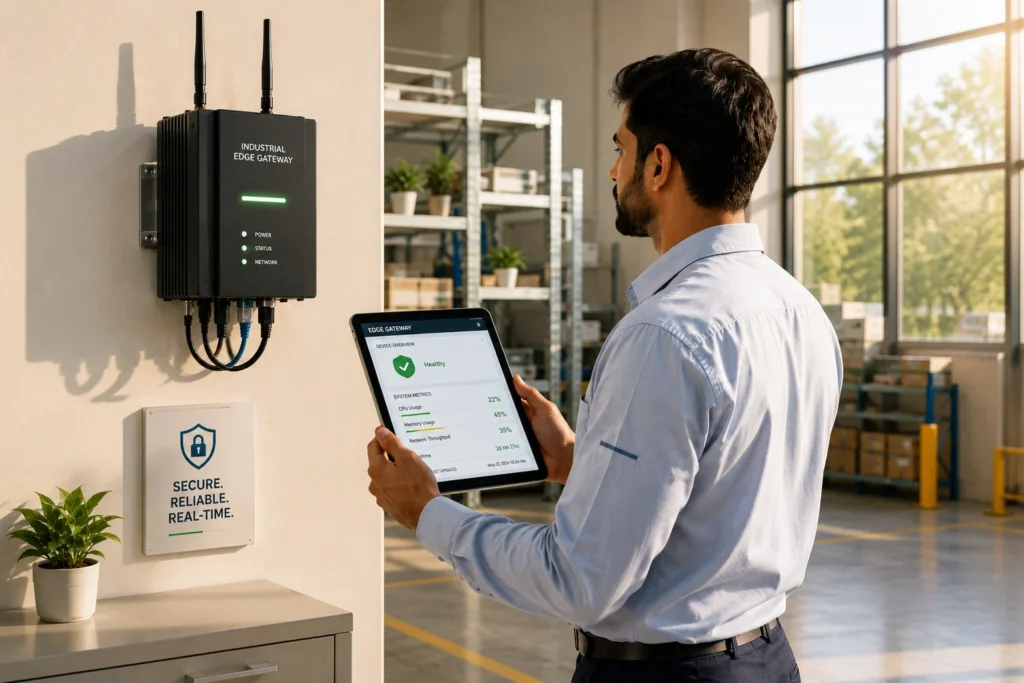
Why Data Processing Location Matters
Traditional cloud-based AI often requires continuous data transmission to centralized servers for analysis. While effective for many applications, this model can increase network dependency and expand the attack surface if large volumes of sensitive data move across public or private networks.
Edge AI changes this approach by analyzing information at or near the source. Keeping most processing local reduces unnecessary data movement and gives organizations greater control over how operational information is stored, accessed, and shared.
Security Advantages of Edge AI
Edge AI provides several security benefits when implemented with appropriate cybersecurity practices.
Security Aspect | Edge AI Processing | Operational Benefit |
Data Exposure | Most data remains on local devices | Lower risk of unnecessary data transfer |
Network Dependency | Processes data locally | Reduced reliance on constant internet connectivity |
Response Time | Real-time local analysis | Faster detection of operational events |
Privacy | Only selected events may be transmitted | Better protection of sensitive operational data |
Business Continuity | Local processing continues during network interruptions | Improved operational resilience |
These advantages make Edge AI particularly attractive for environments where continuous operations and data privacy are important.
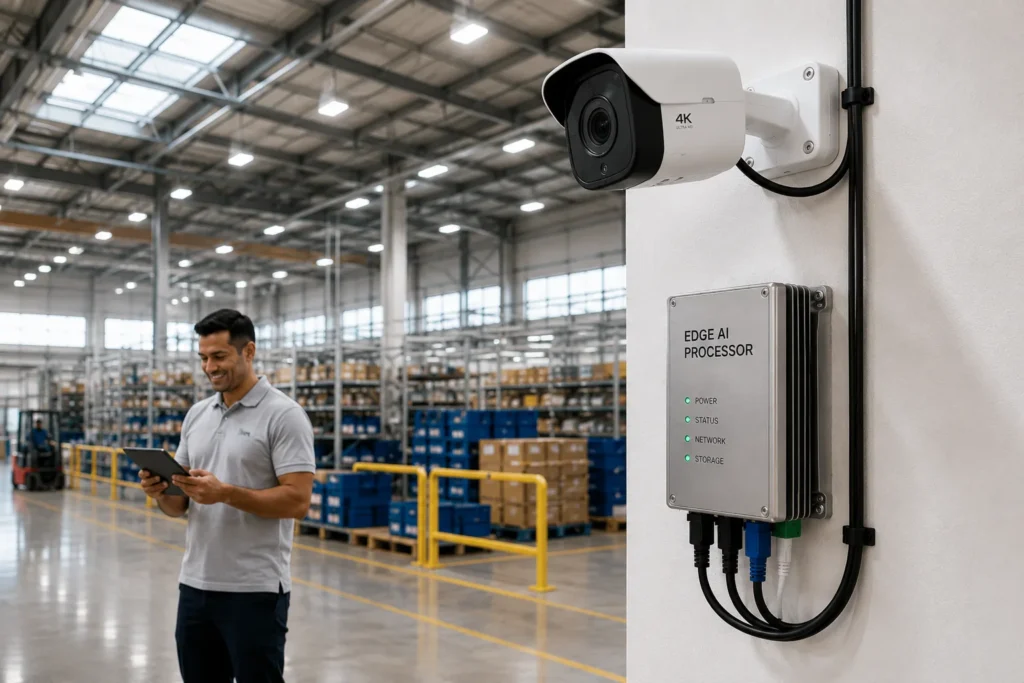
How Edge AI Protects Operational Data
Security is not achieved through local processing alone. Modern Edge AI platforms typically incorporate multiple layers of protection.
Common security measures include:
- Encrypted communication between edge devices and central systems
- Secure device authentication
- Role-based user access controls
- Digital certificates for trusted device identity
- Secure firmware and software updates
- Local storage encryption
- Event logging for audit purposes
- Network segmentation to isolate operational systems
Together, these controls help reduce the likelihood of unauthorized access while maintaining system integrity.
Security Risks That Edge AI Helps Reduce
By minimizing unnecessary data transmission, Edge AI can help organizations reduce exposure to several operational risks.
Examples include:
- Interception of large volumes of video during transmission
- Increased bandwidth usage for continuous streaming
- Network disruptions affecting AI analysis
- Delays in identifying safety or security events
- Excessive storage of sensitive raw footage in centralized environments
Although no technology eliminates cyber risks entirely, processing data locally can significantly reduce potential exposure.
Industries Where Secure Edge AI Matters Most
Security is a priority across many sectors where operational data is sensitive or mission-critical.
Industry | Why Edge AI Security Is Important |
Manufacturing | Protects production data and operational continuity |
Healthcare | Supports patient privacy and controlled data access |
Banking | Reduces exposure of sensitive facility monitoring data |
Food Processing | Protects quality assurance and compliance information |
Warehousing | Secures logistics and inventory operations |
Energy & Utilities | Supports resilient monitoring of critical infrastructure |
Transportation | Enables reliable monitoring with limited network dependency |
Corporate Facilities | Protects workplace and access control information |
Best Practices for Secure Edge AI Deployment
Organizations can strengthen Edge AI security by following proven deployment practices.
- Keep edge devices updated with the latest firmware and security patches.
- Use strong authentication for all users and connected devices.
- Encrypt data while it’s being transmitted and at rest.
- Restrict user permissions using role-based access controls.
- Separate operational technology (OT) networks from corporate IT networks where appropriate.
- Monitor device health and security logs regularly.
- Conduct periodic vulnerability assessments.
- Develop incident response procedures for connected edge devices.
Security should be treated as an ongoing operational process rather than a one-time implementation.
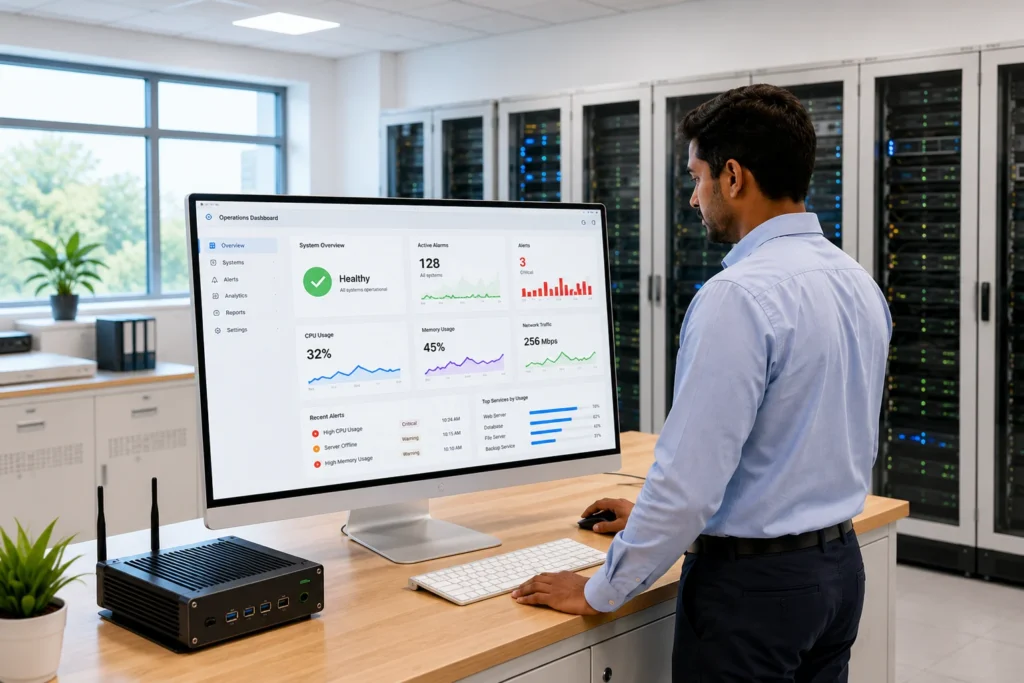
Building a Secure Foundation for Intelligent Operations
By bringing intelligence closer to the data source, edge AI improves operational security. Local processing reduces unnecessary data transmission, enables faster event detection, and provides organizations with greater control over sensitive operational information. When combined with strong cybersecurity practices, secure device management, and continuous monitoring, Edge AI offers a reliable foundation for organizations seeking to improve both operational efficiency and data protection.
Frequently Asked Questions
Is Edge AI more secure than cloud AI?
Edge AI can improve security by reducing the amount of sensitive data transmitted over networks. However, both Edge AI and cloud AI require strong cybersecurity practices to remain secure.
Does Edge AI eliminate cybersecurity risks?
No. Edge AI reduces certain risks but still requires secure device management, encryption, authentication, software updates, and continuous monitoring.
Can Edge AI operate without an internet connection?
Many Edge AI solutions can continue processing data locally during temporary network outages, allowing critical monitoring functions to remain operational.
Is sensitive video always stored locally?
Not necessarily. Organizations can configure systems to store data locally, centrally, or using a hybrid approach based on operational and compliance requirements.
Can Edge AI support regulatory compliance?
Indeed. When properly implemented, local data processing, controlled access, audit logs, and flexible data retention policies can assist organisations in meeting industry-specific compliance standards.