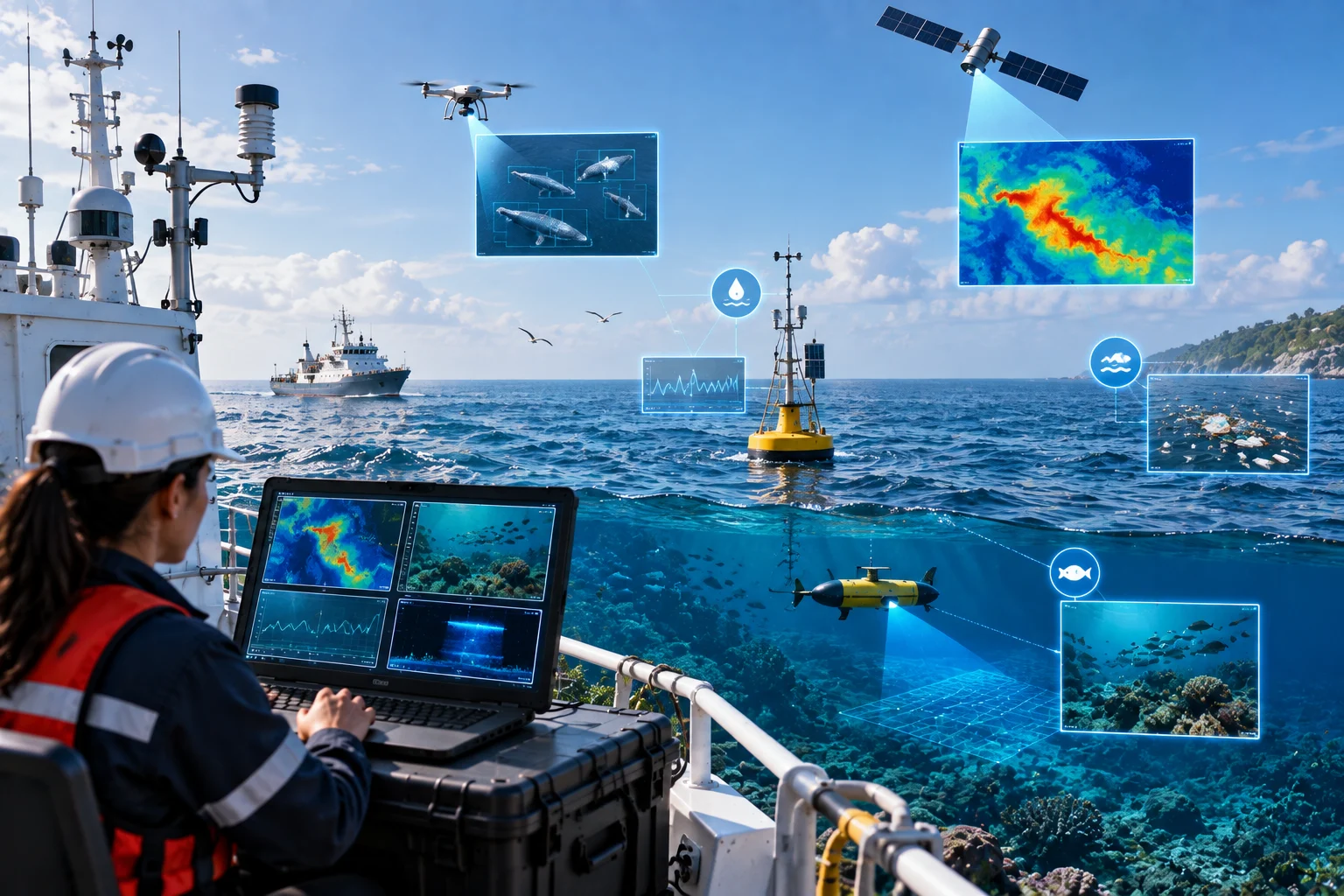
Environmental Monitoring is the process of collecting and analyzing information about air, water, soil, weather, and ecosystems to understand changes in the environment. It uses tools such as sensors, satellites, drones, and monitoring stations to measure conditions and detect changes over time. The collected information helps identify pollution, resource problems, and other environmental risks.
For example, a city can use air-quality sensors to continuously measure pollutants and identify areas where air quality is deteriorating. Similarly, water sensors can detect changes in rivers or lakes. Environmental Monitoring is useful for identifying problems early, supporting regulatory compliance, protecting natural resources, and guiding conservation efforts. Key benefits include faster detection of environmental risks, better planning, accurate reporting, and improved resource management.