
AI is Redefining Enterprise Operational Excellence
Operational excellence has traditionally been associated with lean processes, standardized procedures, and continuous improvement initiatives. While these principles remain important, today’s enterprises operate in environments where decisions must be made in seconds rather than hours. Distributed facilities, growing compliance requirements, workforce shortages, and rising customer expectations have made manual oversight increasingly difficult.
Artificial intelligence introduces a new operating model. Instead of relying solely on periodic inspections, historical reports, or manual supervision, organizations can continuously understand what is happening across their operations and respond before small issues become larger business problems. AI enables enterprises to move from managing operations through hindsight to leading them with real-time awareness.
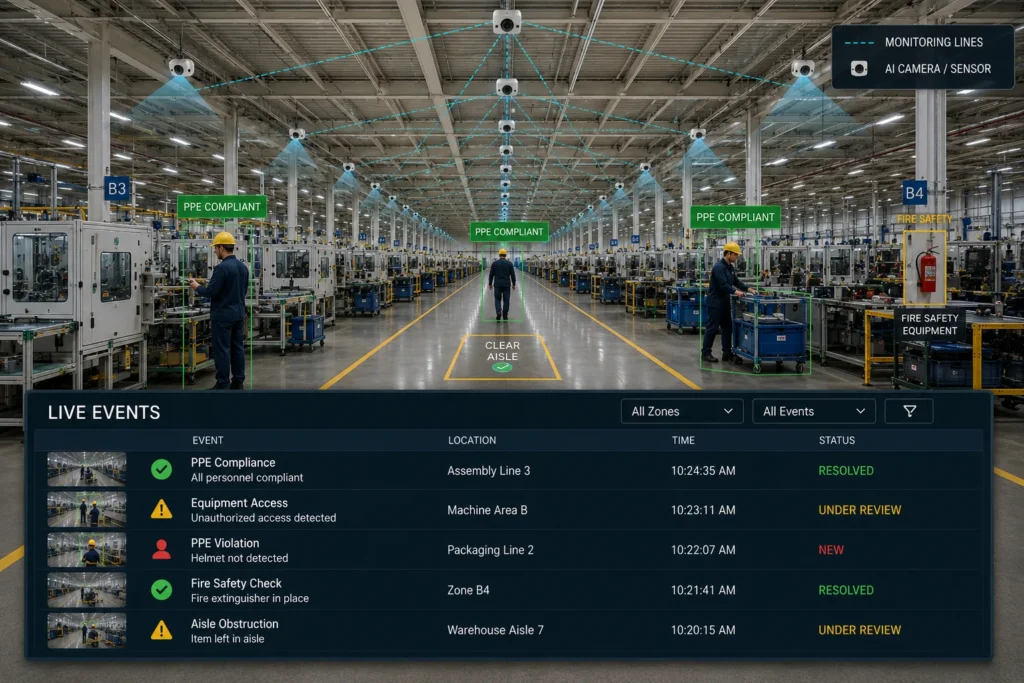
From Operational Visibility to Operational Awareness
Most organizations already collect vast amounts of operational data. Cameras, production equipment, access systems, environmental sensors, and enterprise software all generate valuable information. The challenge is that these systems often work independently, leaving managers to connect the dots manually.
AI bridges these disconnected data sources by identifying meaningful events, recognizing operational patterns, and presenting information that supports faster decision-making. Rather than overwhelming teams with raw data, AI highlights what deserves immediate attention and what trends require strategic action.
Building an Intelligent Decision Framework
Successful enterprises use AI not only to detect events but also to support better operational decisions.
Operational Challenge | AI-Driven Insight | Business Impact |
Delayed issue identification | Real-time event detection | Faster response times |
Manual operational reviews | Automated monitoring | Reduced administrative effort |
Inconsistent compliance checks | Continuous verification | Improved regulatory readiness |
Limited facility visibility | Centralized dashboards | Better operational control |
Equipment performance variations | Early anomaly detection | Reduced downtime |
Distributed site management | Unified enterprise monitoring | Consistent operational standards |
The value lies in creating a decision framework where managers receive actionable information rather than isolated alerts.
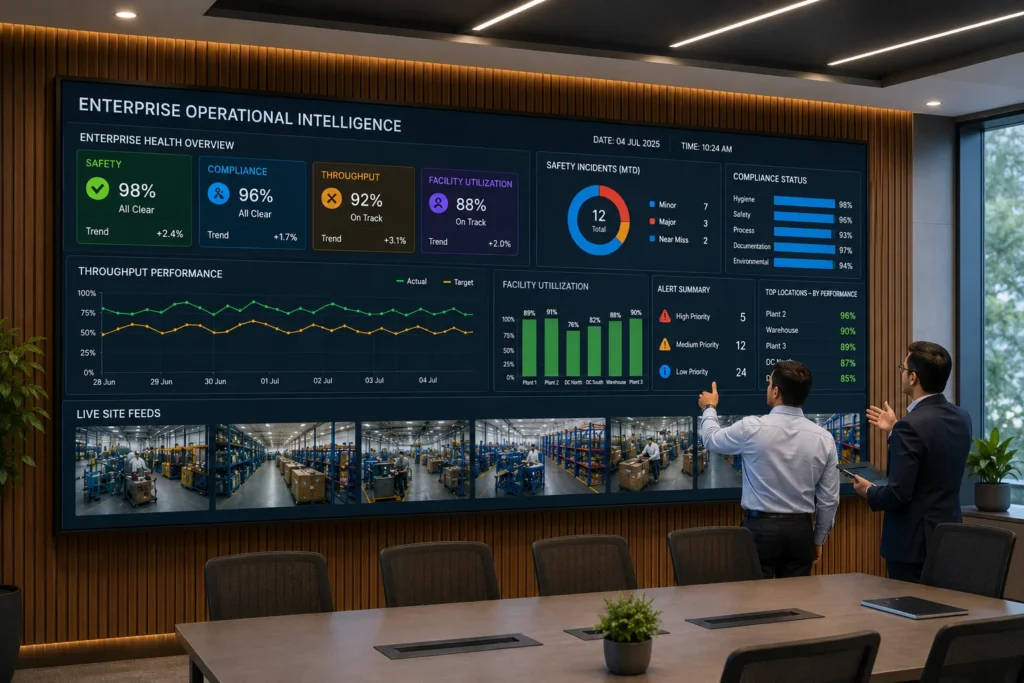
A Connected Enterprise Starts With Continuous Observation
Operational excellence depends on understanding how people, assets, equipment, and processes interact throughout the day. AI-powered Computer Vision and Edge AI transform visual information into operational intelligence without interrupting existing workflows.
Instead of simply recording activities, intelligent monitoring can recognize:
- Safety risks before incidents occur
- Workflow interruptions affecting productivity
- Equipment operating outside normal conditions
- Compliance deviations from established procedures
- Resource utilization across departments
- Operational bottlenecks that slow production
This continuous observation provides leaders with a clearer understanding of how their facilities perform in real time.
Making Every Department More Responsive
Operational excellence is rarely the responsibility of one department. AI supports collaboration by providing relevant insights across multiple business functions.
Operations Teams gain visibility into production flow, process consistency, and resource allocation.
Safety Managers receive immediate notification of workplace hazards, PPE violations, and unsafe behaviors.
Quality Teams can verify adherence to operating procedures and identify deviations before products move further through production.
Facility Managers monitor occupancy, asset movement, environmental conditions, and infrastructure utilization.
Executive Leadership benefits from consolidated dashboards that summarize enterprise performance across multiple locations.
When every team works from the same operational intelligence, decision-making becomes faster and more consistent.
Measuring Excellence Through Business Outcomes
Organizations increasingly evaluate AI initiatives based on measurable operational improvements rather than technology adoption.
Common performance indicators include:
- Reduced operational interruptions
- Faster incident investigation
- Improved workplace safety performance
- Higher compliance consistency
- Better equipment utilization
- Lower manual monitoring requirements
- Improved production efficiency
- Greater visibility across multiple facilities
These outcomes help organizations establish a culture of continuous improvement supported by objective operational data.
Creating a Scalable Foundation for Growth
As enterprises expand, maintaining consistent operational standards becomes increasingly challenging. AI provides a scalable framework that applies monitoring rules, reporting standards, and performance measurements consistently across facilities.
Whether an organization operates a single production site or manages multiple manufacturing plants, warehouses, retail stores, hospitals, or corporate campuses, intelligent monitoring enables leadership to evaluate performance using standardized operational metrics while still addressing site-specific requirements.
This consistency simplifies governance, strengthens accountability, and supports long-term Digital Transformation initiatives.
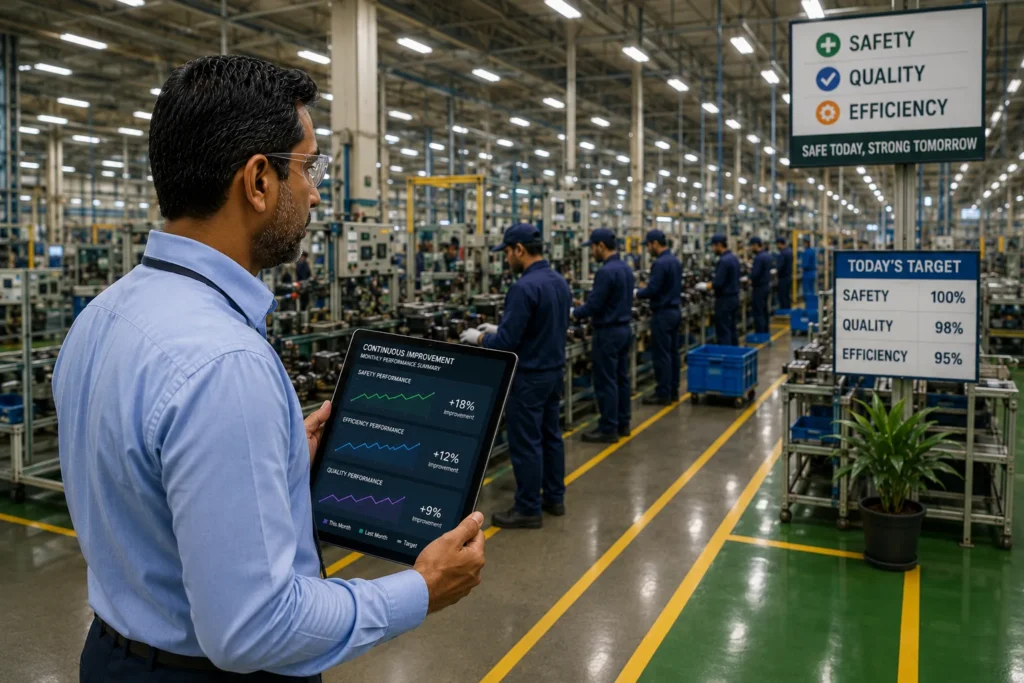
Shaping the Next Standard of Enterprise Performance
Operational excellence is no longer defined solely by efficient processes—it is increasingly determined by how quickly an organization can understand change and respond with confidence. AI enables enterprises to build operations that are more observant, consistent, and adaptable by transforming everyday activities into meaningful operational intelligence. As businesses continue to grow in complexity, organizations that combine human expertise with AI-driven insights will be better positioned to improve performance, strengthen resilience, and sustain long-term operational success.
Frequently Asked Questions
How does AI contribute to operational excellence?
AI continuously analyzes operational activities, identifies significant events, and provides actionable insights that improve decision-making, safety, productivity, and compliance.
Does AI replace operational managers?
No. AI supports managers by automating observation and analysis, allowing them to focus on planning, problem-solving, and continuous improvement.
Can AI improve operations without replacing existing infrastructure?
Yes. Many organizations integrate AI with compatible cameras and operational systems, allowing them to enhance existing infrastructure rather than replacing it entirely.
Which industries benefit the most from AI-driven operational excellence?
Manufacturing, warehousing and logistics, retail, healthcare, education, banking, hospitality, construction, transportation, and energy sectors all benefit from intelligent operational monitoring.
What makes AI valuable beyond automation?
Beyond automating routine monitoring, AI reveals patterns, trends, and operational opportunities that help organizations make more informed strategic decisions.