
Enterprise Edge Computing Architecture for Video Analytics
A global manufacturer operates more than 80 facilities, each equipped with hundreds of IP cameras monitoring production lines, warehouses, loading docks, and restricted areas. Streaming every video feed to a central cloud platform creates bandwidth bottlenecks, increases latency, and makes real-time decision-making difficult. The challenge isn’t collecting video—it’s processing it fast enough to support business operations.
This is why many enterprises are redesigning their video infrastructure around Edge Computing. Instead of treating every camera as a passive recording device, Edge AI transforms cameras and local computing nodes into intelligent processing points capable of analyzing video where it is generated.
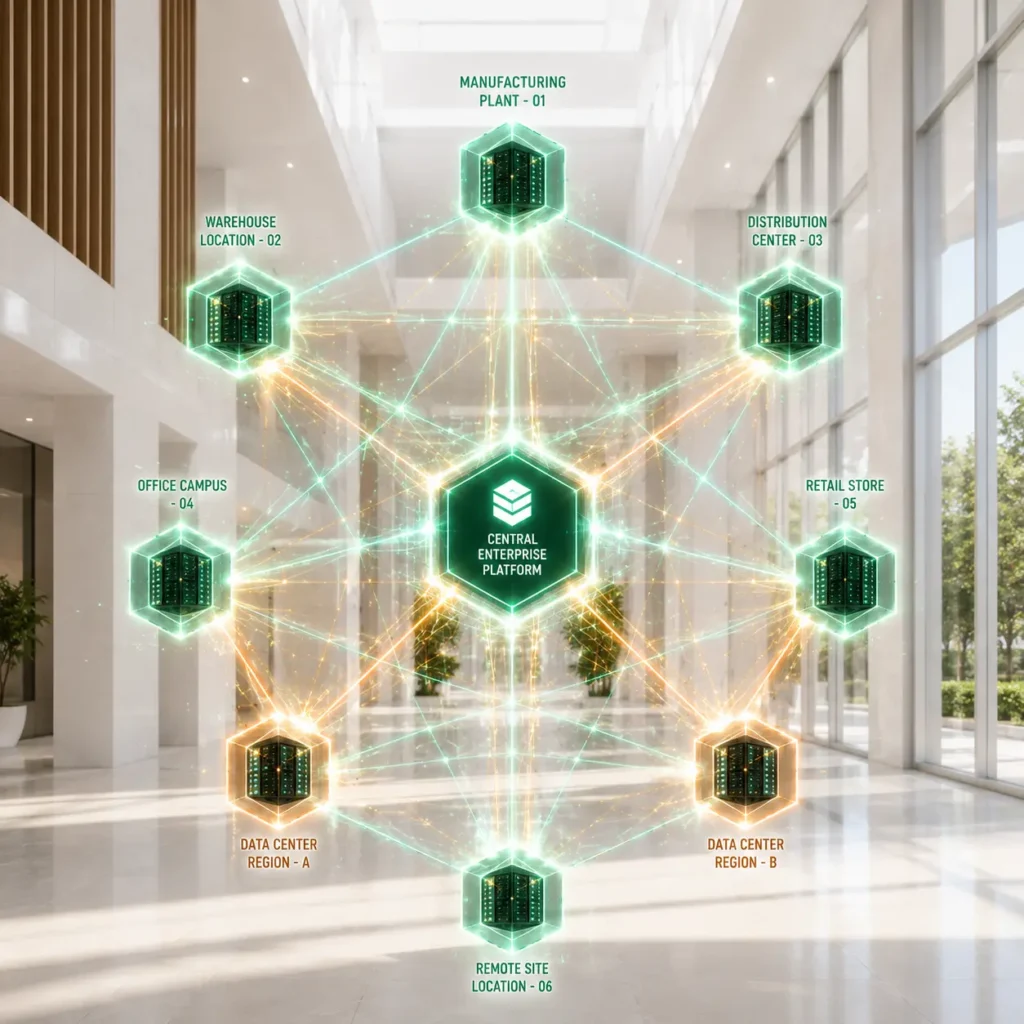
Designing the Modern Enterprise Video Architecture
An enterprise Edge Computing architecture distributes intelligence across multiple infrastructure layers rather than relying on a single centralized system.
Architecture Layer | Primary Responsibility |
Smart Cameras | Capture live video streams |
Edge AI Devices | Execute Computer Vision and AI models locally |
Local Facility Gateway | Aggregate events and coordinate site operations |
Enterprise Platform | Centralize dashboards, reporting, and policy management |
Business Applications | Integrate alerts with operational workflows |
Each layer performs a specific role, allowing the overall system to remain scalable as facilities expand.
Following the Journey of a Single Event
Imagine a worker going into a production area that is limited.
Rather than transmitting continuous video to a remote server, the architecture processes the event through several coordinated stages.
- A smart camera captures the live scene.
- An Edge AI device analyzes the video using Computer Vision.
- The system recognizes unauthorized entry.
- A local alert is generated within seconds.
- Only the event metadata and supporting evidence are forwarded to the enterprise platform.
- Managers receive notifications through centralized AI Dashboards.
This event-driven workflow reduces unnecessary data transmission while enabling immediate operational responses.
Why Distributed Intelligence Improves Enterprise Performance
Moving intelligence closer to operational environments changes how enterprise video systems perform.
Instead of relying entirely on centralized infrastructure, organizations gain several advantages:
- Lower network bandwidth consumption
- Faster Real-Time Analytics
- Reduced response latency
- Greater operational resilience
- Improved scalability across multiple facilities
- Better support for remote and bandwidth-constrained sites
Local processing ensures that critical operational events continue to be detected even when network connectivity is interrupted.
Matching Architecture to Operational Environments
Different enterprise locations often require different deployment strategies.
Manufacturing Plants
Edge AI monitors production equipment, hazardous work areas, machine interaction, and Workplace Safety while minimizing delays in event detection.
Warehouses
Computer Vision processes forklift movement, loading dock activity, pallet handling, and restricted storage zones without continuously transmitting high-volume video streams.
Corporate Campuses
Enterprise offices use distributed analytics to monitor visitor access, occupancy, meeting spaces, and facility operations while maintaining centralized visibility.
Transportation Infrastructure
Airports, logistics hubs, and railway terminals process vehicle movement, platform activity, and restricted-area monitoring locally to support continuous operations.
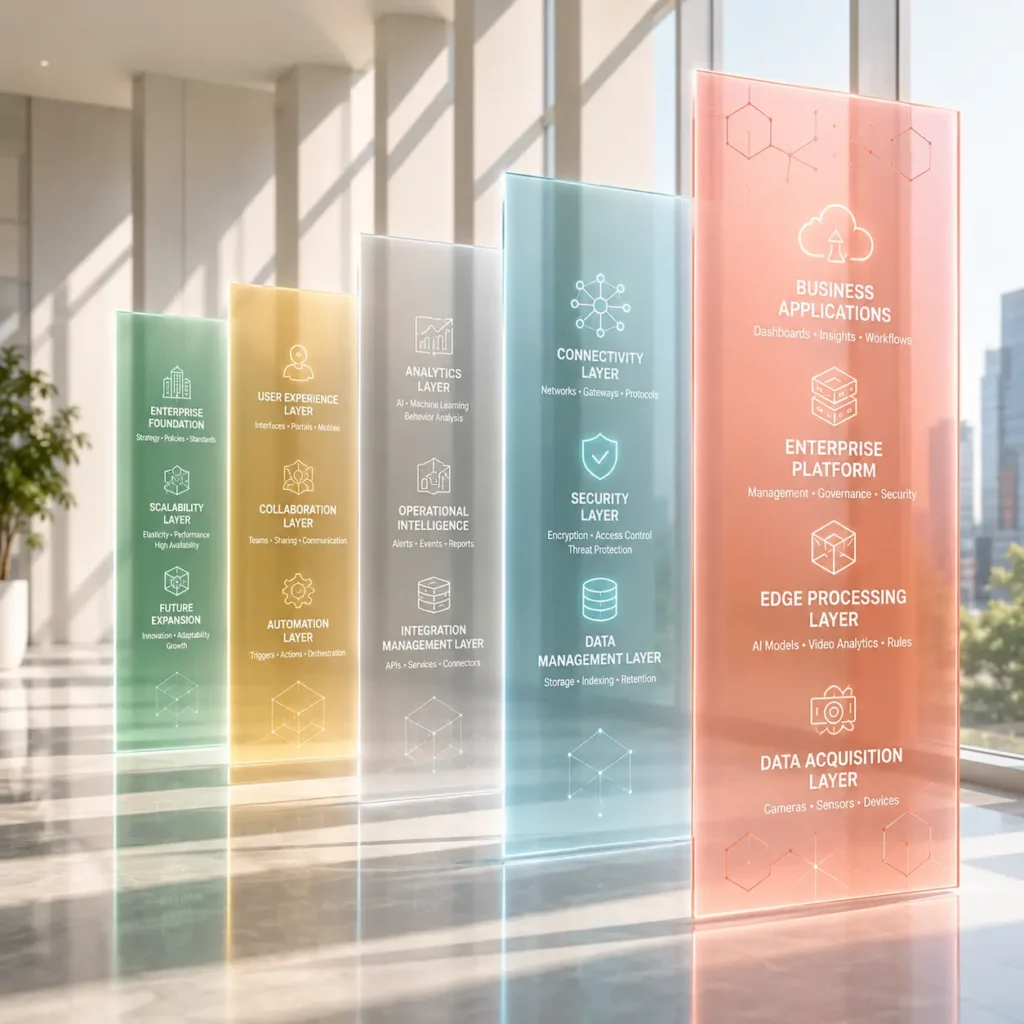
Edge Processing vs Centralized Processing
Enterprise Edge Computing | Centralized Video Processing |
Local AI analysis | Remote server analysis |
Lower latency | Higher response delay |
Reduced bandwidth usage | High network utilization |
Continues during connectivity interruptions | Greater dependence on network availability |
Many organizations combine both approaches to balance operational responsiveness with enterprise-wide reporting.
Building for Enterprise Growth
As organizations expand, architecture becomes just as important as analytics.
Successful deployments often include:
- Modular Edge AI infrastructure
- Standardized deployment across locations
- Centralized policy management
- Secure communication between facilities
- AI model updates managed remotely
- Unified Operational Intelligence dashboards
- Integration with existing business applications
This architecture allows enterprises to grow without redesigning their entire monitoring infrastructure.
Business Outcomes Beyond Video Processing
An effective Edge Computing architecture delivers benefits that extend well beyond surveillance.
Organizations can improve:
- Compliance Monitoring across distributed sites
- Incident response times
- Operational visibility
- Resource utilization
- AI Automation of routine monitoring tasks
- Cross-site performance benchmarking
- Data-driven operational planning
Rather than becoming another isolated technology platform, Edge Computing becomes part of the broader Enterprise AI strategy.
Building an Intelligent Enterprise Foundation
Enterprise video analytics depends as much on architecture as it does on artificial intelligence. By distributing processing across cameras, Edge AI devices, local gateways, and centralized management platforms, organizations create an infrastructure that is responsive, scalable, and resilient. Combined with AI Video Analytics, Computer Vision, Operational Intelligence, and Intelligent Operations, Enterprise Edge Computing enables businesses to process visual information where it matters most while maintaining centralized oversight across every facility.
FAQ
What is Enterprise Edge Computing for video analytics?
Instead of sending all video to centralised servers for analysis, this design uses Edge AI to process video close to the camera or facility.
Why do enterprises prefer Edge Computing?
Edge Computing reduces latency, lowers bandwidth usage, improves resilience, and enables faster responses to operational events.
Can Edge Computing support multiple facilities?
Yes. Enterprise Edge architectures are designed to scale across manufacturing plants, warehouses, offices, hospitals, transportation hubs, and other distributed locations.
Does Edge AI eliminate the need for cloud platforms?
No. Most enterprises use a hybrid architecture where Edge AI performs local analysis while centralized platforms manage reporting, analytics, and enterprise-wide administration.
Which business functions benefit from Enterprise Edge Computing?
Operations, security, workplace safety, quality assurance, compliance, facilities management, logistics, and executive leadership all benefit from faster access to operational insights.