
Building Smart Factories with Edge Analytics
Smart factories are designed to make faster decisions by using operational data generated directly on the production floor. As manufacturing environments become more connected, thousands of events occur every hour, from machine operations and material movement to quality inspections and safety procedures. Sending every piece of data to centralized systems for processing can introduce delays. Edge analytics addresses this challenge by processing information close to where it is generated, enabling quicker responses and greater operational visibility.
By combining edge AI, computer vision, AI video analytics, and real-time analytics, manufacturers can monitor production processes continuously while supporting efficient, data-driven operations.
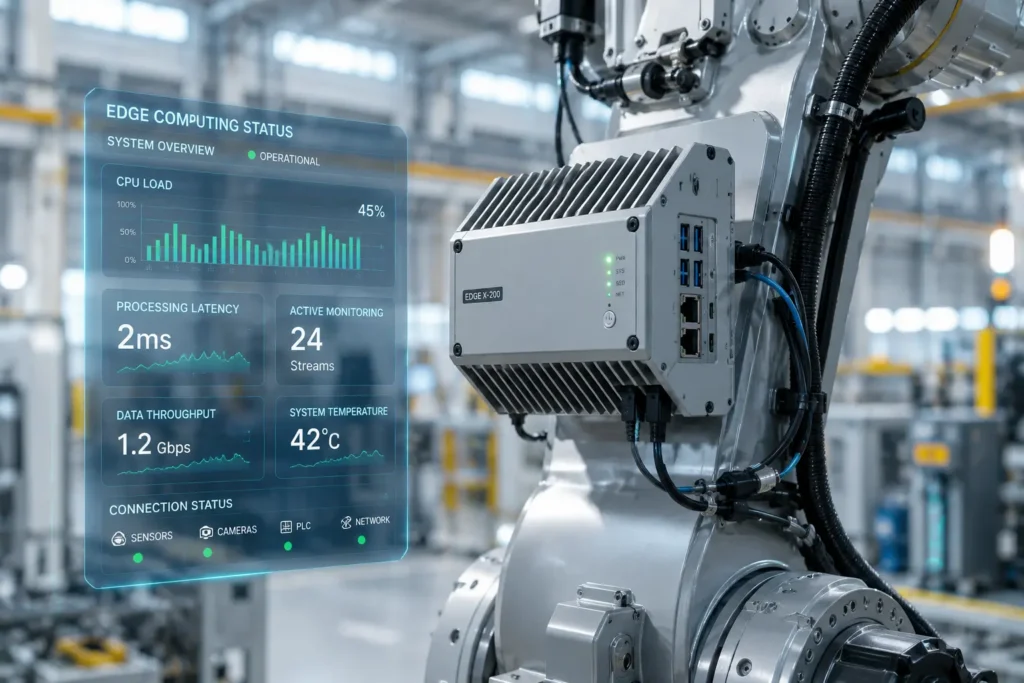
What Defines a Smart Factory?
An automated production facility is only one aspect of a smart factory. It is an environment where equipment, sensors, cameras, and operational systems work together to provide continuous insights into manufacturing performance.
Key characteristics include:
- Connected production equipment
- Real-time operational visibility
- Intelligent process monitoring
- Automated quality inspection
- Continuous compliance monitoring
- Data-driven decision-making
- Integrated operational dashboards
The objective is not simply to collect data, but to transform it into actionable operational intelligence.
Why Edge Analytics Matters on the Factory Floor
Every manufacturing process generates large amounts of operational information. Processing this data at the edge—close to machines and cameras—reduces delays and enables immediate responses to production events.
Examples include:
Manufacturing Activity | Edge Analytics Capability | Operational Value |
Production Monitoring | Processes video locally | Faster event detection |
Quality Inspection | Detects visible defects immediately | Reduced product rework |
Machine Operations | Monitors equipment status | Faster response to abnormalities |
PPE Compliance | Verifies safety practices | Improved workplace safety |
Material Handling | Tracks movement across workstations | Better production flow |
Restricted Areas | Detects unauthorized access | Improved operational security |
Assembly Processes | Identifies workflow deviations | Greater process consistency |
Multi-Line Operations | Supports independent production cells | Improved scalability |
Processing information locally allows operational teams to respond without waiting for centralized analysis.
How Edge Analytics Supports Daily Manufacturing
A typical production day generates thousands of operational events. Edge analytics enables these events to be analyzed as they happen.
Production Starts
Equipment status, production lines, and workstation activity are monitored continuously from the beginning of each shift.
Operations Continue
Computer vision identifies workflow deviations, safety concerns, and production interruptions while AI video analytics evaluates operational patterns in real time.
Supervisors Receive Alerts
Instead of monitoring multiple video feeds, supervisors receive alerts for predefined operational events that require attention.
Performance Data Is Consolidated
Operational insights are shared with enterprise dashboards, enabling managers to review production performance, identify trends, and support continuous improvement initiatives.
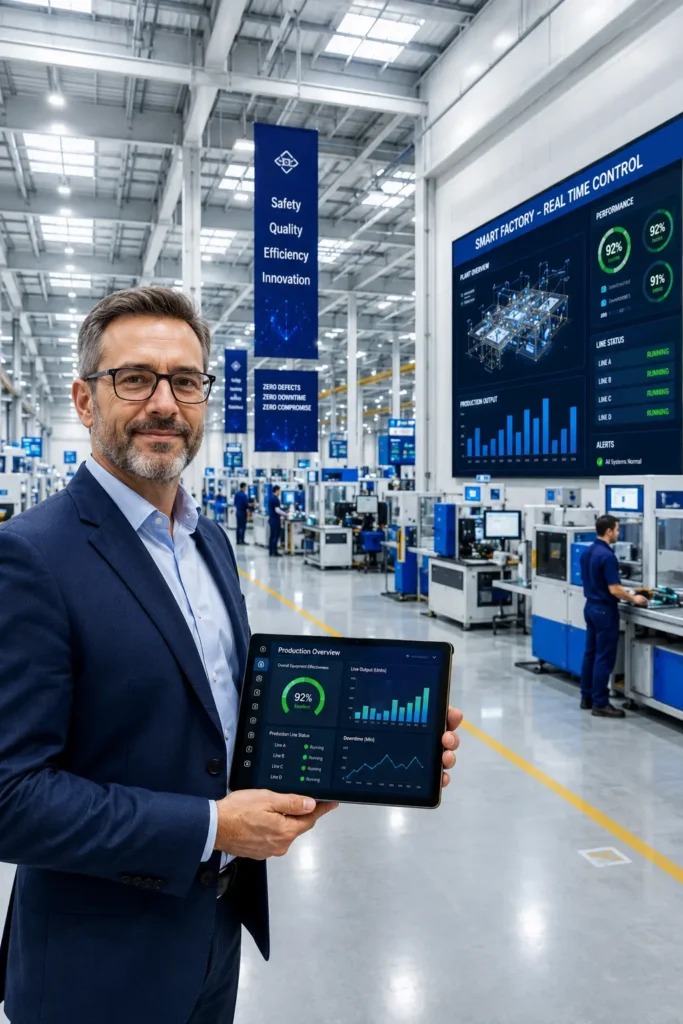
Edge Analytics Compared With Centralized Processing
Area | Centralized Processing | Edge Analytics |
Data Processing | Remote data centers | Local processing near equipment |
Response Speed | Network dependent | Immediate local analysis |
Bandwidth Usage | Higher network traffic | Reduced data transmission |
Production Monitoring | Centralized analysis | Real-time factory visibility |
Scalability | Additional infrastructure required | Easily expands across production areas |
Operational Continuity | More dependent on network connectivity | Local decision support remains available |
Many manufacturers combine edge and centralized analytics to balance rapid local decisions with enterprise-wide reporting.
Planning an Edge Analytics Deployment
Organizations introducing edge analytics typically begin with operational areas where immediate insights provide the greatest value.
Common deployment priorities include:
- Critical production lines
- Quality inspection stations
- Workplace safety monitoring
- Loading and material handling areas
- High-value manufacturing equipment
- Restricted operational zones
A phased implementation enables manufacturers to validate operational improvements before expanding deployment across additional production areas.
Business Outcomes Driving Smart Factory Investments
Edge analytics delivers measurable improvements by providing faster access to operational information.
Organizations commonly achieve:
- Reduced response time to operational events
- Improved production visibility
- Better workplace safety
- Enhanced compliance monitoring
- Reduced manual inspections
- Improved equipment utilization
- More consistent production processes
- Lower operational downtime
- Better resource allocation
- Improved decision-making through real-time analytics
These outcomes support higher operational efficiency while helping manufacturers respond more effectively to changing production requirements.
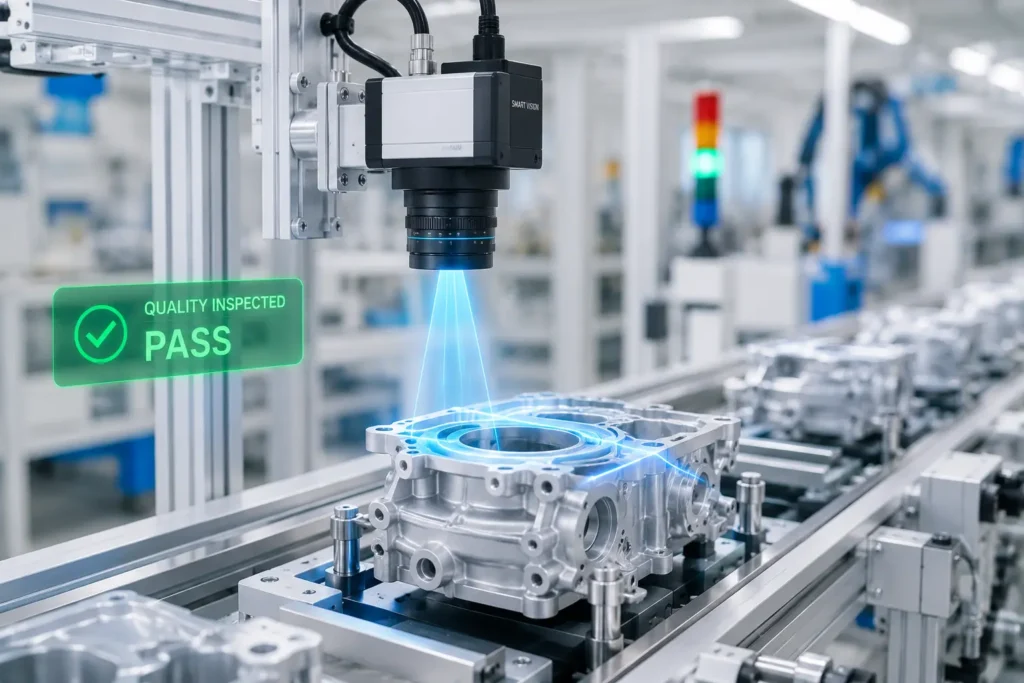
Building Smarter Manufacturing Operations
Smart factories depend on timely, accurate operational information. Edge analytics enables manufacturers to process critical data directly where operations occur, supporting faster responses and continuous visibility across the production environment.
When combined with computer vision, AI video analytics, and experienced operational teams, edge analytics helps manufacturers strengthen operational consistency, improve workplace safety, optimize production workflows, and build intelligent manufacturing environments that are prepared for future growth.
FAQ
What is edge analytics in manufacturing?
Edge analytics processes operational data close to machines, sensors, and cameras, enabling faster analysis and reducing dependence on centralized processing.
How does edge analytics support smart factories?
It provides real-time visibility into production processes, equipment performance, workplace safety, and quality inspection while enabling faster operational responses.
Can edge analytics improve production efficiency?
Yes. By identifying workflow interruptions, equipment abnormalities, and process deviations immediately, organizations can reduce delays and improve operational consistency.
Which manufacturing processes benefit most from edge analytics?
Among the most popular uses are production monitoring, quality control, material handling, equipment monitoring, workplace safety, and compliance monitoring.
What business benefits does edge analytics provide?
Manufacturers can improve operational visibility, reduce downtime, strengthen compliance, optimize equipment utilization, improve workplace safety, and make faster operational decisions using real-time insights.