
The Future of Autonomous Enterprise Monitoring
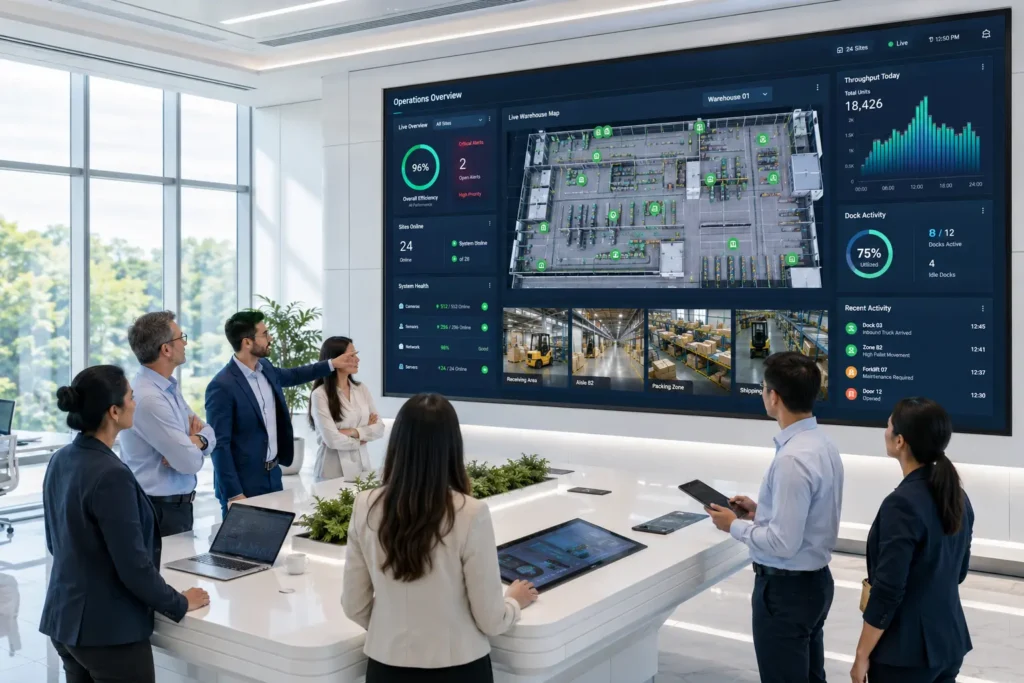
Unexpected operational disruptions rarely begin with a major incident. A delivery delay, a restricted access door left open, an unattended loading dock, or an equipment warning that goes unnoticed can gradually develop into larger business problems. As organizations expand across multiple facilities, relying solely on manual monitoring becomes increasingly difficult. Teams often spend valuable time reviewing alerts instead of responding to the events that truly matter.
The next stage of enterprise monitoring is moving beyond simple event detection. Businesses are adopting intelligent systems that continuously observe operations, recognize patterns, recommend actions, and support faster decision-making. This evolution is shaping the future of autonomous enterprise monitoring.
Why Traditional Monitoring Is Reaching Its Limits
Most organizations already use cameras, sensors, and monitoring software. While these technologies generate valuable information, they also produce thousands of notifications every day.
Common operational challenges include:
- Alert fatigue caused by excessive notifications
- Slow identification of operational anomalies
- Limited visibility across multiple locations
- Delayed investigation of incidents
- Inconsistent responses between different facilities
As enterprises continue their digital transformation, monitoring systems must become more intelligent rather than simply collecting additional data.
What Makes Enterprise Monitoring Autonomous?
Autonomous enterprise monitoring combines multiple AI capabilities to observe operations continuously while reducing dependence on manual supervision. Instead of waiting for operators to review every event, intelligent systems evaluate situations in real time and determine whether action is required.
An autonomous monitoring platform can:
- Detect unusual operational behavior
- Compare live activities with standard operating procedures
- Prioritize incidents based on business impact
- Recommend corrective actions
- Generate detailed operational records for later analysis
Technologies Driving the Next Generation of Monitoring
Autonomous enterprise monitoring is supported by several complementary technologies that work together.
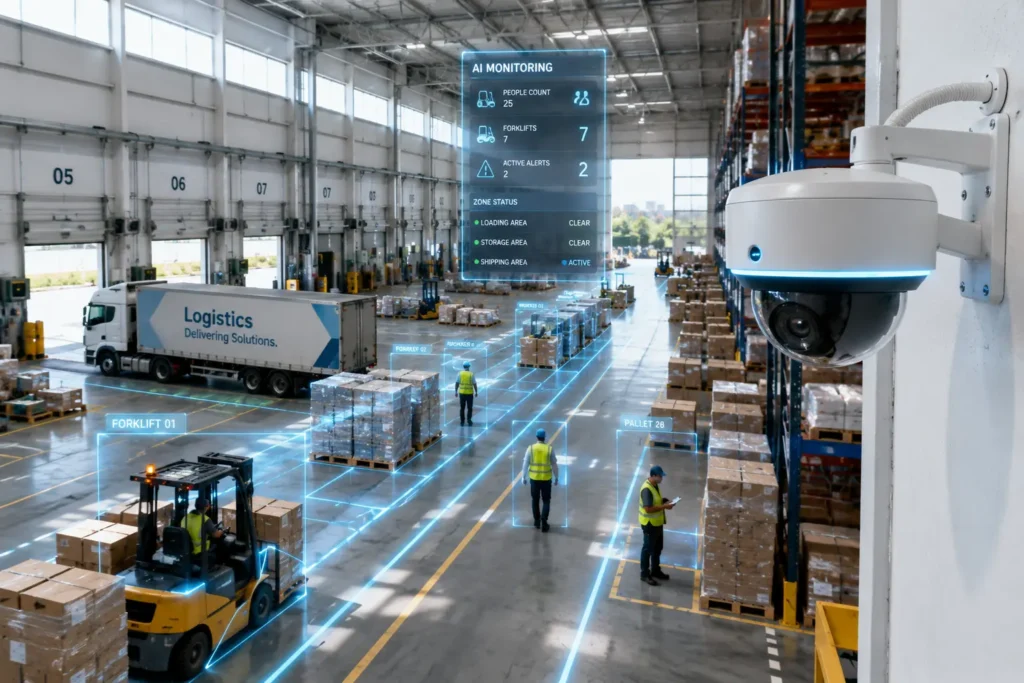
Computer vision enables systems to understand activities captured by cameras instead of simply recording video. AI video analytics continuously evaluates operational events and identifies behaviors that require attention.
By processing data closer to the source, edge AI minimises needless data transmission and speeds up response times. Real-time analytics helps organizations react immediately to changing operational conditions, while operational intelligence transforms daily events into long-term performance insights.
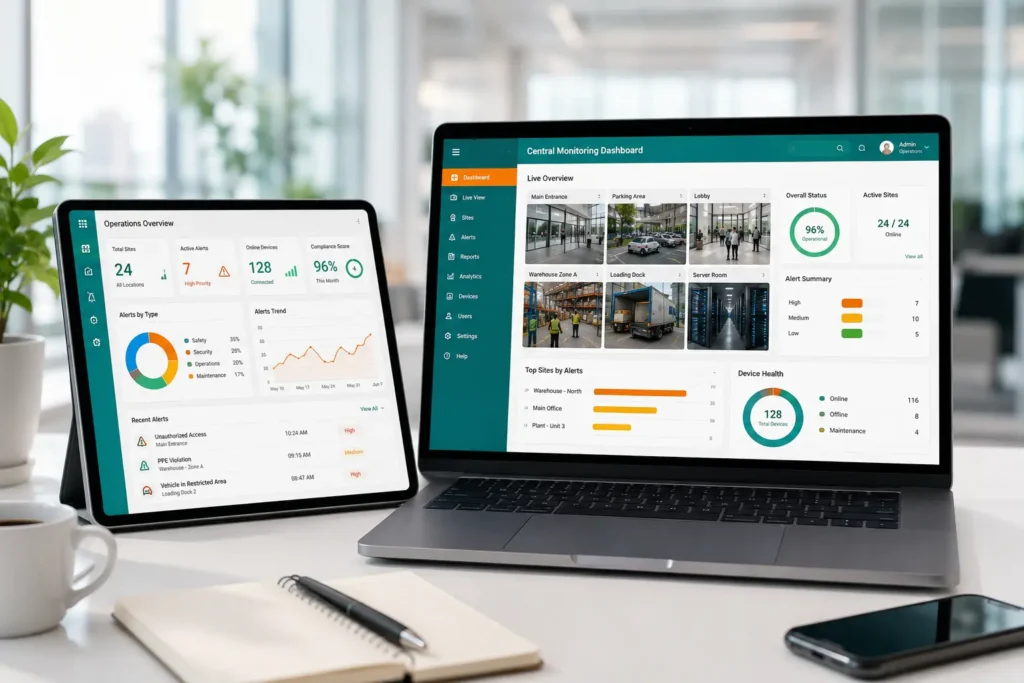
AI dashboards present these insights in a centralized view, allowing managers to monitor multiple facilities simultaneously. Enterprise AI facilitates consistent decision-making and ongoing development by connecting operational data across sites.
Together, these technologies create monitoring systems that are increasingly capable of understanding business operations rather than simply observing them.
The Journey Toward Intelligent Operations
Most organizations progress through several stages before achieving autonomous monitoring.
Stage | Monitoring Capability |
Reactive | Teams respond after incidents occur. |
Automated | Systems generate alerts when predefined events happen. |
Intelligent | AI identifies patterns, trends, and operational risks. |
Autonomous | Systems continuously monitor, prioritize, recommend, and support operational decisions with minimal manual intervention. |
Technologies Driving the Next Generation of Monitoring
Autonomous enterprise monitoring is supported by several complementary technologies that work together.
Computer vision enables systems to understand activities captured by cameras instead of simply recording video. AI video analytics continuously evaluates operational events and identifies behaviors that require attention.
By processing data closer to the source, edge AI minimises needless data transmission and speeds up response times. Real-time analytics helps organizations react immediately to changing operational conditions, while operational intelligence transforms daily events into long-term performance insights.
AI dashboards present these insights in a centralized view, allowing managers to monitor multiple facilities simultaneously. Enterprise AI facilitates consistent decision-making and ongoing development by connecting operational data across sites.
Together, these technologies create monitoring systems that are increasingly capable of understanding business operations rather than simply observing them.
How Autonomous Monitoring Creates Business Value
Future enterprise monitoring delivers measurable operational improvements that extend well beyond security.
Manufacturing facilities can identify production bottlenecks before they affect output schedules.
Warehouses can improve dock scheduling, reduce congestion, and support faster order fulfillment by continuously monitoring operational flow.
Retail businesses can recognize customer movement patterns, improve staffing decisions, and optimize store performance throughout the day.
Healthcare facilities can monitor patient movement, waiting areas, and resource utilization to support smoother hospital operations.
Early facility identification on corporate campuses enables maintenance teams to prioritise tasks before they interfere with regular business operations.
Preparing for Autonomous Monitoring
Organizations considering autonomous monitoring should begin with practical planning rather than pursuing complete automation immediately.
Important considerations include:
- Define clear operational objectives.
- Evaluate existing camera coverage and image quality.
- Identify repetitive monitoring activities suitable for automation.
- Establish data privacy and governance policies.
- Integrate monitoring with operational workflows.
Measure performance using business-focused KPIs
Emerging Trends Shaping the Future
Several developments are expected to accelerate autonomous enterprise monitoring over the coming years.
Generative AI will help summarize operational events, making investigations faster and easier to understand.
Predictive operational analysis will identify developing risks before incidents occur, enabling preventive action instead of reactive responses.
Multi-site monitoring will become increasingly centralized, giving enterprise leaders a unified operational view across regional and global facilities.
AI automation will coordinate alerts, workflows, and reporting with reduced manual intervention, allowing organizations to respond more efficiently to changing operational conditions.
From Insight to Action
Autonomous enterprise monitoring represents a practical evolution in how organizations manage complex operations. Instead of relying on teams to review countless alerts, businesses can use intelligent systems to identify meaningful events, prioritize operational risks, and support faster decision-making.
Organizations that gradually combine AI video analytics, computer vision, operational intelligence, and enterprise AI into their monitoring strategies will be better positioned to improve efficiency, reduce operational delays, and support consistent performance across every location. The future is not about removing people from operations—it is about giving them better information at the right moment to make smarter business decisions.
FAQ
How does autonomous enterprise monitoring work?
It is an AI-driven method that prioritises risks, continuously monitors business processes, finds significant events, and facilitates decision-making with little human participation.
How is autonomous monitoring different from traditional monitoring?
Traditional monitoring mainly records events and generates alerts, while autonomous monitoring analyzes situations, identifies priorities, and provides actionable operational insights.
Which industries benefit most from autonomous enterprise monitoring?
Manufacturing, retail, healthcare, logistics, transportation, corporate facilities, and smart infrastructure can all benefit from intelligent operational monitoring
Does autonomous monitoring replace human operators?
No. It reduces repetitive monitoring tasks while allowing employees to focus on investigation, decision-making, and operational improvement.
Can organizations implement autonomous monitoring using existing camera infrastructure?
In many cases, yes. Existing camera systems can often be enhanced with AI video analytics and computer vision software, depending on image quality and coverage