
AI-Powered Workplace Safety Monitoring Systems
A forklift rounds a warehouse corner while an employee steps into its path. In another facility, a maintenance technician enters a hazardous area without the required helmet. Elsewhere, an emergency exit is blocked by stored materials during a busy production shift. These situations develop in seconds, leaving little time for manual intervention.
For safety teams, the challenge is not the lack of cameras or procedures—it is maintaining continuous awareness across dynamic work environments. AI-powered workplace safety monitoring systems address this gap by continuously observing operational activities, identifying potential hazards, and notifying responsible teams before incidents escalate.
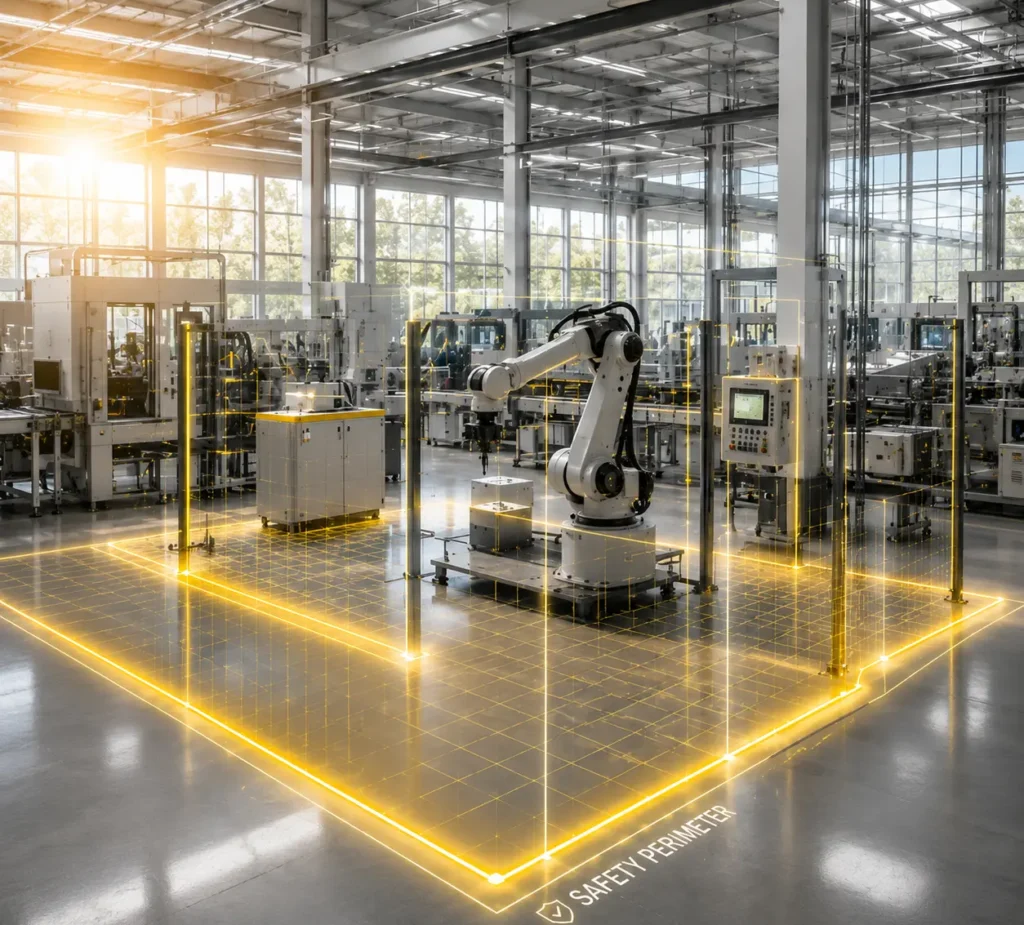
Every Workplace Has Different Safety Risks
Safety priorities vary depending on the environment, but the objective remains the same: reducing risk while maintaining efficient operations.
Workplace | Typical Safety Risks |
Manufacturing | Machine interaction, missing PPE, restricted zones |
Warehousing | Forklift traffic, loading docks, pedestrian movement |
Construction | Unsafe access, fall-risk areas, equipment operation |
Food Processing | Hygiene compliance, protective clothing, sanitation |
Healthcare | Restricted access, patient safety, emergency pathways |
Corporate Offices | Emergency exits, visitor management, occupancy limits |
Instead of applying a single monitoring rule everywhere, AI systems can be configured for the specific operational risks within each facility.
How Intelligent Monitoring Changes Daily Operations
Traditional safety programs often depend on scheduled inspections and human observation. AI introduces continuous monitoring that operates throughout every shift.
Examples include:
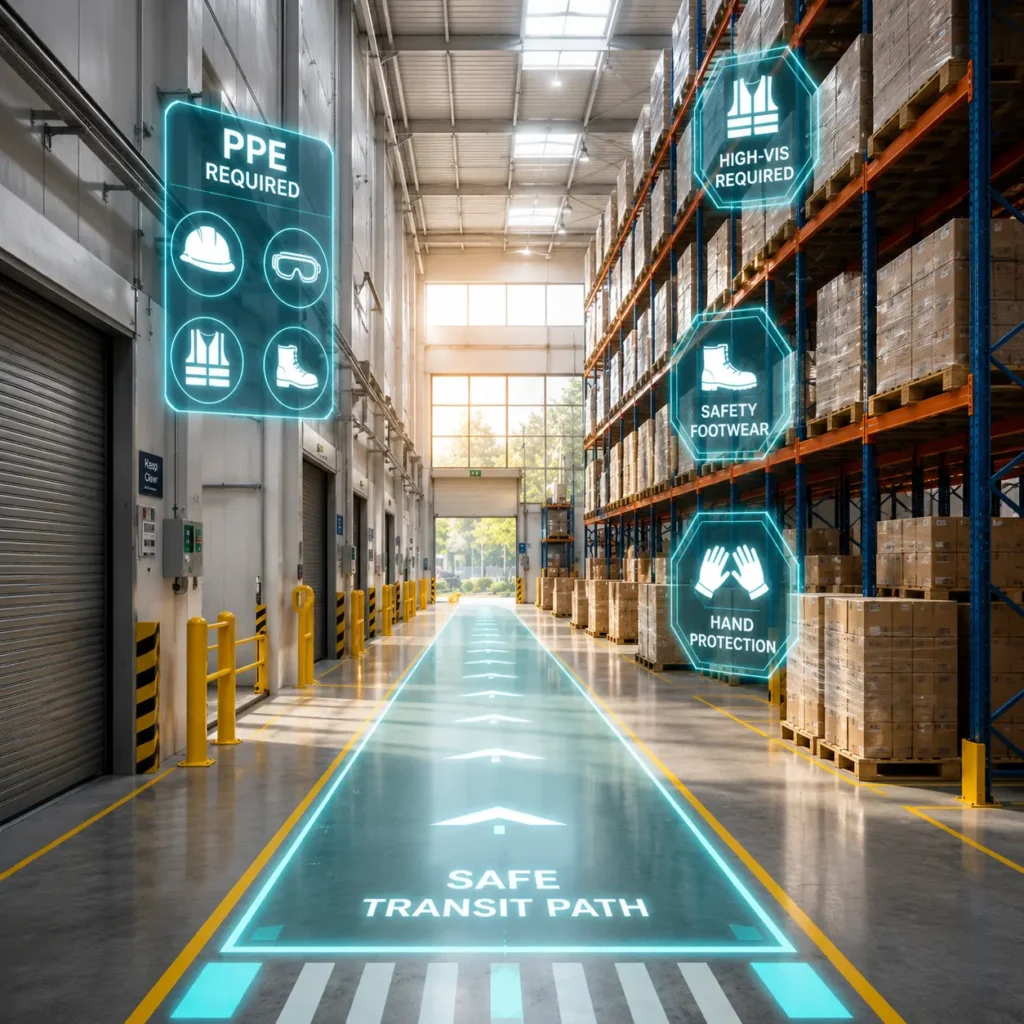
- Detecting missing helmets, gloves, safety glasses, or high-visibility clothing
- Identifying unauthorized access to hazardous areas
- Monitoring safe separation between vehicles and pedestrians
- Detecting blocked emergency exits
- Verifying adherence to standard operating procedures
- Identifying slips, falls, or unusual movement patterns
- Generating immediate Event Monitoring alerts
By continuously analyzing live video, organizations gain visibility that manual supervision alone cannot consistently provide.
A Day in an AI-Assisted Facility
Imagine a busy distribution center during peak operations.
As forklifts transport inventory across multiple aisles, AI Video Analytics continuously evaluates travel paths, pedestrian movement, and safety distances. A worker enters a designated equipment zone without reflective safety gear. Within seconds, the system flags the event and sends a notification to the site supervisor.
Later in the shift, pallets temporarily block an emergency exit. Rather than waiting for a routine inspection, the obstruction is detected automatically and reported immediately. Maintenance personnel clear the area before it becomes a safety hazard.
Throughout the day, these events are recorded as operational insights, helping managers identify recurring risks and improve workplace procedures.
Beyond Incident Detection
Modern safety platforms do more than identify isolated events. They help organizations recognize long-term patterns that influence operational performance.
AI Dashboards can reveal:
- Frequently occurring PPE violations
- High-risk work zones
- Peak periods for safety incidents
- Areas with repeated congestion
- Response times to safety alerts
- Compliance trends across multiple facilities
This information enables organizations to focus on prevention rather than reacting after incidents occur.
AI and Human Safety Teams Working Together
AI is designed to support—not replace—health and safety professionals.
Human Expertise | AI Contribution |
Safety training | Continuous visual monitoring |
Risk assessments | Real-Time Analytics |
Incident investigation | Searchable event history |
Workplace inspections | Automated Compliance Monitoring |
Safety planning | Operational Intelligence from trend analysis |
Corrective actions | Instant alerts and documentation |
Combining human expertise with intelligent monitoring creates a more proactive safety program.
Best Practices for Deployment
Organizations achieve better results when workplace safety monitoring is introduced strategically.
Recommended practices include:
- Prioritize high-risk operational areas first.
- Configure rules specific to each facility.
- Use Edge AI where rapid response is essential.
- Review alert accuracy and adjust detection settings.
- Integrate monitoring with existing safety workflows.
- Analyze recurring trends to improve training programs.
- Expand gradually as operational confidence increases.
A phased implementation allows organizations to optimize system performance while maintaining employee acceptance.
Creating Safer Work Environments Through Continuous Awareness
Workplace safety is most effective when risks are identified before they become incidents. AI-powered workplace safety monitoring systems provide continuous visibility across manufacturing plants, warehouses, construction sites, healthcare facilities, food processing operations, and corporate environments. By combining Computer Vision, AI Video Analytics, Edge AI, and Operational Intelligence, organizations can strengthen Compliance Monitoring, reduce manual observation, improve Workplace Safety, and make informed decisions that support both employee well-being and operational continuity.
FAQ
What is an AI-powered workplace safety monitoring system?
It is a solution that uses Computer Vision and AI Video Analytics to automatically identify safety risks, monitor compliance, and generate real-time alerts.
Can AI detect missing personal protective equipment?
Yes. AI can identify whether workers are wearing required PPE such as helmets, safety vests, gloves, masks, and protective eyewear, depending on the configured use case.
Which industries benefit most from workplace safety monitoring?
Manufacturing, warehousing, logistics, construction, food processing, healthcare, transportation, energy, and utilities commonly deploy AI-based safety monitoring.
Does AI replace safety officers?
No. AI assists safety professionals by continuously monitoring operations and providing timely information, allowing teams to focus on inspections, investigations, and safety improvements.
How does AI help reduce workplace incidents?
AI identifies unsafe behaviors and operational hazards in real time, enabling faster intervention, better compliance, and long-term improvements through trend analysis.