
AI-Powered Workplace Safety Monitoring: PPE, Hazard Detection, Behaviour Analytics, and Incident Prevention
Every workplace has written safety procedures, mandatory protective equipment, and scheduled inspections. Yet incidents often occur not because safety policies are missing, but because small deviations become routine. A worker repeatedly enters a restricted zone without authorization, emergency pathways gradually become obstructed, or unsafe lifting practices are accepted as normal during busy production periods. These behaviours rarely attract immediate attention, but together they shape the overall safety environment.
AI-powered workplace safety monitoring shifts the focus from responding to accidents toward understanding how workplace risks develop during everyday operations. By combining Computer Vision with AI Video Analytics, organizations can continuously observe working conditions, identify recurring safety patterns, and provide managers with information that supports better operational decisions.
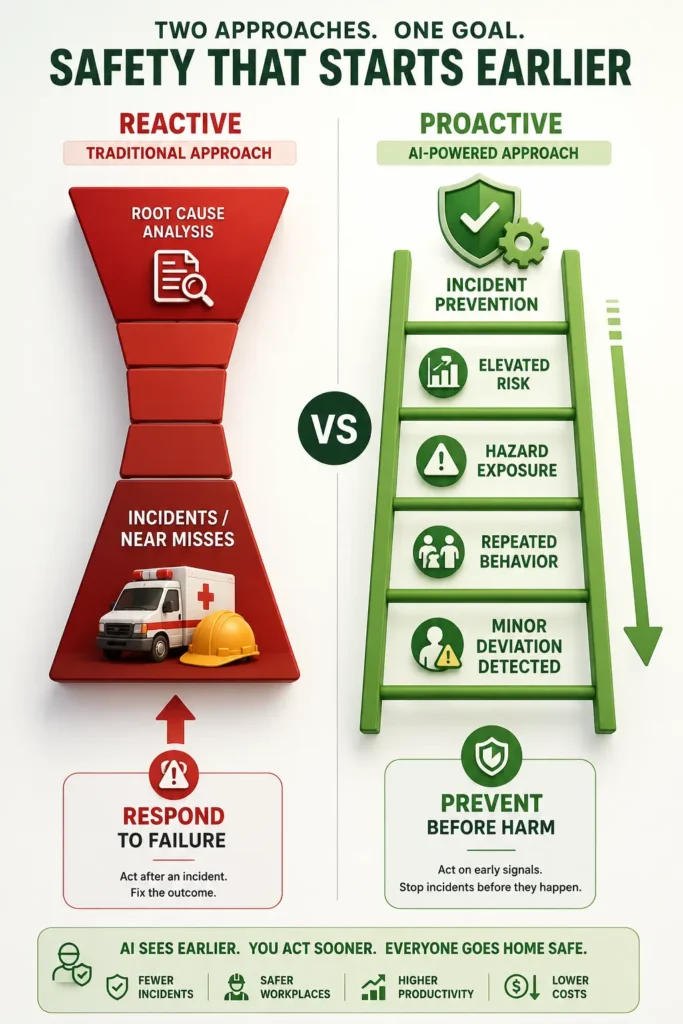
Understanding How Workplace Risks Develop
Safety incidents are usually the final outcome of a series of smaller observations rather than isolated events. Recognizing these stages helps organizations intervene before operational risks increase.
A typical progression includes:
- Safe working practices
- Minor procedural deviation
- Repeated unsafe behaviour
- Increasing exposure to hazards
- Elevated operational risk
- Corrective action before an incident occurs
Viewing workplace safety as a continuous process allows organizations to focus on prevention instead of investigation.
Observations That Reveal Hidden Safety Risks
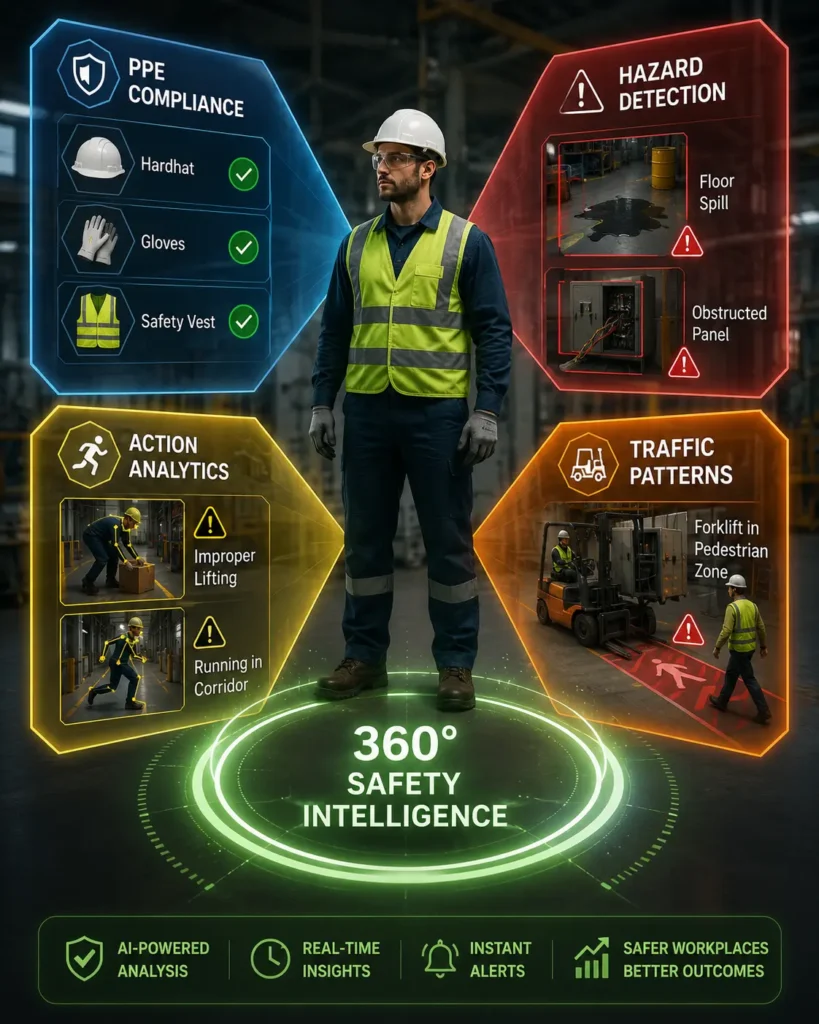
Different workplace conditions require different types of observation. Instead of concentrating on a single compliance requirement, AI evaluates multiple aspects of the working environment simultaneously.
Observation Category | Typical Workplace Indicators |
Personal Protection | Missing helmets, gloves, safety glasses, or reflective clothing |
Workplace Conditions | Spills, blocked exits, damaged barriers, poor housekeeping |
Equipment Interaction | Unsafe distance from machinery, improper equipment use |
Movement Patterns | Restricted area entry, unsafe pedestrian routes, vehicle conflicts |
Work Practices | Unsafe lifting, incorrect procedures, incomplete safety steps |
Together, these observations provide a broader understanding of workplace conditions rather than highlighting isolated violations.
From Scheduled Inspections to Everyday Awareness
Safety inspections remain an essential part of industrial operations, but they represent only brief snapshots of workplace conditions. Activities between inspections often determine whether safety procedures are consistently followed.
Continuous observation helps managers understand:
- Whether PPE compliance changes across shifts
- Which work areas experience repeated safety concerns
- How often hazardous conditions reappear
- Whether corrective actions remain effective
- Which operational practices require additional supervision
This ongoing visibility supports informed decision-making throughout normal operations rather than only during formal audits.
Why Behaviour Often Reveals More Than Individual Violations
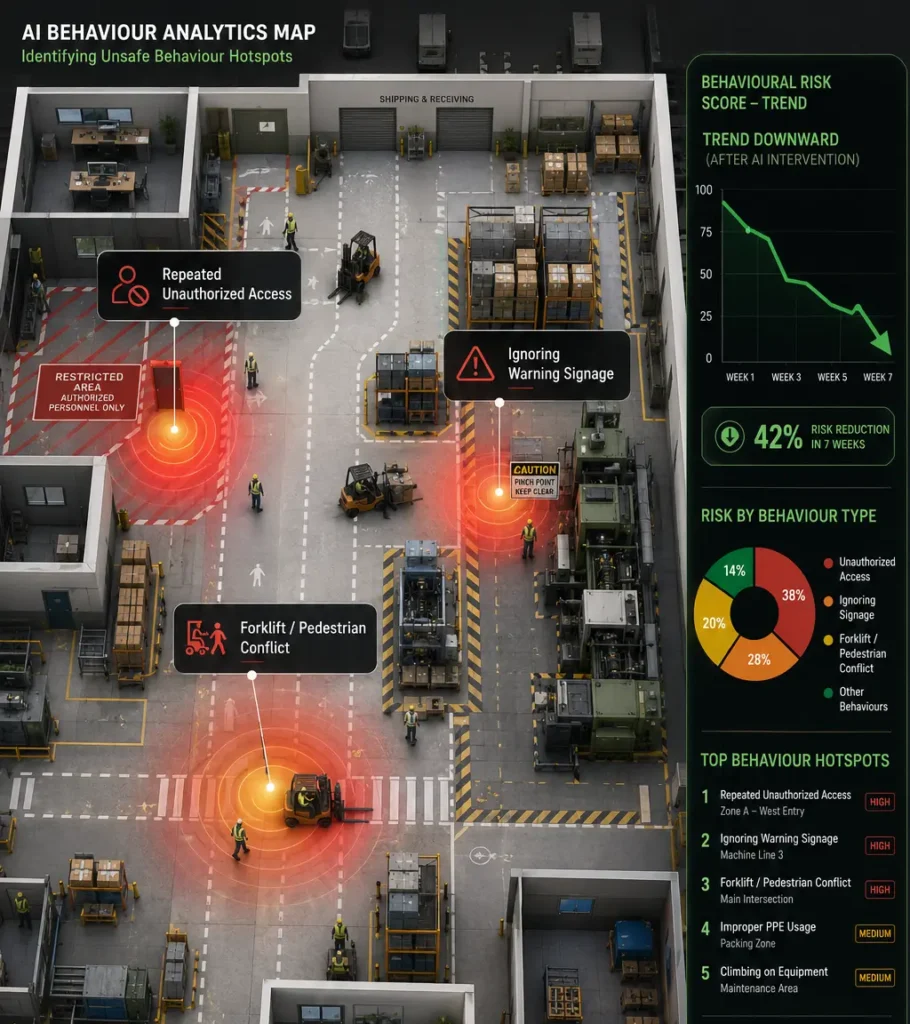
A single safety violation may require immediate correction, but recurring behavioural patterns often provide greater insight into workplace culture.
Examples include:
- Frequently bypassing designated walkways
- Repeated shortcuts during equipment operation
- Ignoring warning signage
- Entering hazardous zones unnecessarily
- Unsafe material handling practices
- Congestion around production equipment
Identifying these patterns enables organizations to address the underlying causes through training, workflow improvements, or revised operating procedures instead of repeatedly correcting the same behaviour.
Sharing Safety Responsibilities Across the Organization
Workplace safety is a shared operational responsibility rather than the responsibility of one department alone. AI-generated observations become more valuable when they support the decisions of different teams.
- Safety officers review compliance trends and workplace hazards.
- Production supervisors address unsafe operational practices.
- Maintenance teams resolve equipment-related safety concerns.
- Facility managers oversee housekeeping and infrastructure issues.
- Human resources use behavioural trends to strengthen safety training.
- Leadership evaluates long-term safety performance across multiple facilities.
A Practical Workplace Example
During a routine production shift, AI identifies several forklift movements crossing a pedestrian walkway outside designated routes. Later, it observes workers repeatedly stepping outside marked safety lanes to save time while transporting materials. Although neither event results in an immediate incident, supervisors recognise a developing traffic management issue.
Measuring Safety Performance Differently
Incident statistics alone rarely provide a complete picture of workplace safety. Monitoring everyday activities allows organizations to evaluate operational performance using broader indicators.
These may include:
- Repeated behavioural observations
- PPE compliance consistency
- Time taken to correct identified hazards
- High-risk operational zones
- Department-wise safety trends
- Frequency of recurring workplace conditions
Operational Perspective
Safety Management Focus | Management Outcome |
Behaviour patterns | Identifies recurring workplace practices requiring attention |
Hazard observations | Prioritizes corrective actions before risks increase |
Compliance consistency | Evaluates how reliably safety procedures are followed |
Workplace trends | Supports planning based on recurring operational evidence |
Training effectiveness | Measures changes in behaviour after awareness programs |
Leadership reporting | Provides structured information for safety reviews |
Creating Safer Workplaces Through Better Observation
Strong workplace safety is built through thousands of everyday decisions rather than occasional inspections. Organizations that consistently understand how people work, how risks emerge, and where unsafe practices become routine are better positioned to strengthen operational discipline over time. AI Surveillance, Intelligent CCTV Monitoring, Computer Vision, Edge AI, Industrial AI, and Workplace Safety technologies provide the evidence needed to guide those decisions, helping leaders develop safer working environments through continuous learning rather than reactive intervention.
FAQ
Can AI identify recurring unsafe behaviours even if no incident has occurred?
Yes. AI can recognize repeated behavioural patterns and operational practices that may increase workplace risk over time.
How does behaviour analytics differ from PPE monitoring?
PPE monitoring verifies the use of protective equipment, while behaviour analytics evaluates how people move, interact with equipment, and follow workplace procedures.
Can different departments receive different workplace safety insights?
Yes. Safety, operations, maintenance, facilities, and management teams can receive information relevant to their specific responsibilities
How can organizations measure improvements in workplace safety beyond incident reports?
They can review behavioural trends, hazard recurrence, compliance consistency, correction times, and departmental safety performance over extended periods.