
How AI Prevents Workplace Safety Incidents
Workplace safety depends on more than policies and scheduled inspections. In busy manufacturing plants, warehouses, construction sites, logistics hubs, and industrial facilities, conditions can change within seconds. A missing helmet, an unauthorized entry into a hazardous zone, or a vehicle operating too close to pedestrians can quickly develop into a serious incident if left unnoticed.
Artificial intelligence helps organizations detect these situations as they occur. Instead of relying solely on manual supervision or post-incident investigations, AI continuously analyzes operational activities, allowing safety teams to identify risks early and take corrective action before an incident happens.
How AI Detects Workplace Risks in Real Time
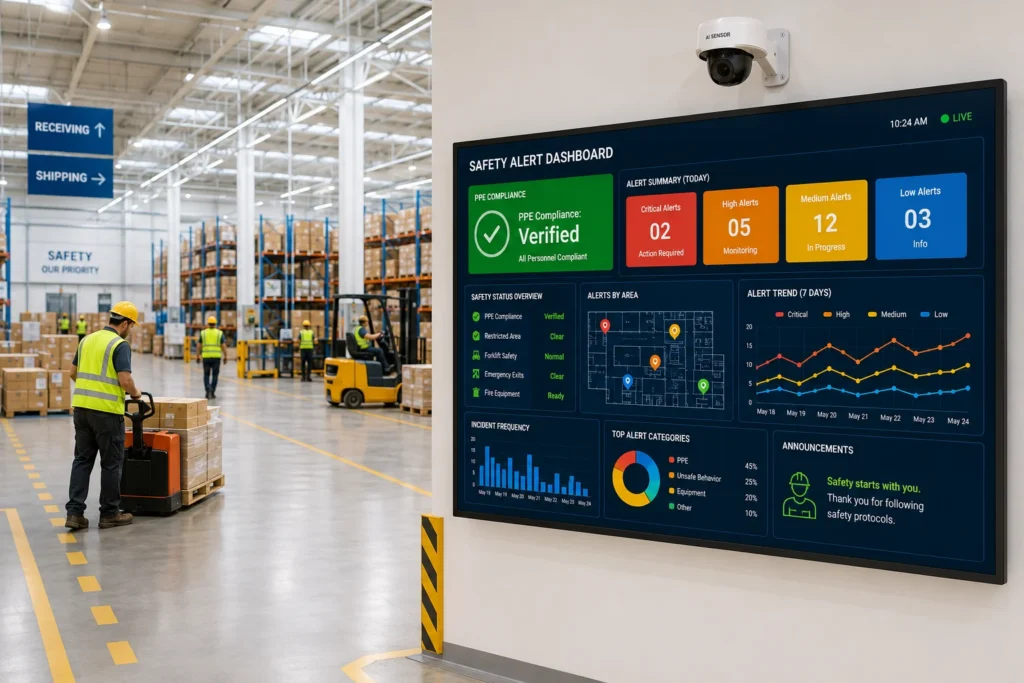
AI-powered video analytics uses computer vision, edge AI, and real-time analytics to continuously evaluate workplace activities.
Instead of simply recording video, the system identifies predefined safety conditions and operational events as they occur.
Examples include:
- PPE compliance verification
- Restricted area access detection
- Unsafe pedestrian and vehicle interactions
- Hazard zone monitoring
- Worker proximity to heavy equipment
- Emergency exit obstruction detection
- Unsafe material handling practices
- Slip, trip, and fall risk identification
When a potential safety concern is detected, supervisors receive immediate alerts that support faster intervention.
Preventive Monitoring Versus Reactive Investigations
Traditional Safety Management | AI-Assisted Safety Monitoring |
Investigates incidents after they occur | Identifies risks before incidents escalate |
Periodic manual inspections | Continuous workplace monitoring |
Limited operational visibility | Real-time safety intelligence |
Manual review of video footage | Automated event detection |
Corrective action after reporting | Immediate operational alerts |
Preventive monitoring enables organizations to reduce exposure to workplace hazards while improving overall safety performance.
Why Traditional Safety Monitoring Has Limitations
Many organizations follow established safety procedures, conduct regular audits, and provide employee training. While these measures remain essential, they cannot provide continuous oversight across every work area.
Common challenges include:
- Large operational facilities
- Multiple work shifts
- High employee movement
- Simultaneous equipment operation
- Manual safety inspections
- Delayed reporting of unsafe conditions
As operations expand, maintaining consistent safety visibility becomes increasingly difficult without automated support.
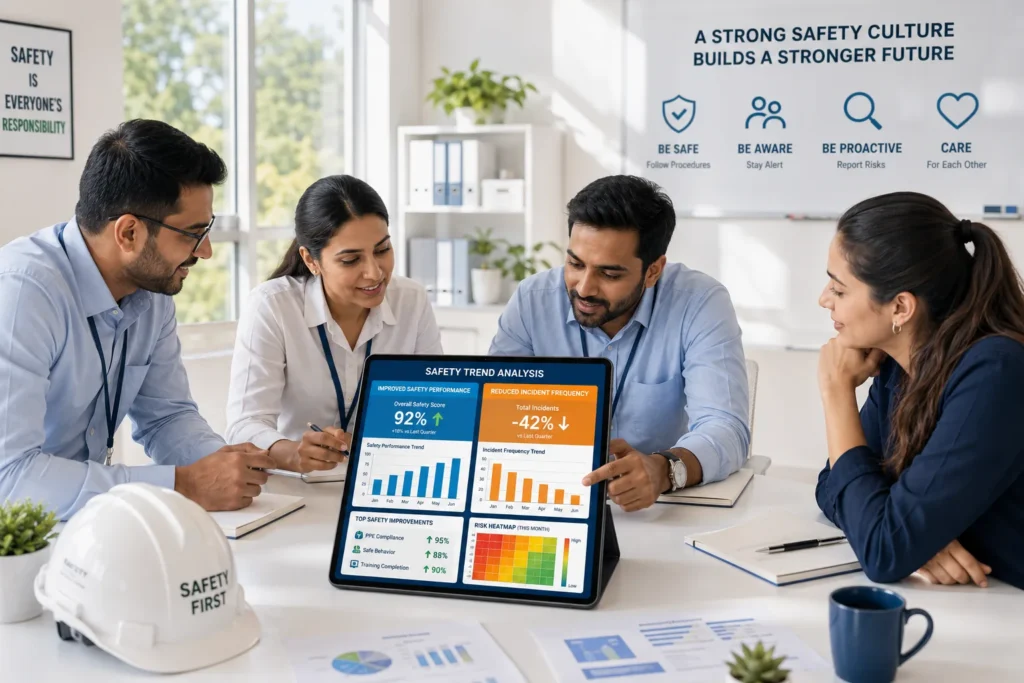
Building a Stronger Safety Culture
A safe workplace cannot be created by technology alone. A positive safety culture develops when employees consistently follow procedures and receive timely guidance.
AI supports this culture by providing objective and consistent monitoring across every shift and facility.
Organizations can use operational insights to:
- Improve employee safety training
- Reinforce PPE compliance
- Identify recurring unsafe behaviors
- Evaluate high-risk operational areas
- Measure safety performance over time
- Strengthen standard operating procedures
Continuous visibility helps transform workplace safety into an ongoing operational practice rather than a periodic compliance activity.
Business Benefits Beyond Safety
Preventing workplace incidents also improves broader business performance.
Organizations frequently achieve:
- Reduced workplace disruptions
- Improved regulatory compliance
- Lower investigation time
- Faster response to safety events
- Better operational visibility
- Increased employee confidence
- Reduced operational downtime
- More consistent safety reporting
- Better resource planning
- Stronger support for enterprise digital transformation
By reducing preventable incidents, organizations protect employees while improving operational continuity.
Supporting Multiple Operational Environments
AI-based safety monitoring delivers value across a wide range of industries.
Common applications include:
- Manufacturing facilities
- Warehouses and distribution centers
- Construction projects
- Logistics hubs
- Energy and utility sites
- Airports and transportation facilities
- Healthcare environments
- Corporate campuses
Each environment has unique operational risks, but all benefit from faster identification of unsafe conditions and improved situational awareness.
Creating Safer Operations Through Continuous Awareness
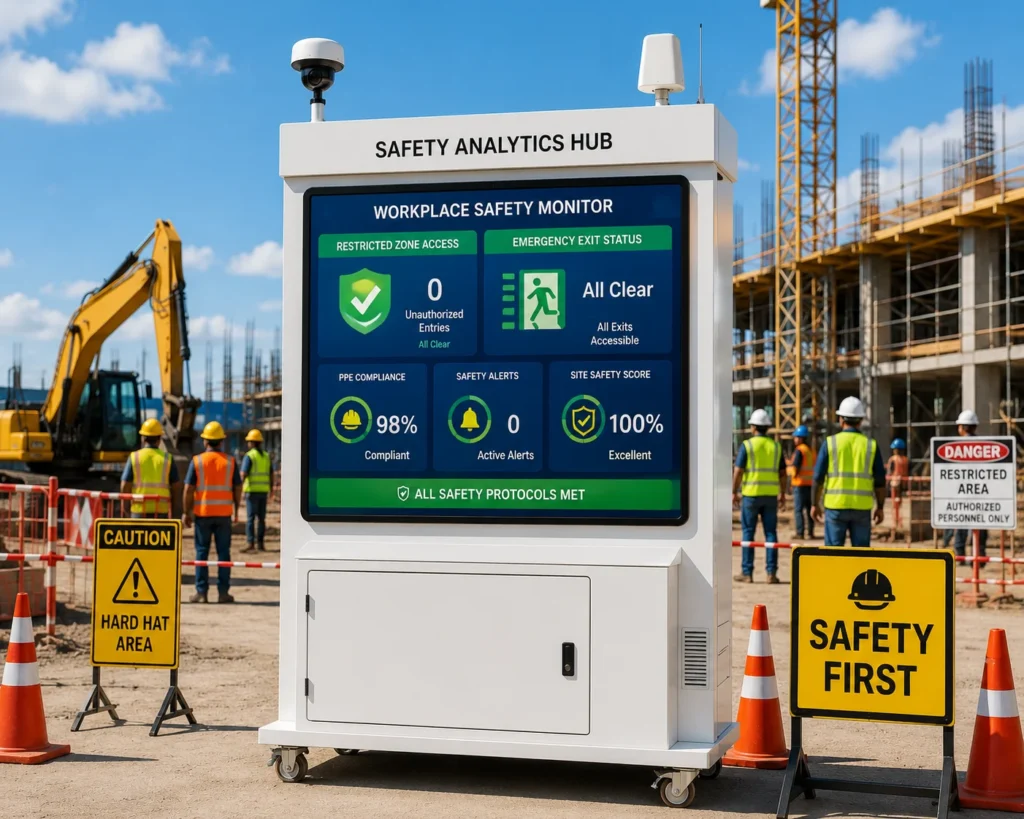
Preventing workplace incidents requires timely information, consistent monitoring, and rapid response. AI enables organizations to maintain continuous awareness of operational risks, helping teams identify hazards before they lead to injuries or disruptions. As workplaces become increasingly connected, AI-driven safety monitoring provides a practical foundation for protecting employees while supporting more reliable, efficient, and compliant operations.
Frequently Asked Questions
How does AI help prevent workplace safety incidents?
AI continuously analyzes operational activities using computer vision to detect unsafe conditions, policy violations, and potential hazards in real time, allowing organizations to respond before incidents occur.
Can AI monitor PPE compliance?
Yes. AI can automatically verify whether employees are wearing required protective equipment such as helmets, safety vests, gloves, or other PPE based on configured operational requirements.
Does AI replace workplace safety officers?
No. AI supports safety teams by providing continuous monitoring and immediate alerts, allowing safety professionals to focus on corrective actions, training, and risk management.
Which industries benefit most from AI safety monitoring?
Manufacturing, warehousing, logistics, construction, healthcare, transportation, energy, utilities, and other operational industries benefit from continuous AI-assisted workplace safety monitoring.
Can AI improve long-term workplace safety performance?
Yes. By identifying recurring safety trends, monitoring compliance, and providing measurable operational insights, AI helps organizations strengthen safety programs and reduce preventable incidents over time.