
AI Autonomous Warehouse Operations
Warehouse Flow Intelligence
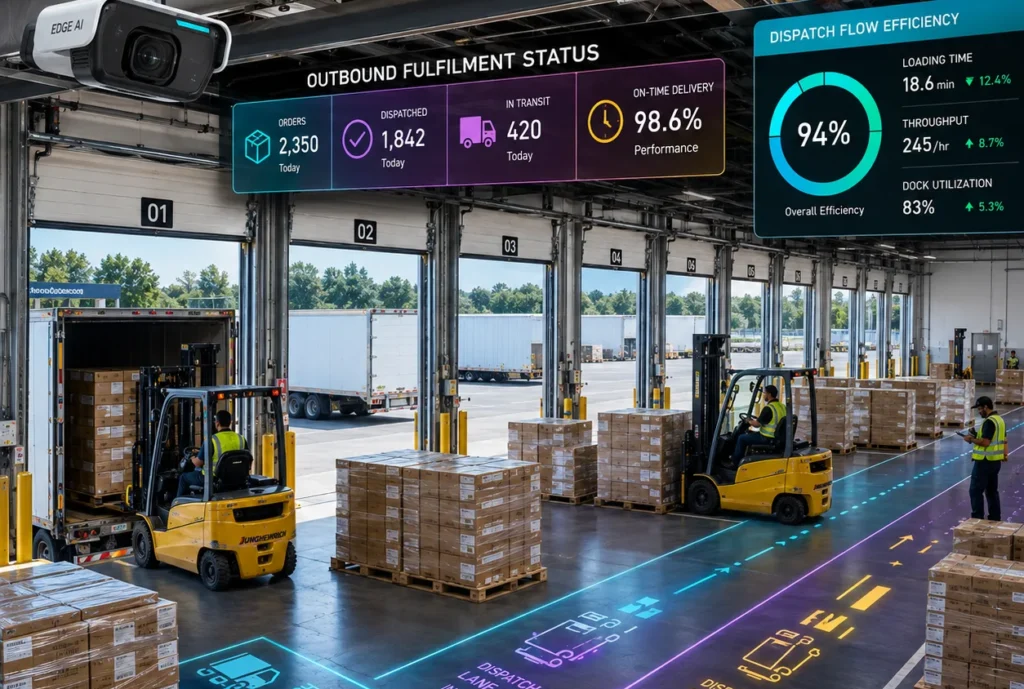
Modern warehouses operate through the continuous movement of inventory, people, vehicles, equipment, and fulfilment activities. Receiving, storage, replenishment, picking, packing, and dispatch are closely connected processes where operational efficiency depends on coordinated execution rather than isolated automation. Warehouse Flow Intelligence provides continuous visibility across these interconnected operational activities, enabling organisations to optimise inventory movement, strengthen workflow coordination, improve resource utilisation, and support reliable fulfilment operations. AI Monitoring enhances this operational approach by delivering meaningful operational insights that help warehouse teams maintain efficient, accurate, and responsive operations.
Executive Summary
A large distribution organisation sought to improve operational visibility across its warehouse network while supporting faster order fulfilment, efficient inventory movement, and coordinated warehouse operations. Existing warehouse management systems effectively controlled inventory records and fulfilment processes, but understanding how warehouse activities, workforce movements, equipment utilisation, and operational workflows influenced overall warehouse performance required broader operational intelligence.
SPGS implemented a Warehouse Flow Intelligence framework using AI Monitoring to strengthen coordination across warehouse operations, improve inventory visibility, support operational planning, and enhance collaboration between warehouse teams, supervisors, and logistics operations. The initiative enabled warehouse managers to optimise operational workflows while maintaining reliable fulfilment performance.
Customer Profile
Industry: Warehousing & Distribution (Anonymous)
Project Scope
- Receiving docks
- Storage aisles
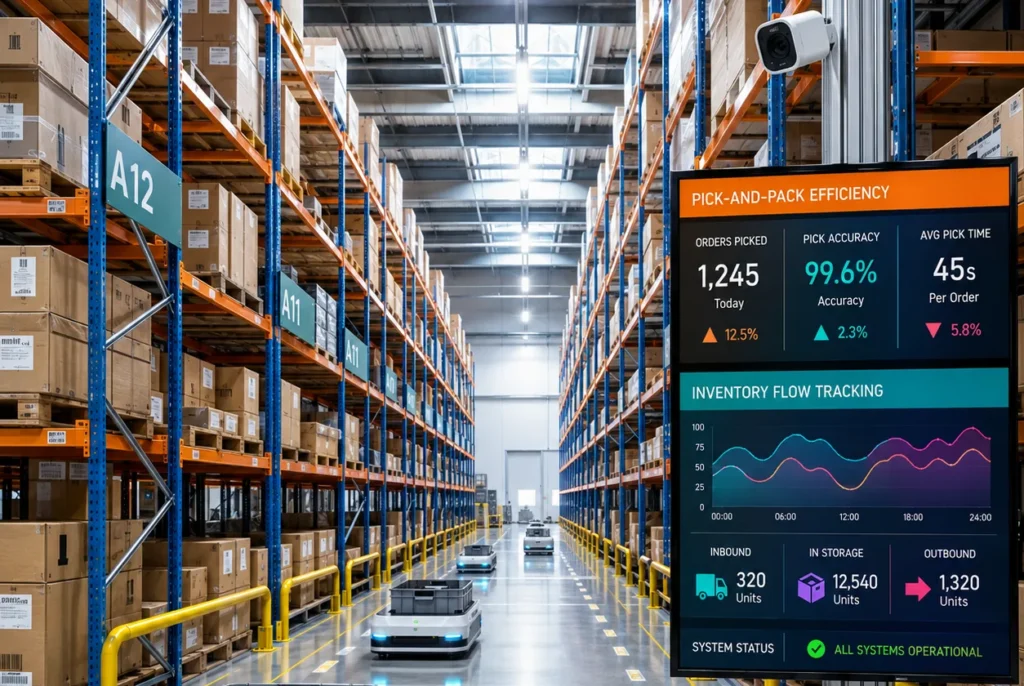
- Picking and packing zones
- Automated storage systems
- Dispatch and loading bays
- Material handling equipment
- Warehouse operations centre
- Continuous 24×7 operational oversight
Operational Environment
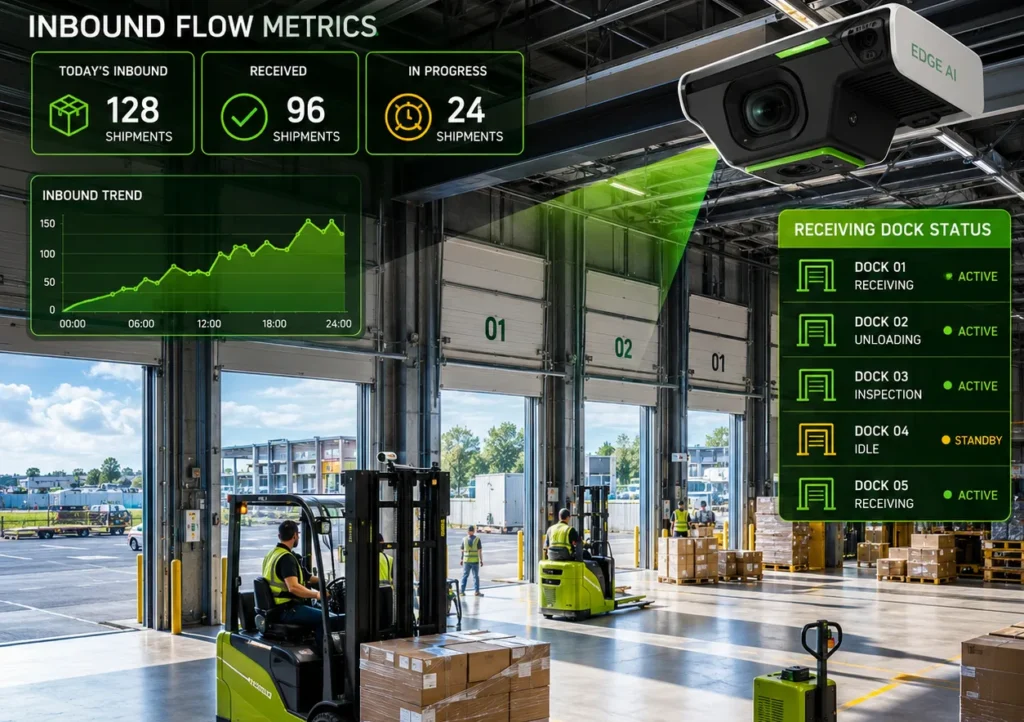
The warehouse managed high-volume inventory movement supporting multiple distribution channels and customer fulfilment operations. Daily activities included receiving goods, storage allocation, replenishment, order picking, packing, dispatch, equipment movement, and workforce coordination. Maintaining reliable fulfilment performance required seamless collaboration between warehouse personnel, supervisors, logistics teams, and material handling equipment operating across the facility.
Business Challenges
- Coordinating high-volume warehouse operations.
- Optimising inventory movement across fulfilment processes.
- Improving visibility into warehouse workflows.
- Supporting efficient workforce coordination.
- Maximising utilisation of warehouse resources.
- Reducing operational bottlenecks.
- Improving fulfilment consistency.
- Strengthening warehouse operational governance.
Project Objectives
- Improve warehouse operational visibility.
- Strengthen inventory flow coordination.
- Support efficient fulfilment operations.
- Optimise warehouse resource utilisation.
- Improve operational planning.
- Enhance warehouse responsiveness.
- Establish a Warehouse Flow Intelligence framework.
Orchestrating Every Movement Across the Warehouse
The transformation focused on improving the continuous flow of warehouse operations rather than automating isolated activities. Inventory movement, workforce activities, material handling equipment, storage operations, replenishment processes, and dispatch workflows were viewed as interconnected operational processes. This broader operational perspective enabled warehouse teams to reduce bottlenecks, improve fulfilment coordination, optimise resource deployment, and maintain consistent operational performance throughout the warehouse lifecycle.
Solution Architecture
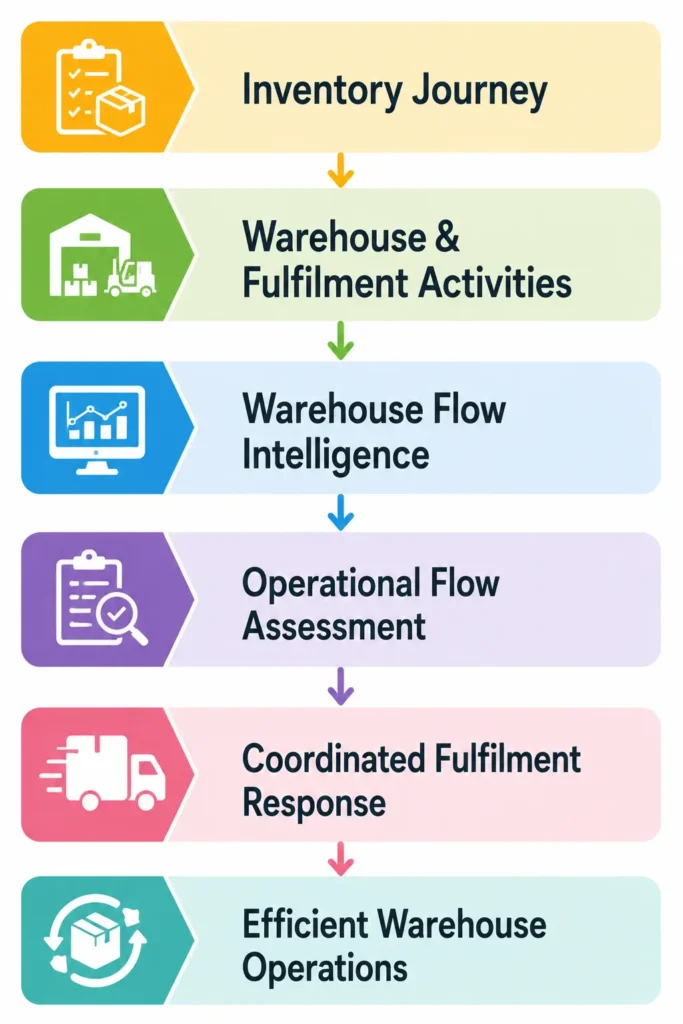
Operational Flow
Operational Technology Ecosystem
Technology | Business Contribution |
AI Monitoring | Continuous visibility across warehouse operations |
Computer Vision | Observation of inventory and workforce activities |
AI Video Analytics | Identification of operational patterns and workflow events |
Edge AI | Immediate operational analysis within warehouse facilities |
Warehouse Management System (WMS) | Inventory and fulfilment context |
Autonomous Mobile Robots (AMRs) / AGVs | Material movement execution |
Enterprise AI Dashboard | Central operational oversight |
REST APIs | Enterprise interoperability |
Operational Decision Intelligence
The solution supported warehouse operations by answering key operational questions:
- Which warehouse areas require immediate operational attention?
- Where are fulfilment activities creating operational bottlenecks?
- Which inventory flows require additional coordination?
- How should warehouse resources be allocated?
- Which operational conditions are affecting fulfilment performance?
- How can inventory movement be optimised?
- Which operational trends should guide warehouse planning?
Deployment Approach
The programme began with a comprehensive assessment of warehouse workflows, inventory movement, fulfilment operations, workforce coordination, and equipment utilisation. Critical operational areas—including receiving docks, storage aisles, picking zones, packing stations, automated storage systems, dispatch bays, and loading facilities—were prioritised for phased implementation. AI Monitoring capabilities were integrated alongside existing warehouse management platforms, enabling warehouse teams to validate operational insights, refine workflows, and strengthen operational coordination without disrupting fulfilment operations.
Enterprise Integrations
System | Business Contribution |
Warehouse Management System (WMS) | Inventory and fulfilment operations |
Enterprise Resource Planning (ERP) | Business planning and inventory information |
Transportation Management System (TMS) | Outbound logistics coordination |
Enterprise AI Dashboard | Central warehouse visibility |
Fleet & Equipment Management | Material handling equipment operations |
REST APIs | Enterprise interoperability |
Business Outcomes
- Improved coordination across warehouse operations.
- Enhanced inventory flow visibility.
- Better utilisation of warehouse resources.
- Reduced fulfilment bottlenecks.
- Improved warehouse planning.
- More consistent fulfilment performance.
- Stronger operational governance.
- Increased warehouse responsiveness.
ROI & Business Value
The initiative improved warehouse performance by strengthening coordination between inventory management, fulfilment operations, workforce activities, and material handling processes. Better visibility into operational workflows enabled warehouse teams to optimise inventory movement, improve resource utilisation, reduce operational delays, and support more consistent fulfilment performance. These improvements contributed to higher warehouse productivity, greater operational flexibility, and improved customer service.
Future Roadmap
The organisation plans to expand Warehouse Flow Intelligence through:
- Predictive Warehouse Flow Analytics
- AI-Assisted Inventory Optimisation
- Vision-Language Models for Warehouse Operations
- Digital Twin Integration for Distribution Centres
- Intelligent Fulfilment Coordination
- Enterprise Warehouse Performance Dashboards
Related Industry Pages
- Distribution Centres
- E-Commerce Fulfilment
- Third-Party Logistics (3PL)
- Manufacturing Warehouses
- Cold Storage Warehouses
- Retail Distribution
Related Technology Pages
- AI Monitoring
- Computer Vision
- AI Video Analytics
- Edge AI
- Warehouse Management System Integration
- Enterprise AI Dashboards
- Operational Analytics
Contact SPGS
High-performing warehouses depend on the continuous coordination of inventory, workforce, equipment, and fulfilment activities. SPGS develops AI-enabled operational intelligence solutions that help organisations improve warehouse flow, optimise fulfilment operations, strengthen operational planning, and create agile warehouse environments capable of supporting modern supply chain demands.