
Can AI Detect PPE Violations Automatically?
Personal Protective Equipment (PPE) is one of the most important safeguards in industrial and hazardous work environments. Helmets, safety vests, gloves, goggles, and other protective gear help reduce workplace risks, but ensuring that every employee consistently wears the required equipment is difficult through manual supervision alone. Supervisors cannot observe every work area continuously, and periodic inspections may miss non-compliance that occurs between checks.
AI-powered video analytics provides a practical way to monitor PPE compliance in real time by analyzing live video streams and identifying whether required safety equipment is present before potential risks escalate.
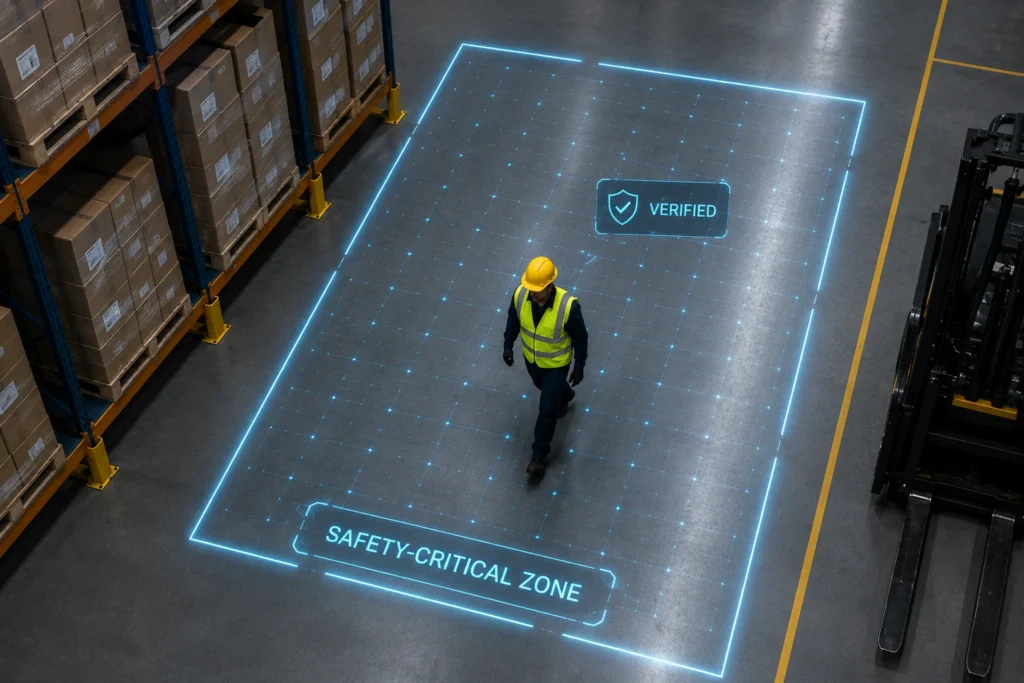
How Automatic PPE Detection Works
AI uses Computer Vision to examine live video from cameras installed across operational areas. Instead of simply recording footage, the system identifies people, recognizes different types of protective equipment, and compares what it observes against predefined safety rules.
A typical detection process includes:
Process Step | AI Activity |
Person Detection | Identifies workers entering the camera’s field of view. |
PPE Recognition | Detects helmets, safety vests, gloves, face masks, goggles, or other configured equipment. |
Compliance Evaluation | Compares detected PPE with workplace safety requirements. |
Violation Detection | Flags missing or incorrect protective equipment. |
Alert Notification | Sends immediate alerts to supervisors or control rooms. |
Event Recording | Stores images, timestamps, and event details for reporting and audits. |
This continuous monitoring allows organizations to identify safety issues as they occur rather than after an incident.
What Types of PPE Can AI Recognize?
The types of equipment AI can monitor depend on the operational environment and the models configured during deployment.
Common examples include:
- Safety helmets
- High-visibility vests
- Safety goggles
- Face masks
- Protective gloves
- Safety boots
- Protective coveralls
- Respiratory protection
- Face shields
- Hearing protection (where visually detectable)
Monitoring requirements can be customized to match the safety policies of different work areas.
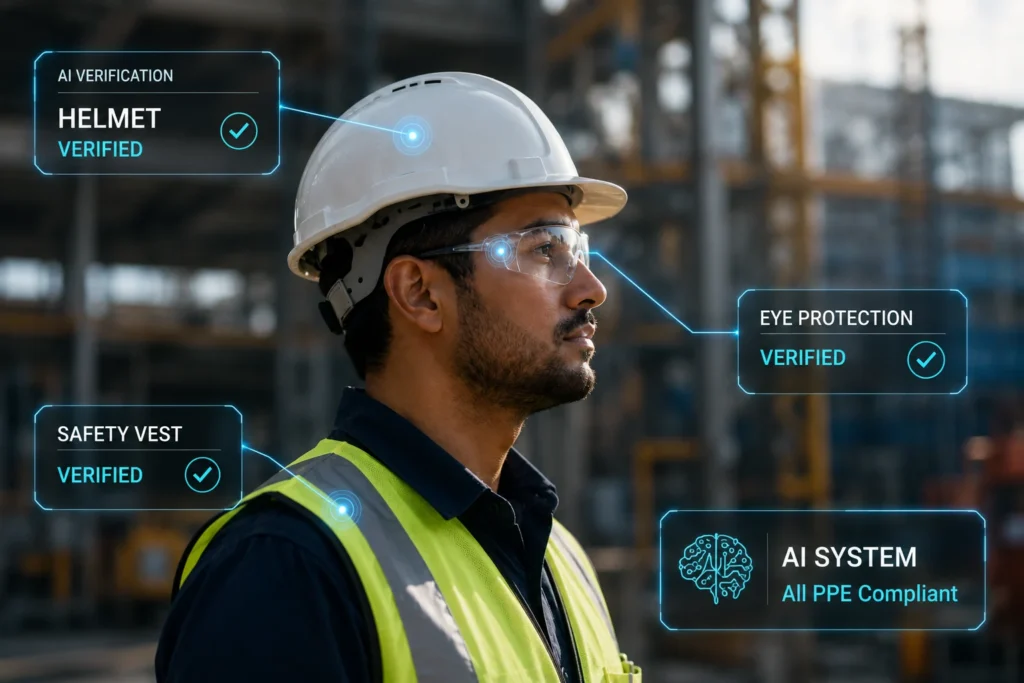
What Happens After a Violation Is Detected?
Once a PPE violation is identified, the system can initiate predefined response workflows without waiting for manual observation.
Possible actions include:
- Displaying an alert on the monitoring dashboard.
- Sending notifications to supervisors.
- Capturing an image of the violation.
- Logging the event with a timestamp and location.
- Creating records for compliance reporting.
- Supporting follow-up corrective actions.
Organizations can configure these responses according to their operational procedures.
Factors That Influence Detection Accuracy
Reliable PPE detection depends on several practical considerations.
Factor | Why It Matters |
Camera placement | Workers and equipment must be clearly visible. |
Lighting conditions | Adequate lighting improves object recognition. |
Camera resolution | Clear images support more accurate detection. |
Viewing angle | Proper positioning minimizes blind spots. |
PPE visibility | Equipment should not be obstructed or hidden. |
AI model configuration | Detection rules should match workplace requirements. |
Evaluating these factors before deployment helps improve monitoring performance.
Business Benefits of Automated PPE Monitoring
Organizations implementing AI-based PPE monitoring often experience improvements beyond simple compliance verification.
Some measurable benefits include:
- Faster identification of safety violations.
- Reduced dependence on manual inspections.
- More consistent compliance monitoring.
- Improved workplace safety visibility.
- Faster supervisor response.
- Better documentation for audits.
- Reduced investigation effort.
- Increased operational accountability.
- Centralized monitoring across multiple facilities.
These outcomes support a more proactive approach to workplace safety management.
Implementation Best Practices
Before deploying AI for PPE monitoring, organizations should:
- Define PPE requirements for each operational area.
- Position cameras to provide unobstructed coverage.
- Test detection accuracy under normal operating conditions.
- Configure alert priorities based on safety risks.
- Train supervisors on reviewing AI-generated alerts.
- Periodically validate and update detection rules.
- Integrate monitoring with existing safety management processes.
Careful planning helps ensure reliable and consistent monitoring.
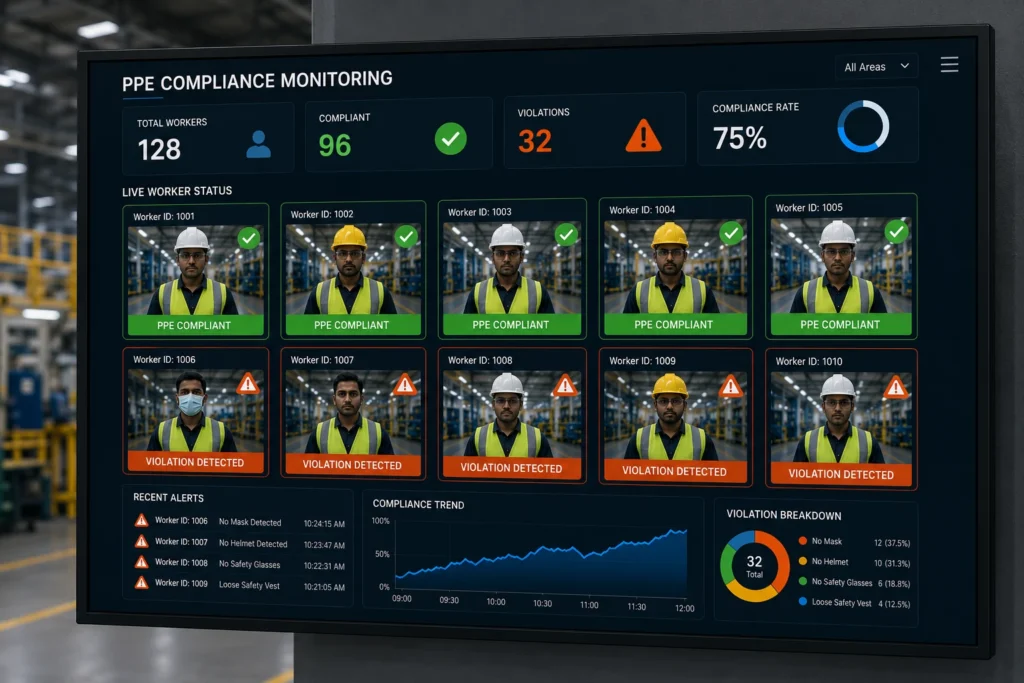
Creating a Safer Workplace Through Continuous Monitoring
Maintaining PPE compliance requires consistent observation, which becomes increasingly challenging as facilities grow and operations become more complex. AI enables organizations to continuously verify whether required protective equipment is being used, allowing supervisors to respond more quickly to safety issues while reducing the burden of manual monitoring. By combining automated detection with established safety procedures, businesses can strengthen workplace compliance and support a safer working environment.
Frequently Asked Questions
Can AI detect multiple PPE items at the same time?
Yes. AI models can be configured to verify multiple types of protective equipment simultaneously, depending on operational requirements.
Does AI replace workplace safety inspections?
No. AI supports safety inspections by providing continuous monitoring between scheduled inspections and highlighting situations that require attention.
Can organizations define different PPE requirements for different areas?
Yes. Monitoring rules can be customized so that PPE requirements vary according to specific work zones or operational activities.
What happens if lighting conditions change?
Modern AI systems can often operate under varying lighting conditions, but camera placement, illumination, and image quality remain important for maintaining reliable detection performance.
Can AI maintain records of PPE violations?
Yes. AI platforms can log violations with timestamps, images, and location information, helping organizations support investigations, audits, and compliance reporting.