
Complete Guide to AI-Powered Video Analytics for Enterprises
Modern enterprises generate enormous volumes of video from cameras installed across offices, manufacturing plants, retail stores, warehouses, hospitals, and other facilities. While these systems capture valuable information, reviewing footage manually is time-consuming and often limits how quickly organizations can respond to operational issues. AI-powered video analytics addresses this challenge by transforming live and recorded video into actionable business insights.
What Is AI-Powered Video Analytics?
AI-powered video analytics uses artificial intelligence, computer vision, and machine learning to automatically analyze video streams. Instead of relying on continuous human monitoring, the system identifies predefined events, recognizes patterns, detects anomalies, and generates alerts in real time.
Unlike traditional video monitoring, AI can continuously evaluate multiple camera feeds simultaneously, helping organizations improve visibility across distributed operations while reducing manual effort.
Common capabilities include:
- Object detection
- People counting
- Vehicle recognition
- Intrusion detection
- Queue monitoring
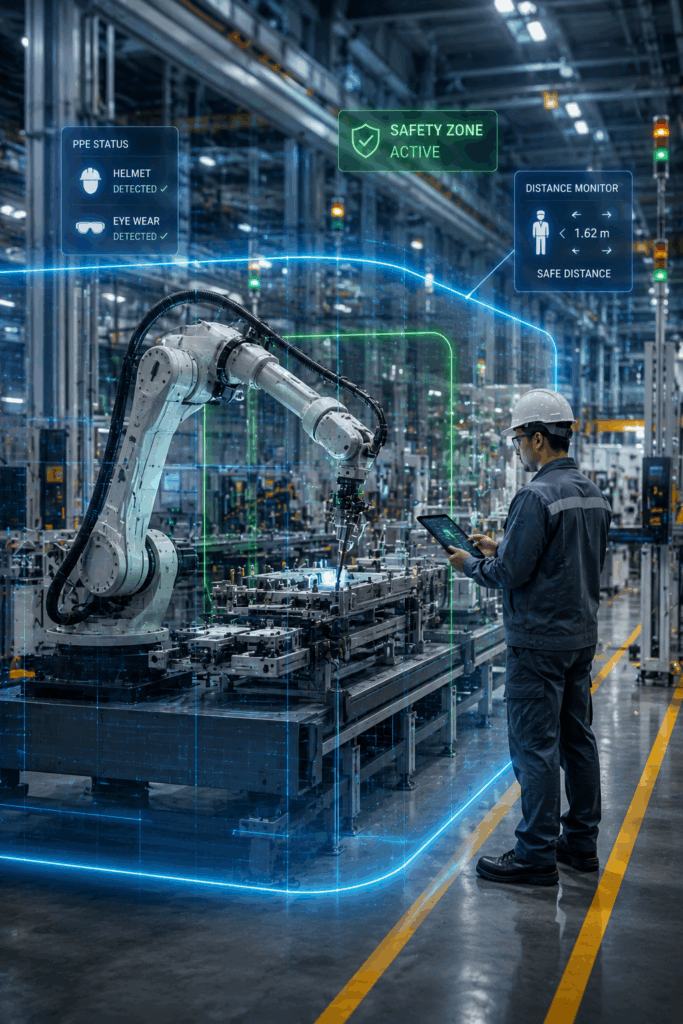
- PPE compliance monitoring
- Smoke and fire detection
- Unauthorized access detection
- Occupancy analytics
- Incident recording
How AI Video Analytics Works
An enterprise AI video analytics solution follows a structured workflow.
Stage | Function |
Video Capture | Receives live feeds from IP cameras or existing surveillance systems |
AI Processing | Uses Edge AI or cloud processing to analyze video frames |
Event Detection | Identifies predefined events or abnormal behavior |
Real-Time Alerts | Sends notifications to operators or management systems |
Reporting | Stores analytics for dashboards, investigations, and audits |
Many organizations combine Edge Analytics with centralized Enterprise AI platforms to balance processing speed, bandwidth usage, and scalability.
Core Technologies Behind AI Video Analytics
Several technologies work together to deliver accurate analysis.
Computer Vision
Computer Vision enables systems to interpret visual information by identifying people, vehicles, equipment, and activities within a scene.
Edge AI
Edge AI processes video near the camera instead of sending every frame to the cloud. This approach reduces latency, minimizes bandwidth consumption, and enables faster response times.
Real-Time Analytics
Real-Time Analytics continuously evaluates incoming video streams to detect incidents immediately rather than after they occur.
AI Dashboards
AI Dashboards consolidate alerts, trends, camera status, and operational metrics into a centralized interface for managers and security teams.
Enterprise Applications Across Industries
AI-powered video analytics supports a wide range of operational objectives.
Manufacturing
Industrial AI helps manufacturers monitor production lines, verify Standard Operating Procedure (SOP) compliance, detect safety violations, and identify equipment abnormalities before they disrupt operations.
Retail
Retail Analytics provides visibility into customer traffic, checkout queues, shelf availability, and store occupancy while helping managers improve staffing decisions.
Warehousing And Logistics
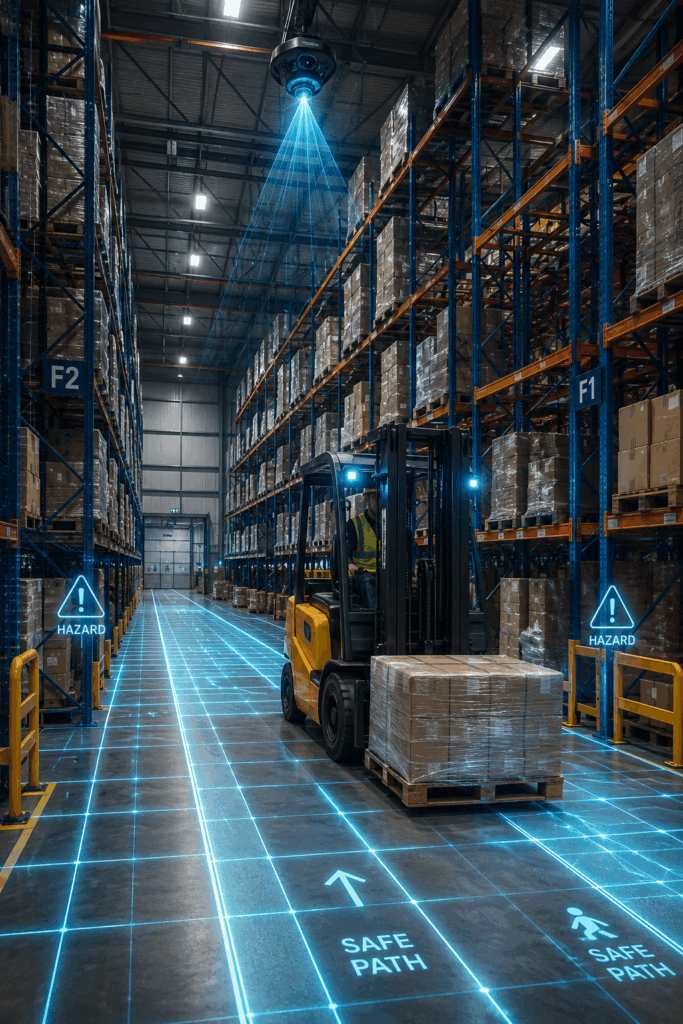
Video analytics tracks loading activities, dock operations, restricted zones, and vehicle movement to improve operational efficiency and reduce delays.
Healthcare
Hospitals use AI Surveillance to monitor restricted areas, improve patient safety, and detect unauthorized access without requiring constant manual observation.
Corporate Offices
Organizations monitor visitor movement, meeting areas, parking facilities, and entry points while maintaining compliance with workplace policies.
Benefits of AI-Powered Video Analytics
Organizations adopting Intelligent Operations often experience measurable improvements.
- Faster incident detection
- Reduced manual video review
- Improved Workplace Safety
- Better Compliance Monitoring
- Increased operational visibility
- Enhanced resource utilization
- Centralized Operational Intelligence
- More informed business decisions
These benefits extend beyond security by supporting operational efficiency, regulatory compliance, and business continuity.
AI-Powered Video Analytics vs Traditional Video Monitoring
Feature | Traditional Monitoring | AI-Powered Video Analytics |
Monitoring | Manual | Automated |
Event Detection | Operator dependent | AI-driven |
Response Time | Slower | Near real time |
Scalability | Limited | Supports multiple locations |
Reporting | Manual review | Automated dashboards |
Operational Insights | Minimal | Data-driven analytics |
For enterprises managing hundreds of cameras across multiple facilities, automation significantly improves consistency and reduces monitoring workloads.
Best Practices for Successful Implementation
Organizations should plan carefully before deploying AI video analytics.
- Define clear operational objectives.
- Identify the business events that require automated detection.
- Evaluate existing camera infrastructure.
- Determine whether Edge AI, cloud processing, or a hybrid approach is appropriate.
- Establish alert workflows to reduce unnecessary notifications.
- Regularly review AI models and system performance.
- Train operational teams to interpret analytics and respond effectively.
A phased rollout often helps validate performance before expanding deployment across additional sites.
Supporting Digital Transformation With Intelligent Video Analytics
As organizations continue their Digital Transformation initiatives, video data is becoming an important source of operational intelligence. AI Automation enables enterprises to convert visual information into measurable insights that support safety, compliance, productivity, and decision-making.
Rather than functioning solely as a surveillance tool, modern AI-powered video analytics becomes part of a broader Enterprise AI strategy that connects cameras, analytics, reporting, and operational workflows into a unified ecosystem.
Frequently Asked Questions
Manufacturing, retail, healthcare, logistics, education, banking, transportation, and corporate facilities commonly use AI video analytics to improve operations and monitoring.
Edge AI processes video close to the camera, reducing latency, lowering bandwidth usage, and enabling faster event detection.
Many solutions integrate with existing IP camera infrastructure, allowing organizations to modernize without replacing all hardware.
Yes. AI can automatically monitor predefined operational procedures, restricted areas, PPE usage, occupancy limits, and other compliance requirements.
Traditional surveillance records video for later review, while AI-powered video analytics continuously analyzes video streams, detects events automatically, and provides actionable insights through real-time alerts and analytics dashboards.