
What Is the ROI of AI-Powered Surveillance?
Organizations invest in surveillance systems to improve security, workplace safety, compliance, and operational visibility. However, traditional surveillance often requires personnel to monitor multiple video feeds manually, making it difficult to identify critical events quickly and consistently. As facilities grow larger and operations become more complex, the cost of manual monitoring continues to increase while important incidents may still go unnoticed.
AI-powered surveillance improves the return on investment (ROI) by transforming surveillance systems from passive recording tools into active operational intelligence platforms. Instead of simply storing video, AI continuously analyzes live feeds, detects significant events, and delivers actionable alerts that help organizations reduce risks, improve productivity, and make better business decisions.
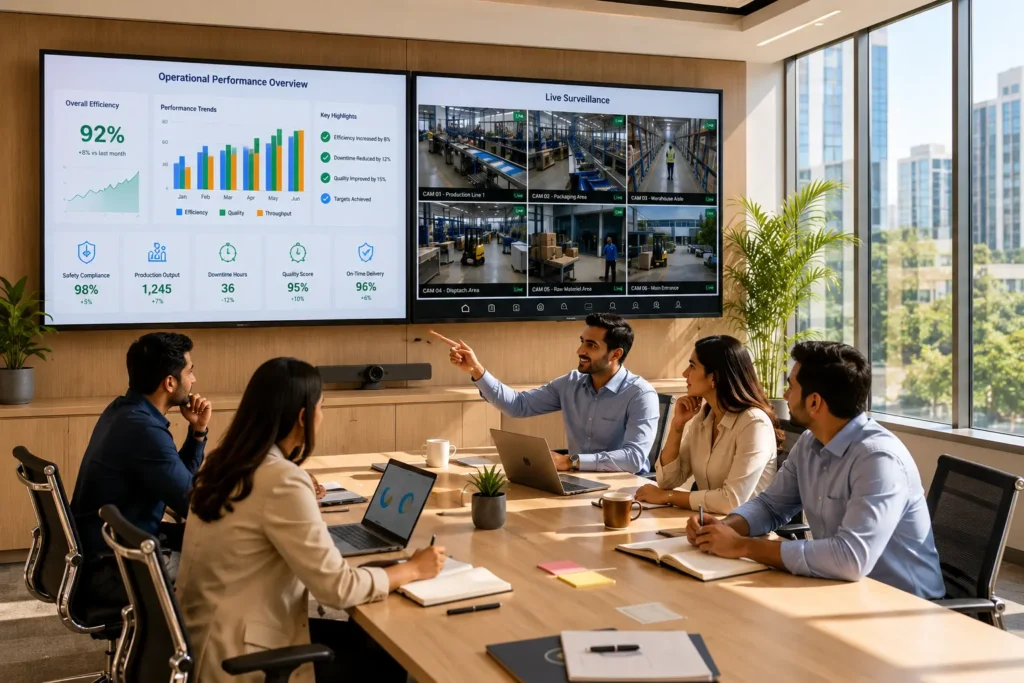
Looking Beyond Hardware Costs
The value of AI-powered surveillance is not measured solely by the cost of cameras or software. The real return comes from improving operational performance across multiple business functions.
Organizations typically evaluate ROI based on:
- Reduced operational risks
- Improved workplace safety
- Lower manual monitoring costs
- Faster incident response
- Better compliance performance
- Increased equipment utilization
- Reduced production disruptions
- Improved decision-making through operational insights
These benefits often extend well beyond traditional security objectives.
Where AI Creates Business Value
AI contributes measurable value across several operational areas.
Business Area | AI Contribution | Potential ROI Impact |
Security | Real-time threat detection | Reduced security incidents |
Workplace Safety | PPE and hazard monitoring | Fewer workplace accidents |
Compliance | Continuous SOP monitoring | Lower compliance risks |
Manufacturing | Equipment and workflow monitoring | Reduced downtime |
Warehousing | Forklift and logistics monitoring | Improved operational efficiency |
Retail | Customer flow and inventory visibility | Better resource utilization |
Rather than relying on periodic reviews, organizations receive continuous operational awareness that supports faster action
Cost Savings Through Automation
One of the most immediate financial benefits comes from reducing manual monitoring efforts.
AI can automatically:
- Monitor multiple camera feeds simultaneously
- Detect predefined operational events
- Prioritize critical alerts
- Capture supporting evidence
- Generate incident records
- Support corrective and preventive action (CAPA) workflows
This enables security teams and supervisors to focus on responding to events instead of continuously watching video screens.
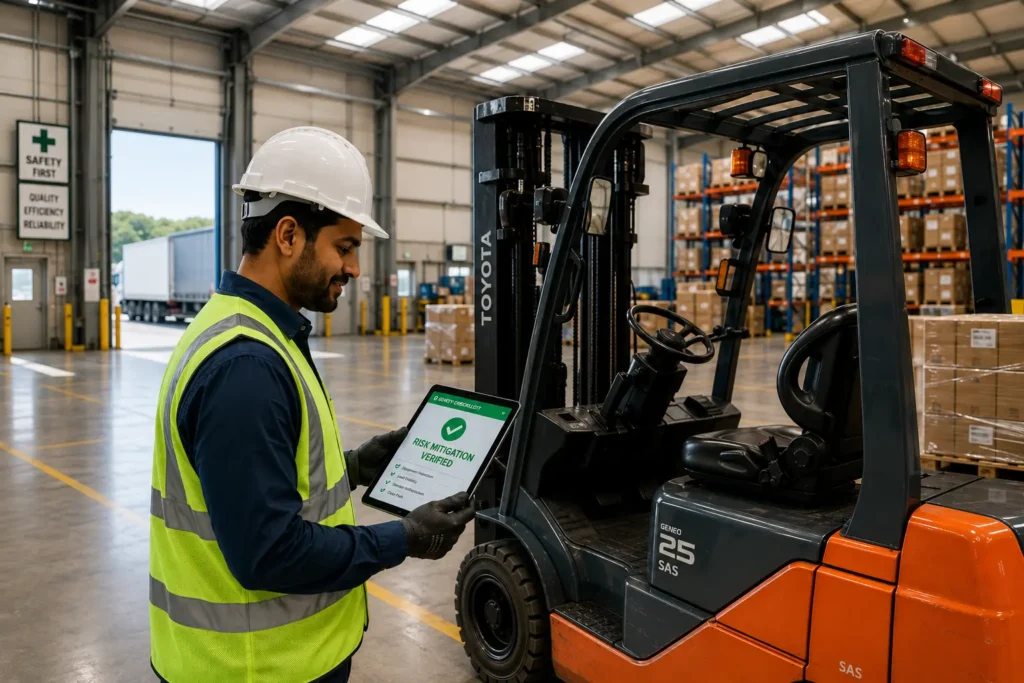
Measuring Operational Improvements
Many organizations track ROI using operational metrics rather than technology metrics.
Common performance indicators include:
KPI | Expected Improvement |
Incident response time | Faster responses |
Manual monitoring hours | Reduced labor requirements |
Safety incidents | Fewer preventable accidents |
Compliance violations | Improved adherence |
Equipment downtime | Reduced interruptions |
Investigation time | Faster root cause analysis |
False alarm handling | Improved operational efficiency |
Multi-site visibility | Better centralized oversight |
Tracking these indicators helps demonstrate long-term business value.
Factors That Influence ROI
The return on investment varies depending on operational complexity, facility size, and implementation strategy.
Organizations typically achieve stronger results when they:
- Deploy AI in high-risk operational areas first.
- Define clear business objectives before implementation.
- Integrate AI with existing operational workflows.
- Configure monitoring rules based on actual business priorities.
- Continuously review alert accuracy and performance.
- Measure improvements using predefined KPIs.
A phased implementation often provides quicker returns than deploying AI across every location simultaneously.
Benefits Beyond Financial Returns
Not every benefit can be measured directly in monetary terms. AI-powered surveillance also delivers strategic advantages.
These include:
- Better workplace safety culture
- Greater employee confidence
- Improved operational transparency
- Enhanced audit readiness
- More consistent policy enforcement
- Better customer and visitor safety
- Stronger business continuity
- Increased confidence in operational decision-making
These improvements contribute to long-term organizational resilience.
Common Challenges to Consider
While AI offers significant value, organizations should plan for successful adoption.
Important considerations include:
- Initial deployment and integration costs
- Employee training
- Camera placement and coverage
- Network and infrastructure requirements
- Privacy and data governance policies
- Ongoing system maintenance and optimization
Addressing these factors early helps maximize long-term ROI.
Building Long-Term Value With AI Surveillance
The ROI of AI-powered surveillance extends far beyond traditional security monitoring. By automating event detection, improving operational visibility, reducing manual effort, and supporting faster responses, AI helps organizations improve safety, compliance, productivity, and decision-making. When aligned with clearly defined business objectives and measurable performance indicators, AI-powered surveillance becomes a strategic investment that delivers lasting operational and financial value.
FAQ
How quickly can organizations see ROI from AI-powered surveillance?
The timeline depends on facility size, operational priorities, and deployment scope. Organizations often begin seeing operational improvements after implementing AI in high-impact areas.
Is ROI limited to security departments?
No. AI-powered surveillance provides value across security, safety, manufacturing, logistics, compliance, quality assurance, and operations.
Can existing cameras be used?
Many AI platforms are compatible with existing IP camera infrastructure, allowing organizations to enhance current surveillance systems without replacing all hardware.
How can ROI be measured?
Businesses typically evaluate ROI using metrics such as incident response time, labor savings, reduced downtime, compliance performance, workplace safety improvements, and operational efficiency
Does AI eliminate the need for human monitoring?
No. AI assists personnel by automatically detecting important events and providing actionable alerts, allowing teams to focus on investigation, decision-making, and corrective actions.