
AI Construction Site Safety Monitoring
Construction Safety Intelligence
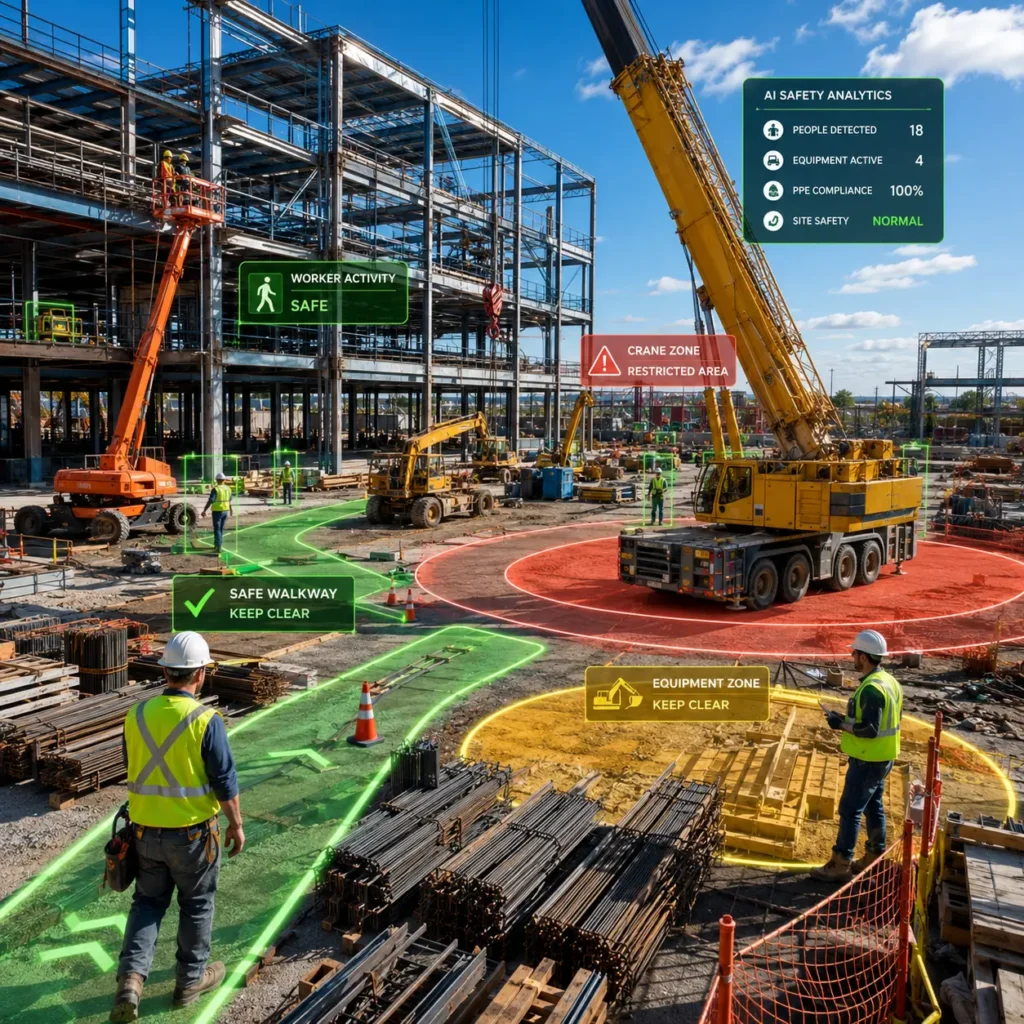
Construction sites are dynamic environments where people, heavy equipment, materials, and temporary structures interact continuously throughout every stage of a project. As work progresses, changing site conditions introduce new operational risks that can influence worker safety, project schedules, equipment utilisation, and regulatory compliance. Construction Safety Intelligence provides continuous visibility into these evolving activities, enabling project teams to recognise emerging risks, coordinate site operations effectively, and maintain safe execution without compromising productivity. AI Monitoring strengthens this approach by supporting informed decisions that improve both construction safety and project performance.
Executive Summary
A leading construction company sought to improve safety oversight across multiple active project sites while maintaining construction productivity and ensuring compliance with established safety procedures. Traditional CCTV systems recorded site activities effectively, but identifying unsafe conditions, coordinating multiple contractors, and responding proactively to developing risks remained challenging in fast-changing construction environments.
SPGS introduced a Construction Safety Intelligence framework using AI Monitoring to improve visibility across construction operations, strengthen safety governance, and support proactive site management. The initiative enabled earlier recognition of operational risks, improved coordination between project teams, and reinforced safe construction practices without interrupting project execution.
Customer Profile
Industry: Construction & Infrastructure Development (Anonymous)
Project Scope
- Multi-building construction project
- Excavation and structural work areas
- Tower crane and equipment zones
- Material storage locations
- Contractor access points
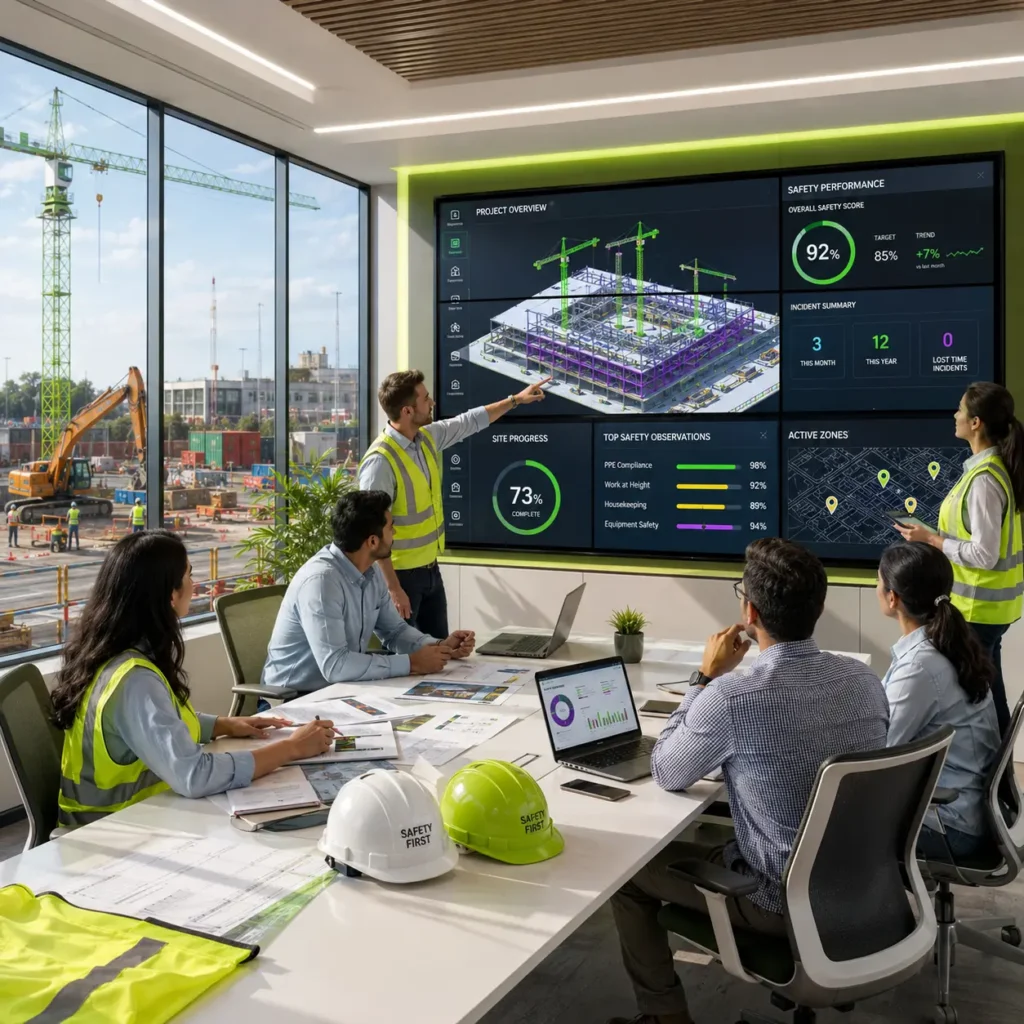
- Central project monitoring centre
- Continuous 24×7 operational oversight
Operational Environment
The construction project involved multiple contractors working simultaneously across excavation, structural construction, material handling, equipment operation, and finishing activities. Daily site conditions changed as work progressed, requiring continuous coordination between project managers, safety officers, supervisors, and field personnel. While site inspections and conventional surveillance supported safety management, maintaining comprehensive visibility across evolving work areas required a more intelligent operational approach.
Business Challenges
- Managing safety across constantly changing work environments.
- Coordinating multiple contractors and work crews.
- Protecting workers operating near heavy equipment.
- Improving visibility across large construction sites.
- Reducing safety-related project interruptions.
- Supporting compliance with construction safety regulations.
- Strengthening communication between field and management teams.
Project Objectives
- Improve construction site safety.
- Strengthen operational visibility.
- Reduce safety-related risks.
- Improve contractor coordination.
- Support regulatory compliance.
- Enhance project execution.
- Establish a Construction Safety Intelligence framework.
Solution Architecture
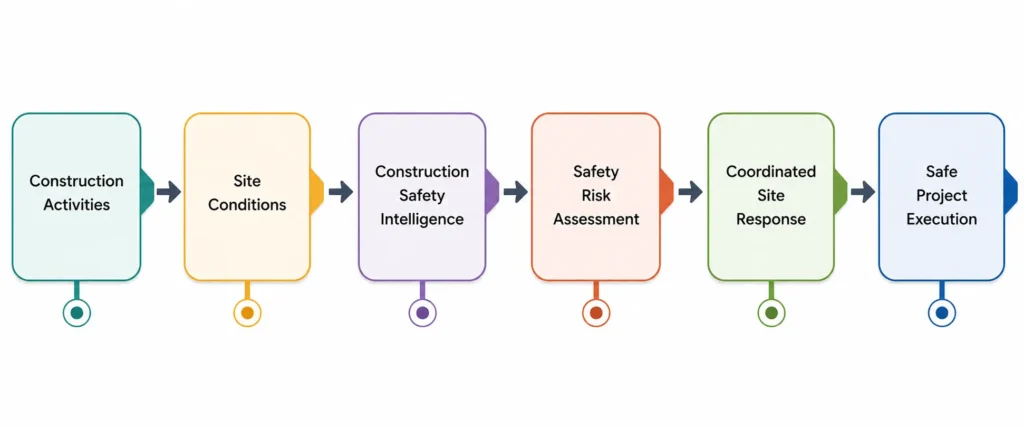
Operational Flow
Operational Technology Ecosystem
Technology |
Business Contribution |
|
AI Monitoring |
Continuous visibility across construction activities |
|
Computer Vision |
Observation of site operations and worker movement |
|
AI Video Analytics |
Identification of operational safety risks |
|
Edge AI |
Immediate analysis at construction sites |
|
IoT Sensors |
Equipment and environmental context |
|
Project Management System |
Construction workflow coordination |
|
Enterprise AI Dashboard |
Central project visibility |
|
REST APIs |
Enterprise interoperability |
Operational Decision Intelligence
The solution supported project managers and safety teams by answering important operational questions:
- Which work areas require immediate safety attention?
- Are construction activities progressing safely?
- Which locations present elevated operational risks?
- Where should supervisors be deployed?
- Which work zones require additional protective measures?
- How can contractor coordination be improved?
- Which conditions could affect project schedules?
Implementation Methodology
The programme began with an assessment of project phases, construction workflows, site layouts, and existing safety procedures. Critical operational areas, including excavation zones, lifting operations, equipment routes, material storage areas, and elevated work locations, were prioritised for phased deployment. AI Monitoring capabilities were introduced alongside existing project management and safety processes, allowing site teams to validate operational alerts, refine response procedures, and integrate intelligent monitoring into daily construction activities without disrupting project progress.
Enterprise Integrations
System |
Business Contribution |
|
Project Management System |
Construction planning and progress visibility |
|
Access Control System |
Workforce access management |
|
IoT Platform |
Environmental and equipment information |
|
Enterprise AI Dashboard |
Central operational oversight |
|
ERP |
Project reporting and resource management |
|
REST APIs |
Enterprise interoperability |
Business Outcomes
- Improved worker safety across active construction sites.
- Earlier identification of operational safety risks.
- Better coordination between contractors and supervisors.
- Reduced project interruptions caused by safety incidents.
- Enhanced visibility across construction operations.
- Improved compliance with construction safety procedures.
- Stronger project governance.
More consistent and efficient project execution
ROI & Business Value
The initiative improved project performance by embedding safety awareness into everyday construction operations rather than treating it as a separate compliance activity. Earlier recognition of operational risks, improved coordination between project teams, and greater visibility across construction workflows reduced avoidable delays, supported efficient resource utilisation, and strengthened confidence in project delivery. This contributed to safer worksites, improved operational consistency, and better overall project outcomes.
Future Roadmap
The organisation plans to expand Construction Safety Intelligence through:
- Predictive Construction Risk Analytics
- AI-Assisted Workforce Safety Planning
- Vision-Language Models for Site Safety Procedures
- Digital Twin Integration for Construction Projects
- Equipment Utilisation Intelligence
- Enterprise Construction Performance Dashboards
Related Industry Pages
- Commercial Construction
- Infrastructure Projects
- Residential Development
- Industrial Construction
- Mining & Quarry Operations
- Engineering, Procurement & Construction (EPC)
Related Technology Pages
- AI Monitoring
- Computer Vision
- AI Video Analytics
- Edge AI
- Workplace Safety Monitoring
- PPE Compliance Monitoring
- Enterprise AI Dashboards
Contact SPGS
Construction projects require continuous awareness of changing site conditions to protect workers while maintaining project momentum. SPGS helps construction organisations establish Construction Safety Intelligence through AI Monitoring, Computer Vision, Edge AI, and intelligent operational analytics that improve site visibility, strengthen safety governance, support contractor coordination, and enable safer, more efficient project execution.