
AI Intrusion Detection for Critical Infrastructure
Infrastructure Protection Intelligence
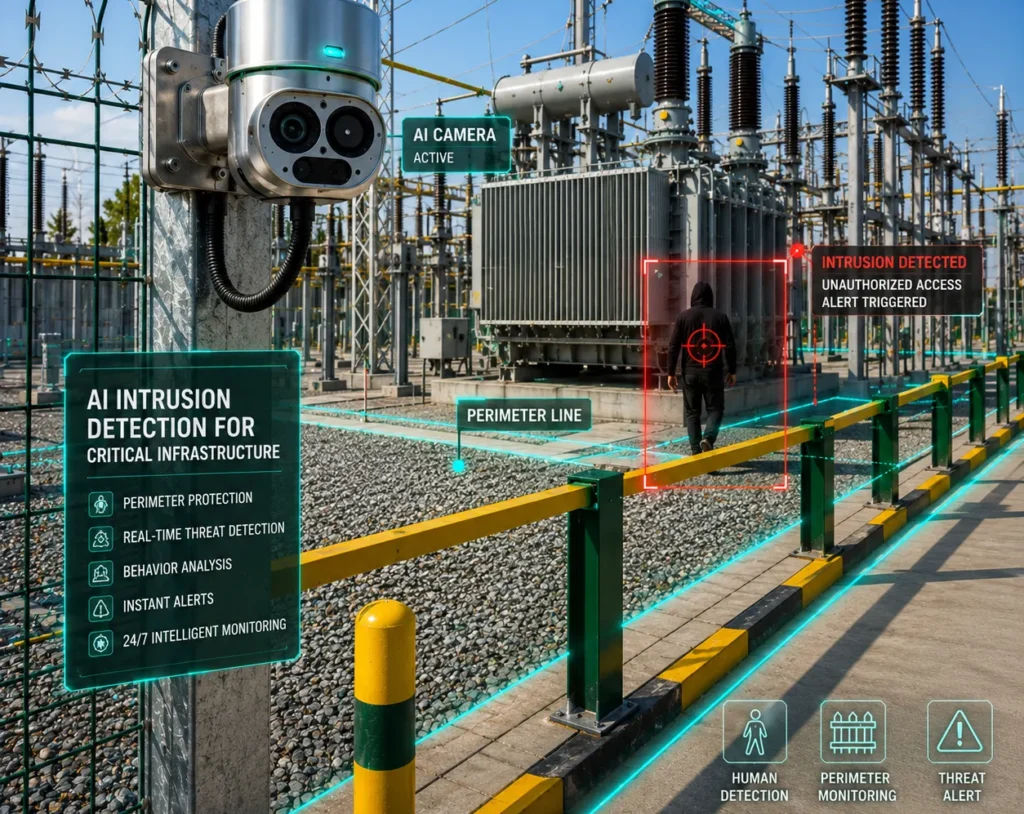
Critical infrastructure forms the backbone of industrial production, utilities, transportation, and essential public services. An unauthorised entry into a substation, control room, storage facility, or restricted operational area can have consequences far beyond a security incident, affecting operational continuity, employee safety, regulatory obligations, and service availability. Infrastructure Protection Intelligence provides a continuous understanding of activities around critical assets, helping organisations recognise abnormal access patterns, strengthen perimeter governance, and respond before operational disruptions occur. AI Intrusion Detection supports this approach by improving awareness of infrastructure risks without interrupting normal operations.
Executive Summary
An operator of critical infrastructure sought to strengthen the protection of high-value operational assets distributed across multiple facilities. Existing perimeter security systems successfully monitored designated zones, but identifying unauthorised activities quickly enough to prevent operational disruption remained an ongoing challenge, particularly in remote and restricted locations.
SPGS supported the organisation in adopting Infrastructure Protection Intelligence by introducing AI Intrusion Detection across critical operational areas. The initiative improved awareness of perimeter activities, strengthened operational governance, and enabled faster response to potential security events while supporting uninterrupted infrastructure operations.
Customer Profile
Industry: Critical Infrastructure (Anonymous)
Project Scope
- Multiple operational facilities
- Restricted infrastructure zones
- Utility and control buildings
- Perimeter protection
- Central security operations
- Distributed monitoring locations
- Continuous 24×7 operational coverage
Operational Environment
The organisation managed geographically distributed infrastructure supporting essential business operations. Facilities included perimeter boundaries, equipment compounds, utility installations, access-controlled operational areas, and high-value assets requiring continuous protection. Security teams needed to balance strict access control with uninterrupted day-to-day operations while maintaining visibility across both staffed and remote locations.
Business Challenges
- Protecting critical operational assets across multiple locations.
- Monitoring large perimeter boundaries effectively.
- Detecting unauthorised access before operational impact occurred.
- Improving awareness of activities in remote infrastructure areas.
- Reducing response times during security events.
- Strengthening governance of restricted operational zones.
- Supporting continuous infrastructure availability.
Project Objectives
- Improve protection of critical infrastructure.
- Strengthen perimeter security.
- Enhance operational awareness.
- Accelerate incident response.
- Reduce operational disruption.
- Improve coordination between security and operations.
- Establish an Infrastructure Protection Intelligence framework.
Protecting What Keeps Operations Running
The transformation centred on safeguarding infrastructure that supported essential business operations rather than simply expanding surveillance coverage. Attention was directed towards operationally sensitive locations where unauthorised access could interrupt services, damage equipment, or compromise employee safety. Continuous observation of perimeter activity and restricted areas enabled operational teams to identify developing security concerns earlier, verify operational conditions more efficiently, and initiate appropriate responses before incidents affected business continuity.
Solution Architecture
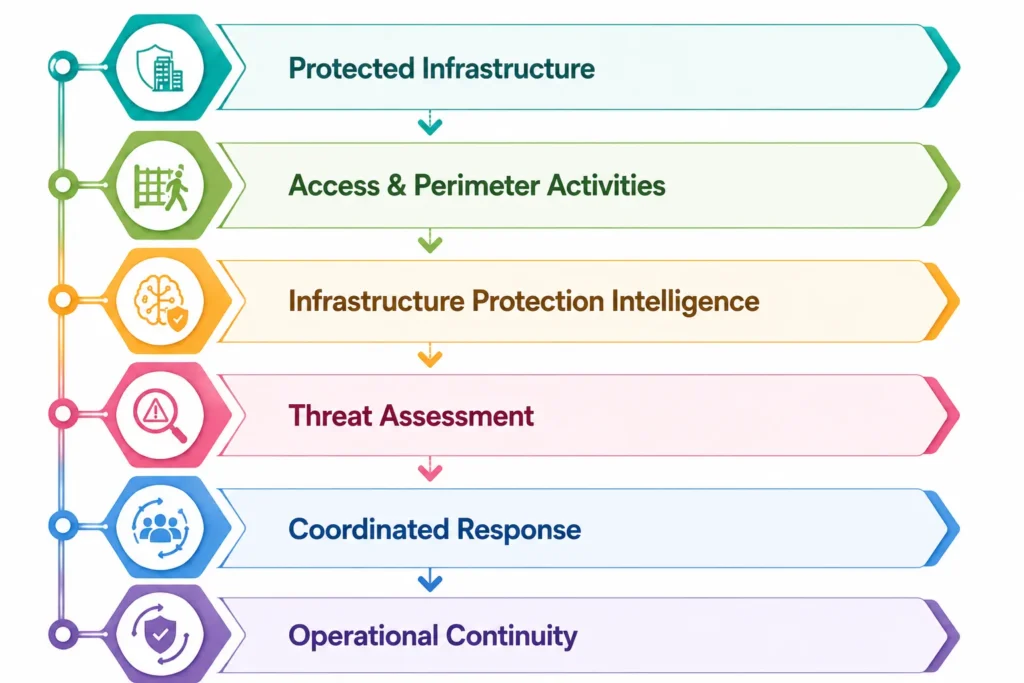
Operational Flow
Operational Technology Ecosystem
Technology | Business Contribution |
AI Intrusion Detection | Recognition of unauthorised access events |
Computer Vision | Continuous observation of operational areas |
AI Video Analytics | Detection of abnormal perimeter activities |
Edge AI | Immediate analysis at infrastructure sites |
Industrial IoT | Environmental and equipment context |
Access Control Systems | Verification of authorised entry |
Enterprise AI Dashboard | Infrastructure-wide operational awareness |
GIS Mapping | Location-based incident context |
REST APIs | Enterprise interoperability |
Operational Decision Intelligence
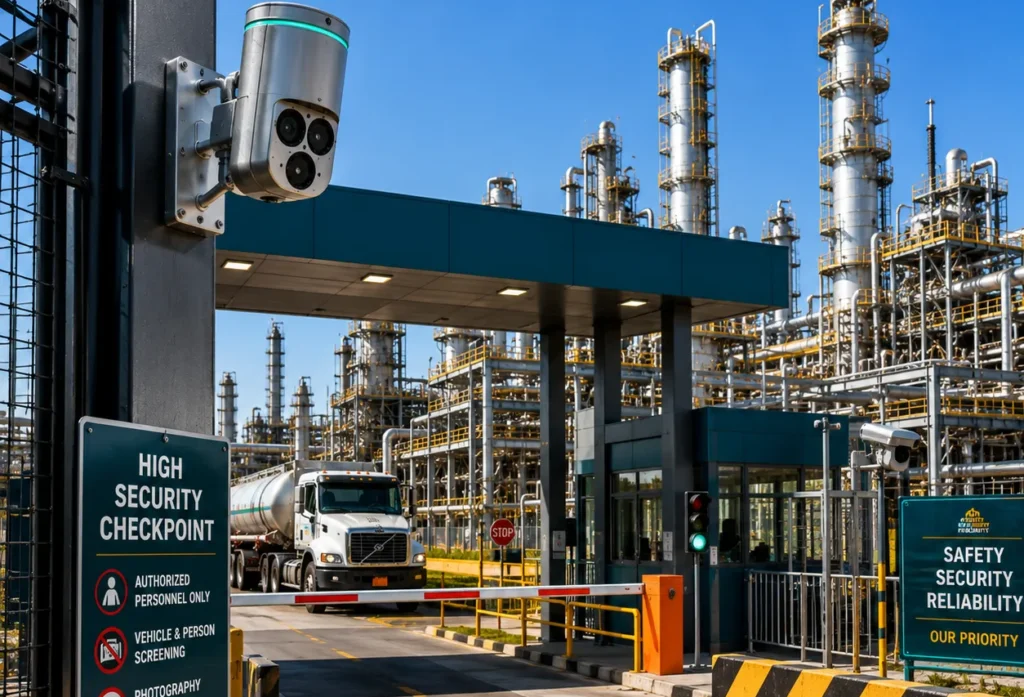
The solution supported operational and security teams by answering critical questions:
- Which restricted areas require immediate investigation?
- Are perimeter activities consistent with authorised operations?
- Which infrastructure assets are exposed to elevated risks?
- Where should response resources be deployed first?
- Are multiple facilities experiencing related security events?
- Which operational areas require additional protection?
- How can infrastructure availability be maintained during security incidents?
Implementation Methodology
The programme began with a detailed assessment of critical infrastructure, operational priorities, and security-sensitive zones. Perimeter boundaries, restricted operational areas, and high-value assets were evaluated to determine where earlier awareness would deliver the greatest operational benefit. AI-driven intrusion detection capabilities were then introduced through a phased deployment, allowing operational teams to refine response procedures while integrating intelligent monitoring into existing security operations without disrupting essential services.
Enterprise Integrations
System | Business Contribution |
Access Control System | Identity verification |
Building Management System | Facility operations |
Industrial IoT | Environmental awareness |
Enterprise AI Dashboard | Central operational visibility |
GIS Platform | Geographic incident mapping |
REST APIs | Enterprise integration |
Business Outcomes
- Improved protection of critical operational assets.
- Earlier identification of unauthorised perimeter activities.
- Faster incident assessment and response.
- Better coordination between security and operational teams.
- Reduced risk of infrastructure disruption.
- Enhanced protection of restricted operational areas.
- Improved resilience across distributed facilities.
- Greater confidence in infrastructure security governance.
ROI & Business Value
The initiative strengthened operational resilience by reducing the likelihood that unauthorised access would escalate into business disruption. Earlier threat recognition, improved coordination between operational and security teams, better utilisation of existing infrastructure, and stronger protection of critical assets contributed to measurable business value while supporting the continuous availability of essential services.
Future Roadmap
The organisation plans to extend Infrastructure Protection Intelligence through:
- Predictive Threat Analytics
- AI-Assisted Perimeter Risk Assessment
- Autonomous Security Patrol Integration
- Vision-Language Models
- Digital Twins for Critical Infrastructure
- Enterprise Risk Intelligence Dashboards
Related Industry Pages
- Power Generation
- Utilities
- Oil & Gas
- Water & Wastewater
- Airports & Transportation
- Data Centres
Related Technology Pages
- AI Intrusion Detection
- Computer Vision
- AI Video Analytics
- Edge AI
- Industrial IoT
- Access Control Integration
- Enterprise AI Dashboards
Contact SPGS
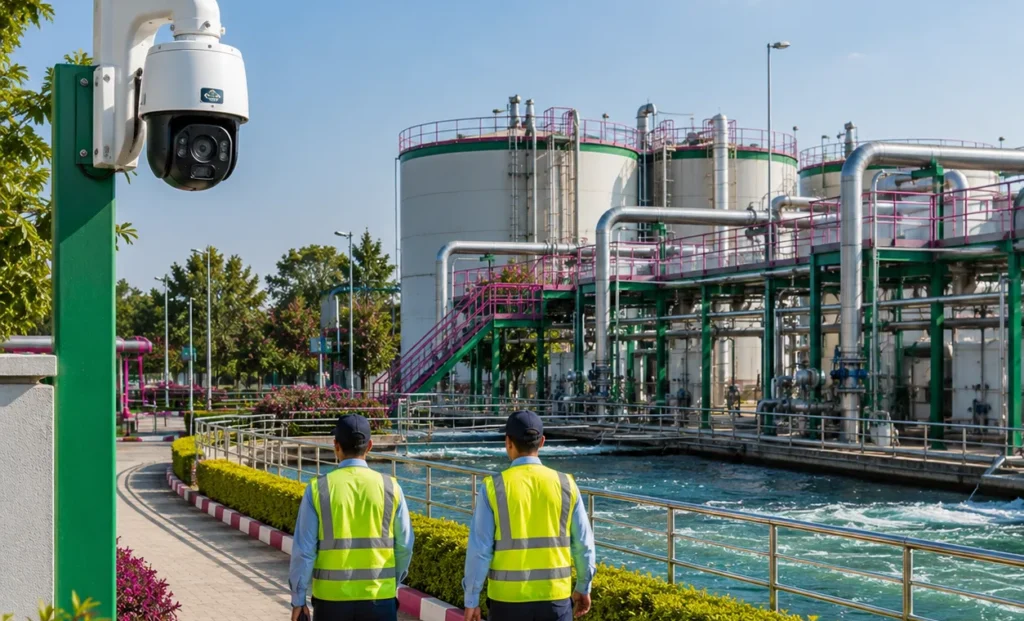
Critical infrastructure demands protection strategies that extend beyond conventional surveillance. SPGS collaborates with infrastructure operators to improve resilience through AI Intrusion Detection, Computer Vision, Edge AI, and intelligent operational monitoring. Our approach helps organisations protect critical assets, strengthen perimeter governance, improve response coordination, and maintain the uninterrupted operation of essential infrastructure and services.