
AI Predictive Analytics for Heavy Equipment
Equipment Lifecycle Intelligence
Heavy equipment represents one of the most valuable operational assets across construction, mining, logistics, manufacturing, ports, and infrastructure projects. Sustaining equipment availability depends on more than scheduled maintenance, it requires continuous awareness of utilisation patterns, operational conditions, field activities, inspection practices, and asset performance throughout the equipment lifecycle. Equipment Lifecycle Intelligence provides continuous visibility into these interconnected operational activities, enabling organisations to optimise equipment readiness, improve resource planning, strengthen operational coordination, and support uninterrupted field operations. AI Monitoring enhances this operational approach by helping organisations make informed decisions that maximise equipment performance and long-term asset value.
Executive Summary
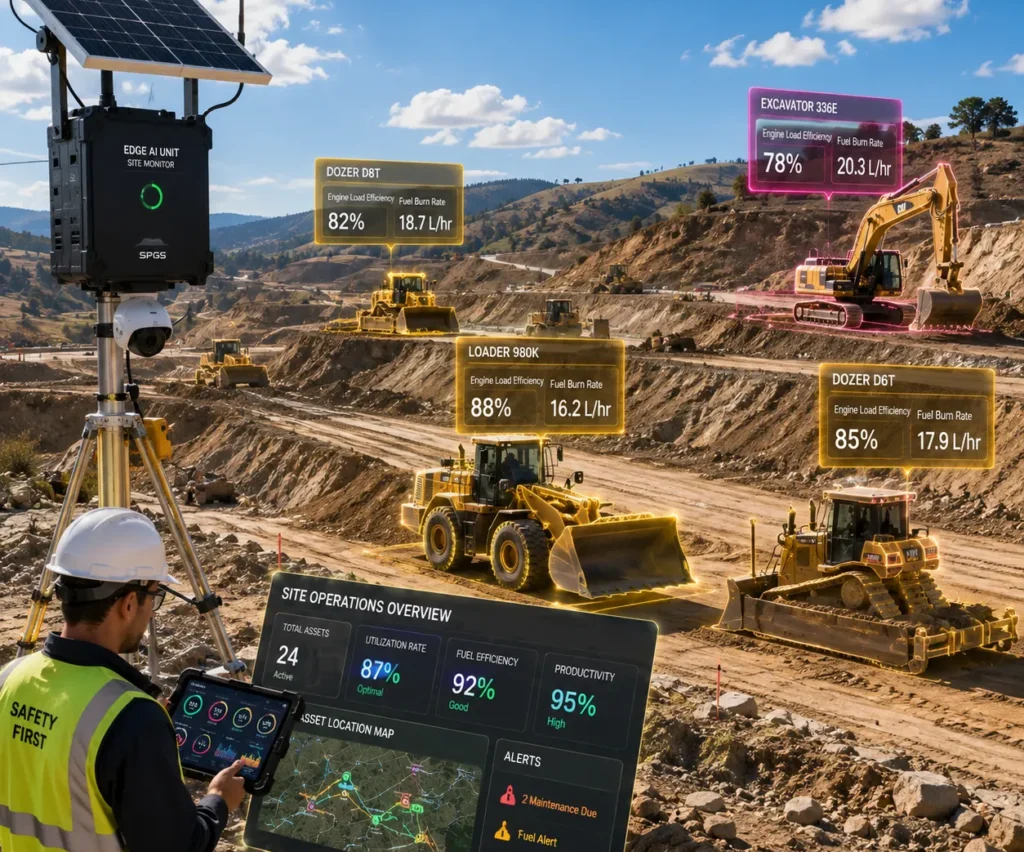
A heavy equipment fleet operator sought to improve operational visibility across construction and industrial assets while reducing unplanned equipment downtime and strengthening fleet coordination. Existing fleet management and maintenance systems effectively tracked equipment records and servicing schedules, but understanding how utilisation patterns, operator activities, inspection routines, and operational conditions influenced equipment readiness required broader operational intelligence.
SPGS implemented an Equipment Lifecycle Intelligence framework using AI Monitoring to strengthen fleet coordination, improve operational visibility, support predictive planning, and enhance collaboration between operations and maintenance teams. The initiative enabled field managers to anticipate operational risks, optimise equipment utilisation, and maintain consistent equipment availability across multiple project locations.
Customer Profile
Industry: Heavy Equipment Operations (Anonymous)
Project Scope
- Excavators and loaders
- Cranes and lifting equipment
- Bulldozers and graders
- Haul trucks
- Mobile equipment workshops
- Equipment staging areas
- Fleet operations control centre
- Continuous 24×7 operational oversight
Operational Environment
The organisation managed a diverse fleet of heavy equipment operating across multiple construction, mining, and infrastructure projects. Daily activities included equipment deployment, operator shift changes, inspections, preventive servicing, fuelling, transportation, and field maintenance. Maintaining equipment readiness required close coordination between operations teams, maintenance personnel, fleet managers, and project supervisors to ensure assets remained available for critical operational activities.
Business Challenges
- Maximising equipment availability.
- Coordinating maintenance with operational schedules.
- Improving visibility across distributed equipment fleets.
- Supporting efficient equipment utilisation.
- Reducing operational interruptions caused by asset downtime.
- Strengthening equipment lifecycle management.
- Improving planning for field operations.
- Extending long-term asset performance.
Project Objectives
- Improve equipment operational visibility.
- Strengthen fleet coordination.
- Support predictive operational planning.
- Improve maintenance scheduling.
- Optimise equipment utilisation.
- Extend equipment lifecycle.
- Establish an Equipment Lifecycle Intelligence framework.
Keeping Equipment Ready for Every Operation
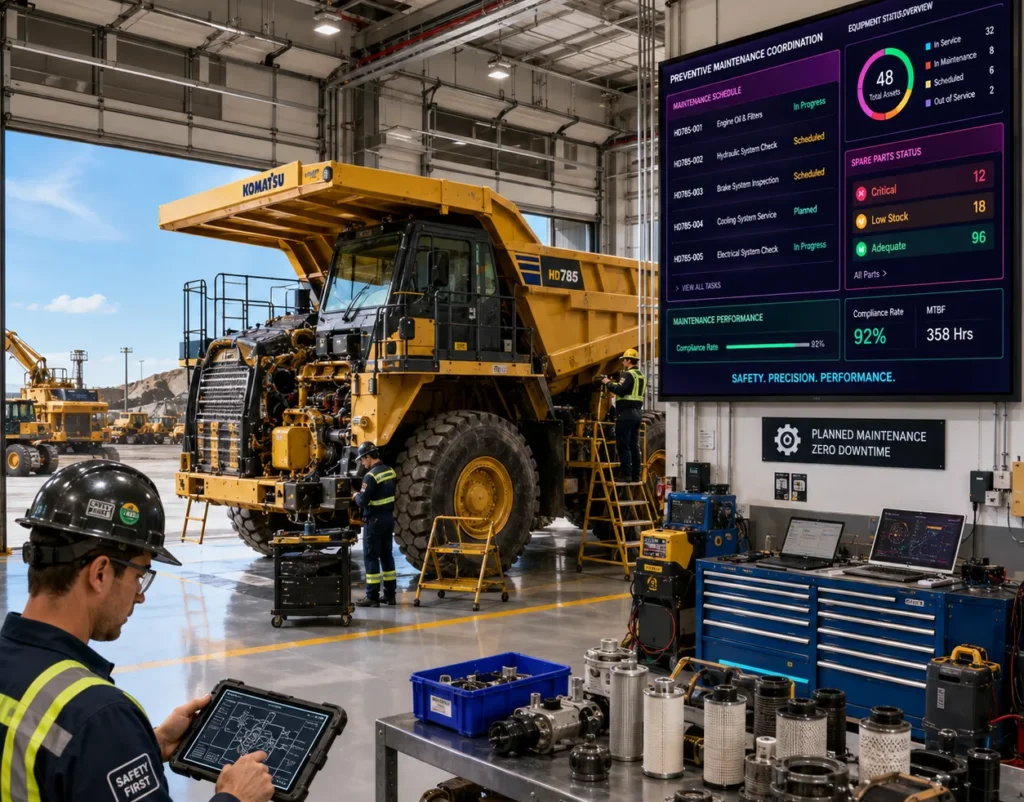
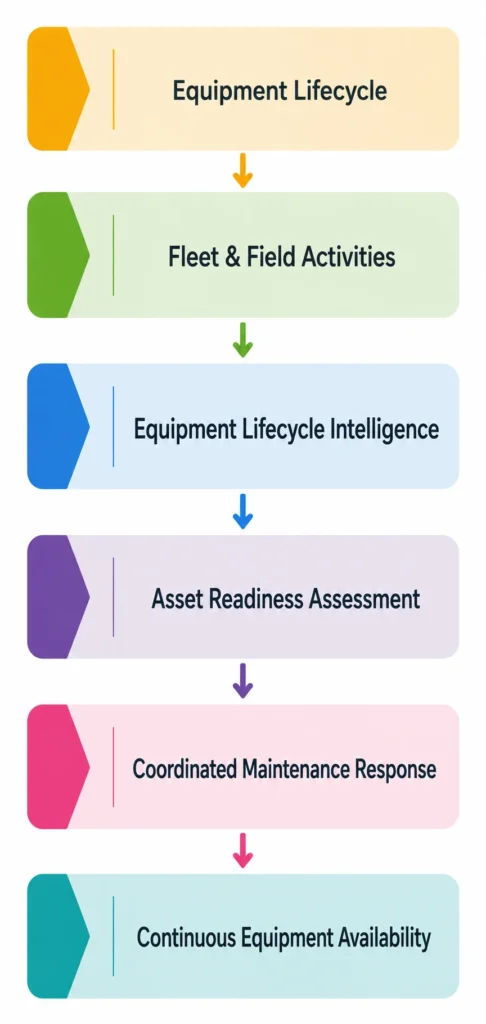
The transformation focused on maintaining equipment readiness rather than reacting to isolated maintenance events. Equipment utilisation, inspections, servicing activities, operator practices, field deployment, and operational workflows were treated as interconnected processes that collectively influenced asset performance. This operational perspective enabled fleet managers to coordinate maintenance more effectively, improve equipment allocation, reduce avoidable downtime, and support uninterrupted project execution.
Solution Architecture
Operational Flow
Operational Technology Ecosystem
Technology | Business Contribution |
AI Monitoring | Continuous visibility across fleet operations |
Computer Vision | Observation of equipment and field activities |
AI Video Analytics | Identification of operational patterns and asset conditions |
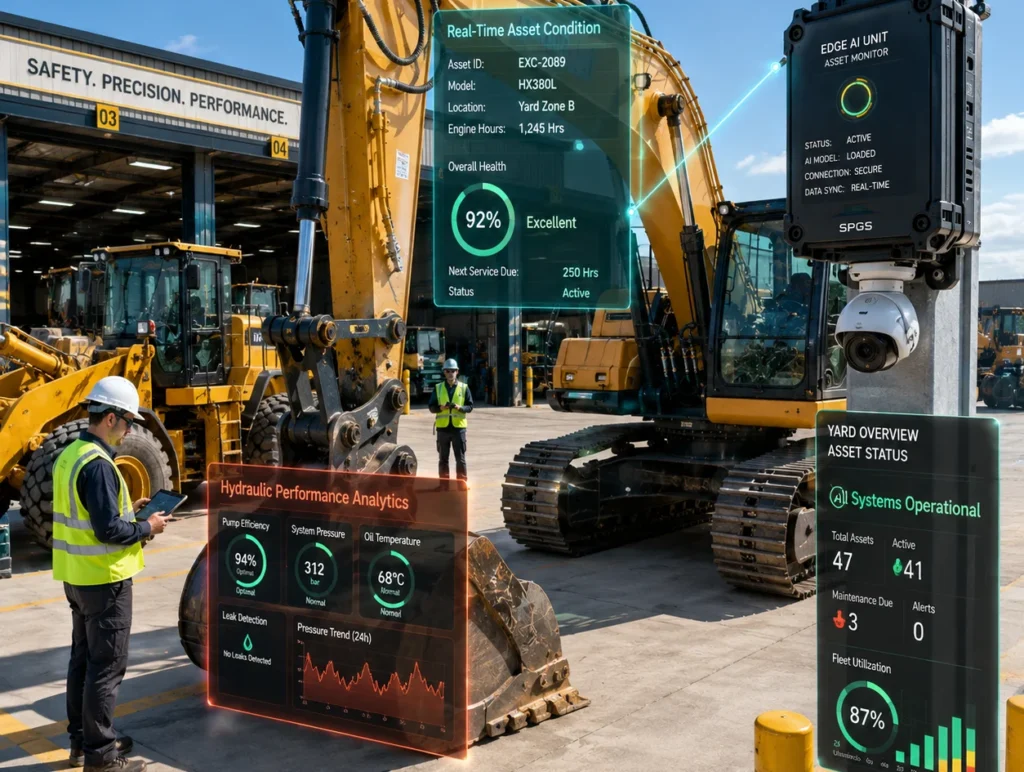
Edge AI | Immediate operational analysis in field environments |
Industrial IoT | Equipment operating condition |
Fleet Management System | Fleet utilisation and deployment context |
Enterprise AI Dashboard | Central fleet operational oversight |
REST APIs | Enterprise interoperability |
Operational Decision Intelligence
The solution supported fleet operations by answering key operational questions:
- Which equipment requires immediate operational attention?
- Are inspection and servicing activities progressing according to plan?
- Which assets present increased operational risk?
- Where should maintenance resources be prioritised?
- Which equipment is underutilised or overutilised?
- How can fleet deployment be improved?
- Which operational trends should influence future asset planning?
Deployment Approach
The programme began with an assessment of fleet operations, maintenance practices, equipment utilisation, and field workflows. Critical assets, maintenance facilities, fuelling stations, staging areas, and active project sites were prioritised for phased implementation. AI Monitoring capabilities were integrated alongside existing fleet management and maintenance platforms, enabling operational teams to validate insights, refine maintenance planning, and strengthen coordination without affecting ongoing field operations.
Enterprise Integrations
System | Business Contribution |
Fleet Management System | Equipment deployment and utilisation |
Computerised Maintenance Management System (CMMS) | Maintenance coordination |
Industrial IoT Platform | Equipment operating condition |
Enterprise AI Dashboard | Central operational visibility |
ERP | Asset planning and reporting |
REST APIs | Enterprise interoperability |
Business Outcomes
- Improved equipment availability.
- Enhanced coordination between fleet and maintenance teams.
- Better utilisation of heavy equipment assets.
- Reduced unplanned operational interruptions.
- Improved maintenance planning.
- Stronger asset lifecycle management.
- More efficient field operations.
- Greater long-term equipment value.
ROI & Business Value
The initiative improved fleet performance by strengthening coordination between equipment operations, maintenance planning, and field deployment. Better visibility into asset utilisation and operational workflows enabled the organisation to reduce avoidable downtime, optimise maintenance resources, improve equipment allocation, and extend the productive lifecycle of critical assets. These improvements increased operational reliability while maximising the return on heavy equipment investments.
Future Roadmap
The organisation plans to expand Equipment Lifecycle Intelligence through:
- Predictive Asset Health Analytics
- AI-Assisted Fleet Planning
- Vision-Language Models for Equipment Operations
- Digital Twin Integration for Heavy Equipment
- Intelligent Spare Parts Planning
- Enterprise Fleet Performance Dashboards
Related Industry Pages
- Construction Equipment
- Mining Operations
- Infrastructure Projects
- Quarry Operations
- Industrial Fleet Management
- Heavy Equipment Rental
Related Technology Pages
- AI Monitoring
- Computer Vision
- AI Video Analytics
- Edge AI
- Industrial IoT
- Enterprise AI Dashboards
- Operational Analytics
Contact SPGS
The efficiency of operations, maintenance, and field activities throughout the asset lifecycle determines how well heavy equipment performs. SPGS develops AI-enabled operational intelligence solutions that help organisations improve equipment readiness, optimise fleet utilisation, strengthen lifecycle planning, and maximise the long-term value of critical operational assets.