
How Accurate Is AI Event Detection?
AI event detection has become an important capability for organizations seeking to automate monitoring, improve operational visibility, and reduce dependence on manual observation. However, one of the most common questions before implementation is whether AI can detect events accurately enough for real-world business operations.
The answer depends on several factors. Modern AI systems can achieve high levels of accuracy when they are properly configured and deployed in suitable environments. Rather than relying solely on the AI model itself, detection performance is influenced by camera quality, lighting, viewing angles, operational conditions, and how well the system has been trained for the specific events it is expected to recognize.
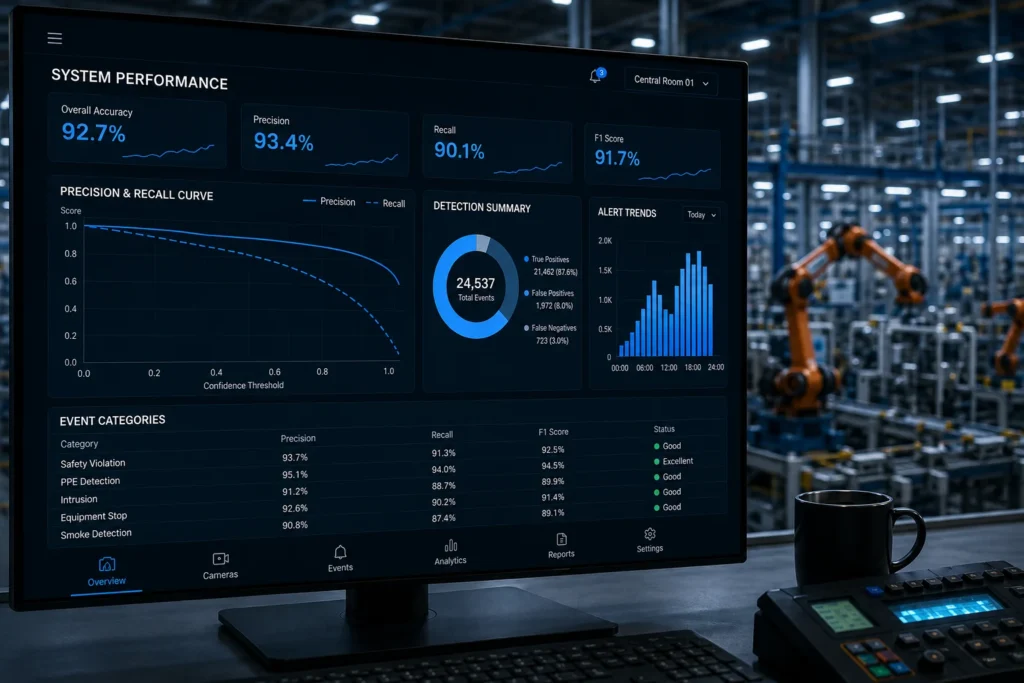
What Does Accuracy Mean in AI Event Detection?
Accuracy is more than simply identifying an event correctly. A reliable AI monitoring system should consistently distinguish between normal activities and situations that require attention.
Detection performance is commonly evaluated using several indicators.
Performance Metric | What It Measures |
Detection Accuracy | Percentage of correctly identified events. |
Precision | How many detected events are actually valid. |
Recall | How many actual events the AI successfully detects. |
False Positives | Incorrect alerts generated for normal activities. |
False Negatives | Actual events that were not detected. |
Response Time | How quickly the system identifies an event. |
Organizations often evaluate these metrics together rather than relying on a single measurement.
Factors That Influence Detection Accuracy
AI performance depends on the quality of the environment in which it operates.
Factor | Impact on Detection |
Camera resolution | Clearer images improve object recognition. |
Camera positioning | Proper viewing angles reduce blind spots. |
Lighting conditions | Consistent lighting improves reliability. |
Scene complexity | Less visual clutter improves detection performance. |
Object visibility | Obstructed objects may reduce accuracy. |
AI model configuration | Detection rules should match operational requirements. |
Environmental changes | Significant changes may require model adjustments. |
Careful planning during deployment often has a greater impact on performance than hardware specifications alone.
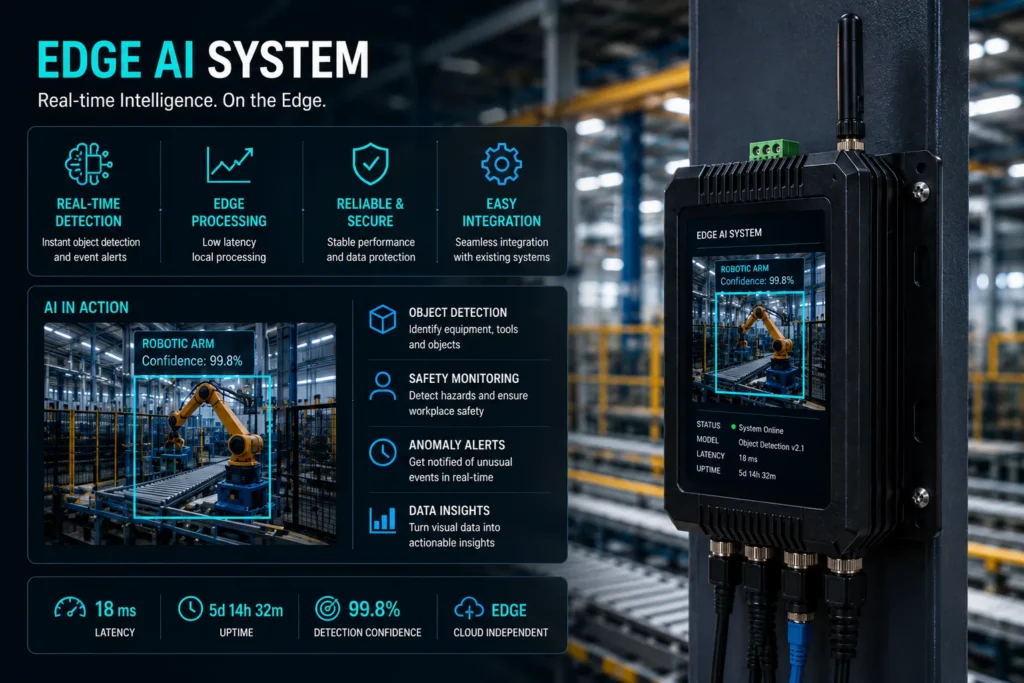
Why Accuracy Improves with Well-Defined Events
AI performs best when it monitors events that have clear visual characteristics.
Examples include:
- Unauthorized entry into restricted areas.
- PPE compliance verification.
- Person or vehicle detection.
- Object left behind.
- Equipment entering designated zones.
- Occupancy monitoring.
- Queue length detection.
- Line crossing events.
Clearly defined detection rules help reduce ambiguity and improve overall reliability.
Balancing Detection Sensitivity
Increasing detection sensitivity can identify more events, but it may also generate additional false alerts. Lower sensitivity may reduce unnecessary notifications while increasing the chance that some events are missed.
Organizations typically configure AI based on operational priorities.
Configuration Goal | Typical Result |
Higher sensitivity | Detects more events but may increase false positives. |
Balanced sensitivity | Optimizes both detection accuracy and alert quality. |
Lower sensitivity | Reduces unnecessary alerts but may miss less obvious events. |
Finding the appropriate balance depends on the operational environment and acceptable risk levels.
Improving Detection Performance Over Time
AI monitoring systems are not static. Performance can improve through continuous optimization and operational feedback.
Organizations commonly improve detection by:
- Refining monitoring rules.
- Adjusting camera placement.
- Improving lighting conditions.
- Updating AI models.
- Reviewing false alerts.
- Expanding training datasets.
- Periodically validating detection results.
Regular system evaluation helps maintain consistent performance as operational environments evolve.
Questions to Ask Before Evaluating an AI Solution
When comparing AI event detection platforms, organizations should consider:
- Which events are supported?
- How are accuracy results measured?
- What testing methodology was used?
- Can detection rules be customized?
- How are false positives managed?
- Does the solution support continuous model improvements?
- Can performance be monitored after deployment?
These questions provide a more meaningful evaluation than relying solely on advertised accuracy percentages.
Building Confidence in AI Monitoring
The effectiveness of AI event detection is determined not only by the intelligence of the software but also by how well it is implemented and maintained. When supported by quality camera infrastructure, appropriate configuration, and ongoing optimization, AI can deliver reliable event detection that helps organizations improve operational visibility, respond more quickly to important situations, and reduce the burden of continuous manual monitoring.
Frequently Asked Questions
Can AI achieve 100% event detection accuracy?
No. Like any automated system, AI performance depends on environmental conditions, camera quality, and the complexity of the events being monitored. The objective is to achieve reliable and consistent performance rather than perfect accuracy.
Why do false alerts occur?
False alerts can result from poor lighting, obstructed views, unusual environmental conditions, or monitoring rules that require adjustment.
Does higher camera resolution always improve accuracy?
Higher resolution often helps, but camera placement, lighting, and proper system configuration are equally important.
Can organizations improve AI accuracy after deployment?
Yes. Detection performance can often be enhanced by refining AI rules, repositioning cameras, improving image quality, and updating AI models.
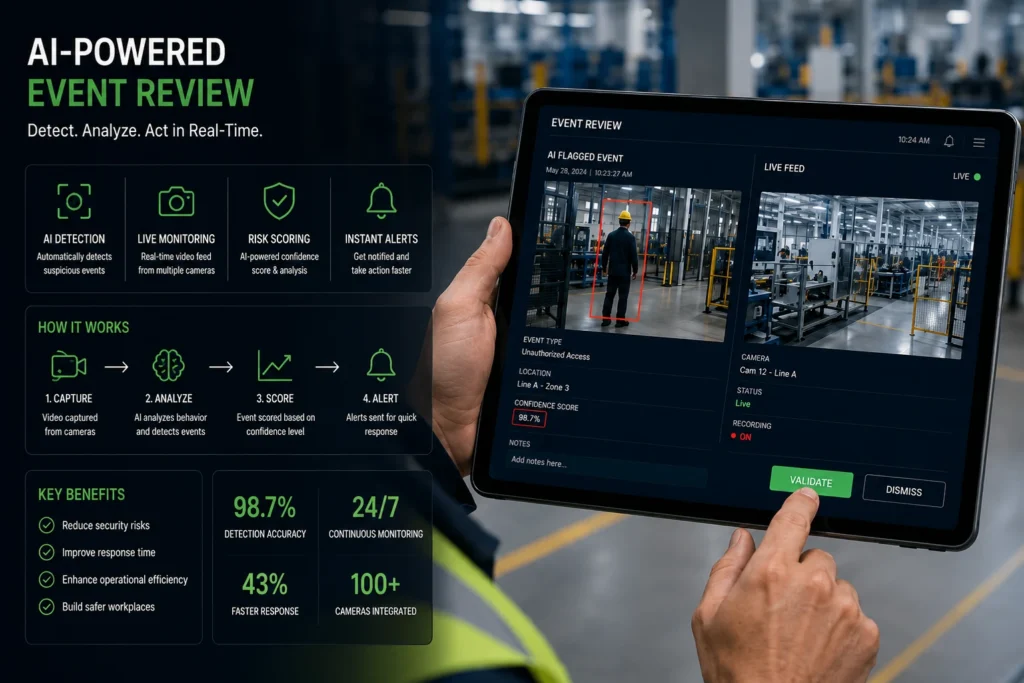
Should AI decisions always be reviewed by people?
For many operational environments, human oversight remains important, particularly for critical safety, compliance, or security decisions. AI supports faster detection, while personnel validate events and determine the appropriate response.