
AI Data Center Infrastructure Monitoring
Digital Infrastructure Intelligence
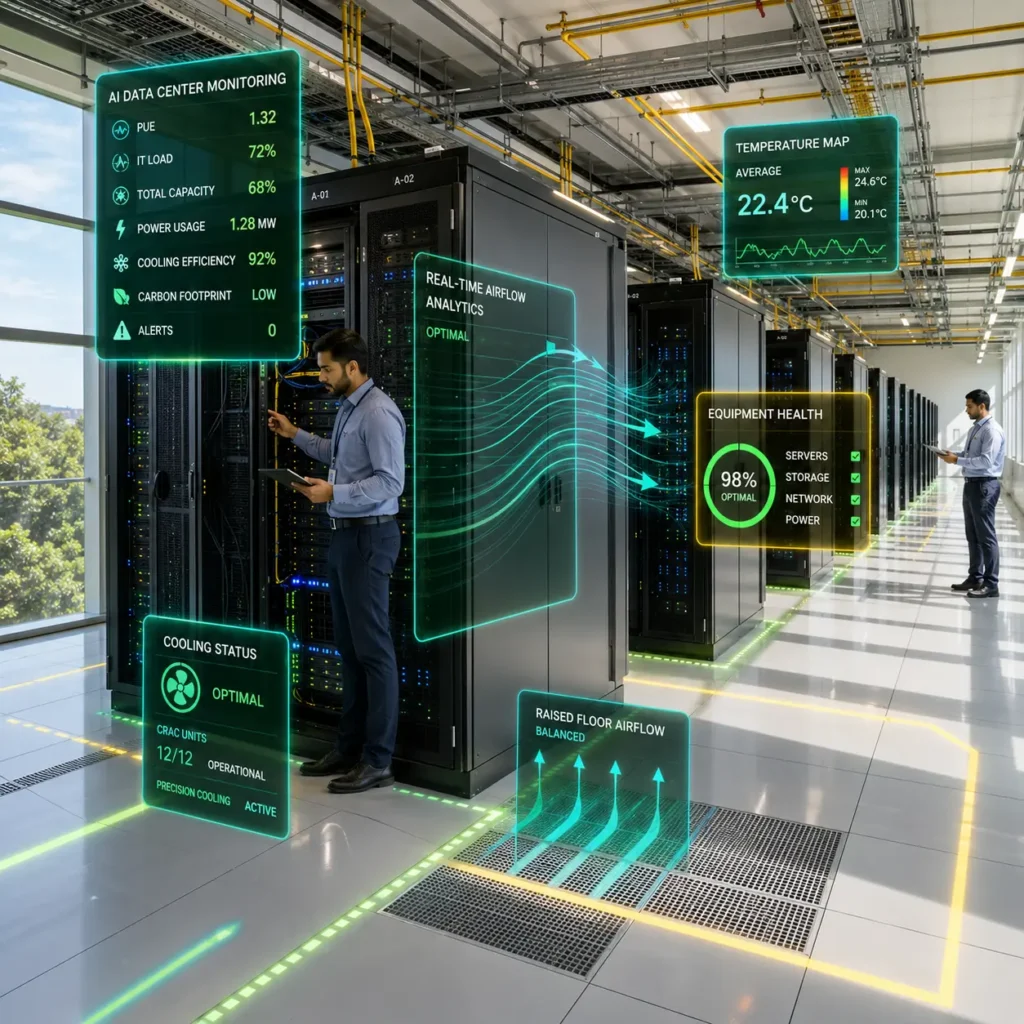
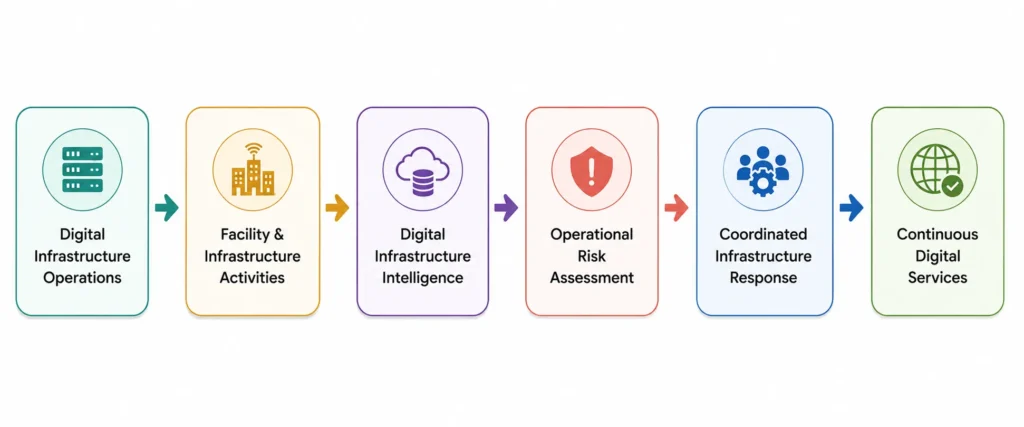
Modern enterprises rely on data centres to deliver uninterrupted digital services, support business applications, process transactions, and maintain enterprise connectivity. The resilience of these facilities depends not only on servers and networking equipment but also on facility operations, maintenance activities, personnel movement, environmental conditions, and adherence to operational procedures. Digital Infrastructure Intelligence provides continuous visibility across these interconnected operational activities, enabling organisations to identify emerging risks, improve infrastructure coordination, and maintain reliable digital services. AI Monitoring strengthens this approach by supporting informed operational decisions that protect infrastructure availability and business continuity.
Executive Summary
A large enterprise operating multiple data centres sought to strengthen operational visibility across critical infrastructure while maintaining uninterrupted digital services. Existing monitoring platforms effectively tracked IT equipment and environmental parameters, but maintaining awareness of facility operations, maintenance activities, infrastructure access, and operational workflows remained a challenge.
SPGS introduced a Digital Infrastructure Intelligence framework using AI Monitoring to improve operational awareness throughout the data centre environment. The initiative strengthened infrastructure governance, improved coordination between operations and facility teams, and enabled earlier identification of operational risks while supporting continuous service availability.
Customer Profile
Industry: Enterprise Data Center Operations (Anonymous)
Project Scope
- Enterprise data centre facility
- Server halls and equipment rooms
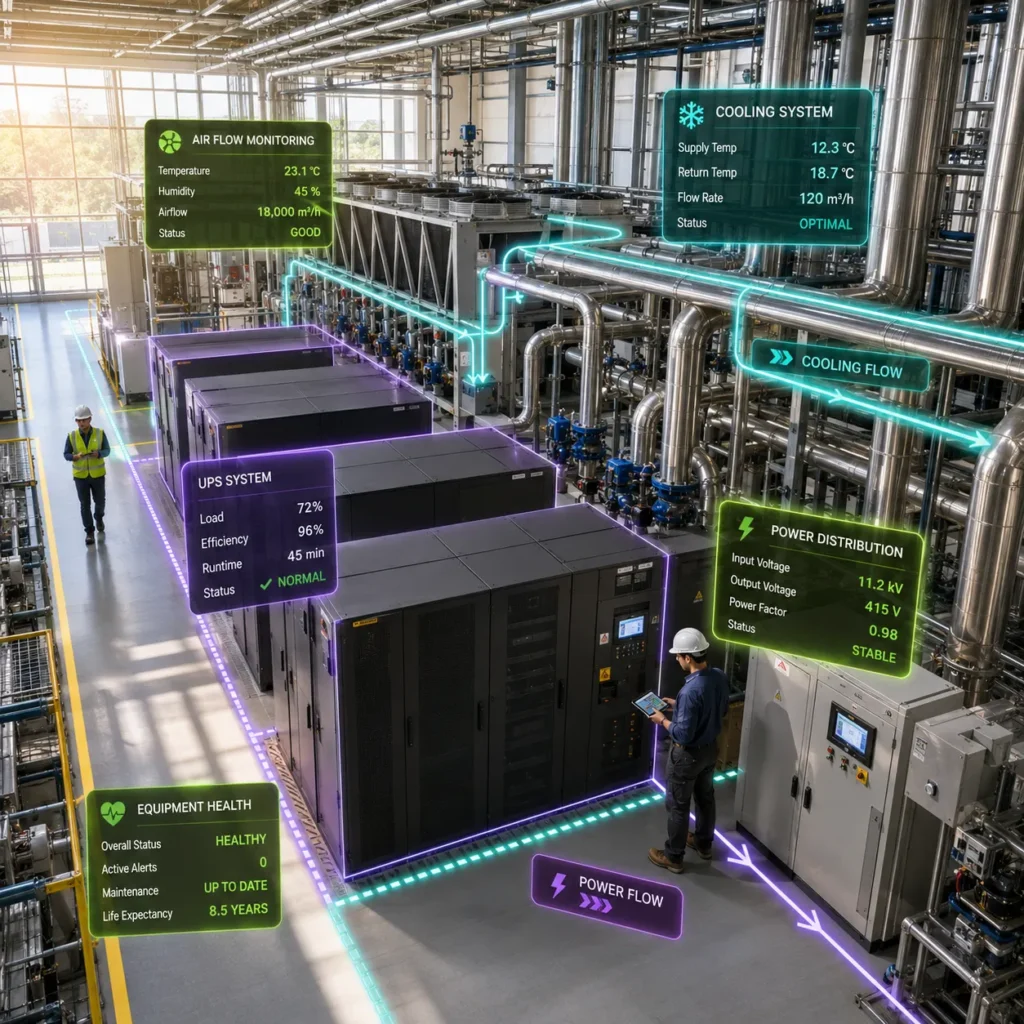
- Power and UPS infrastructure
- Cooling plant operations
- Maintenance access zones
- Central infrastructure operations centre
- Continuous 24×7 operational oversight
Business Challenges
- Maintaining uninterrupted infrastructure operations.
- Improving visibility across critical facility activities.
- Coordinating maintenance without affecting service availability.
- Managing secure access to sensitive infrastructure areas.
- Reducing operational disruptions.
- Strengthening infrastructure governance.
- Supporting business continuity objectives.
Project Objectives
- Improve infrastructure operational visibility.
- Strengthen facility resilience.
- Enhance maintenance coordination.
- Support secure infrastructure operations.
- Improve operational governance.
- Protect service availability.
- Establish a Digital Infrastructure Intelligence framework.
Supporting Always-On Digital Operations
The transformation focused on strengthening infrastructure resilience rather than monitoring isolated operational events. Maintenance activities, equipment handling, contractor access, facility operations, and environmental conditions were treated as interconnected operational processes. This broader operational perspective enabled infrastructure teams to identify developing risks earlier, improve coordination across maintenance activities, and protect the continuous availability of enterprise digital services without disrupting ongoing operations.
Solution Architecture
Operational Flow
Operational Technology Ecosystem
Technology | Business Contribution |
AI Monitoring | Continuous visibility across facility operations |
Computer Vision | Observation of infrastructure activities |
AI Video Analytics | Identification of operational anomalies |
Edge AI | Immediate analysis within the facility |
Building Management System (BMS) | Infrastructure and environmental context |
Data Center Infrastructure Management (DCIM) | Asset and facility visibility |
Enterprise AI Dashboard | Central operational oversight |
REST APIs | Enterprise interoperability |
Operational Decision Intelligence
The solution supported infrastructure operations by answering key operational questions:
- Which infrastructure areas require immediate operational attention?
- Are maintenance activities progressing according to operational procedures?
- Which operational conditions could affect service availability?
- Where should infrastructure teams prioritise their response?
- Which facilities require additional operational oversight?
- How can infrastructure resilience be strengthened?
- Which operational trends should influence future capacity planning?

Implementation Methodology
The programme began with a comprehensive assessment of facility operations, maintenance workflows, infrastructure access procedures, and environmental management practices. Critical operational areas, including server halls, electrical rooms, UPS systems, cooling infrastructure, network equipment areas, and maintenance access zones, were prioritised for phased deployment. AI Monitoring capabilities were introduced alongside existing facility and infrastructure management systems, allowing operations teams to validate alerts, refine operational procedures, and integrate intelligent monitoring into everyday infrastructure management without affecting service continuity.
Enterprise Integrations
System | Business Contribution |
Data Center Infrastructure Management (DCIM) | Infrastructure asset visibility |
Building Management System (BMS) | Facility operations and environmental information |
Computerised Maintenance Management System (CMMS) | Maintenance coordination |
Enterprise AI Dashboard | Central operational visibility |
ERP | Operational reporting |
REST APIs | Enterprise interoperability |
Business Outcomes
- Improved resilience of digital infrastructure.
- Better coordination of maintenance activities.
- Enhanced operational visibility across critical facilities.
- Earlier identification of infrastructure-related operational risks.
- Reduced operational disruptions.
- Stronger governance of facility operations.
- Improved business continuity.
Greater confidence in continuous digital service availability
ROI & Business Value
The initiative strengthened operational resilience by improving coordination between infrastructure management, maintenance, and facility operations. Earlier recognition of operational risks, better planning of maintenance activities, and continuous visibility into infrastructure workflows reduced avoidable disruptions while supporting efficient resource utilisation. This contributed to higher infrastructure reliability, improved operational efficiency, and sustained availability of business-critical digital services.
Future Roadmap
The organisation plans to expand Digital Infrastructure Intelligence through:
- Predictive Infrastructure Risk Analytics
- AI-Assisted Facility Operations Planning
- Vision-Language Models for Infrastructure Operations
- Digital Twin Integration for Data Centre Facilities
- Autonomous Maintenance Coordination
- Enterprise Infrastructure Performance Dashboards
Related Industry Pages
- Enterprise Data Centers
- Cloud Service Providers
- Colocation Facilities
- Telecommunications
- Financial Services
- Healthcare IT Infrastructure
Related Technology Pages
- AI Monitoring
- Computer Vision
- AI Video Analytics
- Edge AI
- Data Center Infrastructure Management
- Building Management System Integration
- Enterprise AI Dashboards
Contact SPGS
Digital infrastructure has become the operational backbone of modern enterprises, making uninterrupted facility performance essential for every business function. Whether managing enterprise data centres, cloud infrastructure, or hybrid digital environments, organisations require greater operational awareness to support reliable service delivery. SPGS works with infrastructure teams to develop practical AI-driven solutions that improve operational confidence, enhance facility oversight, and support long-term infrastructure resilience.