
AI Port & Container Yard Monitoring
Maritime Operations Intelligence
Ports are complex logistics hubs where vessels, cargo, containers, vehicles, equipment, and operational teams interact continuously to support global trade. Every stage of cargo movement, from vessel arrival and container handling to yard operations and outbound transportation, depends on effective coordination between terminal activities, logistics partners, and port infrastructure. Maritime Operations Intelligence provides continuous visibility into these interconnected operational activities, enabling port operators to optimise cargo flow, improve terminal coordination, strengthen operational resilience, and support efficient port operations. AI Monitoring enhances this operational approach by providing timely insights that help terminal teams make informed decisions while maintaining safe, reliable, and efficient cargo movement.
Executive Summary
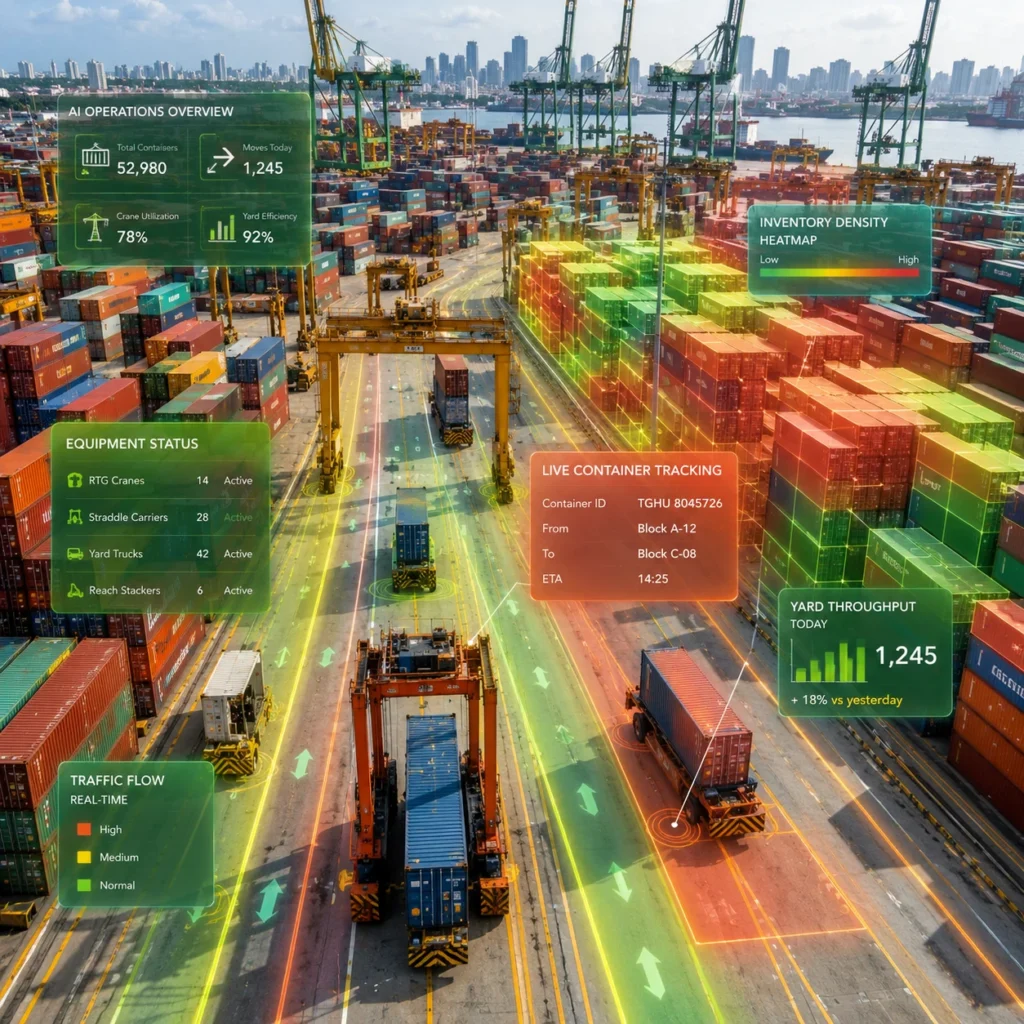
A major container terminal sought to improve operational visibility across its port and container yard while supporting increasing cargo volumes and maintaining efficient terminal operations. Existing terminal systems effectively managed vessel schedules, container inventories, and equipment utilisation, but understanding how cargo movement, yard activities, and operational workflows influenced overall terminal performance required broader operational intelligence.
SPGS implemented a Maritime Operations Intelligence framework using AI Monitoring to strengthen coordination across terminal operations, improve cargo movement, support operational planning, and enhance collaboration between port stakeholders. The initiative enabled terminal teams to respond proactively to operational challenges while maintaining efficient cargo handling throughout the port.
Customer Profile
Industry: Port & Container Terminal Operations (Anonymous)
Project Scope
- Container yard
- Vessel berths
- Quay crane operations
- Container stacking areas
- Truck entry and exit gates
- Cargo inspection zones
- Equipment movement corridors
- Terminal operations control centre
- Continuous 24×7 operational oversight
Operational Environment
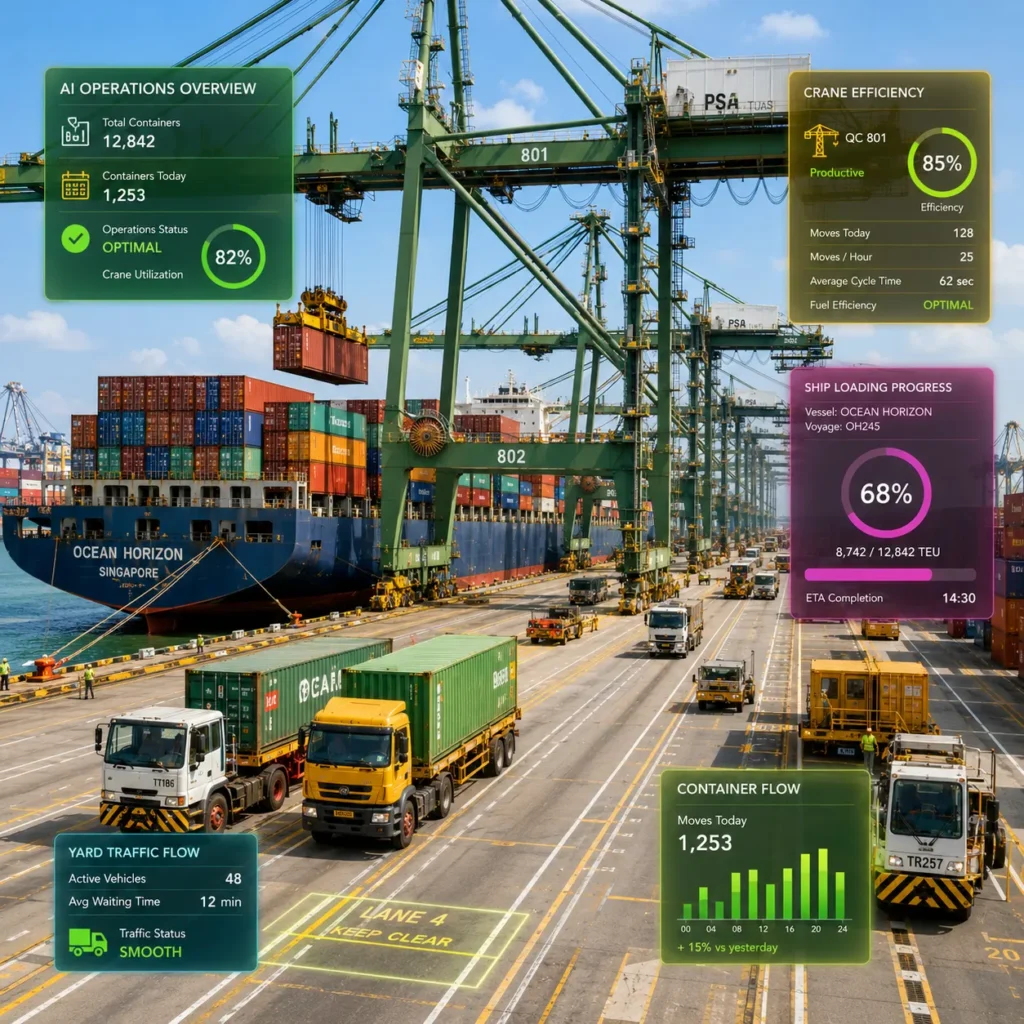
The terminal handled thousands of containers every day across import, export, and transshipment operations. Daily activities involved shipping lines, terminal operators, customs authorities, logistics providers, truck operators, maintenance teams, and equipment operators. Cargo volumes, vessel schedules, and equipment movements continuously changed throughout the day, requiring effective coordination to minimise delays, maximise terminal productivity, and maintain reliable logistics operations.
Business Challenges
- Managing increasing cargo volumes.
- Coordinating container yard operations.
- Improving cargo movement efficiency.
- Reducing congestion across terminal operations.
- Supporting safe equipment movement.
- Strengthening coordination between logistics stakeholders.
- Improving utilisation of terminal resources.
- Maintaining operational continuity during peak vessel schedules.
Project Objectives
- Improve visibility across port operations.
- Optimise cargo movement.
- Strengthen terminal coordination.
- Support efficient yard management.
- Improve operational planning.
- Enhance logistics efficiency.
Establish a Maritime Operations Intelligence framework
Keeping Global Trade Moving Efficiently
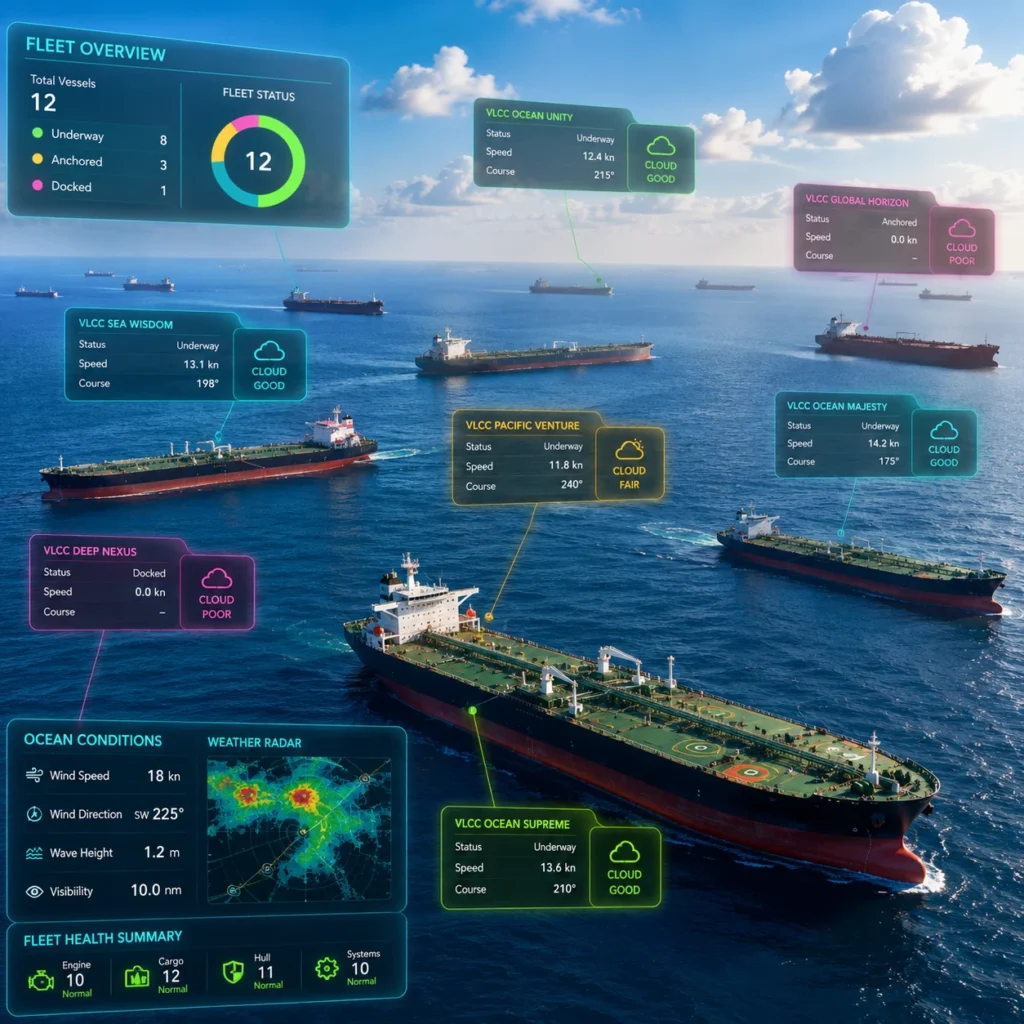
The transformation focused on improving operational coordination throughout cargo handling rather than monitoring isolated operational events. Vessel operations, container movement, equipment activities, truck scheduling, yard management, and logistics coordination were viewed as interconnected operational processes. This broader operational perspective enabled terminal teams to anticipate bottlenecks, coordinate resources more effectively, improve cargo throughput, and maintain efficient logistics operations across the port.
Solution Architecture
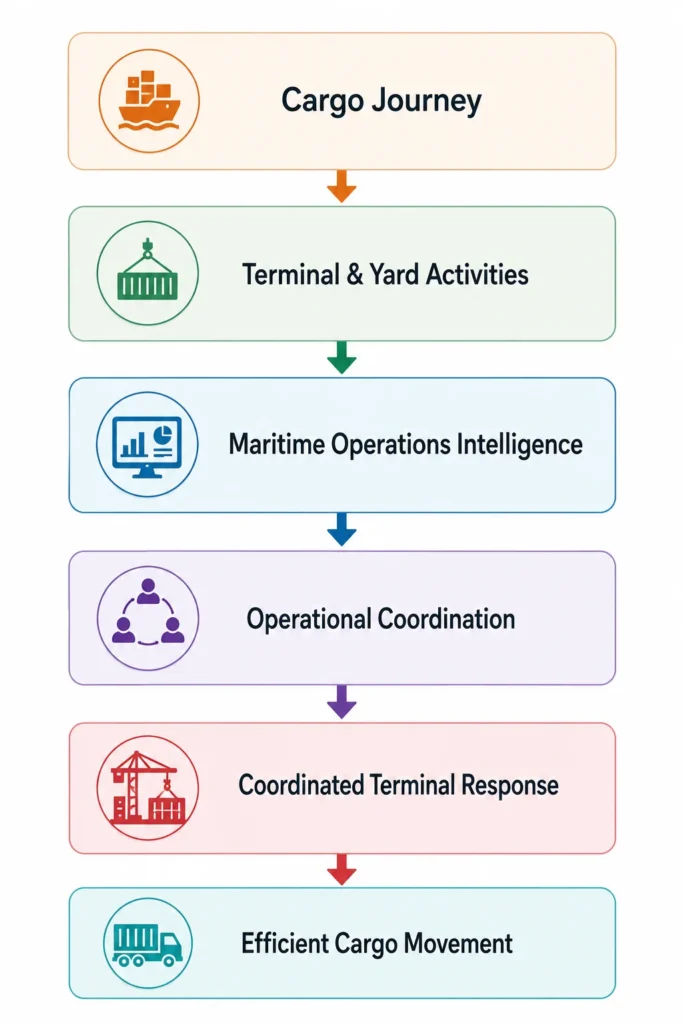
Operational Flow
Operational Technology Ecosystem
Technology | Business Contribution |
AI Monitoring | Continuous visibility across terminal operations |
Computer Vision | Observation of cargo and equipment activities |
AI Video Analytics | Identification of operational patterns and anomalies |
Edge AI | Immediate operational analysis within terminal facilities |
Terminal Operating System (TOS) | Cargo and terminal operational context |
Access Control System | Restricted operational area management |
Enterprise AI Dashboard | Central operational oversight |
REST APIs | Enterprise interoperability |
Operational Decision Intelligence
The solution supported terminal operations by answering key operational questions:
- Which yard areas require immediate operational attention?
- Where are cargo movement patterns creating congestion?
- Which equipment activities require better coordination?
- Are container handling operations progressing efficiently?
- Where should terminal resources be deployed?
- Which operational trends could influence yard planning?
- How can cargo movement be improved across the terminal?
Implementation Methodology
The programme began with a detailed assessment of cargo handling processes, container movement patterns, terminal workflows, and coordination procedures across port operations. Critical operational areas, including vessel berths, quay crane zones, container stacking yards, truck gates, inspection areas, logistics corridors, and restricted operational zones—were prioritised for phased implementation. AI Monitoring capabilities were integrated alongside existing terminal management systems, allowing port teams to validate operational insights, refine workflows, and strengthen coordination without disrupting daily cargo operations
Enterprise Integrations
System | Business Contribution |
Terminal Operating System (TOS) | Cargo and terminal operations |
Port Community System (PCS) | Stakeholder information exchange |
Access Control System | Restricted operational area management |
Enterprise AI Dashboard | Central operational visibility |
Fleet & Equipment Management System | Equipment operations |
REST APIs | Enterprise interoperability |
Business Outcomes
- Improved cargo movement across terminal operations.
- Enhanced coordination between port stakeholders.
- Reduced congestion within container yards.
- Better utilisation of terminal resources.
- Improved operational planning.
- Stronger operational governance.
- Increased terminal productivity.
More reliable logistics operations
ROI & Business Value
The initiative strengthened terminal performance by improving coordination between cargo handling, yard operations, equipment management, and logistics services. Terminal teams were able to optimise resource deployment, decrease handling delays, increase cargo throughput, and ensure more consistent logistics performance thanks to improved visibility into operational operations. These improvements contributed to higher operational efficiency, better asset utilisation, and stronger service reliability across the port
Future Roadmap
The organisation plans to expand Maritime Operations Intelligence through:
- Predictive Cargo Flow Analytics
- AI-Assisted Berth Planning
- Vision-Language Models for Port Operations
- Digital Twin Integration for Container Terminals
- Intelligent Equipment Coordination
- Enterprise Maritime Operations Dashboards
Related Industry Pages
- Container Terminals
- Commercial Seaports
- Inland Container Depots
- Shipping & Logistics
- Port Authorities
- Bulk Cargo Terminals
Related Technology Pages
- AI Monitoring
- Computer Vision
- AI Video Analytics
- Edge AI
- Enterprise AI Dashboards
- Operational Analytics
- Intelligent Operations
Contact SPGS
Efficient ports depend on the seamless coordination of vessels, cargo, equipment, and logistics operations. SPGS develops AI-enabled operational intelligence solutions that help port operators improve terminal visibility, optimise cargo movement, strengthen operational planning, and support resilient maritime operations that keep global supply chains moving