
Digital Transformation Through Computer Vision
Every organization has moments when operations slow down for reasons that aren’t immediately visible. A production line experiences recurring delays, warehouse inventory takes longer to locate, retail queues grow unexpectedly, or compliance teams spend hours reviewing surveillance footage after an incident. The information needed to solve these problems often already exists—it is simply hidden within thousands of hours of video that no one has time to analyze.
Digital transformation is helping organizations overcome this challenge. By combining Computer Vision with AI Video Analytics, businesses can convert visual information into operational intelligence, enabling faster decisions, improved efficiency, and smarter enterprise management.
.
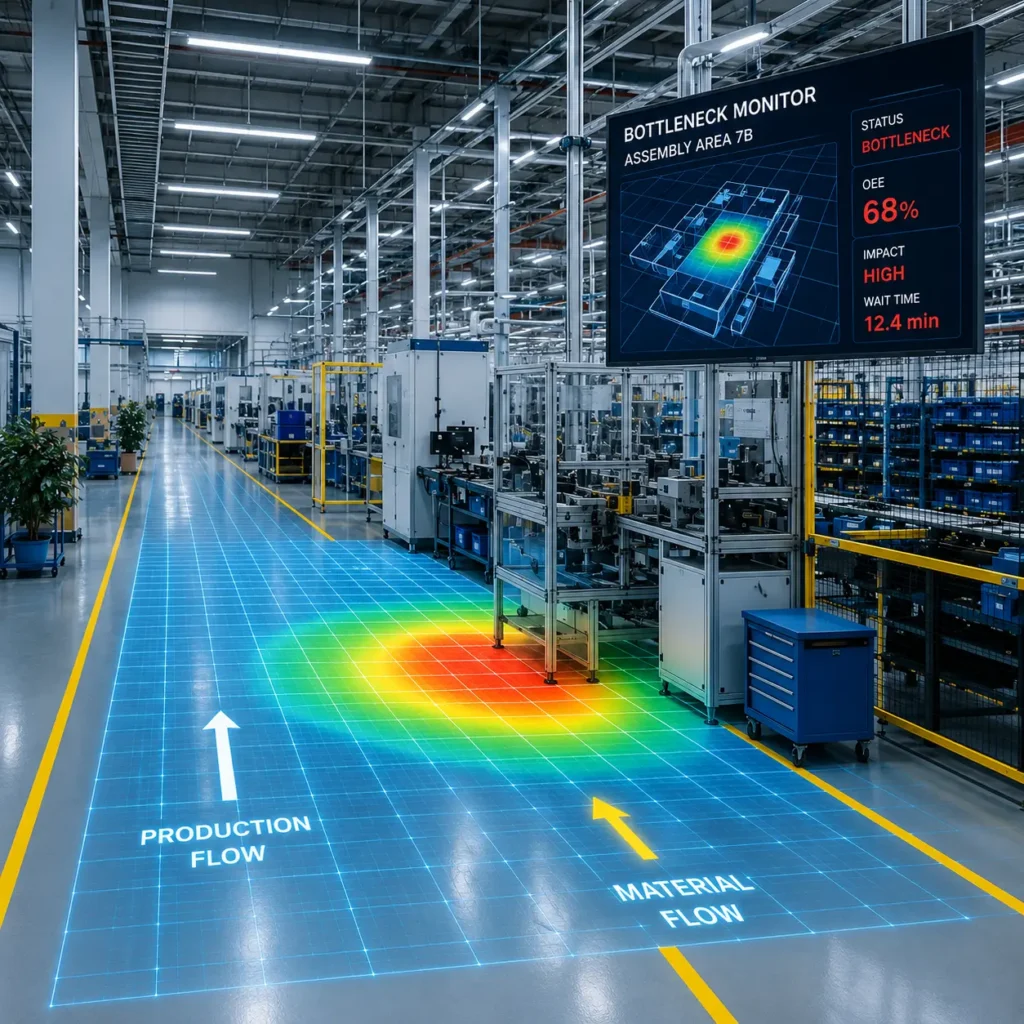
Seeing Business Operations Differently
Digital transformation is often associated with cloud platforms, automation, and data analytics. However, one of the richest sources of business intelligence comes from cameras already installed across facilities.
Cameras become cognitive sensors that can comprehend activity, spot patterns, and discover operational exceptions rather than only serving as security tools.
This modification allows companies to move from
Where Visual Intelligence Creates Business Value
Every department generates visual data that can contribute to operational improvement.
Business Function | Computer Vision Contribution |
Manufacturing | Detects production bottlenecks and monitors quality processes |
Warehousing | Tracks inventory movement and forklift activity |
Retail | Measures customer flow and queue performance |
Healthcare | Supports patient safety and restricted-area monitoring |
Corporate Offices | Analyzes occupancy and visitor management |
Transportation | Monitors vehicle movement and public safety |
Rather than working in isolation, these insights contribute to a broader digital transformation strategy.
From Observation to Intelligent Action
Computer Vision transforms operational workflows by continuously analyzing live environments.
Instead of waiting for reports, organizations receive immediate visibility into situations requiring attention.
Examples include:
- Identifying PPE compliance issues
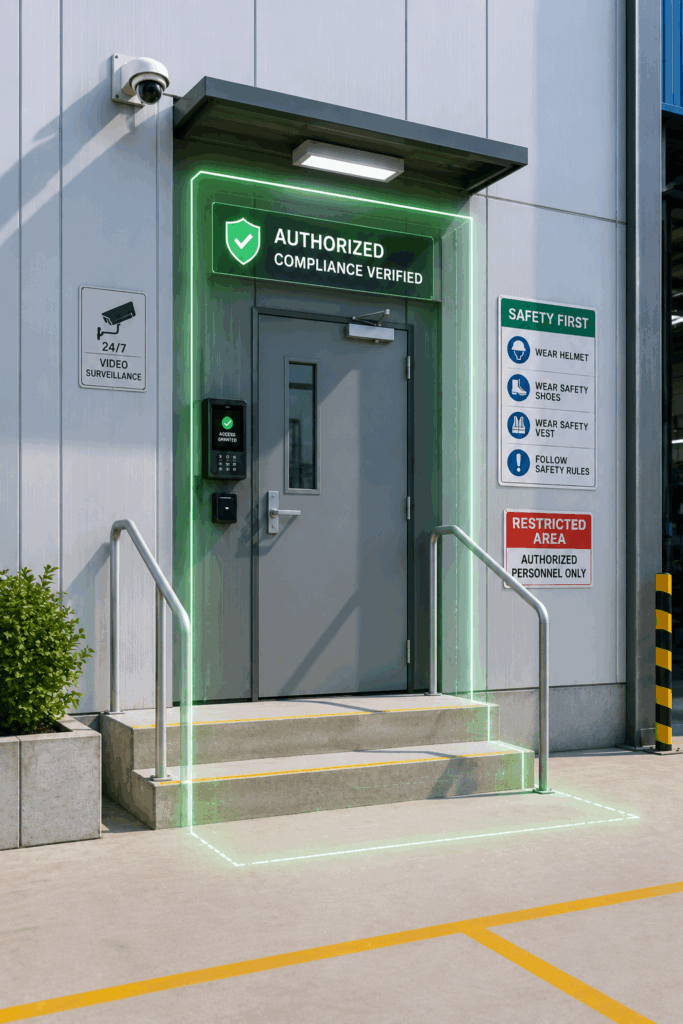
- Detecting restricted-area access
- Monitoring equipment utilization
- Tracking production flow
- Measuring occupancy levels
- Detecting unusual operational events
- Supporting SOP Monitoring
- Automating Compliance Monitoring
These capabilities reduce manual observation while improving operational awareness.
The Transformation Journey Inside a Smart Enterprise
Digital transformation is not achieved through a single technology deployment. It develops through progressive operational improvements.
Stage 1: Capture
Existing cameras collect visual information across production areas, warehouses, offices, and facilities.
Stage 2: Analyze
Computer Vision interprets live images using AI models, identifying objects, activities, and operational events.
Stage 3: Understand
AI Dashboards organize detected events into meaningful trends, helping managers identify recurring operational challenges.
Stage 4: Optimize
Teams use Operational Intelligence to improve workflows, strengthen Workplace Safety, allocate resources efficiently, and reduce operational delays.
Each stage builds on the previous one, creating continuous business improvement.
Traditional Operations vs AI-Driven Operations
Traditional Operations | Computer Vision-Enabled Operations |
Manual observations | Continuous AI analysis |
Reactive investigations | Real-Time Analytics |
Historical reporting | Live operational visibility |
Separate operational systems | Connected Enterprise AI platform |
Manual compliance checks | Automated Compliance Monitoring |
Delayed decision-making | Data-driven operational decisions |
This evolution enables organizations to respond proactively instead of reacting after problems occur.
Expanding Digital Transformation Across Industries
Computer Vision adapts to different operational environments while supporting a common objective—better business performance.
Manufacturing
Supports Smart Manufacturing through quality inspection, production monitoring, equipment observation, and Industrial AI analytics.
Warehousing and Logistics
Improves inventory visibility, loading dock coordination, vehicle movement, and warehouse efficiency using Intelligent Operations.
Retail
Enhances customer experience by monitoring queue lengths, store occupancy, shelf availability, and service performance through Retail Analytics.
Healthcare
Assists with patient safety, operational workflows, access management, and facility compliance.
Smart Cities and Transportation
Supports traffic monitoring, public infrastructure management, and real-time event detection to improve urban operations.
Building a Practical Digital Transformation Strategy
Organizations that achieve measurable results typically begin with clearly defined operational objectives rather than large-scale technology deployments.
A successful strategy includes:
- Prioritizing operational challenges with measurable impact.
- Integrating existing camera infrastructure with AI Video Analytics.
- Deploying Edge AI for latency-sensitive environments.
- Establishing business performance metrics.
- Reviewing operational insights regularly.
- Expanding implementations incrementally across departments.
- Constantly improving AI models in response to operational requirements.
This phased approach reduces implementation risk while delivering continuous value.
Creating Intelligent Enterprises for the Future
Digital transformation is ultimately about improving how organizations operate, make decisions, and respond to change. Computer Vision enables this transformation by turning everyday visual information into actionable business intelligence. By combining AI Video Analytics, Edge AI, Operational Intelligence, Enterprise AI, and Real-Time Analytics, organizations gain the visibility needed to improve productivity, strengthen Compliance Monitoring, enhance Workplace Safety, and build more connected, efficient, and resilient operations.
FAQ
How does Computer Vision support digital transformation?
Computer Vision converts live visual data into actionable insights, helping organizations automate monitoring, improve operational visibility, and make faster business decisions.
Can existing cameras be used for Computer Vision?
Yes. Many Computer Vision platforms integrate with existing IP camera infrastructure, allowing organizations to enhance current systems without replacing all hardware.
Which industries benefit the most from Computer Vision?
Manufacturing, warehousing, retail, healthcare, transportation, construction, education, hospitality, energy, and corporate facilities all benefit from AI-driven visual analytics.
ation about your business, build trust with potential clients, and help convince the visitor that you are a good fit for them.
What is the difference between AI Video Analytics and Computer Vision?
Computer Vision enables machines to understand visual information, while AI Video Analytics applies those capabilities to analyze live video, detect events, and generate operational insights.
What business outcomes can organizations expect?
Organizations often achieve improved operational visibility, faster incident response, better resource utilization, stronger compliance, reduced manual monitoring, and more informed decision-making.