
Industrial AI Analytics for Smart Manufacturing
A production line may appear to be operating smoothly, yet hidden inefficiencies often develop beneath the surface. A machine begins cycling more slowly than expected, material accumulates at one workstation, or operators repeatedly pause production to address minor issues. Individually, these events seem routine. Together, they influence throughput, product quality, equipment utilization, and operating costs.
Manufacturers have long relied on automation to improve productivity, but today’s competitive environment requires more than automated machinery. Industrial AI Analytics enables manufacturers to continuously analyze production activities, transform operational data into meaningful insights, and support faster, more informed decisions across the factory floor.
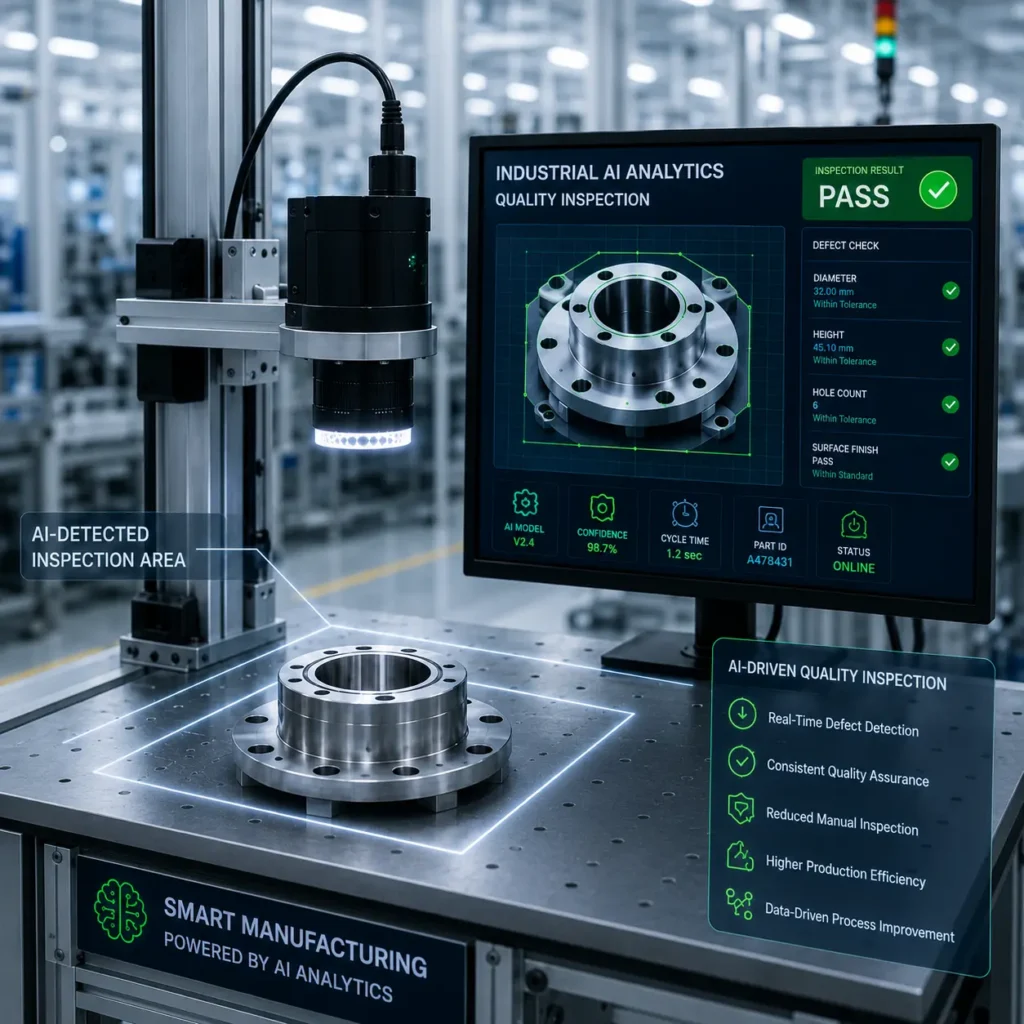
Every Production Line Generates Valuable Data
Modern manufacturing facilities produce information from numerous sources throughout the day.
These include:
- Production equipment
- Industrial cameras
- Conveyor systems
- Robotics
- Quality inspection stations
- Environmental sensors
- Warehouse operations
- Maintenance systems
Without a unified analytics platform, this information often remains isolated, limiting its value for operational improvement.
Industrial AI Analytics brings these data sources together to create a complete operational picture.
Turning Factory Events into Actionable Intelligence
Rather than simply collecting information, AI continuously interprets operational events as production occurs.
Operational Event | AI-Driven Insight |
Machine idle time | Equipment utilization trends |
Conveyor congestion | Production bottleneck detection |
Quality inspection failures | Process variation analysis |
PPE violations | Workplace Safety improvements |
Material movement delays | Workflow optimization |
Equipment alarms | Maintenance prioritization |
This enables production teams to respond proactively instead of relying solely on end-of-shift reports.
How AI Supports the Manufacturing Lifecycle
Industrial AI Analytics delivers value throughout the production process rather than focusing on a single operation.
Production Monitoring
AI Video Analytics continuously observes assembly lines, production flow, and workstation activity to identify delays and maintain operational consistency.
Quality Assurance
Computer Vision assists with product inspection, component verification, packaging validation, and defect detection while reducing manual inspection effort.
Safety and Compliance
AI supports Compliance Monitoring by identifying missing PPE, monitoring hazardous work zones, verifying SOP Monitoring, and detecting unauthorized access.
Material Handling
Warehouses and production areas benefit from Real-Time Analytics that track forklift movement, pallet transfers, inventory flow, and loading operations.
Operational Planning
Managers use AI Dashboards to compare production performance, identify recurring issues, and allocate resources more effectively.
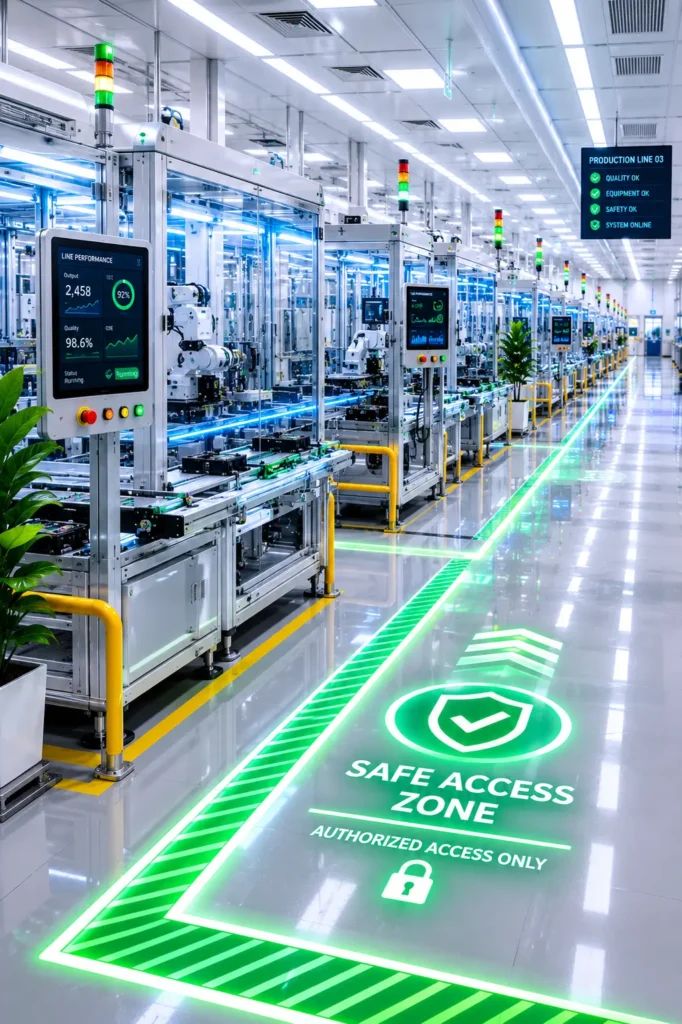
From Individual Machines to Enterprise Operations
Manufacturing organizations often operate multiple production lines across several facilities. Industrial AI Analytics provides centralized visibility while maintaining detailed insight into each site.
Enterprise AI platforms enable organizations to:
- Compare production performance across facilities.
- Monitor operational consistency.
- Standardize reporting methods.
- Track key manufacturing metrics.
- Benchmark production efficiency.
- Support continuous improvement initiatives.
This creates a connected manufacturing environment where decisions are based on live operational data rather than isolated reports.
Industrial AI vs Conventional Manufacturing Analytics
Traditional Manufacturing Analytics | Industrial AI Analytics |
Historical production reports | Continuous Real-Time Analytics |
Manual performance reviews | Automated operational insights |
Periodic quality inspections | Continuous Computer Vision monitoring |
Separate data systems | Unified Operational Intelligence |
Reactive maintenance decisions | Early identification of operational trends |
Limited process visibility | Enterprise-wide production oversight |
The objective is to improve operational awareness without increasing manual monitoring.
Building an Effective AI Analytics Strategy
Successful adoption begins with measurable operational objectives rather than technology alone.
Organizations should:
- Identify production processes with the greatest improvement potential.
- Connect existing cameras, machines, and operational systems.
- Deploy Edge AI for latency-sensitive manufacturing areas.
- Define operational performance indicators.
- Review analytics regularly with production teams.
- Expand deployments gradually across facilities.
- Continuously refine AI models as production requirements evolve.
A phased implementation allows manufacturers to achieve measurable improvements while minimizing operational disruption.
Driving Smarter Manufacturing Decisions
Smart manufacturing depends on more than connected equipment—it requires continuous understanding of how production actually performs. Industrial AI Analytics transforms operational data into actionable insights that improve productivity, quality, safety, and resource utilization. By combining AI Video Analytics, Computer Vision, Edge AI, Operational Intelligence, and Real-Time Analytics, manufacturers can strengthen Compliance Monitoring, optimize production workflows, and build factories that continuously improve through data-driven decision-making.
FAQ
What is Industrial AI Analytics?
Industrial AI Analytics uses artificial intelligence to analyze manufacturing operations, identify trends, and provide real-time insights that improve production performance.
How does AI improve manufacturing efficiency?
AI continuously monitors production activities, detects bottlenecks, automates operational analysis, and supports faster decision-making using live data.
Can Industrial AI Analytics work with existing manufacturing systems?
Yes. Most platforms integrate with existing cameras, production equipment, industrial sensors, and enterprise software to enhance operational visibility.
Which manufacturing processes benefit the most?
Production monitoring, quality inspection, material handling, equipment utilization, workplace safety, maintenance planning, and compliance management all benefit from Industrial AI Analytics.
Is Industrial AI Analytics suitable for multi-site manufacturing?
Yes. Enterprise AI platforms provide centralized dashboards, standardized reporting, and cross-facility performance analysis, making them ideal for organizations operating multiple manufacturing plants.