
AI Airport Security & Passenger Flow Analytics
Aviation Operations Intelligence
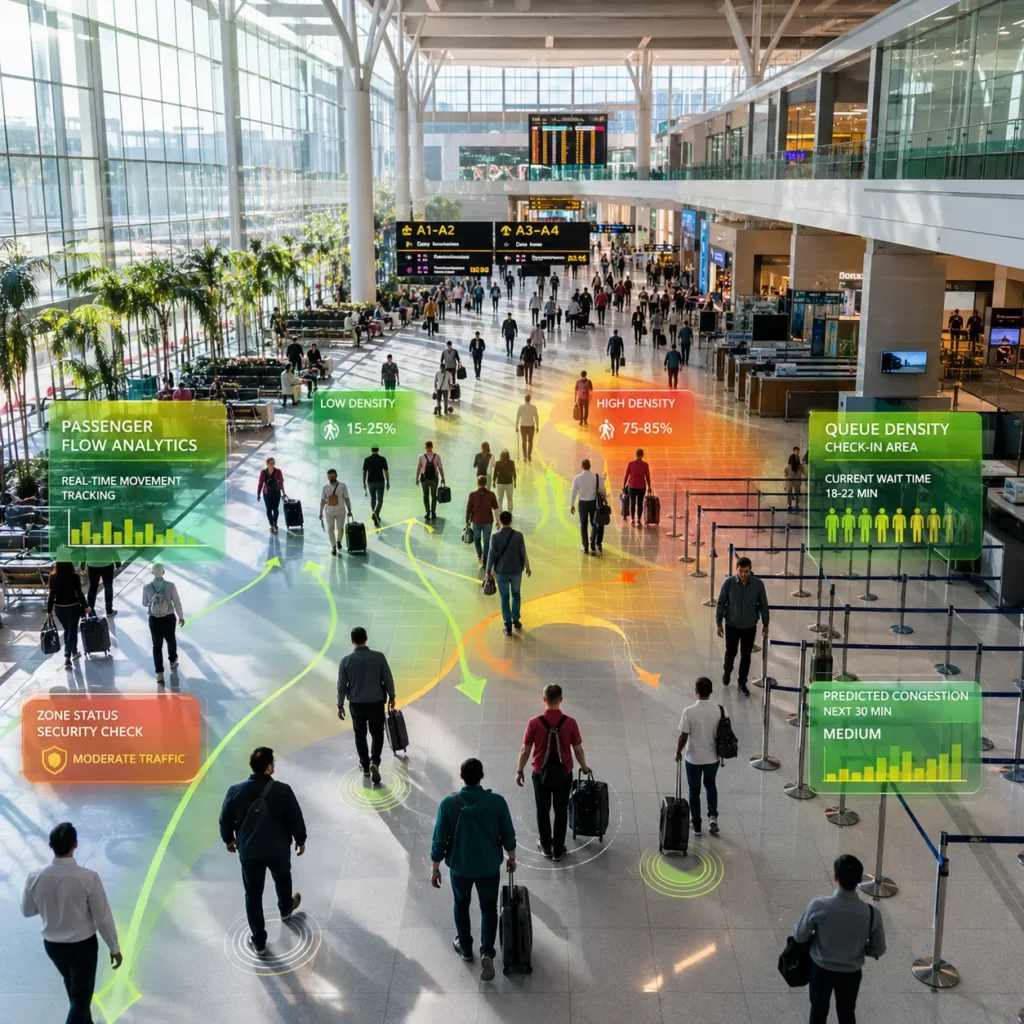
Airports are dynamic operational environments where passengers, airlines, security agencies, ground handling teams, retail services, and critical infrastructure work together to support safe and efficient air travel. Every stage of the passenger journey depends on effective coordination between terminal operations, airside activities, security procedures, and facility management. Aviation Operations Intelligence provides continuous visibility into these interconnected operational activities, enabling airport authorities to improve coordination, optimise passenger movement, strengthen operational resilience, and maintain consistent service quality. AI Monitoring supports this operational approach by providing timely insights that help airport teams make informed decisions while ensuring secure and efficient airport operations.
Executive Summary
An international airport sought to improve operational visibility across passenger terminals while maintaining high standards of security, service quality, and operational efficiency. Existing airport systems effectively managed flight operations, security checkpoints, and facility infrastructure, but understanding how passenger movement, terminal activities, and operational workflows influenced the overall airport experience required broader operational intelligence.
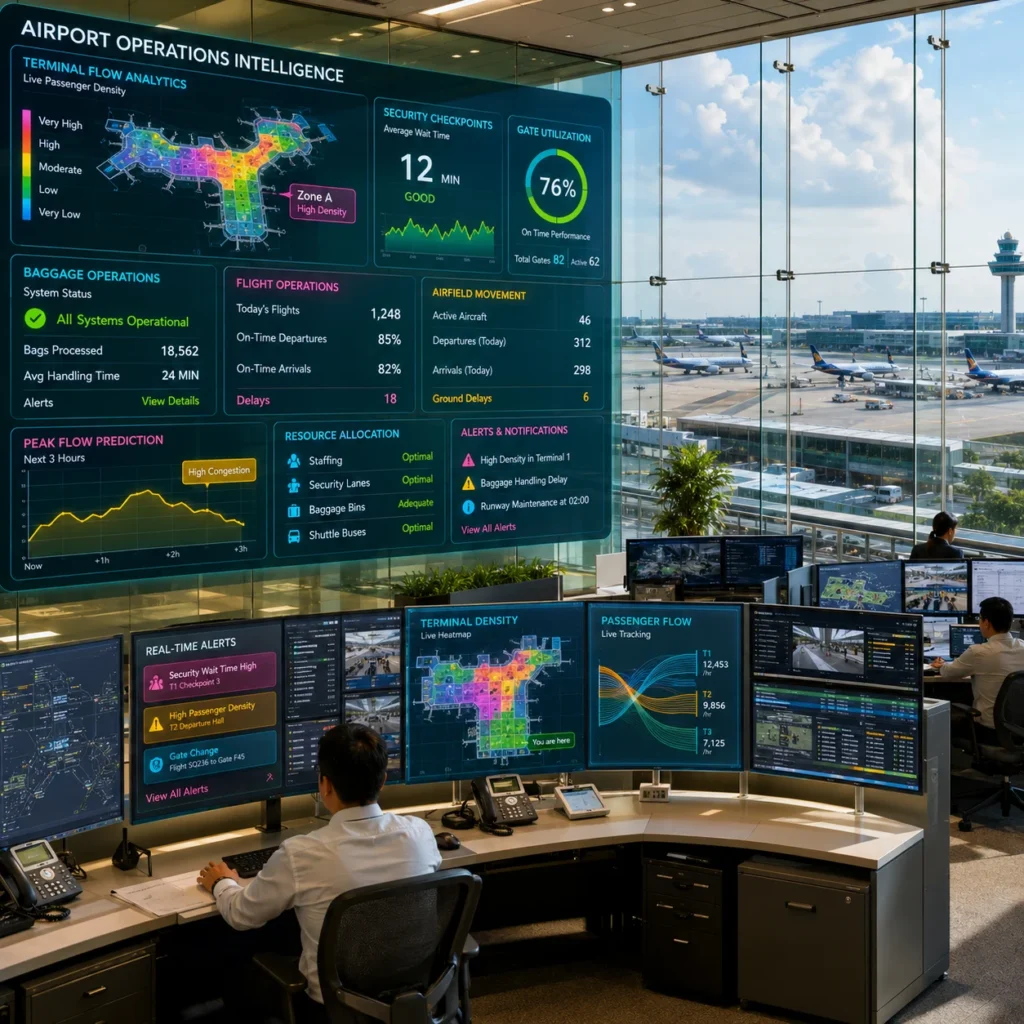
SPGS implemented an Aviation Operations Intelligence framework using AI Monitoring to strengthen coordination across terminal operations, improve passenger flow, support operational planning, and enhance collaboration between airport stakeholders. The initiative enabled airport teams to respond proactively to operational challenges while maintaining efficient passenger movement throughout the airport.
Customer Profile
Industry: International Airport Operations (Anonymous)
Project Scope
- Passenger terminals
- Departure and arrival halls
- Security screening checkpoints
- Immigration and customs areas
- Boarding gates
- Baggage claim areas
- Retail and public spaces
- Airport operations control centre
- Continuous 24×7 operational oversight
Operational Environment
The airport managed thousands of passengers each day across domestic and international flights. Daily operations involved airline personnel, airport authorities, security agencies, ground handling teams, retail operators, maintenance crews, and passenger service staff. Passenger volumes continuously changed throughout the day, requiring effective coordination between multiple departments to minimise congestion, maintain operational efficiency, and support a smooth travel experience.
Project Objectives
- Improve operational visibility across airport terminals.
- Optimise passenger flow.
- Strengthen coordination between operational teams.
- Support efficient terminal management.
- Improve operational planning.
- Enhance passenger experience.
- Establish an Aviation Operations Intelligence framework.
Keeping Airports Moving Efficiently
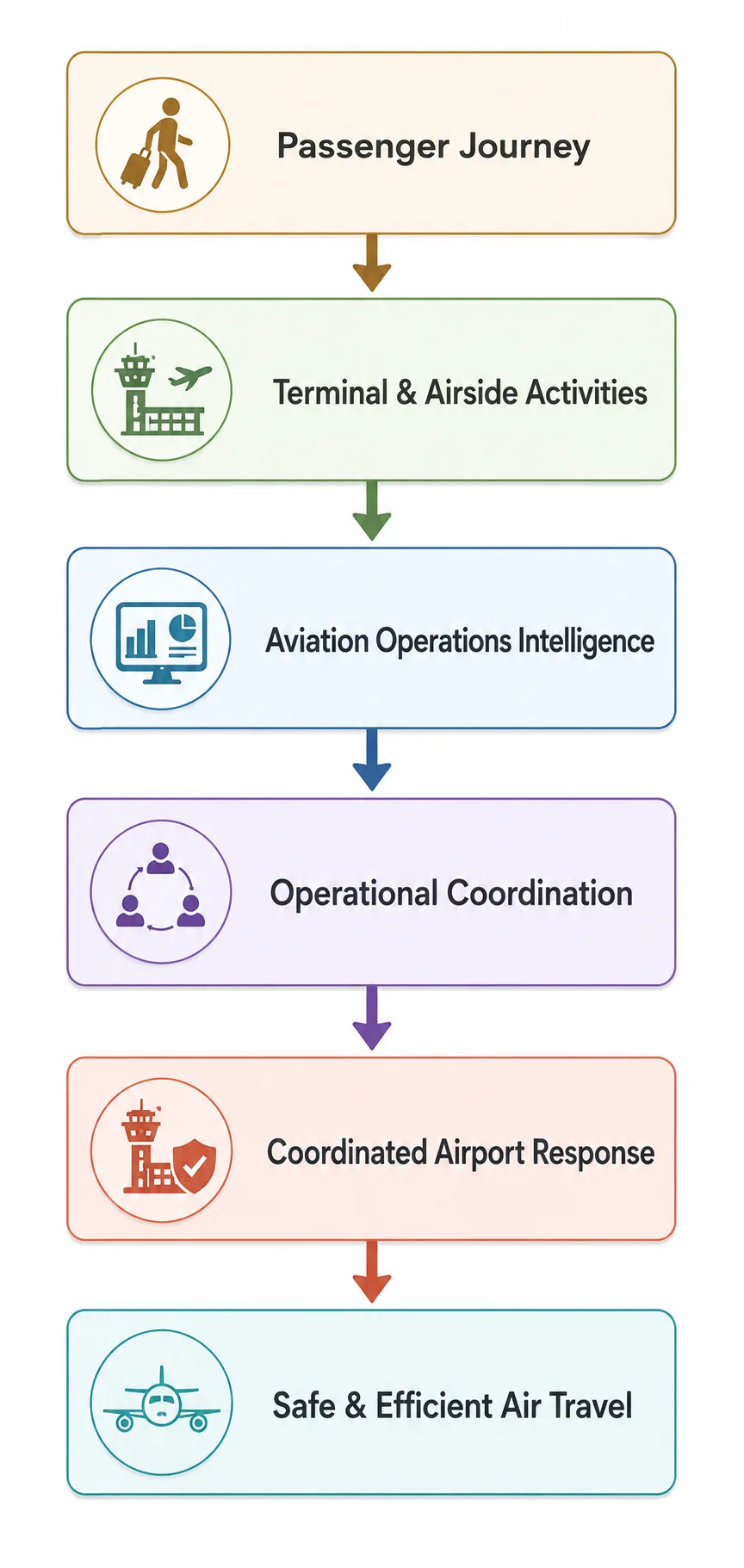
The transformation focused on improving operational coordination throughout the passenger journey rather than monitoring isolated activities. Passenger movement, security screening, boarding operations, retail activity, baggage handling, and terminal services were viewed as interconnected operational processes. This broader operational perspective enabled airport teams to anticipate congestion, coordinate resources more effectively, improve terminal efficiency, and maintain consistent passenger experiences across every stage of airport operations.
Solution Architecture
Operational Flow
Operational Technology Ecosystem
Technology | Business Contribution |
AI Monitoring | Continuous visibility across airport operations |
Computer Vision | Observation of passenger and operational activities |
AI Video Analytics | Identification of operational patterns and anomalies |
Edge AI | Immediate operational analysis within airport facilities |
Airport Operations Database (AODB) | Flight and operational context |
Access Control System | Restricted area management |
Enterprise AI Dashboard | Central operational oversight |
Operational Decision Intelligence
The solution supported airport operations by answering key operational questions:
- Which terminal areas require immediate operational attention?
- Where are passenger movement patterns creating congestion?
- Which operational activities require better coordination?
- Are critical airport procedures progressing efficiently?
- Where should operational resources be deployed?
- Which trends could influence terminal planning?
- How can passenger movement be improved throughout the airport?
Implementation Methodology
The programme began with a detailed assessment of terminal operations, passenger movement patterns, operational workflows, and coordination procedures across airport departments. Critical operational areas, including security checkpoints, immigration zones, boarding gates, baggage claim areas, passenger waiting spaces, retail corridors, and restricted operational zones, were prioritised for phased implementation
Enterprise Integrations
System | Business Contribution |
Airport Operations Database (AODB) | Operational and flight information |
Flight Information Display System (FIDS) | Passenger information and flight visibility |
Access Control System | Restricted area management |
Enterprise AI Dashboard | Central operational visibility |
Building Management System | Terminal infrastructure operations |
REST APIs | Enterprise interoperability |
Business Outcomes
- Improved passenger movement across airport terminals.
- Enhanced coordination between airport departments.
- Reduced congestion in high-traffic operational areas.
- Better utilisation of airport resources.
- Improved operational planning.
- Stronger compliance with airport operational procedures.
- Enhanced terminal efficiency.
- Better passenger experience throughout the journey.
ROI & Business Value
The initiative improved airport performance by strengthening coordination across passenger services, terminal operations, security functions, and facility management. Greater visibility into operational workflows enabled airport teams to optimise resource deployment, reduce passenger delays, improve terminal efficiency, and support more consistent operational performance. These improvements contributed to higher service quality, more efficient airport operations, and a better overall travel experience.
Future Roadmap
The organisation plans to expand Aviation Operations Intelligence through:
- Predictive Passenger Flow Analytics
- AI-Assisted Airport Resource Planning
- Vision-Language Models for Aviation Operations
- Digital Twin Integration for Airport Facilities
- Intelligent Ground Operations Coordination
- Enterprise Aviation Performance Dashboards
Related Industry Pages
- International Airports
- Domestic Airports
- Airline Operations
- Cargo Terminals
- Ground Handling Services
- Aviation Authorities
Related Technology Pages
- AI Monitoring
- Computer Vision
- AI Video Analytics
- Edge AI
- Enterprise AI Dashboards
Contact SPGS
Airports succeed when every operational activity works together to keep passengers, airlines, and airport services moving efficiently. SPGS designs AI-powered operational intelligence solutions that help aviation organisations improve terminal coordination, optimise passenger movement, strengthen operational planning, and build resilient airport environments that support safe, efficient, and reliable air travel