
Multimodal AI Will Revolutionize Industrial Video Analytics Through Vision, Audio, and Sensor Fusion
Unexpected equipment failures rarely happen without warning. A conveyor motor may produce unusual sounds, a machine could begin vibrating beyond normal limits, or a production area may show subtle visual changes before output quality declines. When these signals are monitored independently, important patterns can be missed. Bringing them together gives operations teams a more complete understanding of what is happening on the factory floor.
Industrial facilities are increasingly moving beyond camera-only monitoring. By combining video, audio, and sensor data, multimodal AI helps businesses detect operational issues earlier, reduce manual inspections, and support faster decision-making. Instead of relying on a single source of information, enterprises gain richer operational intelligence that reflects real-world conditions.
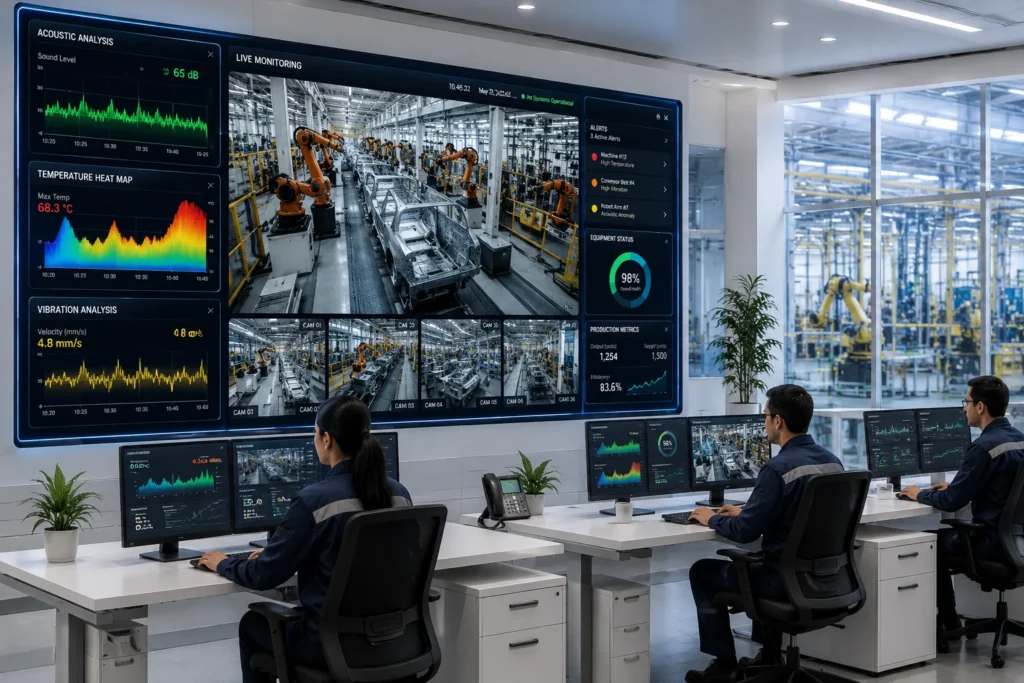
Why One Data Source Is No Longer Enough
Traditional AI Video Analytics focuses primarily on visual information captured by cameras. While this remains valuable, many operational events cannot be fully understood through images alone.
For example:
- A motor may sound abnormal before visible damage appears.
- Temperature sensors may detect overheating before smoke is visible.
- Vibration readings may indicate bearing wear while production continues normally.
- Environmental sensors may identify unsafe conditions that cameras cannot measure.
Combining these signals provides greater confidence in identifying genuine operational issues while reducing false alerts.
How Multimodal AI Works in Industrial Environments
Rather than treating cameras, microphones, and IoT devices as separate systems, multimodal AI analyzes information from all available sources simultaneously.
A typical workflow includes:
Data Source | Operational Insight |
Video Cameras | Equipment activity, worker movement, process compliance |
Audio Sensors | Abnormal machine sounds, leaks, mechanical faults |
Temperature Sensors | Heat buildup, overheating equipment |
Vibration Sensors | Mechanical wear and predictive maintenance indicators |
Environmental Sensors | Air quality, humidity, gas detection, workplace conditions |
When multiple data sources indicate the same issue, the system can prioritize alerts with greater accuracy and provide better context for maintenance and operations teams.
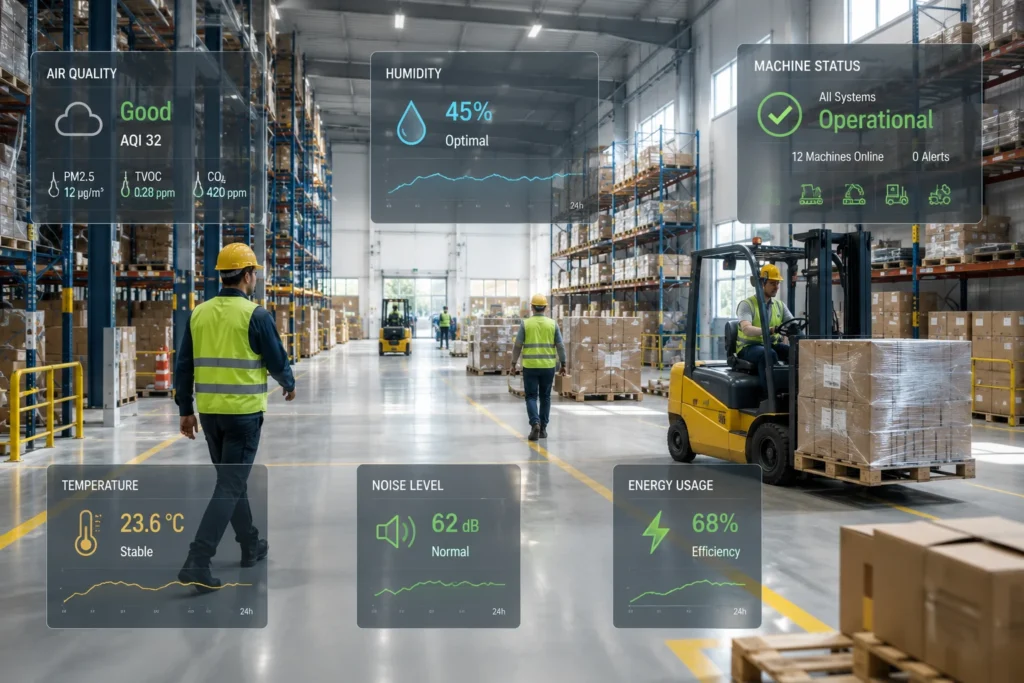
Where Sensor Fusion Creates the Greatest Value
Different industries benefit from multimodal monitoring in different ways.
Manufacturing plants can correlate machine performance with vibration and temperature data to identify early maintenance needs.
Food processing facilities can combine video monitoring with environmental sensors to support hygiene standards and process consistency.
While keeping an eye on dock equipment performance and environmental conditions, warehouses can analyse loading activity.
Energy and utility operators can monitor equipment, detect abnormal sounds, and identify temperature variations before they escalate into failures.
Instead of reviewing isolated data points, managers receive a comprehensive operational picture.
Supporting Faster Maintenance Decisions
Maintenance teams often spend valuable time determining whether an alert represents a genuine problem.
Multimodal AI simplifies this process by presenting supporting evidence from several sources at once.
For example, an alert may include:
- Video showing reduced conveyor movement
- Audio indicating unusual bearing noise
- Rising motor temperature
- Increasing vibration levels
- Historical trend data for the same equipment
This combination helps maintenance teams assess severity quickly and prioritize the right corrective actions.
Implementation Considerations for Enterprises
Organizations planning to adopt multimodal AI should begin with clearly defined operational objectives rather than deploying every available sensor.
A practical implementation roadmap includes:
- Identify critical production assets.
- Review existing camera and sensor infrastructure.
- Prioritize high-impact operational challenges.
- Integrate AI Dashboards for centralized monitoring.
- Establish Real-Time Analytics and alert thresholds.
- Connect alerts with maintenance or CAPA workflows.
- Measure improvements using operational KPIs.
A phased rollout allows organizations to validate results before expanding across multiple facilities.
Business Impact Beyond Equipment Monitoring
Sensor fusion supports more than predictive maintenance. It also contributes to broader operational improvements.
Potential business outcomes include:
- Reduced unplanned equipment downtime
- Improved production scheduling
- Faster fault diagnosis
- Better asset utilization
- More accurate maintenance planning
- Enhanced Workplace Safety
- Improved Compliance Monitoring
- Lower manual inspection effort
These measurable improvements help organizations maximize the value of both existing camera systems and industrial sensor networks.
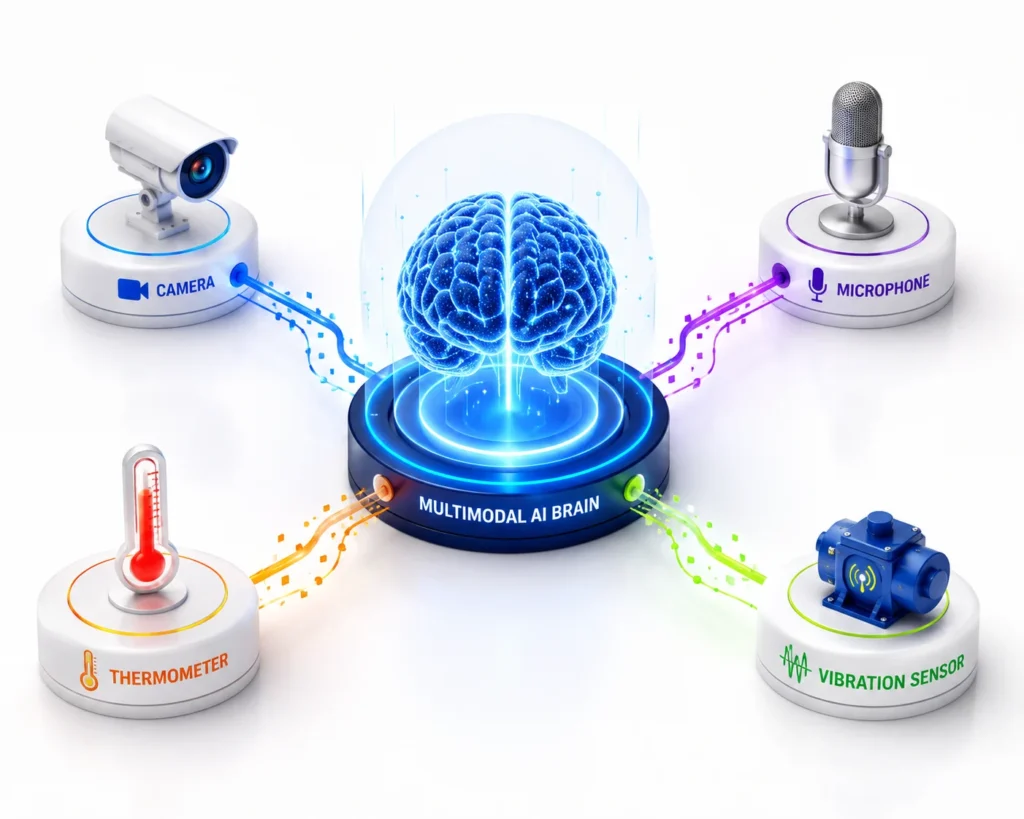
The Future of Industrial Monitoring
As Enterprise AI continues to evolve, industrial monitoring platforms will increasingly combine Computer Vision, AI Automation, Edge Analytics, and sensor intelligence into a unified decision-support system. Rather than generating isolated alerts, future platforms will understand relationships between visual events, machine behavior, environmental conditions, and operational performance.
This shift enables businesses to move from reactive monitoring to proactive operations, where issues are detected earlier, investigations become faster, and operational decisions are supported by multiple sources of evidence instead of a single video feed.
From Data Streams to Smarter Decisions
The next phase of industrial monitoring is not about installing more cameras or more sensors. It involves linking the data that companies already gather and transforming it into insights that can be put to use. By combining vision, audio, and sensor data, organizations can improve maintenance planning, increase operational reliability, and strengthen Digital Transformation initiatives while making everyday industrial operations more efficient and predictable.
FAQs
What is multimodal AI in industrial video analytics?
It is an AI approach that combines video, audio, and sensor data to provide more accurate operational insights than using cameras alone.
Which industries benefit most from sensor fusion?
Manufacturing, food processing, energy, logistics, warehousing, pharmaceuticals, and utilities commonly benefit from multimodal monitoring.
Can multimodal AI work with existing industrial cameras?
Yes. Many solutions integrate with existing camera infrastructure while incorporating additional sensor inputs such as vibration, temperature, and audio devices.
Does sensor fusion reduce false alarms?
Yes. Validating events across multiple data sources helps distinguish genuine operational issues from isolated anomalies, improving alert accuracy.
What should enterprises monitor first when adopting multimodal AI?
Start with vital machinery or production procedures where maintenance expenses, downtime, or quality problems have the biggest effects on the company.