
Industrial IoT and Edge Analytics Together Deliver Faster, Smarter Decision-Making
A temperature sensor reports an unexpected rise on a production machine. At almost the same moment, a nearby industrial camera identifies slower material movement on the conveyor feeding that machine. Individually, neither event appears critical. Together, they indicate a developing production issue that requires immediate attention.
In many industrial environments, these connected signals are still reviewed separately, delaying operational decisions. This procedure is altered by industrial IoT and edge analytics, which integrate machine data with real-time source analysis. Instead of waiting for centralized systems to interpret every event, organizations gain immediate operational intelligence that supports faster and more confident decision-making.
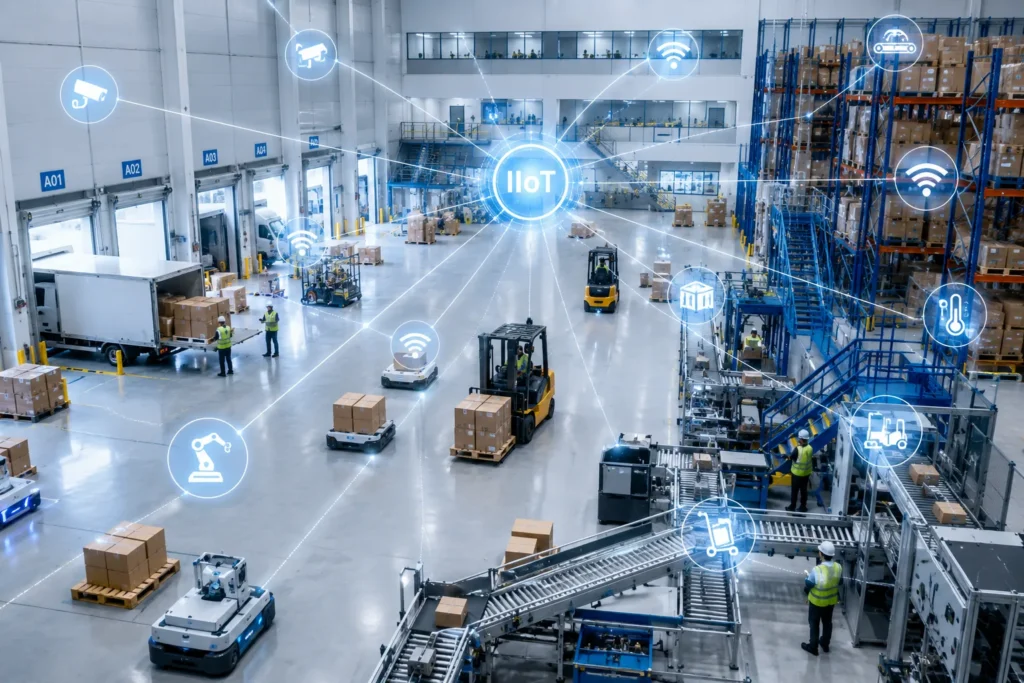
Following One Event from Detection to Action
A typical operational decision involves several connected stages rather than a single alert.
First, Industrial IoT devices detect changing operating conditions through connected equipment and sensors.
Next, Edge Analytics evaluates incoming information locally, filtering routine measurements from conditions that require attention.
When multiple indicators suggest an operational issue, the system generates an alert supported by contextual information rather than isolated data points.
Supervisors receive meaningful insights instead of thousands of individual sensor readings, allowing them to determine the most appropriate response without manually investigating multiple systems.
Organisations can respond sooner thanks to this linked decision-making process, which also minimises needless disruptions to operations.
Why Processing Data at the Edge Changes Operational Speed
Traditional architectures often transfer operational information to centralized platforms before analysis begins. Although effective for reporting and historical analysis, this approach may introduce delays for time-sensitive operational events.
Local processing changes that sequence.
Instead of transmitting every measurement across the network, Edge Analytics evaluates information immediately after it is generated. Only relevant operational insights are forwarded to enterprise systems for broader visibility and trend analysis.
This approach helps organizations:
- Reduce response times for operational events.
- Lower network bandwidth requirements.
- Continue monitoring during temporary connectivity interruptions.
- Prioritize actionable information over raw data.
- Support more efficient operational workflows.
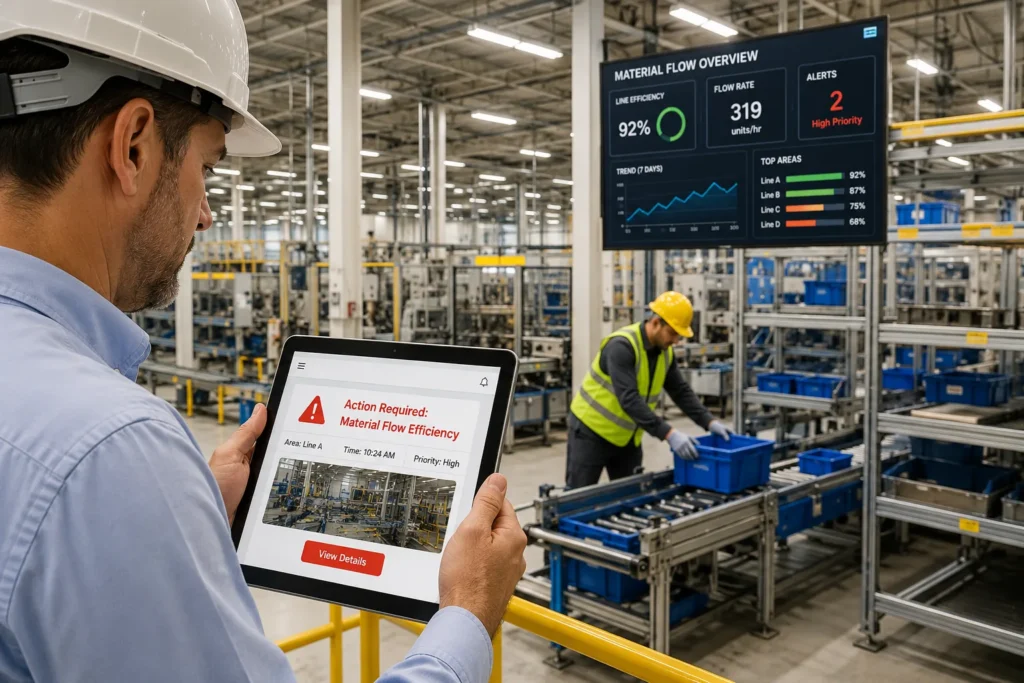
Every Operational Decision Starts with Data
Industrial facilities generate enormous amounts of information every minute. Sensors report equipment conditions, controllers monitor production parameters, cameras observe workflows, and connected assets continuously communicate their status.
Collecting this information is no longer the primary challenge. The real objective is identifying which data requires immediate action and which information should contribute to long-term planning.
Edge Analytics addresses this challenge by processing operational data where it is created, reducing unnecessary delays and helping teams focus on events that influence production performance.
Connecting Machines, People, and Processes
Industrial IoT creates value when information moves beyond machines and reaches the teams responsible for operations.
Maintenance engineers receive early indications of abnormal equipment behavior before failures occur.
Production supervisors understand how equipment performance influences workflow continuity.
Operations managers compare current activity with expected production targets throughout the shift.
Business leaders use summarized operational intelligence to identify recurring patterns that influence long-term investment and capacity planning.
Rather than operating independently, every decision becomes part of a connected operational ecosystem.
Making Operational Intelligence More Meaningful
Industrial environments rarely depend on one information source.
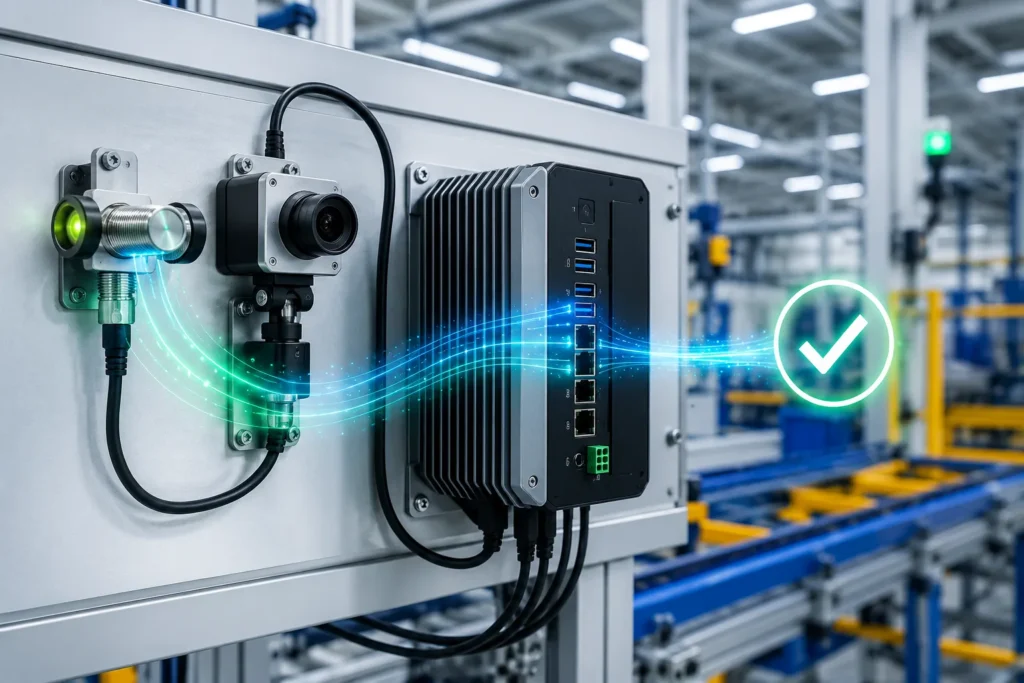
Sensor readings explain how equipment is performing, while AI Video Analytics and Computer Vision provide visual confirmation of what is happening around the equipment. Operational Intelligence platforms combine these insights with production metrics to create a more complete understanding of facility performance.
This layered approach reduces uncertainty and allows teams to make decisions using multiple sources of operational evidence instead of isolated measurements.
Planning a Practical Deployment
Organizations often achieve the strongest results by introducing Industrial IoT and Edge Analytics through clearly defined operational objectives.
An effective deployment typically begins by identifying one business process where faster decisions will have measurable value. Teams then validate data quality, establish response workflows, define operational metrics, and evaluate business outcomes before expanding to additional production areas.
This measured approach allows organizations to improve operational performance while minimizing implementation complexity.
Creating a Faster Decision-Making Culture
Industrial organizations no longer gain a competitive advantage simply by collecting more operational data. The advantage comes from understanding events as they develop and responding before they disrupt productivity.
By combining Industrial IoT with Edge Analytics, businesses transform continuous streams of operational information into timely, actionable insights. As connected infrastructure, AI Video Analytics, Computer Vision, Edge AI, and Operational Intelligence continue to evolve, organizations will be able to make faster decisions, improve operational resilience, and create smarter industrial environments built around real-time intelligence.
Frequently Asked Questions
Why are Industrial IoT and Edge Analytics often implemented together?
Industrial IoT continuously gathers operational data, while Edge Analytics processes that information locally to support faster operational decisions without waiting for centralized analysis.
What types of operational data can Edge Analytics process?
Edge Analytics can evaluate sensor readings, equipment status, environmental conditions, production parameters, and AI-generated visual insights from connected industrial systems.
How does local processing improve operational performance?
Processing information close to the source reduces response delays, lowers unnecessary data transmission, and enables immediate action for time-sensitive operational events.
Can Edge Analytics complement existing industrial automation systems?
Yes. Many organizations integrate Edge Analytics with existing Industrial IoT infrastructure, SCADA platforms, and operational dashboards to enhance decision-making without replacing current systems.
Which operational teams gain the most from this strategy?
Production, maintenance, engineering, warehouse operations, quality assurance, and plant management teams all benefit from faster access to actionable operational insights.
How can organizations measure the success of an Industrial IoT and Edge Analytics deployment?
Success is typically measured through improvements in response times, equipment availability, production continuity, resource utilization, maintenance efficiency, and overall operational performance.