
AI-Based Fire and Smoke Detection Systems
Early detection is one of the most important factors in minimizing the impact of fire-related incidents. In manufacturing plants, warehouses, logistics centers, retail stores, energy facilities, and commercial buildings, even a small fire or smoke event can disrupt operations, damage assets, and create serious safety risks. While traditional fire detection systems remain essential, many organizations are complementing them with AI-based fire and smoke detection to improve situational awareness and enable faster response.
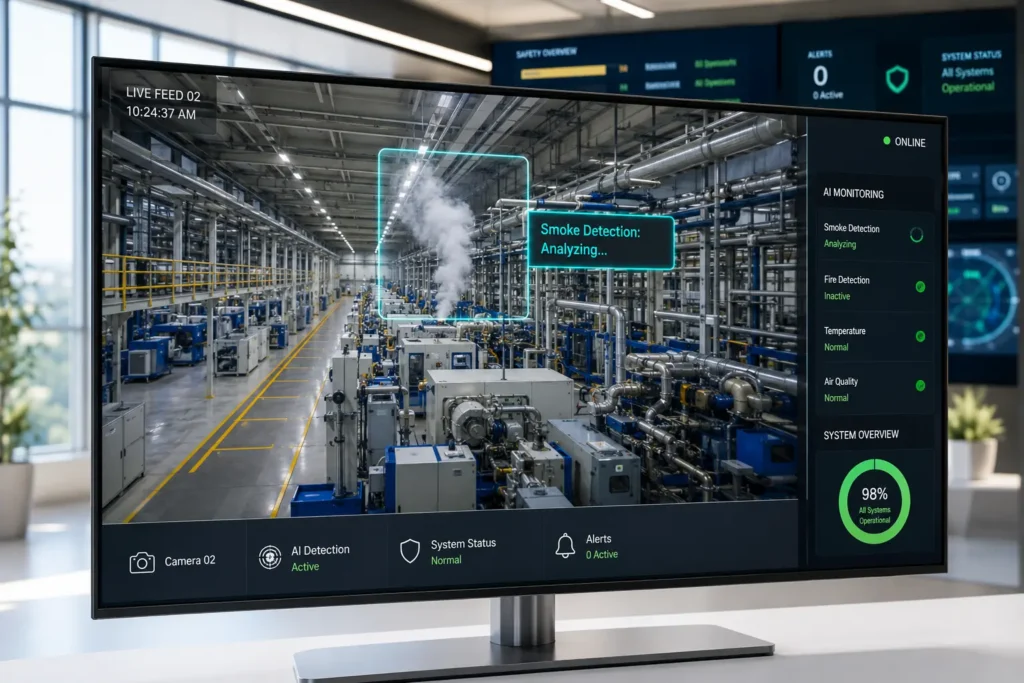
Using computer vision, AI video analytics, edge AI, and real-time analytics, AI-based systems continuously analyze live video streams for visual indicators of smoke and fire. Instead of waiting for heat or smoke to reach a detector, AI can identify visible signs at an early stage and immediately notify responsible personnel for verification and action.
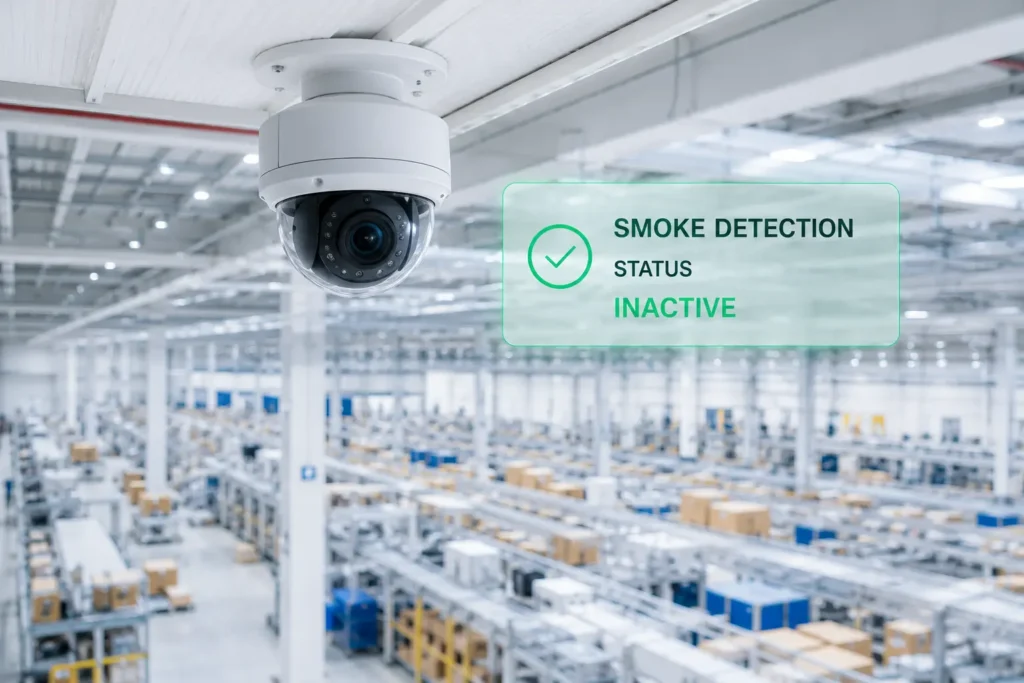
Why Conventional Detection Alone May Not Be Enough
Traditional fire protection systems are highly effective and remain a critical part of building safety. However, certain operational environments can benefit from an additional layer of visual monitoring, particularly in large open spaces where early visual detection provides valuable context.
Examples include:
- High-ceiling warehouses
- Outdoor storage yards
- Manufacturing production areas
- Loading docks
- Waste collection zones
- Large logistics facilities
In these environments, AI-based visual detection can complement existing fire safety systems by providing earlier operational awareness.
Where AI Can Detect Fire and Smoke
Different operational environments present different fire risks. AI monitoring can be configured to continuously observe areas where early visual detection supports faster investigation.
Operational Area | AI Detection Focus | Operational Value |
Warehouse Storage | Visible smoke and fire | Earlier incident awareness |
Production Lines | Flames near equipment | Reduced operational disruption |
Loading Docks | Fire during loading activities | Improved response coordination |
Electrical Rooms | Smoke around electrical equipment | Faster investigation |
Parking Areas | Vehicle fire detection | Improved site safety |
Outdoor Storage | Smoke in open storage zones | Better perimeter monitoring |
Waste Handling Areas | Combustion indicators | Reduced escalation risk |
Utility Facilities | Fire around critical infrastructure | Improved operational continuity |
These monitoring capabilities provide an additional source of operational intelligence while supporting existing emergency procedures.
How AI Identifies Potential Fire Events
AI-based monitoring follows a continuous sequence of analysis that operates throughout the day.
Continuous Observation
AI video analytics processes live video feeds without interruption, examining each frame for visual characteristics associated with smoke or fire.
Pattern Recognition
Computer vision distinguishes between normal operational activities and patterns that resemble smoke, flames, or unusual light conditions.
Event Verification
Configured rules evaluate the detected event to reduce unnecessary alerts before notifying responsible personnel.
Alert Generation
When predefined conditions are met, notifications are sent to operators, enabling rapid verification and appropriate emergency response.
This workflow allows organizations to identify potential incidents while they are still developing.
AI-Based Detection Compared With Conventional Monitoring
Capability | Conventional Detection | AI-Based Video Detection |
Detection Method | Heat, smoke, or flame sensors | Visual analysis using computer vision |
Monitoring Area | Detector coverage | Camera field of view |
Operational Context | Limited event information | Live visual verification |
Event Awareness | Detector activation | Real-time visual analysis |
Multi-Site Visibility | Individual building systems | Centralized AI dashboards |
Operational Insights | Alarm notification | Visual event evidence and analytics |
Many organizations use both approaches together to strengthen overall fire protection strategies.
Beyond Fire Detection
Once AI monitoring infrastructure is deployed, organizations often expand its use to support additional operational objectives.
These may include:
- Workplace safety monitoring
- Compliance monitoring
- SOP monitoring
- Equipment safety observation
- Restricted area monitoring
- Event monitoring
- Operational intelligence reporting
- Multi-site facility visibility
This broader use of AI helps maximize the value of existing monitoring infrastructure.
Business Outcomes of Early Visual Detection
Organizations implementing AI-based fire and smoke detection often focus on measurable operational improvements.
Potential business outcomes include:
- Earlier awareness of developing incidents
- Faster response coordination
- Improved workplace safety
- Reduced manual monitoring
- Better operational visibility
- Enhanced incident documentation
- Improved business continuity
- Greater multi-site oversight
- Better decision-making using real-time analytics
- Support for proactive risk management
These outcomes help organizations strengthen operational resilience while supporting existing fire protection measures.
Supporting Safer Industrial Operations
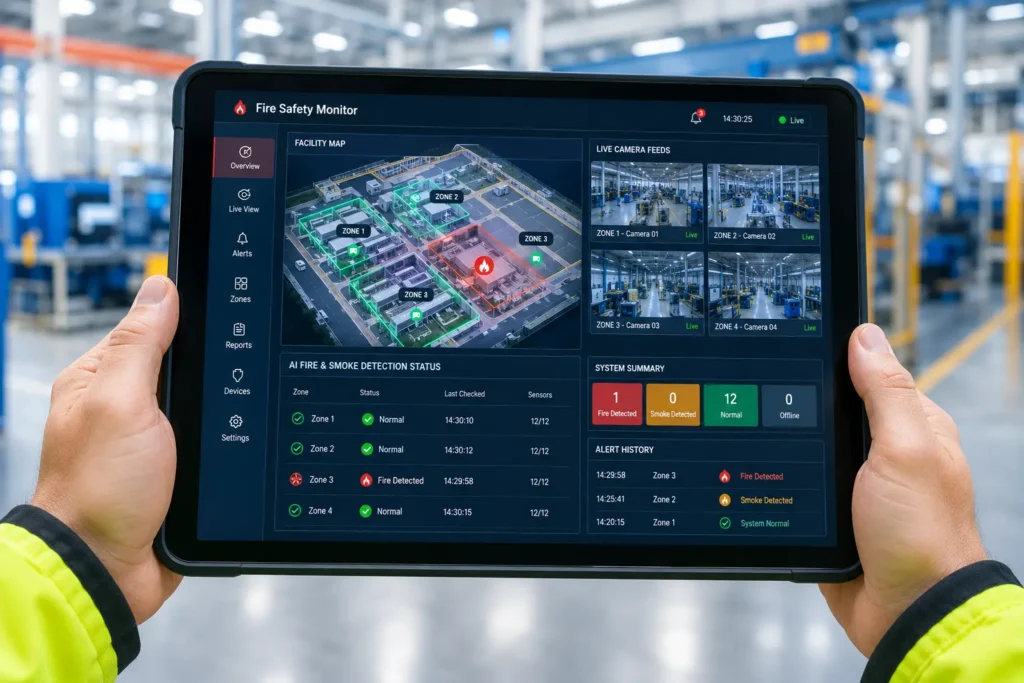
Fire safety depends on a combination of prevention, preparedness, and rapid response. AI-based fire and smoke detection adds visual intelligence to existing safety systems by continuously monitoring operational environments and providing timely information when potential fire-related events are identified.
When combined with established fire protection equipment, emergency procedures, and trained personnel, AI enables organizations to improve situational awareness, support faster investigations, and strengthen operational safety across a wide range of industrial and commercial facilities.
FAQ
How does AI detect fire and smoke?
AI uses computer vision and AI video analytics to analyze live video streams for visible signs of smoke, flames, or other fire-related indicators.
Can AI replace traditional fire alarm systems?
No. AI-based fire and smoke detection is designed to complement existing fire protection systems by providing additional visual monitoring and operational awareness
Which industries benefit from AI-based fire detection?
Manufacturing, warehousing, logistics, energy, retail, food processing, utilities, and commercial facilities commonly use AI to enhance operational safety.
Does AI provide real-time alerts for fire events?
Yes. When configured conditions are detected, AI can generate real-time alerts that enable personnel to verify the situation and respond quickly.
What business benefits does AI-based fire and smoke detection provide?
Organizations can improve workplace safety, reduce manual monitoring, enhance operational visibility, support faster response coordination, strengthen business continuity, and make informed decisions using real-time operational insights.