
Why Edge Analytics Is Growing Faster Than Cloud Analytics
Companies today produce vast amounts of operational data from cameras, sensors, machinery, warehouses, retail locations, and connected environments. Although cloud analytics continues to play a key role in enterprise systems, many organizations are realizing that transmitting all operational data to a central platform is not always the most effective solution.
Edge analytics is gaining momentum because it analyzes data where it is created. This enables organizations to make faster decisions, reduce network dependency, strengthen data privacy, and improve operational continuity. Rather than replacing cloud analytics, edge analytics complements it by handling time-sensitive workloads closer to the source.
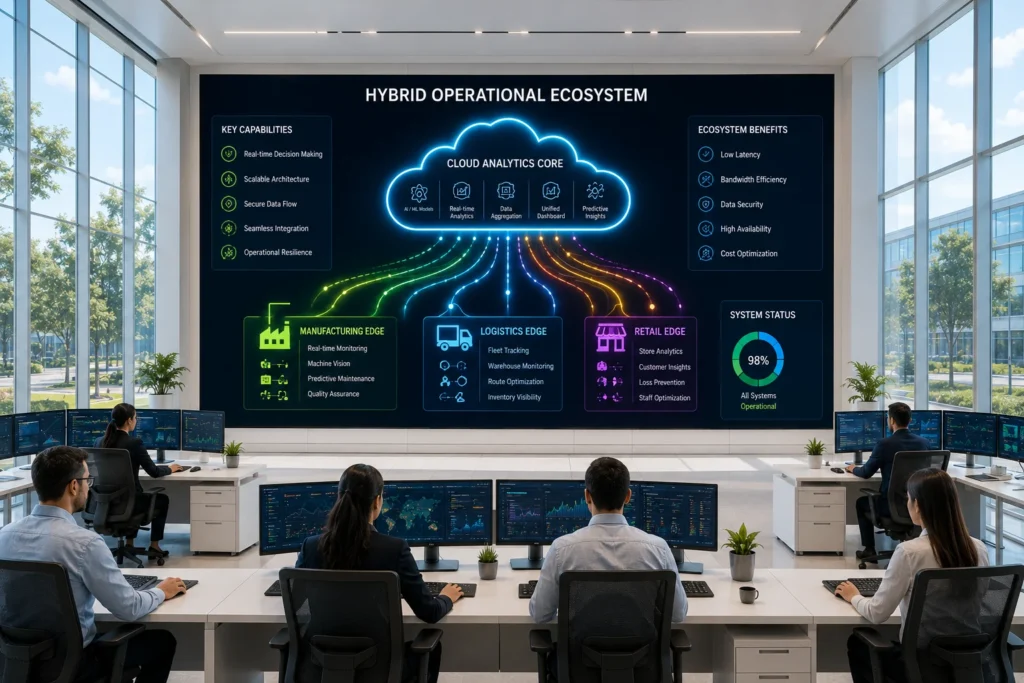
Key Reasons Businesses Prefer Edge Analytics
Several business requirements are accelerating the adoption of edge analytics.
Faster Decision-Making
Local processing significantly reduces latency, allowing operational alerts and business insights to be generated within seconds.
Lower Network Usage
Instead of transmitting continuous video streams or large data volumes, only relevant operational events and summarized insights are shared with centralized systems.
Improved Operational Continuity
Edge devices continue processing information even if external network connectivity is interrupted, helping organizations maintain operational visibility.
Better Data Governance
Keeping operational data within the facility reduces unnecessary data movement and gives organizations greater control over sensitive business information.
Scalable Enterprise Operations
Each facility can process its own operational data while contributing summarized intelligence to enterprise-wide dashboards.
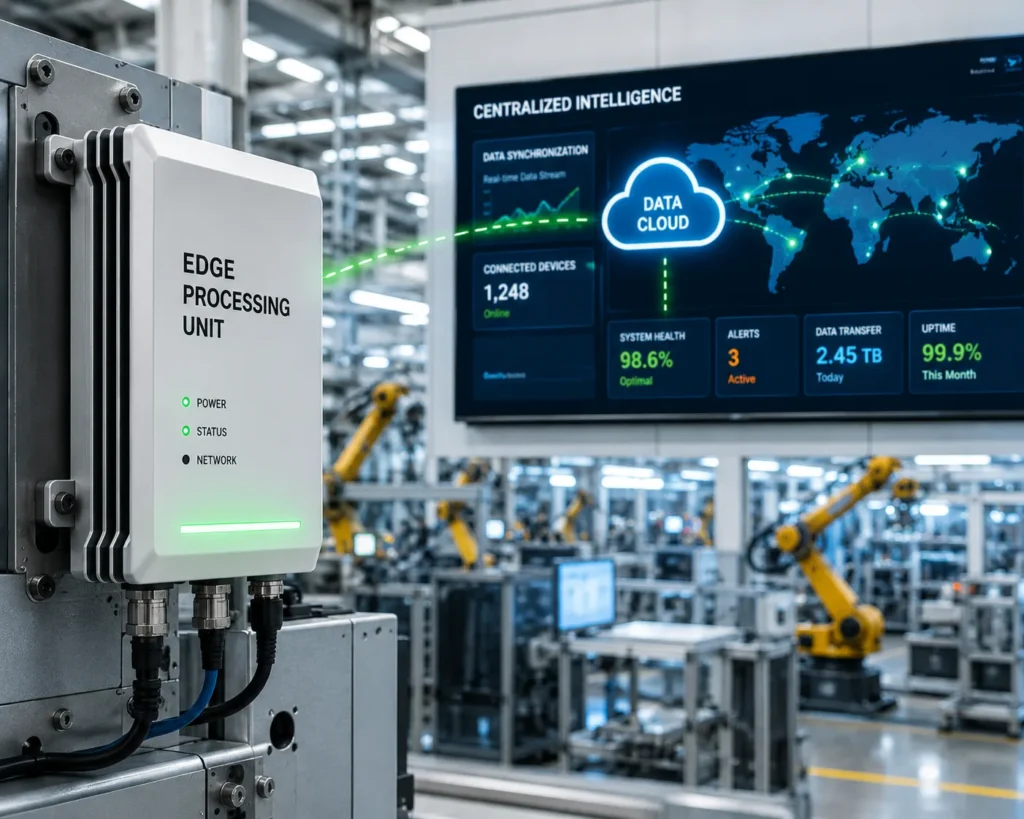
The Shift Toward Local Intelligence
Modern operations often require immediate decisions. Waiting for data to travel across networks before analysis can introduce delays that affect productivity, safety, and customer experience.
Edge analytics processes operational information directly within the facility, allowing AI to evaluate events in real time.
This approach is especially valuable for:
- Manufacturing production lines
- Warehouse operations
- Retail stores
- Logistics facilities
- Healthcare environments
- Transportation hubs
- Energy and utility sites
Organizations can respond to operational changes while activities are still taking place.
Edge Analytics vs Cloud Analytics
Edge Analytics | Cloud Analytics |
Processes data near the source | Processes data in centralized infrastructure |
Low latency for operational decisions | Higher latency for time-sensitive events |
Reduced bandwidth requirements | Greater dependence on network connectivity |
Supports local operational continuity | Best suited for centralized reporting |
Ideal for immediate operational insights | Ideal for historical analysis and enterprise reporting |
Many organizations achieve the best results by combining both approaches rather than choosing one over the other.
How Edge and Cloud Work Together
Edge analytics and cloud analytics serve different purposes within modern enterprise architecture.
Edge analytics is well suited for:
- Real-time event detection
- Workplace safety monitoring
- Equipment status analysis
- Compliance verification
- Operational alerts
- Workflow monitoring
Cloud analytics provides value through:
- Historical trend analysis
- Enterprise-wide reporting
- Long-term performance evaluation
- Business intelligence dashboards
- Cross-site benchmarking
- Strategic planning
When combined, they produce a well-rounded analytics strategy that promotes both short-term and long-term business improvement.
Industries Seeing Rapid Growth
Edge analytics is expanding across industries where operational decisions must happen quickly.
Examples include:
- Manufacturing
- Warehousing and distribution
- Logistics
- Retail
- Healthcare
- Construction
- Airports and transportation
- Energy and utilities
- Smart buildings
- Corporate campuses
Although operational requirements differ, the common objective is faster access to reliable business intelligence.
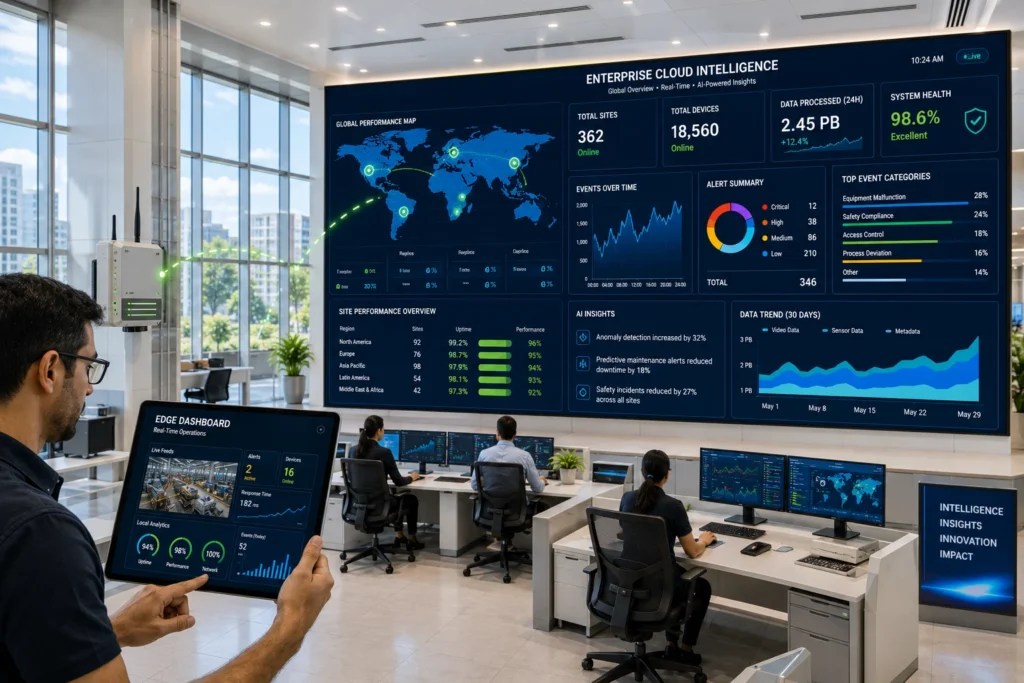
Business Benefits Driving Adoption
Organizations implementing edge analytics often experience measurable operational improvements.
These include:
- Faster incident detection
- Improved workplace safety
- Better compliance monitoring
- Reduced network bandwidth costs
- Higher operational efficiency
- Improved response times
- Better multi-site visibility
- Greater operational resilience
- Stronger data privacy
- More effective enterprise AI deployments
These advantages explain why many organizations are prioritizing edge analytics as part of their digital transformation strategies.
Getting Ready for Enterprise Intelligence’s Next Phase
As operational environments become more connected, organizations need analytics that keep pace with real-world business demands. Edge analytics delivers immediate operational intelligence where decisions matter most, while cloud analytics provides the broader enterprise perspective needed for long-term planning. Together, they create a practical foundation for faster decisions, stronger operational resilience, and sustainable business growth.
Frequently Asked Questions
What is edge analytics?
Organisations can analyse data locally before sharing specific insights with centralised systems thanks to edge analytics, which evaluates operational data near to the point of generation.
How does edge analytics improve operational efficiency?
Edge analytics enhances operational efficiency by enabling immediate data processing at the source, reducing delays in decision-making, minimizing network congestion, and allowing organizations to respond quickly to real-time events within their facilities.
Does edge analytics replace cloud analytics?
No. Most organizations use edge analytics for immediate operational intelligence while relying on cloud analytics for historical reporting, enterprise dashboards, and long-term analysis.
Which industries benefit most from edge analytics?
Manufacturing, logistics, warehousing, retail, healthcare, transportation, construction, and energy organizations benefit from faster local analysis and improved operational visibility.
How does edge analytics support enterprise AI?
It allows AI models to analyze operational activities in real time, generate immediate alerts, reduce unnecessary data transmission, and provide actionable insights directly at the point of operation.