
Business Intelligence Starts at the Edge
Every second, businesses employ cameras, production machinery, warehouses, retail locations, and linked gadgets to create operational data. The challenge is no longer collecting information it is processing it quickly enough to support business decisions while maintaining security and operational continuity.
This is where edge computing becomes a critical part of enterprise intelligence. By processing operational information close to where it is created, organizations gain faster insights, reduce unnecessary data movement, and enable AI to respond in real time. Business intelligence no longer begins in a centralized data center; it begins at the edge of the operation.
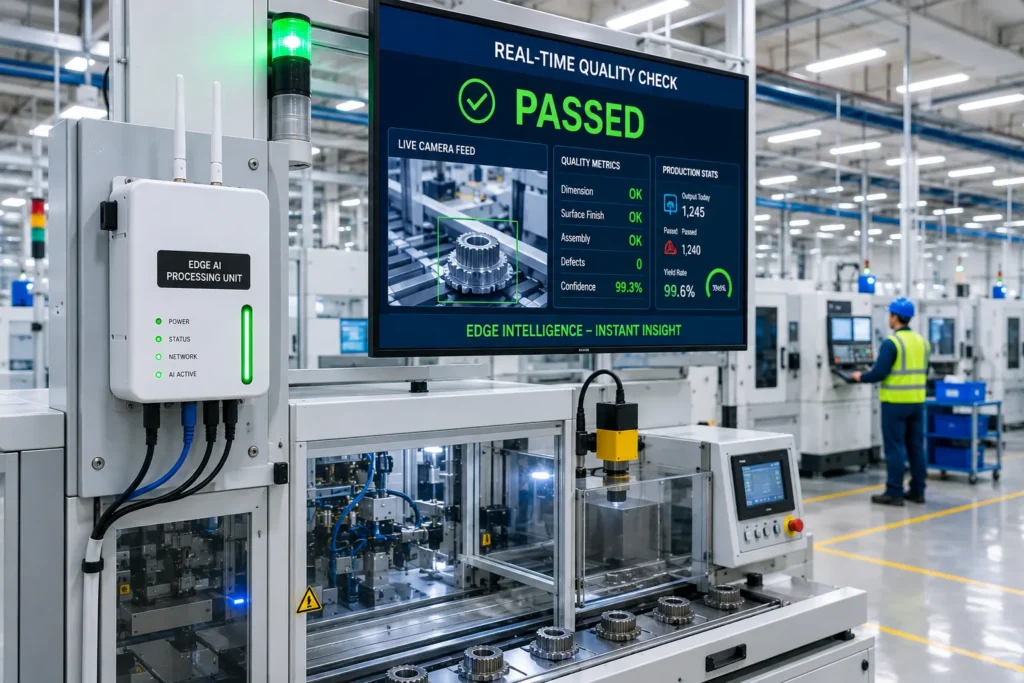
Why Processing Data Near the Source Matters
Traditional architectures often transmit large volumes of operational data to centralized cloud environments before analysis begins. While suitable for historical reporting, this approach may introduce delays that affect time-sensitive operations.
Processing information locally provides several advantages:
- Faster operational insights
- Reduced network latency
- Lower bandwidth consumption
- Improved operational continuity
- Better control of sensitive business data
- Quicker response to operational events
Instead of waiting for information to travel across networks, AI can evaluate activities immediately where they occur.
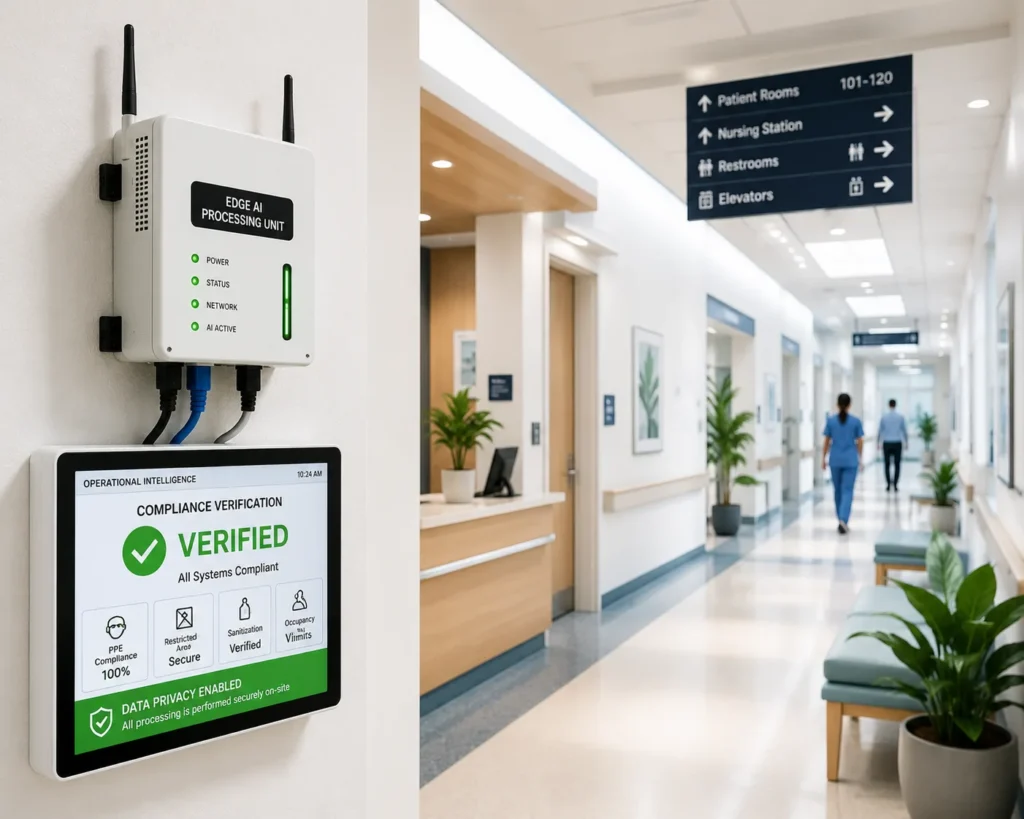
Improving Security Through Local Processing
Operational environments often generate information related to employees, equipment, inventory, and business processes. Keeping much of this information within the facility helps organizations strengthen data governance while reducing unnecessary exposure.
Local processing supports:
- Better protection of operational information
- Reduced transfer of raw video data
- Stronger internal security controls
- Improved compliance with organizational policies
- Greater confidence in enterprise AI deployments
This strategy enables organisations to manage data access.
How Edge Intelligence Powers Better Decisions
Edge AI combines local computing with computer vision and real-time analytics to transform live operational data into actionable business intelligence.
Rather than sending every video frame or operational event to a remote platform, edge devices analyze activities on-site and generate meaningful insights such as:
- Workflow interruptions
- Equipment utilization
- PPE compliance
- Loading dock activity
- Occupancy levels
- Queue development
- Vehicle movement
- Production performance
Only relevant operational information is shared with enterprise systems, making reporting more efficient while reducing unnecessary data transfer.
Edge Processing Versus Centralized Analysis
Centralized Processing | Edge Intelligence |
Processes data after transmission | Processes data where it is generated |
Greater network dependency | Faster local decision support |
Higher bandwidth usage | Reduced data transmission |
Increased latency for operational alerts | Immediate operational insights |
Primarily historical analysis | Real-time operational intelligence |
Many organizations combine edge processing with cloud platforms to support both immediate operational decisions and long-term business reporting.
Supporting Multiple Business Environments
Edge intelligence delivers value across a wide range of enterprise operations.
Examples include:
- Manufacturing plants monitoring production performance
- Warehouses tracking inventory movement
- Retail stores analyzing customer flow
- Logistics facilities supervising loading operations
- Healthcare organizations supporting operational workflows
- Corporate campuses improving workplace safety
- Transportation hubs monitoring vehicle activity
- Energy facilities overseeing restricted operational areas
Each location benefits from immediate analysis without relying entirely on external connectivity.
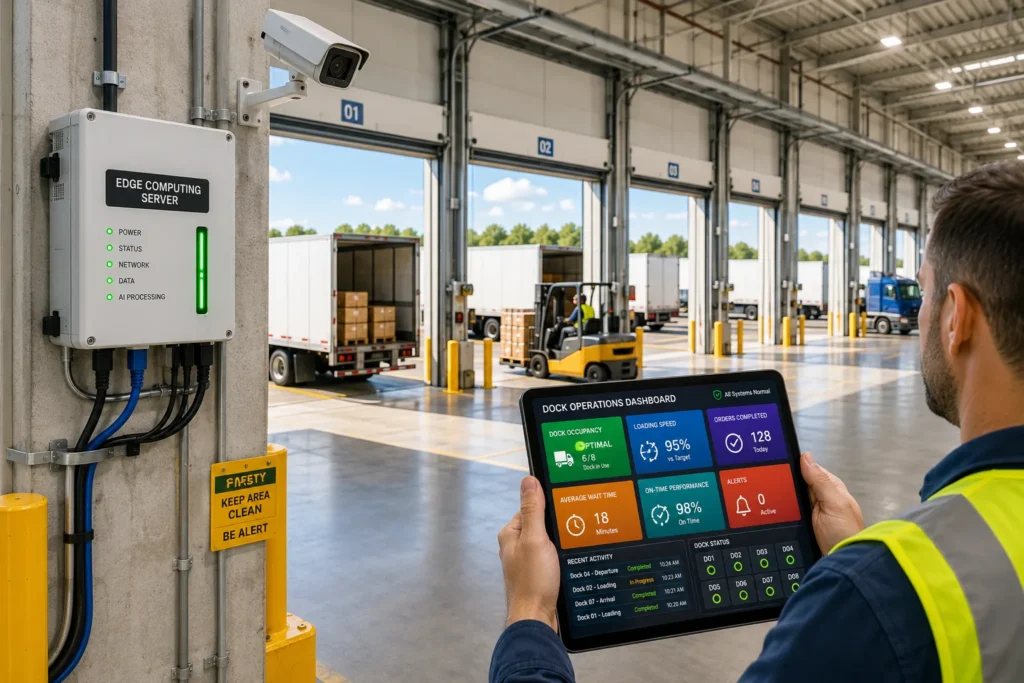
Business Outcomes Enabled by Edge Intelligence
Organizations adopting edge-powered business intelligence often experience measurable improvements across daily operations.
These include:
- Faster operational response
- Better real-time visibility
- Reduced network utilization
- Improved compliance monitoring
- Higher workplace safety performance
- More efficient resource allocation
- Lower infrastructure costs
- Better multi-site operational oversight
- Increased operational resilience
- Stronger support for enterprise digital transformation
Processing intelligence where operations occur enables businesses to act with greater speed and confidence.
Frequently Asked Questions
What does business intelligence at the edge mean?
It refers to examining operational data locally, near the source where it is generated, instead of passing on all information to centrally managed systems before processing.
How does edge computing improve business intelligence?
Edge computing reduces processing delays, enables real-time analytics, lowers bandwidth usage, and provides faster operational insights for decision-making.
Is edge intelligence only useful for manufacturing?
No. Retail, warehousing, logistics, healthcare, transportation, construction, energy, and many other industries benefit from local AI processing and operational intelligence.
Does edge computing replace cloud platforms?
No. Edge computing complements cloud infrastructure by handling time-sensitive analysis locally while cloud platforms manage centralized reporting, historical data, and enterprise-wide analytics.
How does edge intelligence improve data security?
By processing information locally and transmitting only relevant operational insights, organizations reduce unnecessary movement of raw data and maintain greater control over sensitive operational information.