
Compliance Monitoring Should Be Continuous, Not Periodic
Many organizations still rely on scheduled inspections, manual audits, and checklist-based reviews to evaluate compliance. While these methods help verify whether standards were met at a specific point in time, they provide only a snapshot of operations. Between inspections, procedures can be overlooked, safety practices may decline, and operational risks can develop unnoticed.
Continuous compliance monitoring offers a different approach. Instead of checking compliance once a day, once a week, or during an audit, AI continuously observes operational activities and identifies deviations as they occur. This enables organizations to address issues immediately, strengthen accountability, and build a culture where compliance becomes part of everyday operations rather than an occasional exercise.
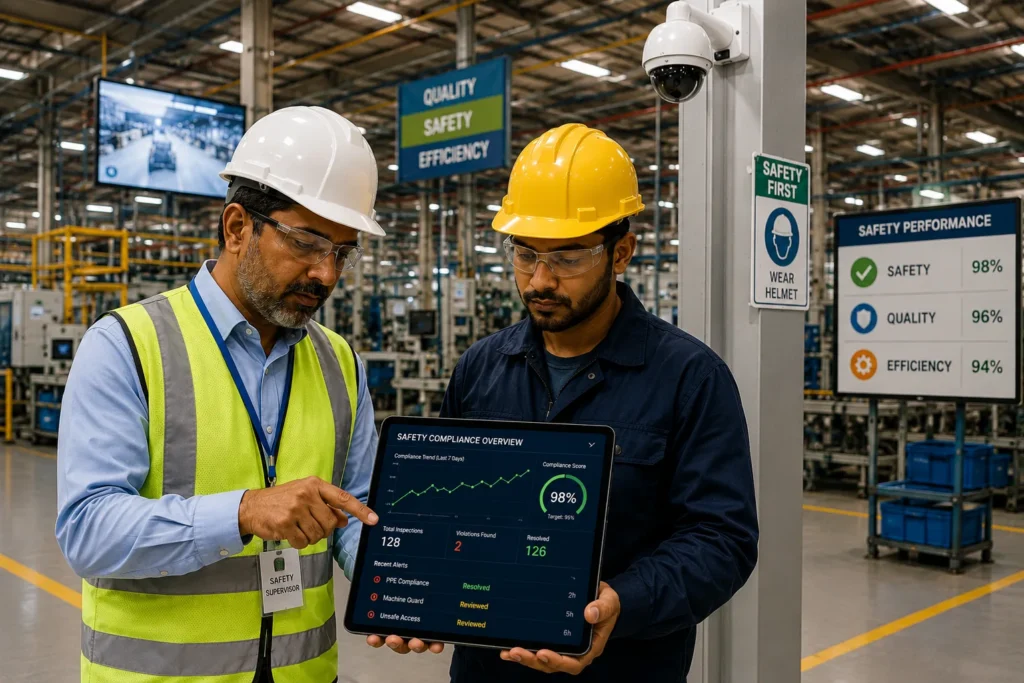
Compliance Is Strongest Between Audits
Passing an audit does not necessarily mean processes remain compliant every hour afterward. Operational conditions change throughout the day as employees rotate shifts, equipment usage varies, production volumes increase, and contractors or visitors enter the facility.
Organizations that monitor continuously gain visibility into these changing conditions instead of relying on assumptions between scheduled inspections.
Continuous monitoring can help verify:
- Personal protective equipment (PPE) usage
- Restricted area access
- Hygiene and sanitation procedures
- Standard operating procedure (SOP) adherence
- Equipment safety practices
- Emergency exit accessibility
- Housekeeping standards
- Vehicle and pedestrian movement
Rather than waiting for the next inspection, potential issues can be identified when they first appear.
Turning Compliance Into a Live Operational Process
AI-powered Computer Vision enables cameras to function as active compliance observers. Instead of simply recording activities, they analyze live video streams against predefined operational rules.
The process typically follows a simple workflow:
Stage | AI Function | Operational Outcome |
Observe | Monitor live activities | Continuous visibility |
Verify | Compare actions against compliance rules | Automated validation |
Detect | Identify deviations or unsafe behaviors | Early risk identification |
Notify | Send alerts to responsible teams | Faster response |
Record | Log events with supporting evidence | Simplified reporting |
Improve | Review trends and corrective actions | Continuous improvement |
This workflow allows compliance management to become an ongoing operational activity rather than a periodic administrative task.
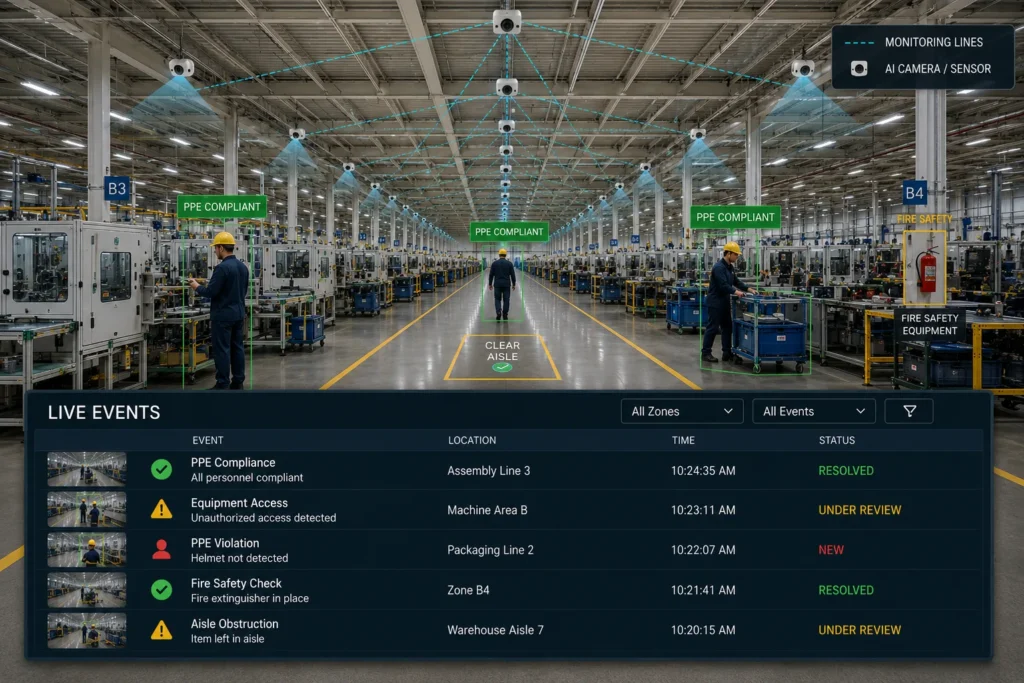
The Cost of Waiting for the Next Inspection
Periodic inspections can leave long gaps during which operational issues remain undetected.
For example:
- A worker enters a restricted area without authorization.
- A production line skips a sanitation procedure during a busy shift.
- PPE compliance decreases after a shift change.
- Emergency equipment becomes temporarily obstructed.
- Loading dock safety rules are not consistently followed.
If these issues are discovered only during the next scheduled audit, organizations lose valuable time that could have been used to prevent incidents or correct unsafe conditions.
Continuous monitoring shortens the gap between detection and action.
Real-Time Compliance Across Multiple Operations
AI can simultaneously monitor different operational areas from a centralized platform.
Operational Area | Continuous Monitoring Example | Business Benefit |
Manufacturing | PPE and machine safety | Reduced workplace risks |
Food Processing | Hygiene and sanitation verification | Improved food safety compliance |
Warehousing | Forklift safety and pedestrian zones | Safer material handling |
Retail | Restricted stockroom access | Better asset protection |
Healthcare | Cleanroom and protocol adherence | Consistent operational standards |
Corporate Facilities | Visitor management and access control | Improved security and governance |
A centralized approach provides consistent compliance standards across multiple departments and locations.
Building a Culture of Everyday Accountability
Technology alone does not create compliance. The greatest value comes from encouraging consistent operational behavior.
Continuous monitoring helps organizations:
- Reinforce established procedures.
- Reduce dependence on manual supervision.
- Provide objective operational evidence.
- Support coaching instead of reactive enforcement.
- Identify recurring compliance trends.
- Measure improvement over time.
When employees know that operational standards are continuously verified, compliance becomes part of routine work rather than preparation for inspections.
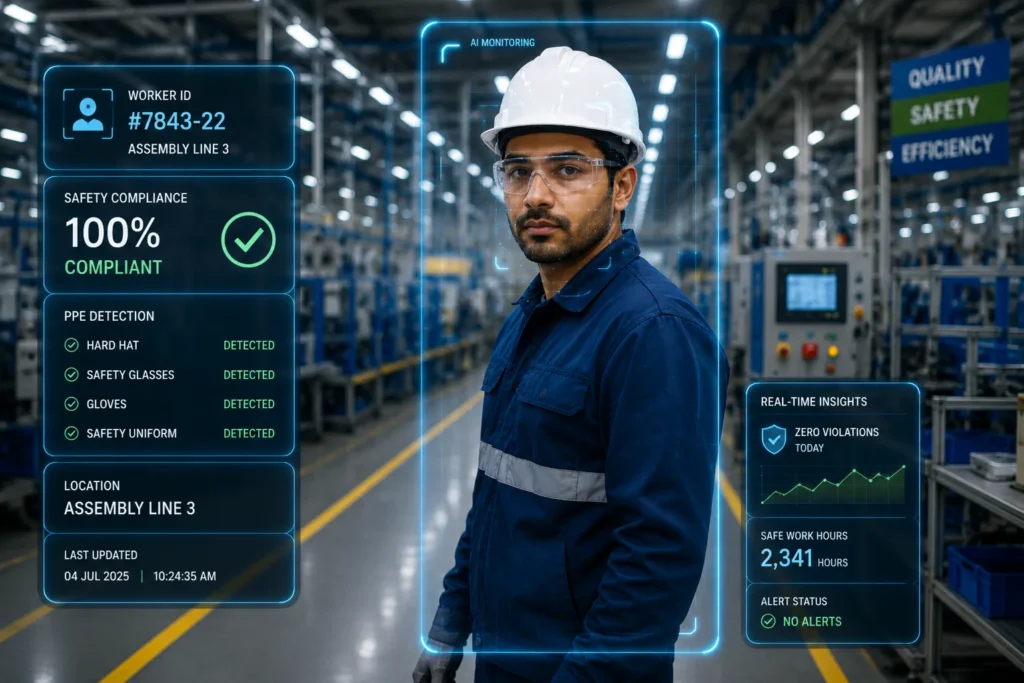
Measuring Continuous Compliance
Organizations often evaluate compliance programs using measurable operational indicators such as:
- PPE compliance rates
- SOP adherence percentages
- Hygiene verification scores
- Time taken to resolve compliance alerts
- Repeat violation frequency
- Audit preparation time
- Safety observation trends
- Corrective action completion rates
Tracking these metrics helps demonstrate progress while identifying areas that require additional attention.
Frequently Asked Questions
How is continuous compliance monitoring different from periodic inspections?
Periodic inspections evaluate compliance at specific intervals, while continuous monitoring verifies operational activities throughout the day and identifies deviations as they occur.
Can AI replace compliance officers?
No. AI supports compliance teams by automating observation and event detection, allowing professionals to focus on investigations, coaching, and process improvement.
What types of compliance activities can AI monitor?
Depending on the deployment, AI can monitor PPE usage, hygiene procedures, restricted area access, SOP adherence, equipment safety, housekeeping practices, occupancy, and other operational requirements.
Does continuous monitoring improve audit readiness?
Yes. Continuous monitoring creates documented evidence of compliance activities, making it easier to prepare reports and demonstrate adherence during internal or external audits.
Can continuous compliance monitoring be implemented across multiple facilities?
- Many AI platforms provide centralized dashboards that allow organizations to monitor compliance consistently across multiple sites using standardized rules and reporting.