
Every CCTV Camera Can Become an Intelligent Business Sensor
Traditional surveillance systems generate enormous amounts of video every day, yet most of that footage is never reviewed unless an incident occurs. As a result, businesses often miss opportunities to identify operational inefficiencies, safety concerns, and compliance issues while they are happening. Cameras that simply record events provide historical evidence, but they rarely contribute to day-to-day operational decision-making.
AI-powered video analytics changes this role completely. Instead of functioning as passive recording devices, existing cameras can become intelligent business sensors that continuously observe activities, recognize operational events, and deliver actionable insights. This shift enables organizations to use their camera infrastructure not only for security but also for improving productivity, safety, quality, and operational visibility.
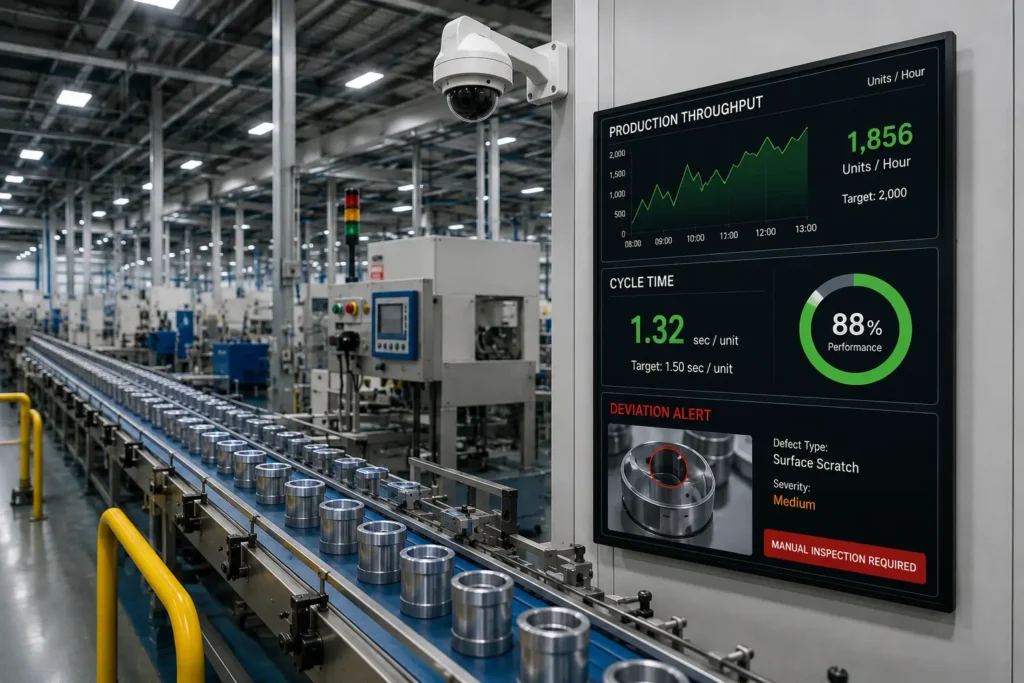
From Recording Events to Understanding Operations
A traditional camera captures video, while an intelligent business sensor interprets what the camera sees. Using computer vision and Edge AI, the system analyzes people, equipment, vehicles, and workflows in real time, identifying meaningful events based on predefined business rules.
Rather than requiring someone to watch multiple video feeds, AI automatically highlights events that require attention, allowing supervisors to focus on decision-making instead of continuous monitoring.
What Can an Intelligent Business Sensor Detect?
AI transforms video into operational intelligence by recognizing activities across multiple categories.
Operational Area | Examples of AI Detection | Business Value |
Workplace Safety | PPE compliance, restricted area access, slips and falls | Safer working environments |
Operational Compliance | SOP adherence, hygiene checks, sanitation verification | Improved regulatory compliance |
Asset Protection | Unauthorized movement, equipment misuse, asset tracking | Reduced operational losses |
Process Monitoring | Production bottlenecks, machine idle time, workflow deviations | Higher operational efficiency |
Facility Management | Occupancy levels, congestion, blocked pathways | Better space utilization |
Customer Experience | Queue monitoring, service delays, footfall analysis | Improved service quality |
Instead of producing hours of footage, the system generates information that helps businesses respond faster and optimize operations.
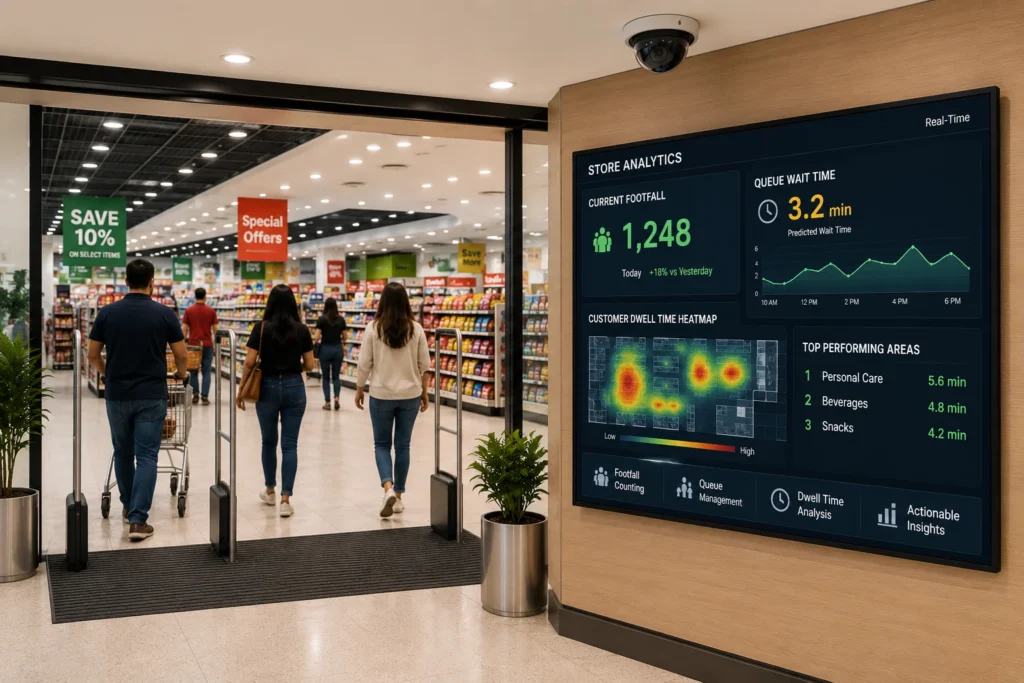
How a Camera Becomes an Intelligent Sensor
The transformation happens through a structured AI workflow.
Capture – Existing IP cameras continuously observe operational activities.
AI Analysis – Computer vision identifies objects, people, vehicles, and behaviors.
Event Classification – AI compares observations with predefined business rules.
Alert Generation – Relevant events trigger notifications for supervisors or operations teams.
Dashboard Visualization – Events are summarized through real-time dashboards and reports.
Business Action – Teams investigate, resolve issues, and implement corrective or preventive actions.
This process enables organizations to act on live operational insights instead of reviewing recorded footage after an incident.
Business Decisions Powered by Intelligent Cameras
When cameras become business sensors, they support far more than security operations.
Organizations can use AI-generated insights to:
- Identify recurring production delays
- Improve workforce safety compliance
- Monitor equipment utilization
- Detect operational bottlenecks
- Verify quality and hygiene procedures
- Reduce manual inspection efforts
- Improve resource allocation
- Strengthen multi-site operational oversight
By continuously analyzing activities, AI helps managers make informed decisions based on real-time operational data.
Traditional CCTV vs Intelligent Business Sensors
Capability | Traditional CCTV | AI-Powered Business Sensor |
Primary Function | Records video | Interprets operational events |
Monitoring | Manual review | Continuous AI analysis |
Alerts | Usually after incidents | Real-time notifications |
Data Value | Historical evidence | Actionable operational insights |
Reporting | Video playback | Dashboards, analytics, and trends |
Business Impact | Security-focused | Supports safety, compliance, quality, and productivity |
This evolution allows organizations to maximize the value of their existing camera infrastructure.
Getting More Value From Existing Infrastructure
Many organizations can begin using AI without replacing all of their cameras. Depending on compatibility, existing IP camera systems can often be integrated with AI platforms that perform analytics on edge devices or centralized servers.
To achieve the best results:
- Prioritize high-impact operational areas.
- Define measurable monitoring objectives.
- Configure AI rules based on business processes.
- Validate detection accuracy before full rollout.
- Review analytics regularly to identify improvement opportunities.
- Expand deployment in phases as business needs evolve.
A structured implementation ensures that AI delivers operational value beyond traditional surveillance.
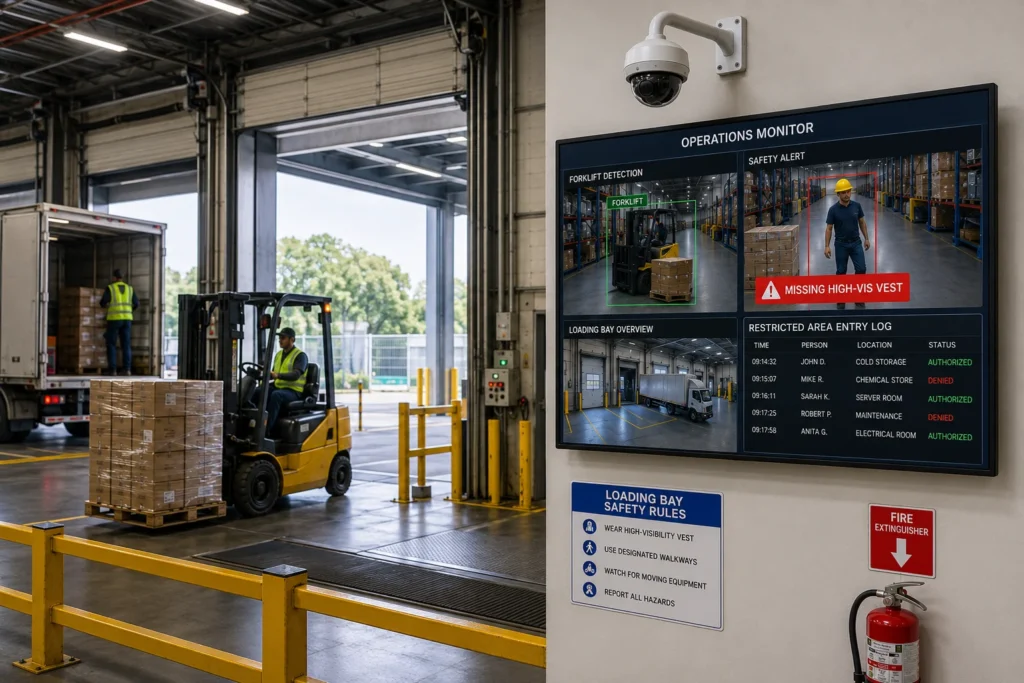
Turning Every Camera Into a Business Asset
Modern organizations expect technology investments to deliver value beyond their original purpose. AI-powered video analytics allows existing camera systems to evolve from passive surveillance tools into intelligent business sensors that continuously support safety, compliance, operational efficiency, and informed decision-making. By converting visual data into actionable insights, businesses gain greater visibility into daily operations and unlock new opportunities to improve performance without starting from scratch.
FAQ
Can existing CCTV cameras become intelligent business sensors?
In many cases, yes. Many modern AI platforms are compatible with standard IP cameras, allowing organizations to add intelligent analytics without replacing their entire surveillance infrastructure.
What makes a business sensor different from a security camera?
A business sensor not only records video but also analyzes activities, identifies operational events, generates alerts, and provides actionable insights for business improvement.
Which business functions benefit the most?
Operations, workplace safety, quality assurance, compliance, manufacturing, logistics, retail management, and facility management all benefit from AI-powered operational intelligence.
Does AI analyze every video frame?
Yes. AI continuously analyzes incoming video streams and evaluates activities against configured rules to identify relevant operational events.