
How Long Does It Take to Deploy an AI Monitoring System?
Many organizations assume that deploying an AI monitoring system is a lengthy, disruptive project that requires replacing existing infrastructure. In reality, deployment timelines depend on factors such as facility size, existing camera infrastructure, integration requirements, and the number of AI use cases being implemented. With proper planning, many businesses can begin monitoring selected areas within days or weeks while expanding the system over time.
Rather than treating deployment as a single large-scale project, organizations often achieve better results through a phased implementation that minimizes operational disruption and delivers measurable value early.
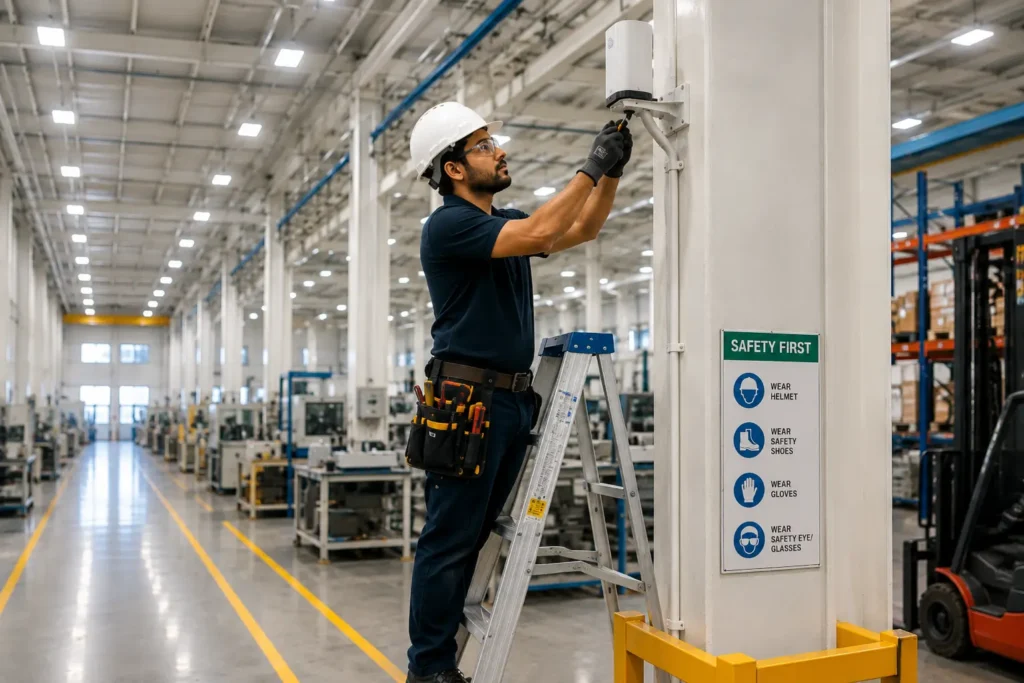
Factors That Affect Deployment Time
Every deployment is unique, but several factors have the greatest influence on implementation schedules.
Deployment Factor | Impact on Timeline |
Number of facilities | More sites require additional planning and configuration |
Existing camera infrastructure | Existing IP cameras can shorten deployment time |
AI use cases | More monitoring rules require additional configuration and testing |
Network readiness | Reliable connectivity supports faster implementation |
Integration requirements | Connecting with VMS, CAPA, or ERP systems adds complexity |
User training | Staff onboarding should be included in the project timeline |
Compared to organisations that need major hardware upgrades, those with current infrastructure typically see speedier deployments.
Typical Deployment Phases
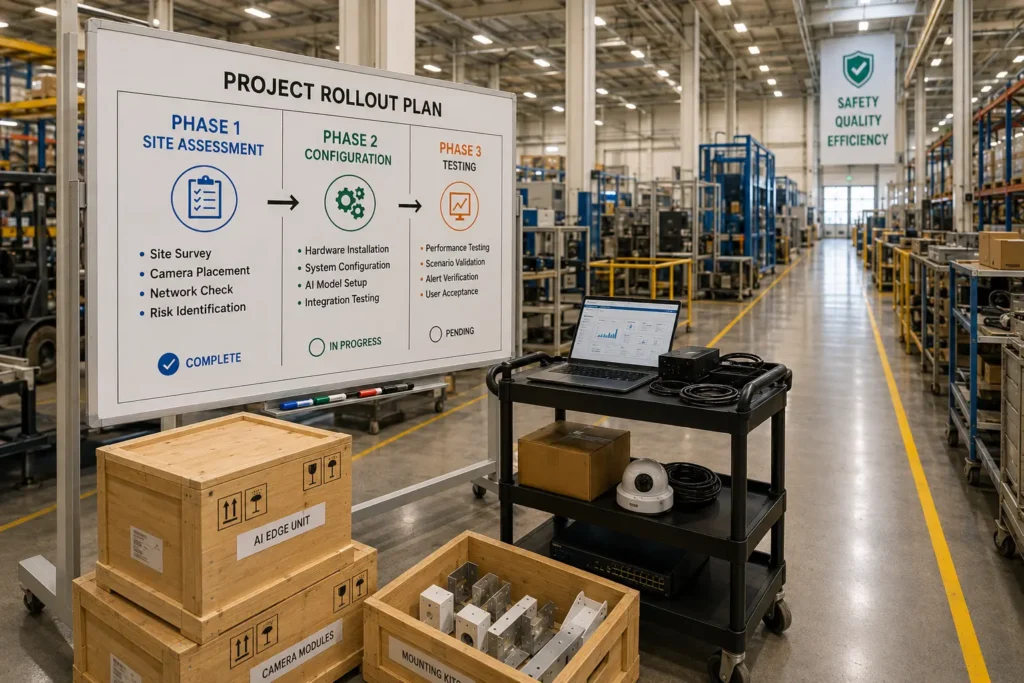
Most AI monitoring projects follow a structured rollout rather than installing every capability at once.
Phase 1: Site Assessment
The implementation team evaluates:
- Camera locations and coverage
- Lighting conditions
- Network capacity
- Operational workflows
- Monitoring objectives
- Compliance requirements
This assessment helps determine the most effective deployment strategy.
Phase 2: System Configuration
During this stage, teams:
- Connect cameras and edge devices
- Configure AI models
- Define monitoring rules
- Set alert thresholds
- Create user accounts
- Configure dashboards
Proper configuration ensures alerts align with operational priorities.
Phase 3: Testing and Validation
Before going live, organizations verify that the system correctly detects configured events.
Typical validation includes:
- PPE detection accuracy
- Restricted area monitoring
- Alert delivery
- Dashboard functionality
- Event logging
- False-positive review
Testing helps improve accuracy before full-scale deployment.
Phase 4: User Training
Operators, supervisors, and administrators learn how to:
- Review alerts
- Investigate events
- Manage dashboards
- Adjust monitoring rules
- Generate reports
- Respond to incidents
Well-trained users help maximize the value of the system from day one.
Phase 5: Operational Expansion
After a successful pilot, organizations often expand AI monitoring to:
- Additional production lines
- Warehouses
- Retail locations
- Distribution centers
- Multiple facilities
This phased approach reduces implementation risk while allowing continuous optimization.
Example Deployment Timelines
The following examples illustrate how deployment duration can vary.
Deployment Scope | Typical Timeline* |
Single operational area | Several days to 2 weeks |
One facility with existing cameras | 2–6 weeks |
Multi-department deployment | 1–3 months |
Multi-site enterprise rollout | Several months, depending on project scope |
*Actual timelines vary based on infrastructure, integrations, customization, and organizational requirements.
Best Practices for Faster Deployment
Organizations can reduce deployment time by following proven implementation practices.
- Define clear business objectives before installation.
- Start with high-priority monitoring use cases.
- Reuse compatible existing camera infrastructure where possible.
- Validate AI performance in real operating conditions.
- Train users before full production rollout.
- Expand gradually after achieving success in pilot areas.
A phased deployment often delivers faster business value than attempting an organization-wide rollout all at once.
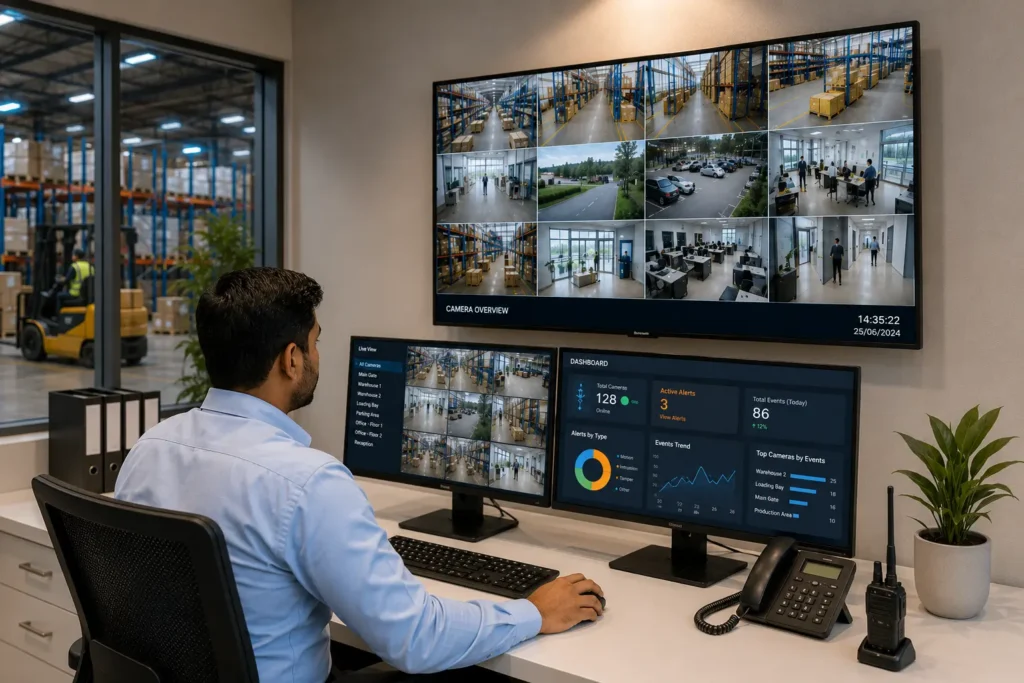
Challenges That May Extend Deployment
Some projects require additional planning due to:
- Legacy camera systems
- Limited network bandwidth
- Complex facility layouts
- Multiple third-party integrations
- Strict regulatory requirements
- Customized reporting needs
Addressing these considerations during planning helps avoid delays later in the project.
Building Toward Intelligent Operations
Deploying an AI monitoring system is not simply a technology installation—it is the foundation for more proactive, data-driven operations. By starting with clearly defined objectives, validating performance, and expanding through a phased rollout, organizations can implement AI efficiently while minimizing disruption. With the right planning and infrastructure, businesses can begin realizing improvements in safety, compliance, and operational visibility much sooner than many expect.
FAQ
Can AI monitoring be deployed without replacing existing cameras?
In many cases, yes. Many AI monitoring platforms are compatible with standard IP camera systems, although compatibility depends on the existing infrastructure
Does deployment interrupt daily operations?
Most deployments are designed to minimize disruption. Configuration and testing can often be completed while normal operations continue.
How long does employee training take?
Basic user training is typically completed within a few hours, while administrator and system management training may require additional time depending on the deployment.
Can organizations start with one department?
Yes. Many businesses begin with a pilot deployment in a single production area, warehouse, or facility before expanding to additional locations.