
Can AI Reduce Workplace Accidents?
Workplace accidents remain one of the biggest challenges for organizations operating in manufacturing plants, warehouses, construction sites, logistics centers, and industrial facilities. Even with established safety policies and regular inspections, hazards can develop within seconds. Manual supervision alone often cannot provide continuous visibility across large or complex operations.
Artificial Intelligence (AI) is helping businesses strengthen workplace safety by continuously monitoring operational environments, identifying potential risks in real time, and enabling faster responses. While AI cannot eliminate accidents entirely, it can significantly reduce preventable incidents by supporting proactive safety management.
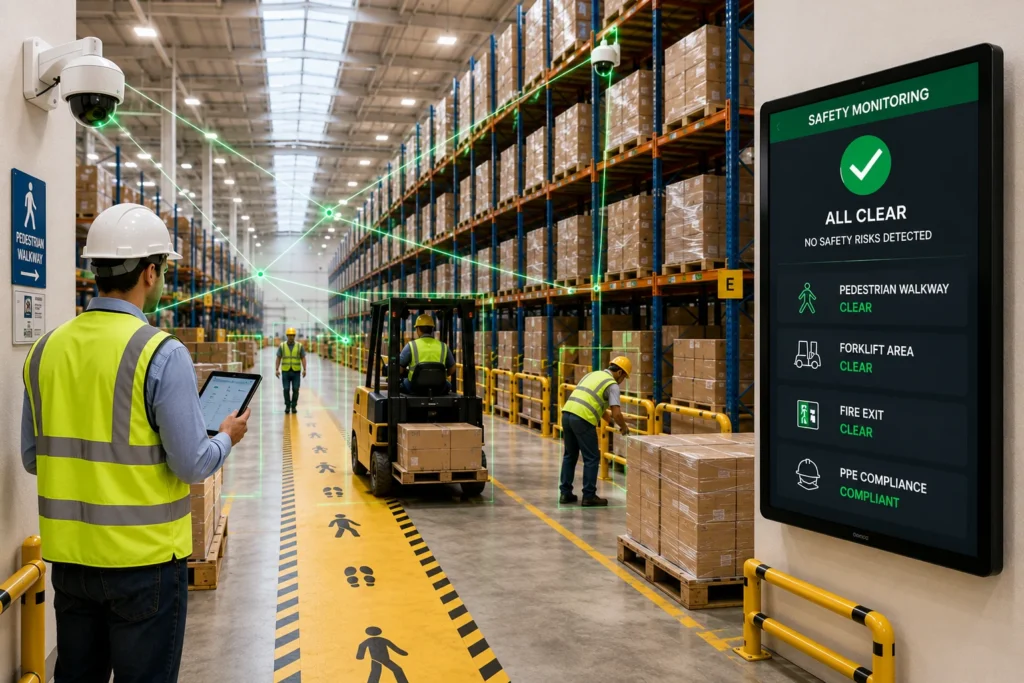
Why Workplace Accidents Still Happen
Many incidents result from a combination of operational, environmental, and human factors.
Common causes include:
- Employees not wearing required PPE
- Unauthorized entry into hazardous areas
- Unsafe interactions with machinery
- Slips, trips, and falls
- Forklift and pedestrian conflicts
- Poor housekeeping
- Equipment misuse
- Fatigue-related unsafe behavior
- Delayed reporting of safety hazards
In large facilities, these risks can be difficult to monitor continuously through manual observation alone.
How AI Improves Workplace Safety
AI-powered video analytics uses computer vision to analyze live camera feeds and identify predefined safety events as they occur. Instead of replacing safety officers, AI acts as an additional layer of continuous monitoring, helping teams detect hazards earlier and respond more quickly.
AI can:
- Monitor work areas 24/7
- Detect unsafe conditions in real time
- Generate instant alerts
- Capture evidence for investigations
- Support corrective and preventive actions (CAPA)
- Provide operational dashboards for safety trends
This enables organizations to move from reactive incident management to proactive risk prevention.
Workplace Risks AI Can Monitor
Safety Area | AI Detection Capability | Operational Benefit |
PPE Compliance | Missing helmets, gloves, safety glasses, reflective vests | Improved compliance |
Restricted Areas | Unauthorized entry into hazardous zones | Reduced exposure to danger |
Fall Detection | Worker slips, trips, and falls | Faster emergency response |
Machinery Safety | Unsafe proximity to moving equipment | Lower injury risk |
Forklift Safety | Vehicle-pedestrian interactions | Safer warehouse operations |
Emergency Readiness | Blocked exits, evacuation monitoring | Better emergency preparedness |
By monitoring multiple safety events simultaneously, AI provides broader visibility than periodic inspections alone.
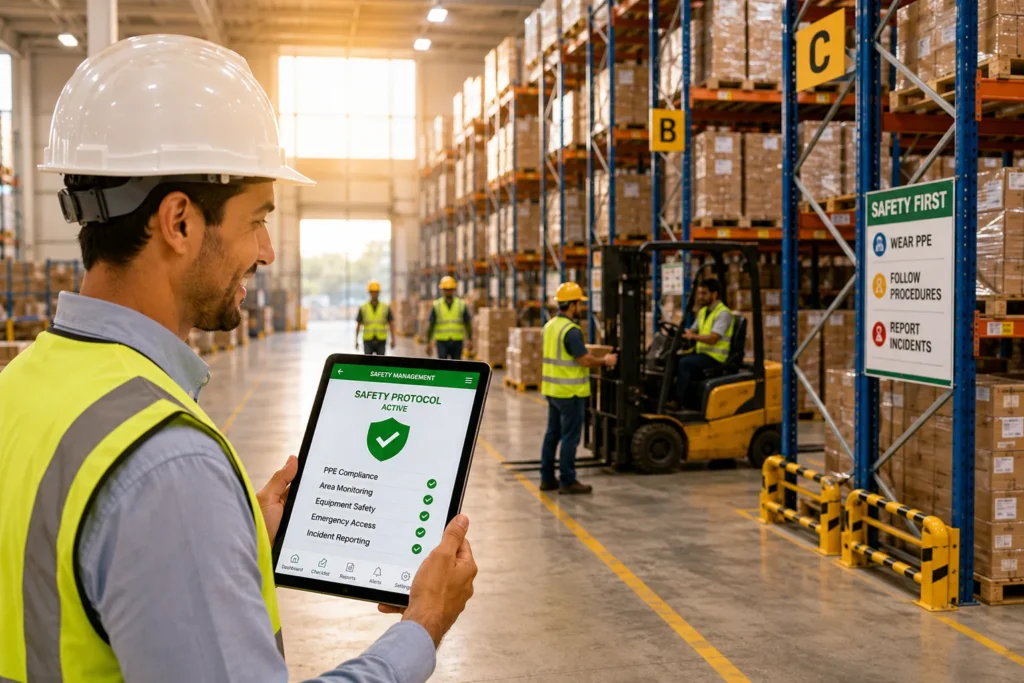
Preventing Incidents Before They Escalate
One of AI’s greatest strengths is early risk detection.
For example, AI can identify:
- A worker entering a restricted production area without authorization
- Missing PPE before an employee begins a task
- A forklift approaching a pedestrian crossing
- Materials obstructing emergency exits
- Unsafe crowding around heavy machinery
- Employees remaining in hazardous zones longer than permitted
Early detection allows supervisors to intervene before these situations lead to accidents.
Business Benefits Beyond Safety
Reducing workplace accidents also improves overall operational performance.
Organizations often experience:
- Faster incident response
- Better compliance with workplace safety policies
- Reduced manual safety inspections
- Improved visibility across multiple facilities
- Lower operational disruptions
- Better documentation for investigations
- Increased employee confidence in workplace safety
- Stronger safety culture throughout the organization
Safety improvements frequently contribute to higher productivity by reducing downtime associated with incidents.
Best Practices for AI Safety Monitoring
To maximize effectiveness, organizations should integrate AI into their existing safety programs rather than treating it as a standalone solution.
Recommended practices include:
- Prioritize monitoring in high-risk operational areas.
- Clearly define safety events that require alerts.
- Regularly review AI detection accuracy.
- Train employees on AI-assisted safety procedures.
- Integrate alerts with incident management workflows.
- Analyze safety trends to identify recurring risks.
- Update monitoring rules as operations change.
A phased deployment focused on the highest-risk activities typically delivers the best results.
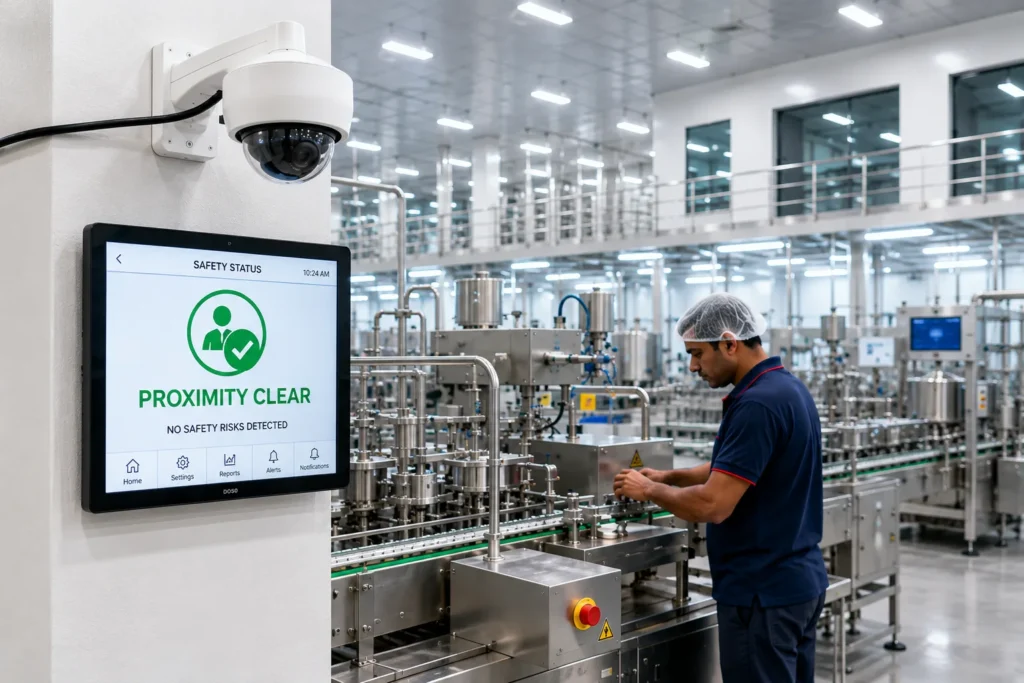
Creating Safer Work Environments Through Continuous Monitoring
Reducing workplace accidents requires more than periodic inspections and safety checklists. AI provides organizations with continuous visibility into workplace activities, helping identify hazards before they result in injuries or operational disruptions. When combined with strong safety policies, employee training, and proactive risk management, AI becomes a valuable tool for improving workplace safety, strengthening compliance, and supporting a safer, more efficient operation.
Frequently Asked Questions
Can AI completely prevent workplace accidents?
No. AI helps reduce preventable accidents by identifying risks early, but maintaining a safe workplace still depends on employee training, proper procedures, equipment maintenance, and effective safety management.
What types of accidents can AI help reduce?
AI can help reduce incidents related to PPE non-compliance, unauthorized access, slips and falls, forklift interactions, unsafe machinery operation, blocked emergency exits, and other workplace hazards.
Does AI replace safety officers?
No. AI supports safety professionals by providing continuous monitoring, allowing them to focus on investigation, training, and corrective actions rather than constant manual observation.
Is AI suitable for small facilities?
Yes. AI monitoring can be deployed in specific high-risk areas first and expanded as operational requirements grow.
Which industries benefit the most?
Manufacturing, warehousing, logistics, construction, food processing, energy, healthcare, mining, transportation, and large commercial facilities all benefit from AI-assisted workplace safety monitoring.