
Can Existing CCTV Cameras Support AI Analytics?
Many organizations considering AI video analytics assume they need to replace their existing CCTV infrastructure with entirely new hardware. In reality, this is often unnecessary. Modern AI platforms are commonly designed to integrate with compatible camera systems, allowing businesses to enhance their existing surveillance network with intelligent analytics while minimizing additional infrastructure investment.
The feasibility of using existing cameras depends on factors such as camera quality, network connectivity, viewing angles, and the type of AI applications being deployed. Evaluating the current infrastructure is the first step before planning any upgrades.
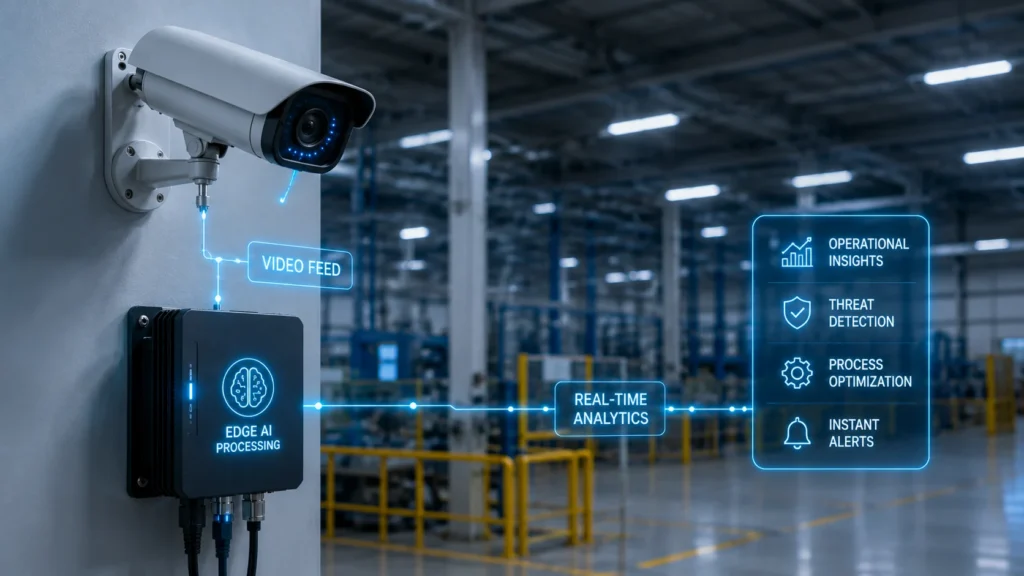
How AI Works with Existing Camera Systems
In a typical deployment, cameras continue performing their original function of capturing video. The difference is that the video is also analyzed by AI software running on an edge device, local server, or cloud platform.
The overall workflow is straightforward:
Stage | System Activity |
Video Capture | Existing cameras stream live video. |
Video Processing | AI receives the video feed for analysis. |
Event Detection | The system identifies configured events, objects, or activities. |
Alert Generation | Relevant incidents trigger notifications. |
Reporting | Events are recorded for review, dashboards, and audits. |
Because the cameras continue acting as video sources, organizations can often modernize monitoring capabilities without replacing their entire surveillance system.
What Determines Compatibility?
Not every camera provides the same level of performance for AI analytics. Several technical factors influence compatibility.
Evaluation Factor | Why It Matters |
Video resolution | Higher image quality improves detection accuracy. |
Camera placement | Clear viewing angles reduce blind spots. |
Frame rate | Smoother video supports better motion analysis. |
Lighting conditions | Consistent illumination improves object recognition. |
Network connectivity | Reliable video transmission supports continuous analytics. |
Video format | AI platforms must support the camera’s output format. |
A technical assessment helps determine whether existing cameras meet the requirements for the intended AI applications.
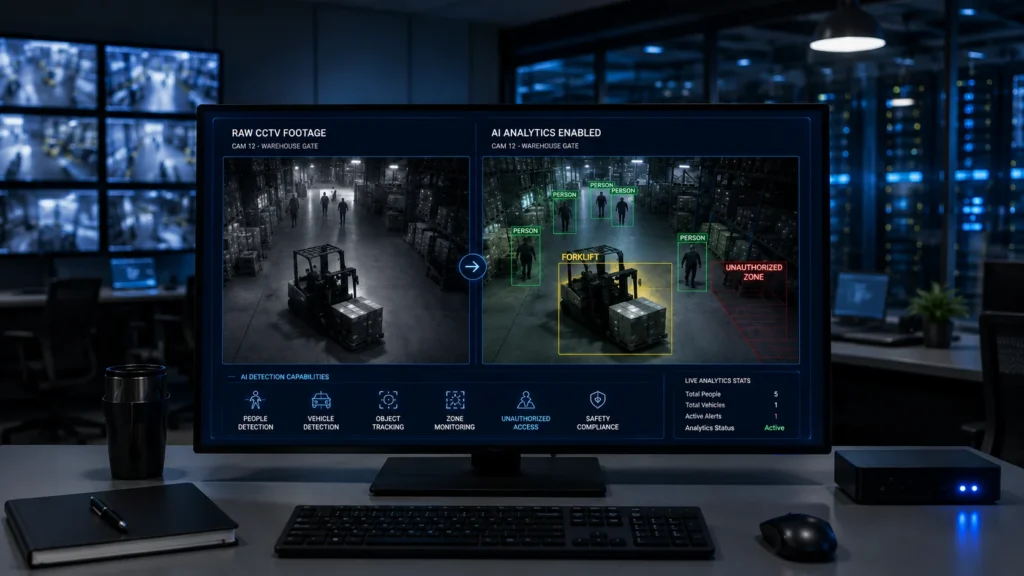
When Camera Upgrades May Be Needed
Although many existing cameras can support AI analytics, some situations may require selective upgrades.
Examples include:
- Cameras with very low image resolution.
- Poorly positioned cameras that do not adequately cover monitored areas.
- Aging hardware with unreliable video output.
- Low-light environments where image quality is insufficient.
- Areas requiring higher detail for object recognition.
- Locations with significant blind spots.
Rather than replacing every camera, organizations often upgrade only the locations where improved image quality is necessary.
Benefits of Reusing Existing Infrastructure
Using existing camera systems can provide several operational and financial advantages.
- Lower initial implementation costs.
- Faster AI deployment.
- Reduced installation disruption.
- Preservation of existing network infrastructure.
- Easier integration with current monitoring systems.
- Gradual modernization of surveillance capabilities.
- Better return on previous infrastructure investments.
This approach allows organizations to adopt AI while maximizing the value of their existing assets.
Questions to Ask Before Deployment
Before implementing AI analytics on an existing CCTV network, organizations should evaluate:
- Are the current cameras providing clear and stable video?
- Do camera positions support the required monitoring objectives?
- Is network bandwidth sufficient for AI processing?
- Are the cameras compatible with the selected AI platform?
- Which operational events need to be detected?
- Should processing occur at the edge, on-premises, or in the cloud?
- Are additional cameras needed to eliminate blind spots?
Answering these questions early helps reduce implementation challenges.
Common Misconceptions
Several misconceptions often discourage organizations from adopting AI analytics.
Misconception | Reality |
Every camera must be replaced. | Many existing cameras can be integrated with AI platforms. |
AI only works with the newest hardware. | Compatibility depends on video quality and system support rather than camera age alone. |
AI analytics requires rebuilding the surveillance network. | Existing infrastructure can often be enhanced instead of replaced. |
Upgrading one area means upgrading every location. | Organizations can modernize gradually based on operational priorities. |
Understanding these points helps organizations plan more practical and cost-effective deployments.
Questions to Ask Before Deployment
Before implementing AI analytics on an existing CCTV network, organizations should evaluate:
- Are the current cameras providing clear and stable video?
- Do camera positions support the required monitoring objectives?
- Is network bandwidth sufficient for AI processing?
- Are the cameras compatible with the selected AI platform?
- Which operational events need to be detected?
- Should processing occur at the edge, on-premises, or in the cloud?
- Are additional cameras needed to eliminate blind spots?
Answering these questions early helps reduce implementation challenges.
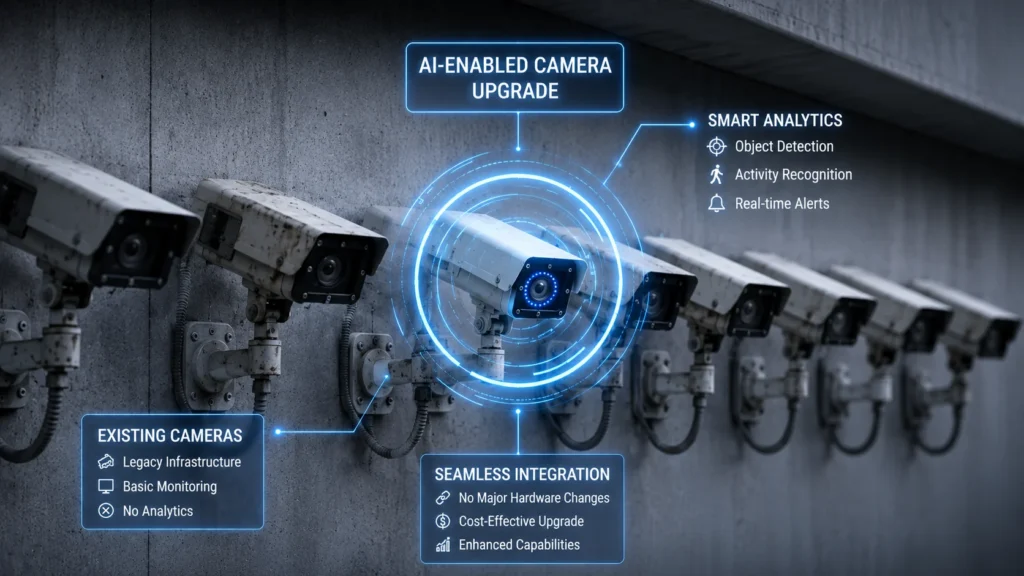
Getting More Value from Existing Camera Infrastructure
Existing CCTV systems often provide a strong foundation for AI video analytics, making it possible to improve monitoring capabilities without replacing an entire surveillance network. By evaluating camera quality, coverage, and compatibility, organizations can identify where their current infrastructure is sufficient and where targeted improvements may be beneficial. This phased approach helps reduce implementation costs while supporting a smoother transition to intelligent video monitoring.
Frequently Asked Questions
Can analog CCTV cameras support AI analytics?
Some analog systems can support AI when connected through compatible video encoders or digital recording infrastructure, although capabilities depend on image quality and system architecture.
Do I need IP cameras for AI video analytics?
Many AI platforms are designed for IP cameras, but existing analog systems may also be integrated using appropriate conversion hardware where required.
Will AI affect normal video recording?
No. In most deployments, cameras continue recording as usual while AI analyzes the video stream independently.
How can I determine if my cameras are suitable for AI?
A technical assessment of camera resolution, placement, lighting, network connectivity, and video quality is typically the best way to evaluate compatibility.
Can organizations upgrade cameras gradually?
Yes. Many organizations begin by enabling AI in priority areas and upgrade additional cameras over time as operational requirements evolve.