
Does Edge Analytics Reduce Cloud Costs?
As organizations deploy more cameras, IoT devices, and connected equipment, the amount of operational data generated every day continues to grow. Sending every image, video stream, and sensor reading to the cloud for processing can significantly increase bandwidth usage, storage requirements, and cloud computing expenses. For businesses operating at scale, these costs can quickly become a major operational consideration.
Edge Analytics offers a different approach by processing data closer to where it is generated. Instead of transmitting every piece of raw information, edge devices analyze data locally and send only meaningful events, summaries, or alerts to centralized systems. This approach can help organizations optimize cloud usage while maintaining operational visibility.
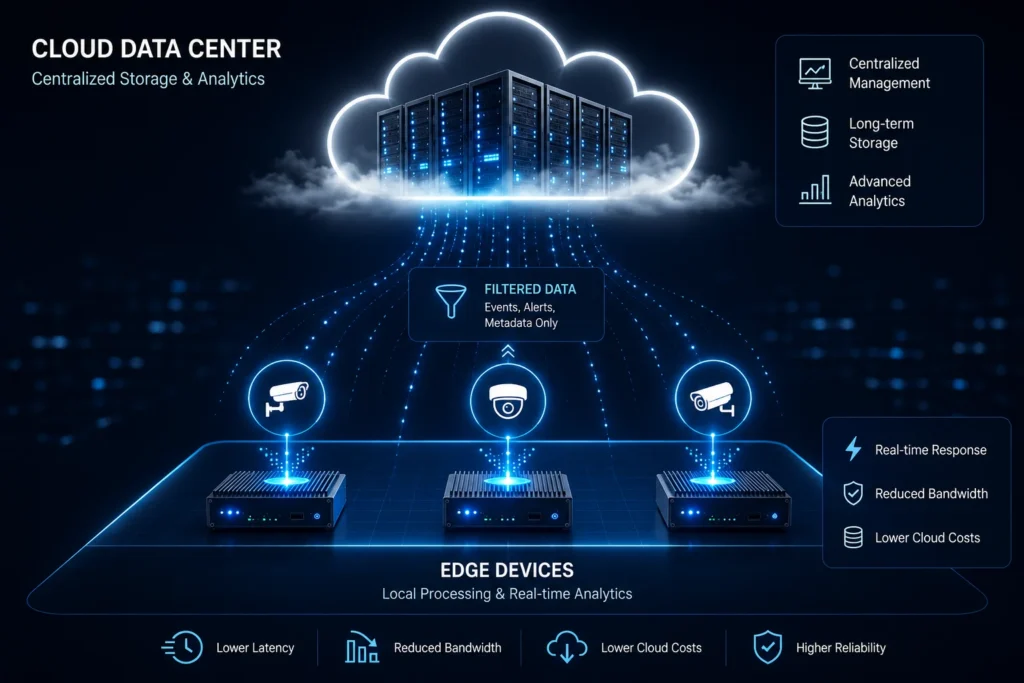
Where Cloud Costs Typically Increase
Cloud expenses are influenced by more than just storage. Organizations often incur costs from several areas simultaneously.
Cloud Cost Component | Why Costs Increase |
Data transmission | Continuous upload of raw video and sensor data consumes bandwidth. |
Cloud storage | Large volumes of footage require long-term storage capacity. |
Compute resources | Processing AI models in the cloud consumes computing resources. |
Data retrieval | Downloading archived footage for investigations may generate additional costs. |
Network infrastructure | Higher data volumes often require greater network capacity. |
As the number of connected devices grows, each of these cost categories can expand accordingly.
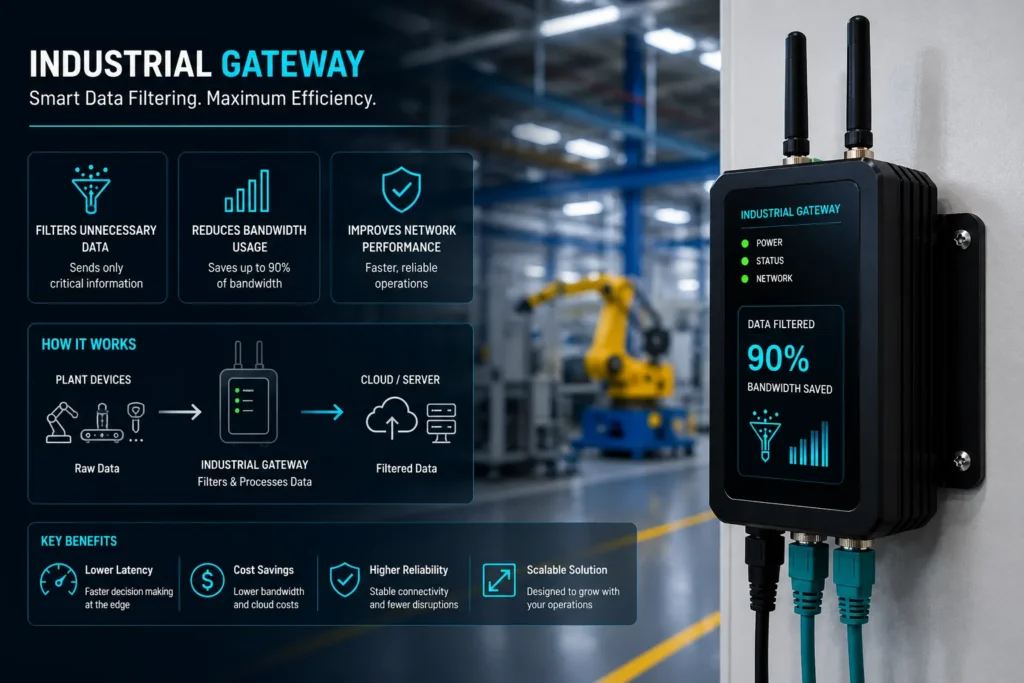
How Edge Analytics Changes the Data Flow
Rather than treating every piece of information equally, Edge Analytics filters data before it leaves the facility.
The process typically follows this sequence:
- Cameras and sensors continuously collect operational data.
- Edge devices process the information locally.
- Relevant events, anomalies, or alerts are identified.
- Only valuable results are transmitted to centralized platforms.
- Long-term reporting and historical analysis remain available through enterprise systems.
By reducing unnecessary data movement, organizations can optimize both network utilization and cloud resources.
Comparing Traditional and Edge-Based Processing
Operational Activity | Cloud-Only Processing | Edge Analytics |
Raw video transmission | Continuous | Only when required or configured |
Initial AI processing | Cloud servers | Local edge devices |
Network bandwidth | Higher | Lower |
Cloud storage demand | Higher | Optimized through selective uploads |
Operational response | Depends on connectivity | Local real-time response |
Many organizations adopt a hybrid approach, combining local processing with centralized reporting to balance performance and long-term analytics.
Where Savings Are Most Noticeable
The financial impact of Edge Analytics depends on operational scale and data volume.
Businesses frequently save the most money when they have:
- Hundreds of cameras generating continuous video.
- Multiple facilities connected to centralized systems.
- Large numbers of IoT devices producing constant data.
- Long operating hours with continuous monitoring.
- AI applications requiring real-time analysis.
- Limited network bandwidth at remote locations.
In these environments, reducing unnecessary cloud traffic can significantly improve overall infrastructure efficiency.
Planning an Edge Analytics Deployment
Before implementing Edge Analytics, organizations should evaluate:
- Which data requires immediate local processing.
- Which information should be retained in the cloud.
- Existing network capacity.
- Edge hardware capabilities.
- Data retention policies.
- Integration with current enterprise platforms.
- Future expansion requirements.
A well-defined deployment strategy helps organizations maximize both performance and cost efficiency.
Beyond Cost Reduction
Although lowering cloud expenses is an important advantage, many organizations implement Edge Analytics for additional operational benefits.
These include:
- Faster response to operational events.
- Reduced network latency.
- Improved business continuity during connectivity interruptions.
- Lower bandwidth consumption.
- Better scalability for growing operations.
- More consistent real-time monitoring.
- Improved operational resilience.
The combination of operational and financial benefits often provides greater long-term value than cost savings alone.
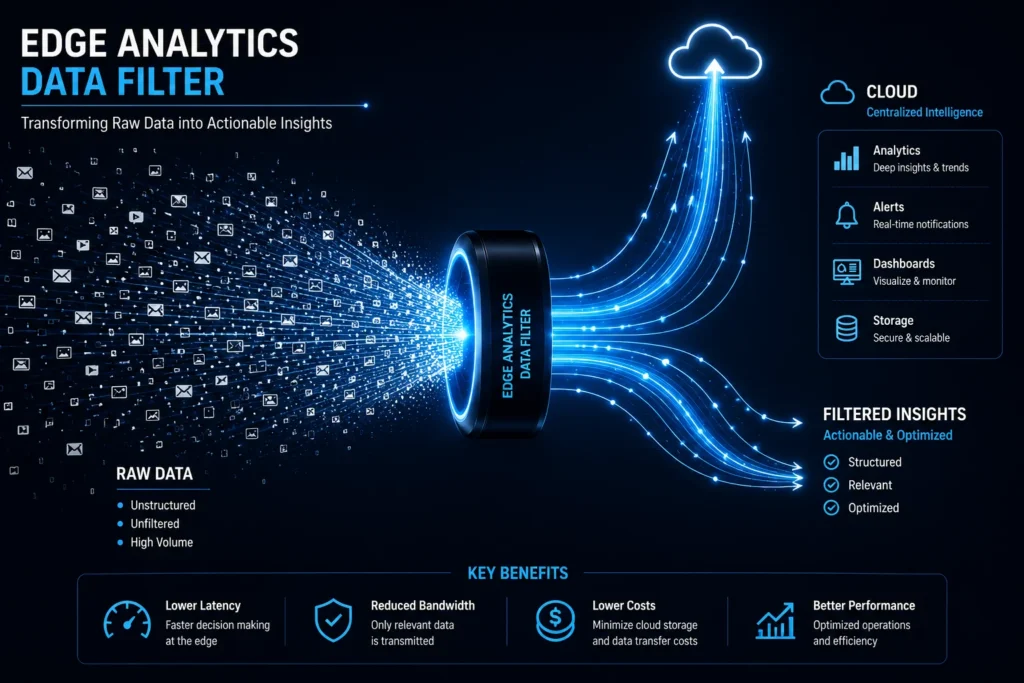
Balancing Performance and Infrastructure Costs
Reducing cloud costs is one of the practical advantages of Edge Analytics, but its value extends beyond financial savings. By analyzing data closer to its source, organizations can reduce unnecessary data transmission, improve response times, and make better use of both local and cloud resources. As operational data volumes continue to grow, Edge Analytics provides a scalable approach that supports efficient infrastructure management while maintaining access to centralized insights when they are needed.
Frequently Asked Questions
Does Edge Analytics eliminate cloud costs completely?
No. Most organizations continue using cloud services for centralized management, reporting, backups, and historical data analysis. Edge Analytics helps reduce cloud usage rather than eliminate it.
Why does processing data locally reduce cloud expenses?
Because only relevant events, summaries, or alerts are transmitted instead of continuously sending large volumes of raw data.
Is Edge Analytics suitable for organizations with multiple locations?
Yes. Multi-site operations often benefit from reduced bandwidth usage and more efficient centralized monitoring.
Can Edge Analytics operate without continuous internet connectivity?
Many edge deployments continue processing data locally even if internet connectivity is temporarily unavailable, synchronizing selected information when the connection is restored.
Should businesses choose Edge Analytics or cloud processing?
For many organizations, the most effective approach is a hybrid architecture where Edge Analytics handles real-time processing while cloud platforms support centralized reporting, long-term storage, and enterprise-wide analytics.