
Which Industries Benefit Most from AI Video Analytics?
Organizations across every sector use cameras to improve security, oversee operations, and investigate incidents. However, traditional video systems often require constant human attention, making it difficult to monitor large facilities, multiple locations, or complex workflows effectively. AI video analytics addresses this challenge by automatically analyzing live video, identifying meaningful events, and delivering actionable insights that support faster and more informed operational decisions.
While almost any organization with camera infrastructure can benefit from AI video analytics, its impact is greatest in industries where safety, operational efficiency, compliance, and real-time visibility are essential.
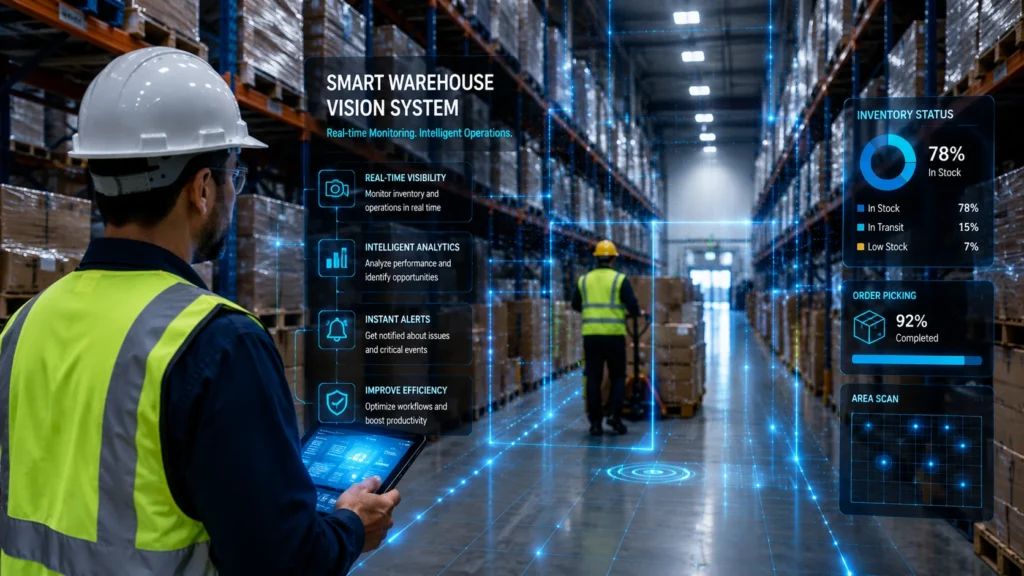
What Makes an Industry a Good Candidate?
AI video analytics delivers the highest value when an organization faces one or more of these operational challenges:
- Continuous monitoring across large facilities.
- High volumes of daily activity.
- Strict safety or compliance requirements.
- Time-sensitive incident response.
- Multiple locations requiring centralized oversight.
- Manual monitoring that consumes significant resources.
- Frequent operational audits or inspections.
Industries with these characteristics often see measurable improvements in visibility, consistency, and operational efficiency.
Operational Challenges AI Video Analytics Can Solve
Instead of serving only as a recording system, AI continuously evaluates visual information to help organizations address common operational issues.
Business Challenge | How AI Video Analytics Helps |
Missed operational events | Detects incidents automatically in real time. |
Manual video review | Highlights relevant events instead of requiring hours of footage review. |
Limited supervisory visibility | Continuously monitors critical operational areas. |
Delayed incident response | Generates immediate alerts for predefined conditions. |
Inconsistent compliance checks | Applies monitoring rules consistently across facilities. |
Growing camera networks | Scales monitoring without proportional increases in staffing. |
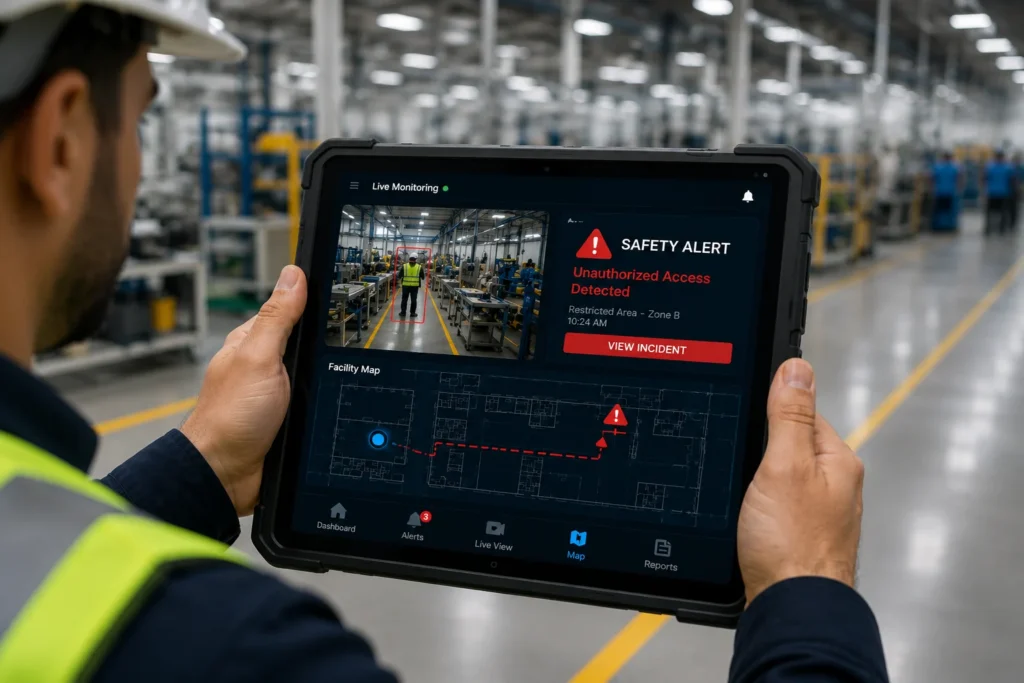
Characteristics of High-Value Deployments
Organizations often achieve the greatest return on investment when AI video analytics is deployed in environments that involve:
- Continuous production or operational activities.
- High employee or visitor movement.
- Heavy equipment or vehicle operations.
- Safety-sensitive work environments.
- Access-controlled areas.
- Repetitive operational workflows.
- Large distributed facilities.
These conditions create numerous opportunities for AI to automate monitoring and improve operational awareness.
Business Functions Enhanced by AI Video Analytics
Rather than focusing on individual industries, AI video analytics supports several core business functions that are common across many sectors.
Business Function | Operational Benefit |
Workplace safety | Identifies unsafe behaviors and supports faster intervention. |
Compliance monitoring | Verifies adherence to operational procedures and policies. |
Asset protection | Monitors valuable equipment and restricted areas. |
Operational efficiency | Detects workflow interruptions and bottlenecks. |
Facility management | Provides visibility across multiple operational zones. |
Incident investigation | Simplifies event searches using AI-based detection. |
Process monitoring | Helps verify that operational activities occur as expected. |
This functional approach allows organizations to address multiple operational objectives using a single monitoring platform.
How Organizations Measure Success
The effectiveness of AI video analytics is often evaluated using operational performance indicators rather than simply counting detected events.
Common performance metrics include:
- Reduction in manual monitoring hours.
- Faster incident response times.
- Improvement in compliance rates.
- Reduction in workplace safety violations.
- Decrease in operational disruptions.
- Lower investigation time.
- Increased visibility across facilities.
- Improved audit readiness.
- Higher operational consistency.
These metrics help organizations assess the business value delivered by AI monitoring over time.
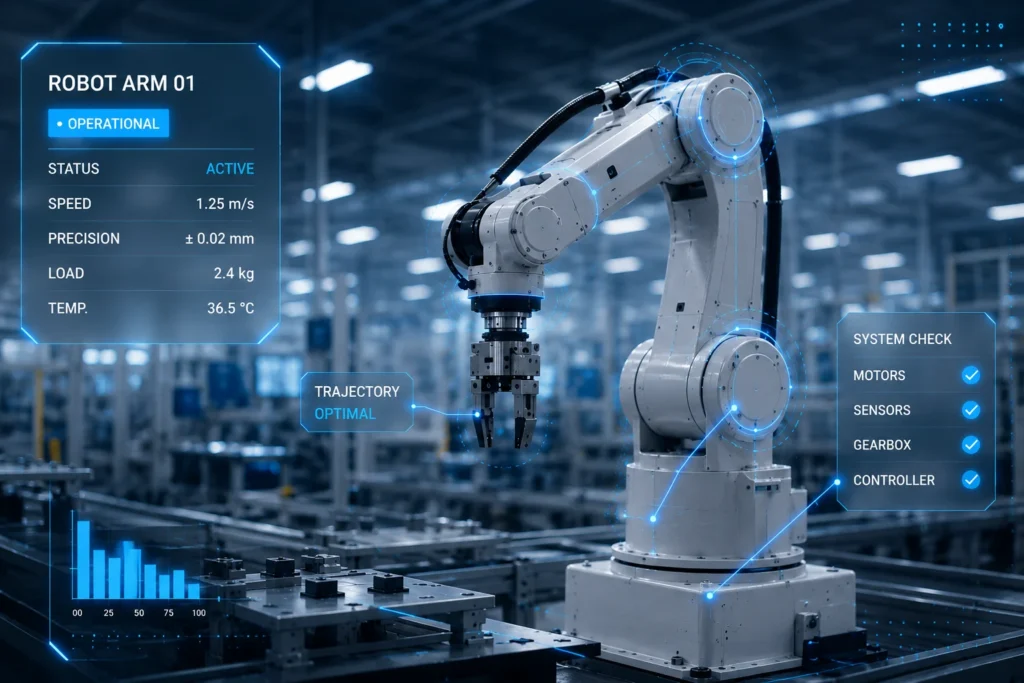
Considerations Before Deployment
Successful implementation requires thoughtful planning rather than simply installing AI software.
Organizations should evaluate:
- Whether camera coverage supports the required monitoring objectives.
- The operational events that need to be detected.
- Existing workflows for responding to alerts.
- Data retention and privacy requirements.
- Integration with operational reporting systems.
- Scalability for future expansion.
Clearly defining these requirements before deployment helps maximize the effectiveness of the solution.
Creating Greater Operational Visibility
The industries that benefit most from AI video analytics are those that depend on continuous visibility, timely decision-making, and consistent operational performance. Rather than limiting its value to security, AI transforms camera systems into intelligent operational tools that support safety, compliance, efficiency, and informed decision-making. As organizations continue modernizing their operations, AI video analytics is becoming an increasingly important component of proactive operational management.
Frequently Asked Questions
Is AI video analytics only useful for large enterprises?
No. Organizations of different sizes can benefit from AI video analytics, particularly when they need to automate monitoring, improve operational visibility, or reduce manual supervision.
Can AI video analytics work with existing camera systems?
In many cases, yes. Modern AI platforms are often designed to integrate with compatible existing camera infrastructure, reducing the need for complete hardware replacement.
Does AI video analytics only improve security?
No. In addition to security, AI supports workplace safety, compliance monitoring, operational efficiency, process verification, and facility management.
How do organizations determine where AI should be deployed first?
Many begin with high-risk or high-activity areas where improved visibility can deliver the greatest operational value before expanding to additional locations.
Can AI video analytics support multi-site operations?
Yes. Centralized monitoring platforms allow organizations to analyze and manage video streams from multiple facilities through a single interface.