
How Is AI Different from Conventional CCTV Monitoring?
Many organizations have invested in CCTV systems to improve security, monitor facilities, and maintain records of daily activities. However, as businesses expand and the number of cameras increases, relying solely on people to observe video feeds becomes less practical. Operators can miss important events, investigations may take hours, and responding after an incident has already occurred can impact safety and operations.
Artificial intelligence changes the role of video monitoring. Instead of simply recording footage, AI continuously analyzes live video, identifies predefined events, and delivers timely alerts that help organizations respond faster and make better operational decisions.
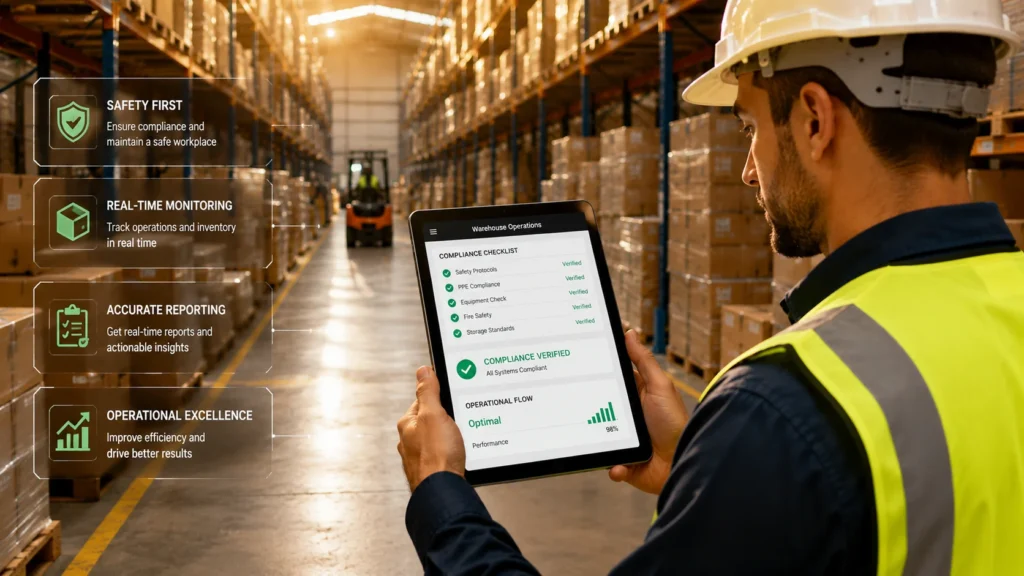
A Side-by-Side Comparison
The differences between conventional CCTV monitoring and AI-powered monitoring become clear when comparing how they handle everyday operational tasks.
Operational Requirement | Conventional CCTV Monitoring | AI-Powered Monitoring |
Video Review | Manual observation | Automated video analysis |
Event Detection | Depends on operators | Detects events automatically |
Alert Generation | Manual reporting | Instant notifications |
Incident Investigation | Search recorded footage | Intelligent event search |
Multi-Site Visibility | Separate monitoring for each site | Centralized monitoring |
Operational Insights | Limited | Dashboards, trends, and analytics |
Scalability | Requires more operators | Supports large camera networks efficiently |
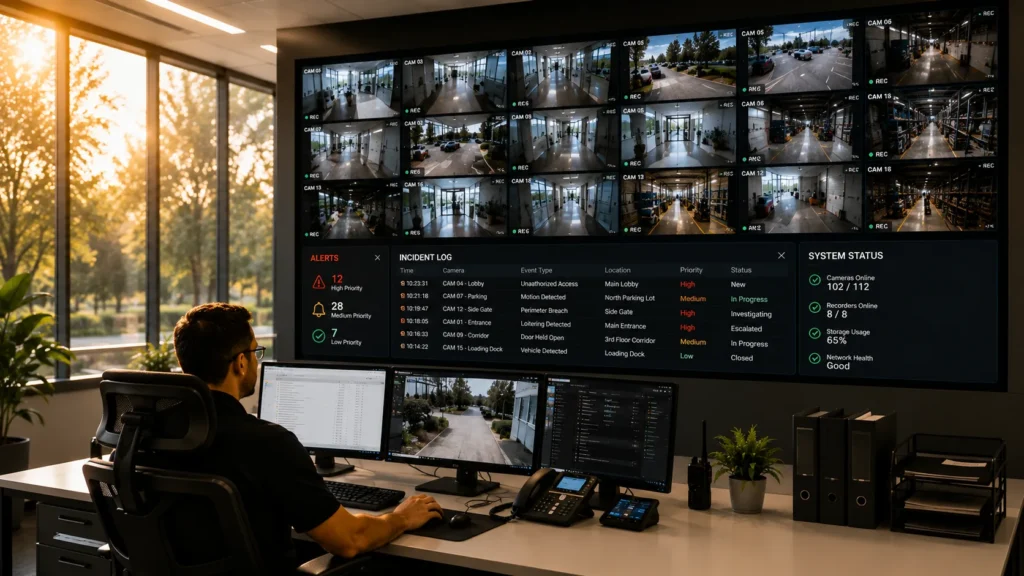
How Monitoring Happens in a Conventional CCTV System
Traditional CCTV systems primarily function as recording tools. Cameras continuously capture footage, which is either viewed live by operators or stored for future reference.
A typical workflow includes:
- Cameras record video continuously.
- Security personnel watch selected camera feeds.
- Incidents are identified through manual observation.
- Recorded footage is reviewed after an event.
- Reports are prepared based on operator findings.
This approach is effective for documenting events but relies heavily on continuous human attention.
How AI Changes the Monitoring Process
AI-powered monitoring introduces an automated layer of intelligence between the camera and the operator.
Instead of waiting for someone to notice an issue, AI continuously examines every video frame, looking for predefined activities, objects, or operational conditions.
The workflow typically follows this sequence:
Step | AI Monitoring Process |
Video Capture | Cameras stream live video. |
Visual Analysis | AI analyzes every frame using Computer Vision. |
Event Recognition | People, vehicles, equipment, and activities are identified. |
Rule Evaluation | Business rules determine whether an event requires attention. |
Alert Delivery | Notifications are sent immediately to operators or business systems. |
This allows personnel to focus on responding to events rather than continuously watching screens.
Where AI Creates Operational Advantages
AI-powered monitoring delivers measurable improvements in several operational areas.
Faster Incident Response
Automatic detection enables organizations to receive alerts as events occur instead of discovering them during routine monitoring or after reviewing recorded footage.
Reduced Manual Work
Operators spend less time watching multiple camera feeds and more time handling verified events that require action.
Improved Operational Visibility
Beyond security, AI helps monitor workplace activities, equipment movement, occupancy levels, and compliance with operational procedures.
Better Decision-Making
Analytical dashboards summarize trends, recurring events, and operational performance, helping managers make informed business decisions.
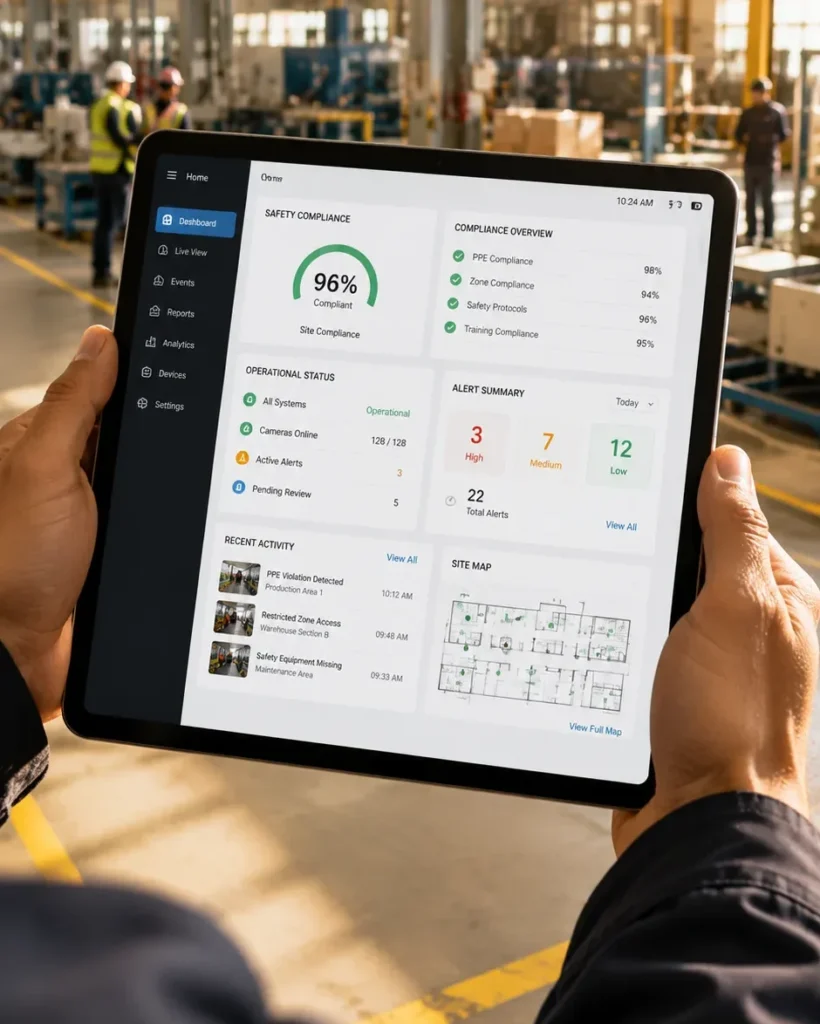
Choosing the Right Monitoring Approach
The most suitable solution depends on business requirements.
Business Need | Recommended Approach |
Basic video recording | Conventional CCTV |
Reviewing incidents after they occur | Conventional CCTV |
Automated event detection | AI-powered monitoring |
Workplace safety monitoring | AI-powered monitoring |
Compliance monitoring | AI-powered monitoring |
Managing multiple facilities | AI-powered monitoring |
Operational analytics | AI-powered monitoring |
Many organizations continue using their existing camera infrastructure while adding AI software to enhance monitoring capabilities.
Key Considerations When Evaluating AI Monitoring
When transitioning from conventional CCTV to AI-powered monitoring, organizations should assess several important factors to ensure the solution aligns with their operational needs.
Accuracy and Reliability
AI systems must consistently detect events with high accuracy. Evaluating how well the system performs under different lighting conditions, camera angles, and environments is essential.
Integration with Existing Infrastructure
A practical solution should work with existing camera systems and IT infrastructure, minimizing the need for costly replacements or complex upgrades.
Customization and Flexibility
Different organizations have unique monitoring requirements. The ability to define custom rules, alerts, and workflows ensures the system supports specific operational goals.
Scalability
As the number of cameras and locations grows, the system should handle increased data without compromising performance or requiring significant additional resources.
Data Privacy and Compliance
Organizations must ensure that AI monitoring solutions comply with local regulations and internal policies related to data protection and privacy.
Ease of Use
User-friendly dashboards, clear alerts, and simple configuration tools help teams adopt the system quickly and operate it effectively without extensive training.
Moving Beyond Video Recording
Conventional CCTV remains valuable for recording and reviewing events, but modern organizations increasingly require systems that can interpret what is happening rather than simply capture footage. AI-powered monitoring transforms video into actionable operational intelligence by automatically detecting events, supporting faster responses, and providing insights that extend well beyond traditional surveillance. As operational demands continue to grow, AI enables businesses to shift from passive recording to proactive monitoring without necessarily replacing their existing camera infrastructure.
Frequently Asked Questions
Does AI replace existing CCTV cameras?
No. AI generally works with compatible camera systems by analyzing the video they already capture.
Can AI reduce the need for continuous manual monitoring?
Yes. AI automatically analyzes video and alerts operators only when predefined events occur.
Is AI monitoring only useful for security?
No. Businesses also use AI for workplace safety, operational monitoring, compliance, quality inspection, and process improvement.
Can AI monitor multiple locations at the same time?
Yes. AI platforms can analyze video from multiple facilities through a centralized monitoring system.
Should businesses replace conventional CCTV completely?
Not necessarily. Many organizations retain their existing cameras and enhance them with AI-powered analytics to improve operational efficiency and visibility.