
What Is Computer Vision?
How AI Enables Machines to Understand Visual Data
Modern businesses generate enormous volumes of visual data through cameras, production lines, warehouses, retail stores, and industrial facilities. However, manually reviewing this information is time-consuming, inconsistent, and often impractical. Systems that can continuously assess visual data, identify operational problems, and facilitate quicker decision-making are essential for organisations. Computer vision is crucial in this situation.
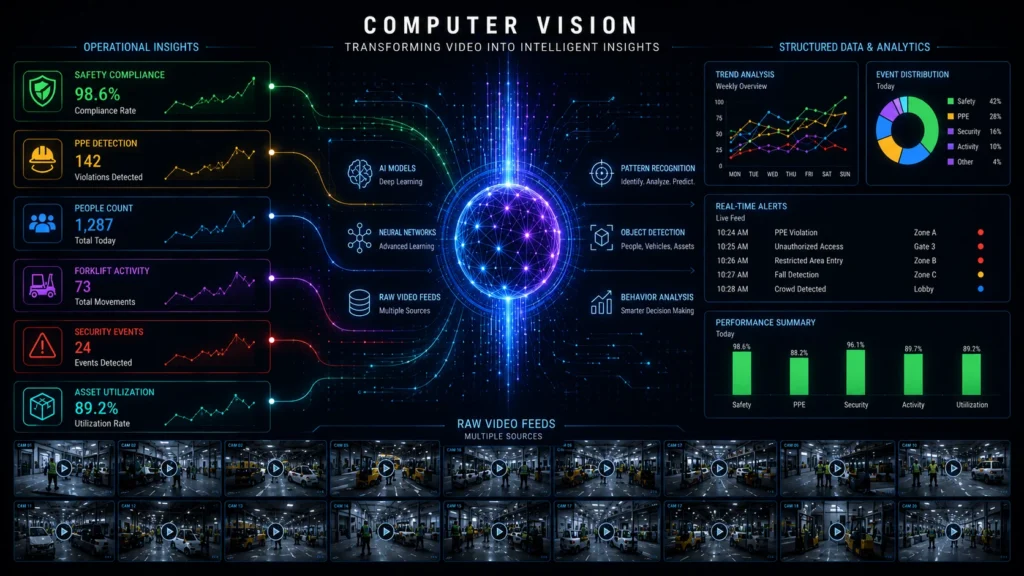
Understanding Computer Vision
A subfield of artificial intelligence called computer vision makes it possible for computers to comprehend and interpret pictures and videos in a manner similar to how people see. Beyond simply capturing visual data, computer vision assesses circumstances, recognises objects, identifies patterns, tracks movement, and automatically detects events.
How Computer Vision Works
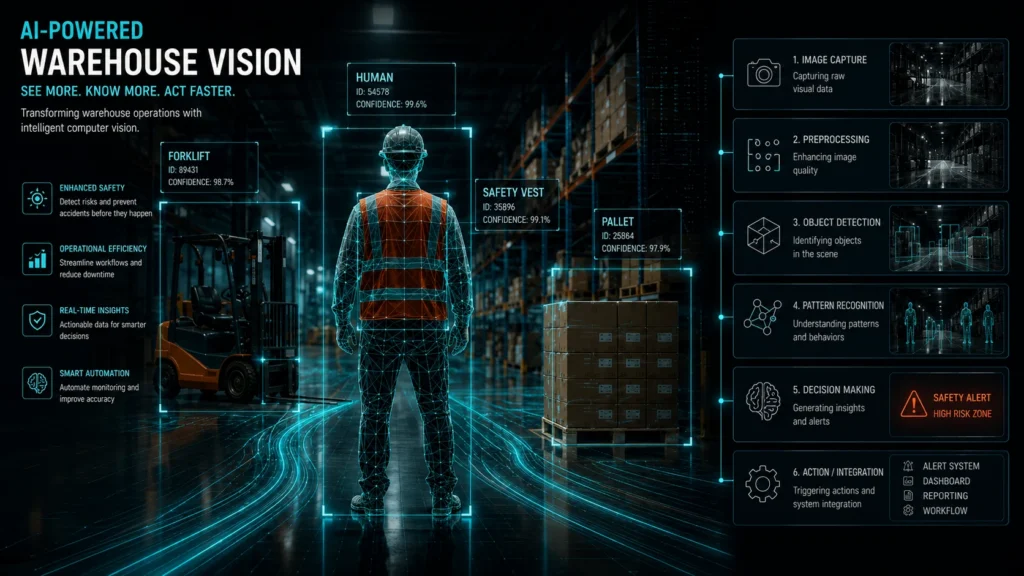
A typical Computer Vision system follows several stages to transform raw images into actionable information.
Stage | Purpose |
Image Capture | Collects images or video from cameras or imaging devices. |
Data Processing | Enhances image quality and prepares data for analysis. |
Object Detection | Identifies people, vehicles, equipment, products, or other objects. |
Pattern Recognition | Recognizes behaviors, activities, or operational conditions. |
Decision Making | Generates alerts, reports, or automated actions based on predefined rules. |
Advanced AI Video Analytics solutions perform these tasks in real time, allowing organizations to respond quickly to operational events.
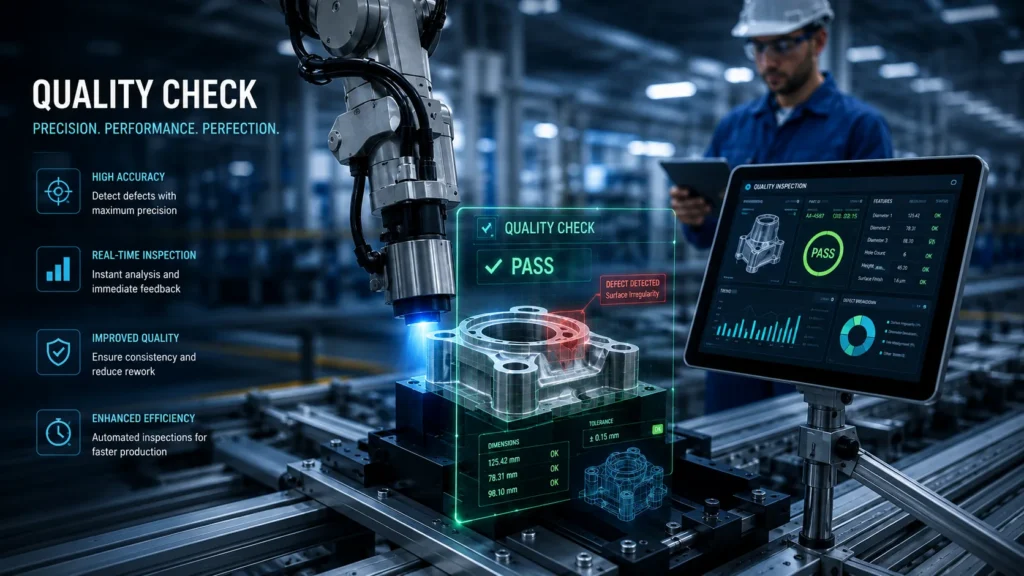
Key Capabilities of Computer Vision
Computer Vision supports a wide range of visual analysis functions, including:
- Object detection and classification
- Facial and identity recognition
- Optical Character Recognition (OCR)
- Defect and quality inspection
- Motion and activity detection
- Vehicle and license plate recognition
- Crowd and occupancy monitoring
- PPE and safety compliance monitoring
- Event detection and automated alerts
These capabilities allow businesses to automate visual inspection processes that traditionally required constant human supervision.
Business Benefits of Computer Vision
Organizations across industries use Computer Vision to improve operational efficiency and reduce manual effort.
Some of the most significant benefits include:
- Faster incident detection
- Improved operational visibility
- Better compliance monitoring
- Reduced manual surveillance
- Higher productivity
- Consistent quality inspections
- Enhanced workplace safety
- More informed business decisions
- Lower operational costs
- Real-time analytics for proactive management
Rather than reviewing recorded footage after an incident occurs, businesses can identify potential issues as they happen and respond more effectively.
Industry Applications of Computer Vision
Computer Vision has become an important technology across many sectors.
Manufacturing
Manufacturers use Industrial AI and Computer Vision to inspect products, monitor assembly lines, identify defects, verify packaging, and ensure workers follow safety procedures.
Retail
Retail businesses use Retail Analytics to monitor customer movement, optimize store layouts, detect empty shelves, and understand shopping patterns.
Warehousing and Logistics
Distribution centers use Computer Vision to monitor loading docks, track pallet movement, improve inventory accuracy, and support efficient warehouse operations.
Healthcare
Hospitals utilise visual analytics to assist regulatory compliance while monitoring restricted areas, enhancing operational workflows, and improving patient safety.
Banking and Corporate Offices
Financial institutions and corporate campuses use intelligent visual monitoring to secure facilities, monitor access points, and improve operational awareness.
Energy and Utilities
Power plants and utility operators monitor critical infrastructure, detect equipment abnormalities, and improve workplace safety using automated visual inspections.
Computer Vision vs Traditional Image Monitoring
Traditional Monitoring | Computer Vision |
Human observation | AI-assisted analysis |
Reactive investigations | Real-time detection |
Manual reporting | Automated alerts |
Limited scalability | Supports multiple locations |
Higher labor requirements | Reduced manual monitoring |
Inconsistent analysis | Consistent decision-making |
Computer Vision enhances not replaces human teams by handling repetitive visual analysis while allowing personnel to focus on higher-value tasks.
Best Practices for Implementing Computer Vision
Organizations can maximize value by following several practical recommendations:
- Clearly define business objectives before deployment.
- Use high-quality camera coverage for reliable analysis.
- Integrate visual insights with operational workflows.
- Regularly evaluate AI model performance.
- Establish clear alert thresholds to reduce unnecessary notifications.
- Verify adherence to data protection and privacy laws.
- Continuously review system performance as operational requirements evolve.
A structured implementation approach helps organizations achieve reliable and measurable business outcomes.
The Future of Computer Vision
Advances in Edge AI, Edge Analytics, and Real-Time Analytics are enabling faster processing directly at the source, reducing latency and improving responsiveness. At the same time, improvements in AI Dashboards, Operational Intelligence, and Enterprise AI are helping organizations combine visual insights with broader operational data.
As businesses continue their Digital Transformation initiatives, Computer Vision is expected to become an integral part of intelligent operations, supporting automation, predictive decision-making, and continuous process improvement.
Building Smarter Visual Operations
Computer Vision is revolutionising how organisations use visual information by turning photos and video into actionable operational intelligence. Businesses may automate inspections, increase compliance, bolster worker safety, and obtain real-time visibility throughout their operations rather than depending just on manual observation. As AI technologies continue to evolve, Computer Vision will remain a foundational capability for organizations seeking more efficient, data-driven, and intelligent operations.
Frequently Asked Questions
To put it simply, what is computer vision?
Computer Vision enables computers to analyze images and videos, recognize objects and activities, and convert visual information into useful insights.
What distinguishes computer vision from conventional video surveillance?
Traditional monitoring depends on people watching video feeds, while Computer Vision automatically analyzes visual data and generates alerts when specific events occur.
How does Computer Vision improve operational efficiency?
Computer Vision automates visual inspection, reduces manual errors, speeds up processes, and provides real-time insights, helping organizations streamline operations and make faster, data-driven decisions.
Does Computer Vision require artificial intelligence?
Modern Computer Vision systems typically combine AI, machine learning, and deep learning techniques to accurately recognize objects, patterns, and events.
Can Computer Vision improve workplace safety?
Yes. It can detect safety violations, monitor hazardous areas, identify missing protective equipment, and support faster responses to operational risks.