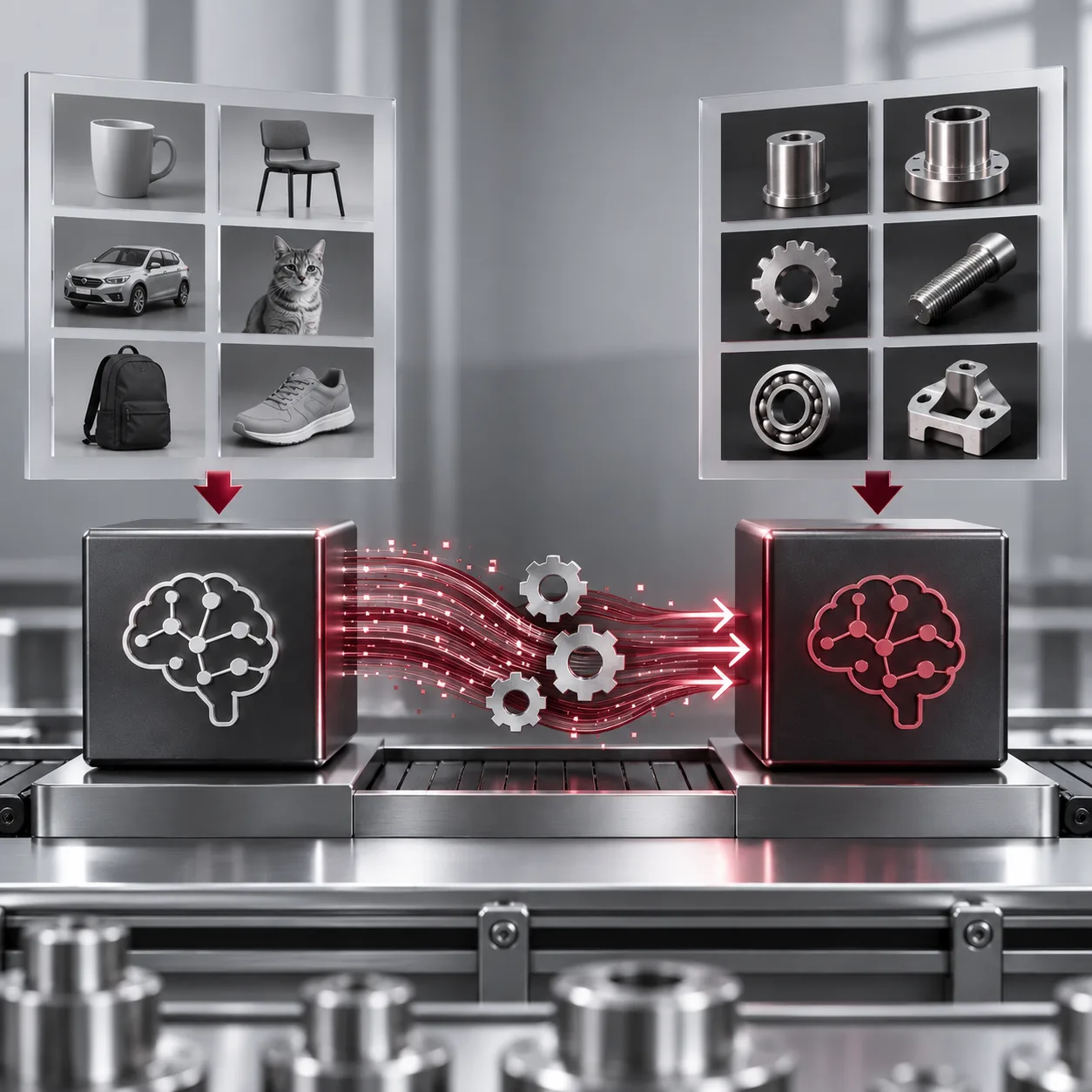
Model Adaptation is the process of modifying an existing machine learning model so that it performs effectively on a new dataset, environment, task, or user requirement. Instead of building a model entirely from scratch, adaptation uses knowledge already learned by a pretrained model and adjusts it to work with new conditions or domain-specific data.
For example, a general-purpose computer vision model may be adapted to identify specific types of defects in manufactured components. This can involve fine-tuning the model with a smaller domain-specific dataset, adjusting selected model parameters, or applying techniques such as transfer learning and parameter-efficient fine-tuning. Model Adaptation can reduce development time, data requirements, and computational costs while improving performance on specialized tasks.
Model Adaptation is widely used in computer vision, natural language processing, speech recognition, generative AI, healthcare, industrial AI, and edge applications where a general model needs to perform reliably in a particular environment.