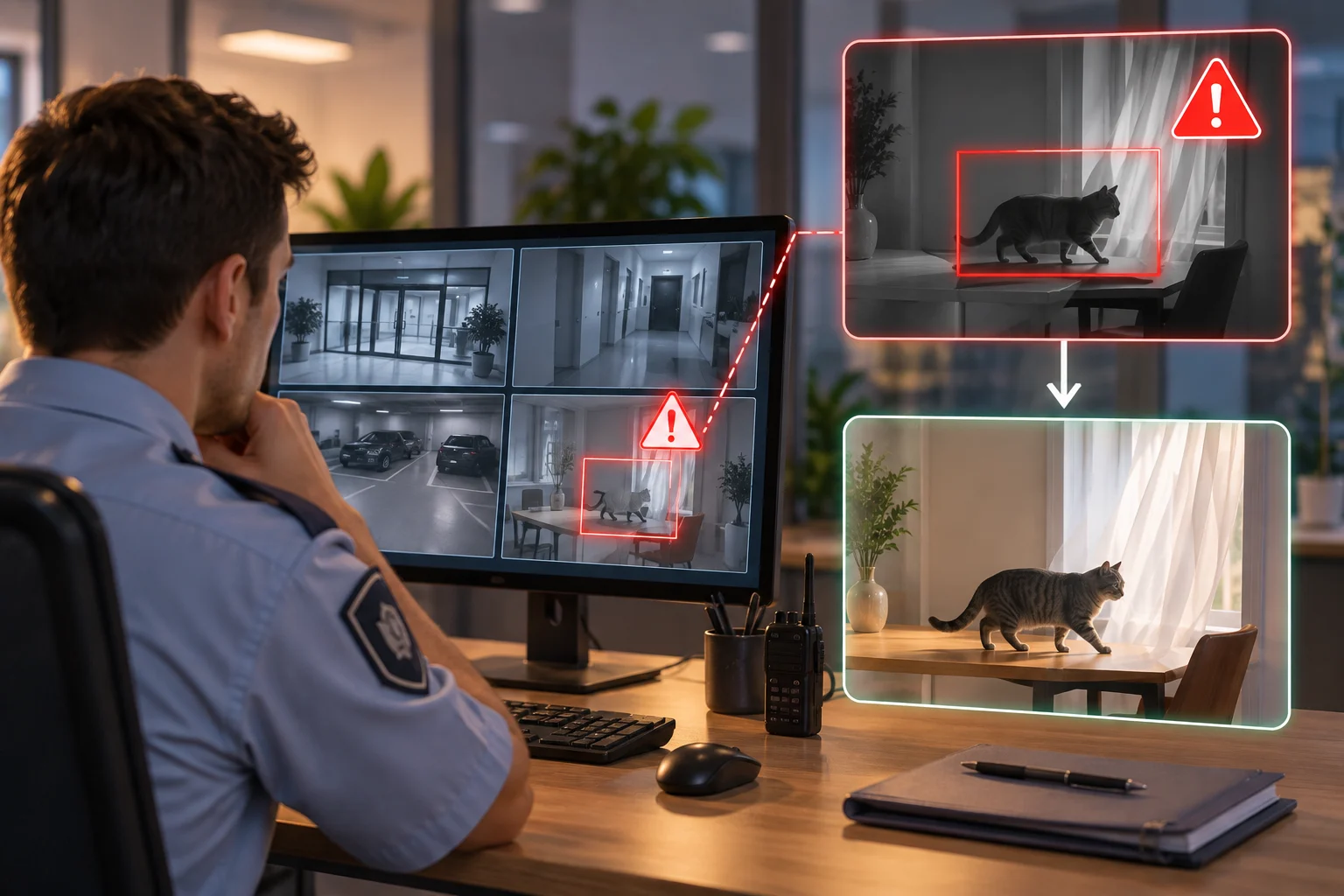
A False Alarm occurs when a system incorrectly identifies a situation as a problem, threat, or abnormal event when no actual issue exists. It can happen when monitoring systems, sensors, or detection tools interpret normal activity as something requiring attention. Frequent false alarms can distract teams, consume resources, and make it harder to recognize genuine problems.
For example, a security system may trigger an alert because a harmless movement, such as a curtain moving in the wind, is mistaken for an intrusion. Similarly, an equipment monitoring system may report a potential failure because of a temporary sensor fluctuation. False alarms are important to manage in security, monitoring, healthcare, and industrial systems. Reducing them helps prevent unnecessary responses, lowers operational costs, and allows teams to focus on real incidents.