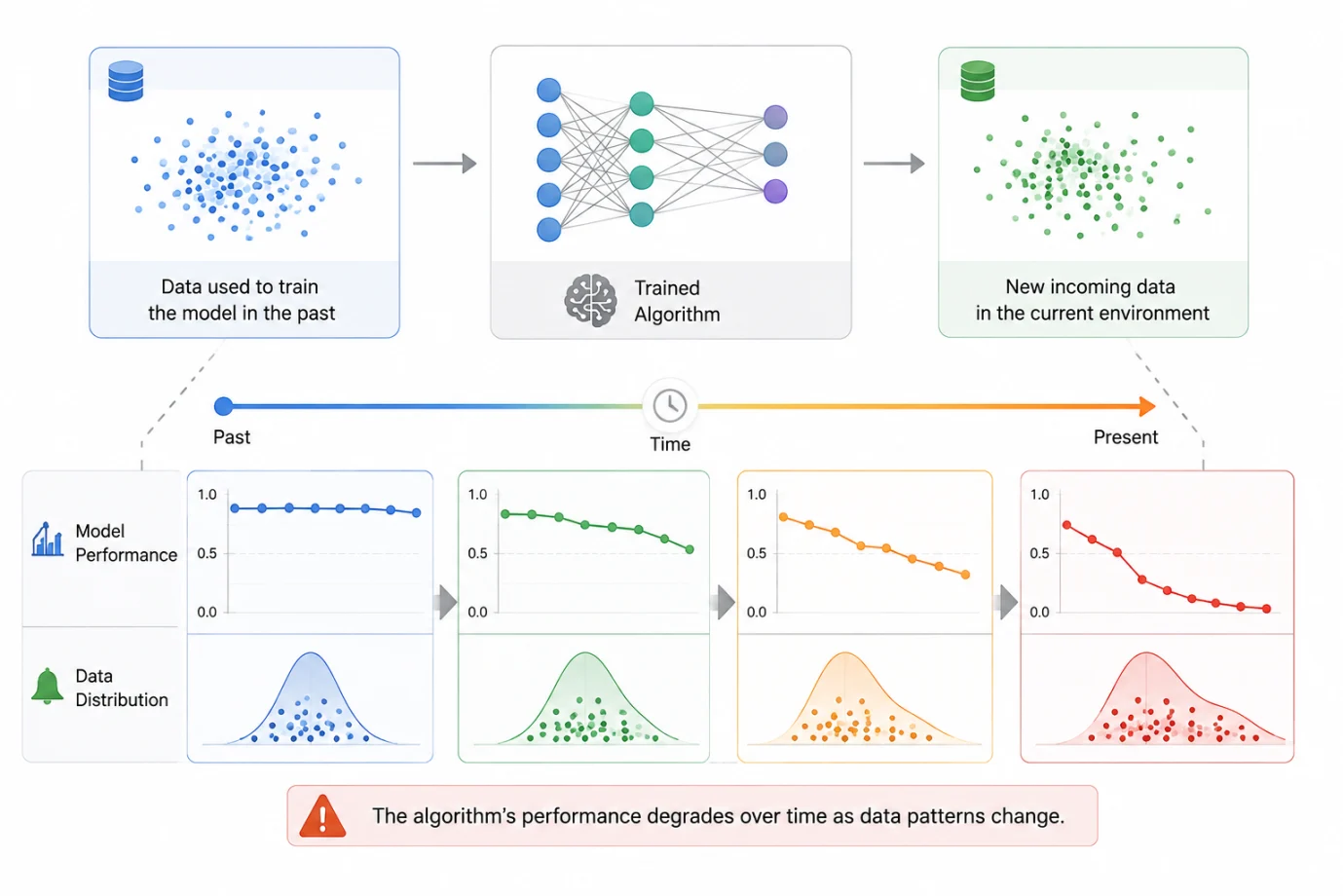
Algorithm drift occurs when an algorithm’s performance or behavior changes over time because the data, conditions, or patterns it encounters have shifted from those present when it was designed or trained. The algorithm itself may remain unchanged, but its outputs can become less accurate or reliable as real-world circumstances evolve.
This is particularly important in machine learning systems used for fraud detection, recommendation engines, demand forecasting, and predictive maintenance. Changes in customer behavior, market conditions, equipment patterns, or incoming data can gradually reduce model effectiveness. Monitoring performance, detecting data distribution changes, and periodically retraining or recalibrating models can help manage algorithm drift.